Overture in Percussion: 5th Percussion Sheet Music Preview

Overture in Percussion: 5th Percussion

For Percussion Quintet

By Anthony J. Cirone

Level: Intermediate Plus

Item: 00-PC-0015225_PC5

Digital Download
$3.00
Description
A melodic rondo for five players. Instrumentation: bells, xylophone, vibraphone, snare drum, tenor drum, bass drum, timpani, cymbals, triangle, finger cymbals, woodblock, and castanets.

Don't just read it, hear it, play along with it, and watch your students grow with it. In MakeMusic Cloud, Overture in Percussion: 5th Percussion comes alive with professional accompaniment, adjustable tempo, and built-in practice tools that turn solo practice into real progress.

Sample Audio
No sample audio found.
Sample Video
Additional Details
Series: Percussion Performance Series
Publisher: Alfred Music
Page Count: 36
SKU: 00-PC-0015225_PC5

More about this title

About the Composer: Anthony J. Cirone

Anthony J. Cirone is a composer and percussionist whose work has shaped percussion education for decades. His compositions balance musical substance with pedagogical clarity, creating pieces that challenge students while remaining accessible to intermediate ensembles.

Why we love this

This rondo gives five percussionists genuine musical material to sink their teeth into rather than a rhythm-section support role. The melodic writing distributes interest across pitched and unpitched instruments, which means every player has moments that matter, and the instrumentation teaches students how different percussion colors work together in conversation.

What to expect

Energetic and organized. The rondo form gives the piece a sense of return and familiarity, while the variety of percussion colors keeps the ear engaged. It feels like a small concert work that happens to use drums and percussion as its voice.

Who it's for

Five intermediate-plus percussionists ready to play as an ensemble rather than as individuals. This works for students who have solid mallet control, can read standard percussion notation, and are ready to balance multiple musical ideas happening at once.

How to get the most out of it

  • Balance the melodic line across bells, xylophone, and vibraphone so the rondo form reads clearly to the audience; these three should sound like they're trading a single musical idea rather than competing for attention.
  • Establish a rock-solid pulse between snare and tenor drums early in rehearsal; the drum parts provide the rhythmic scaffold everything else builds on.
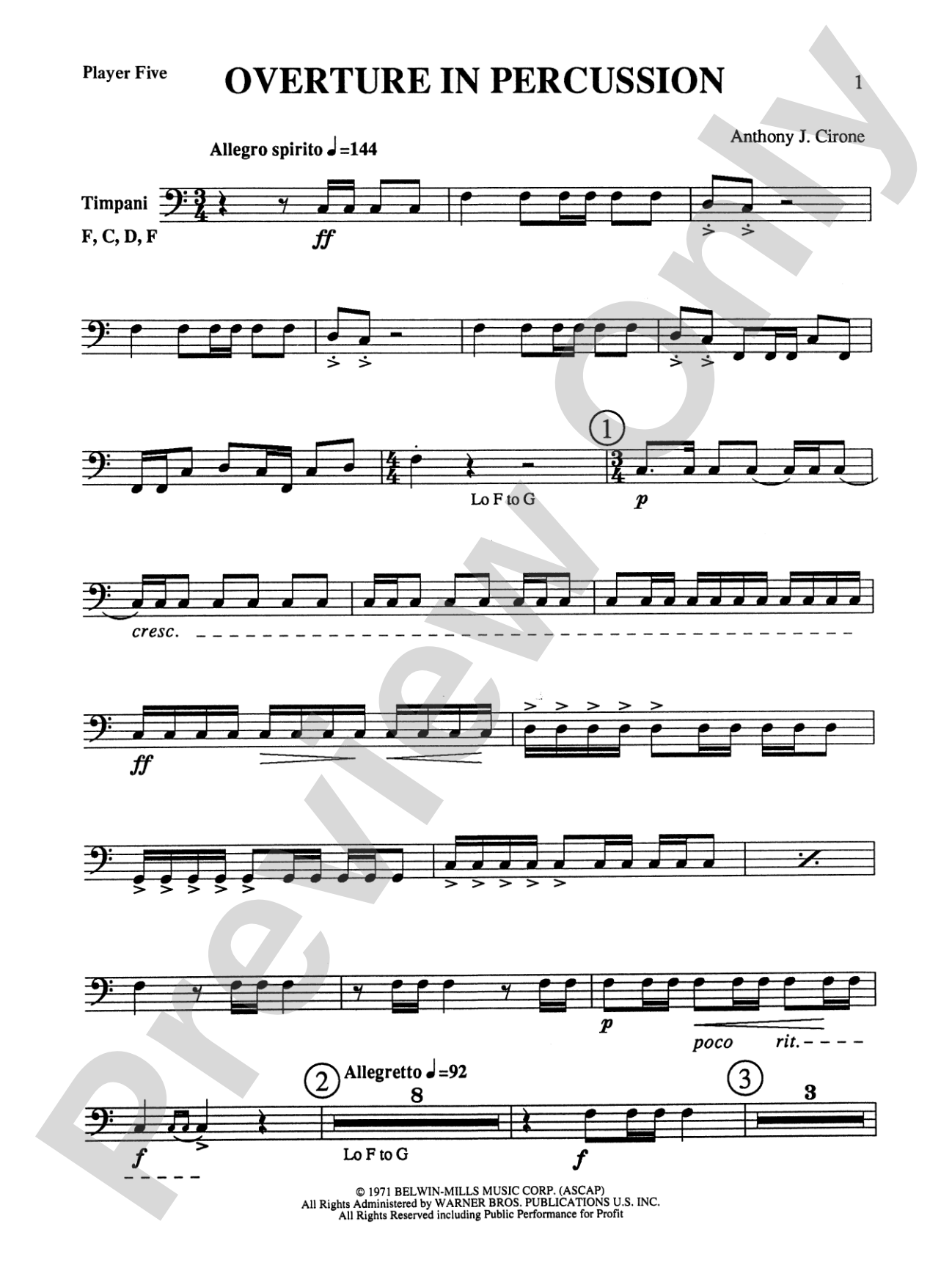
  • Use the timpani entry as a structural landmark that signals form changes; make sure the timpanist knows which sections benefit from a slight dynamic lift.
  • Let the unpitched percussion (cymbals, triangle, castanets, woodblock) breathe between hits so they enhance texture rather than fill every moment.

How to use it

Program this as a showcase for your percussion section in a concert where you want to demonstrate their musicianship beyond the pit or the marching band. It also works as a capstone piece for a percussion ensemble class, since it requires every student to contribute something essential.

Skills your students will build

  • Reading and executing rondo form on percussion instruments
  • Balancing melodic lines across pitched percussion (bells, xylophone, vibraphone)
  • Coordinating pitched and unpitched percussion in a unified ensemble texture
  • Dynamic control across five independent parts
  • Ensemble listening and synchronization at the intermediate level

You May Also Like