Overture in D minor (Concerto Grosso): Cello Sheet Music Preview

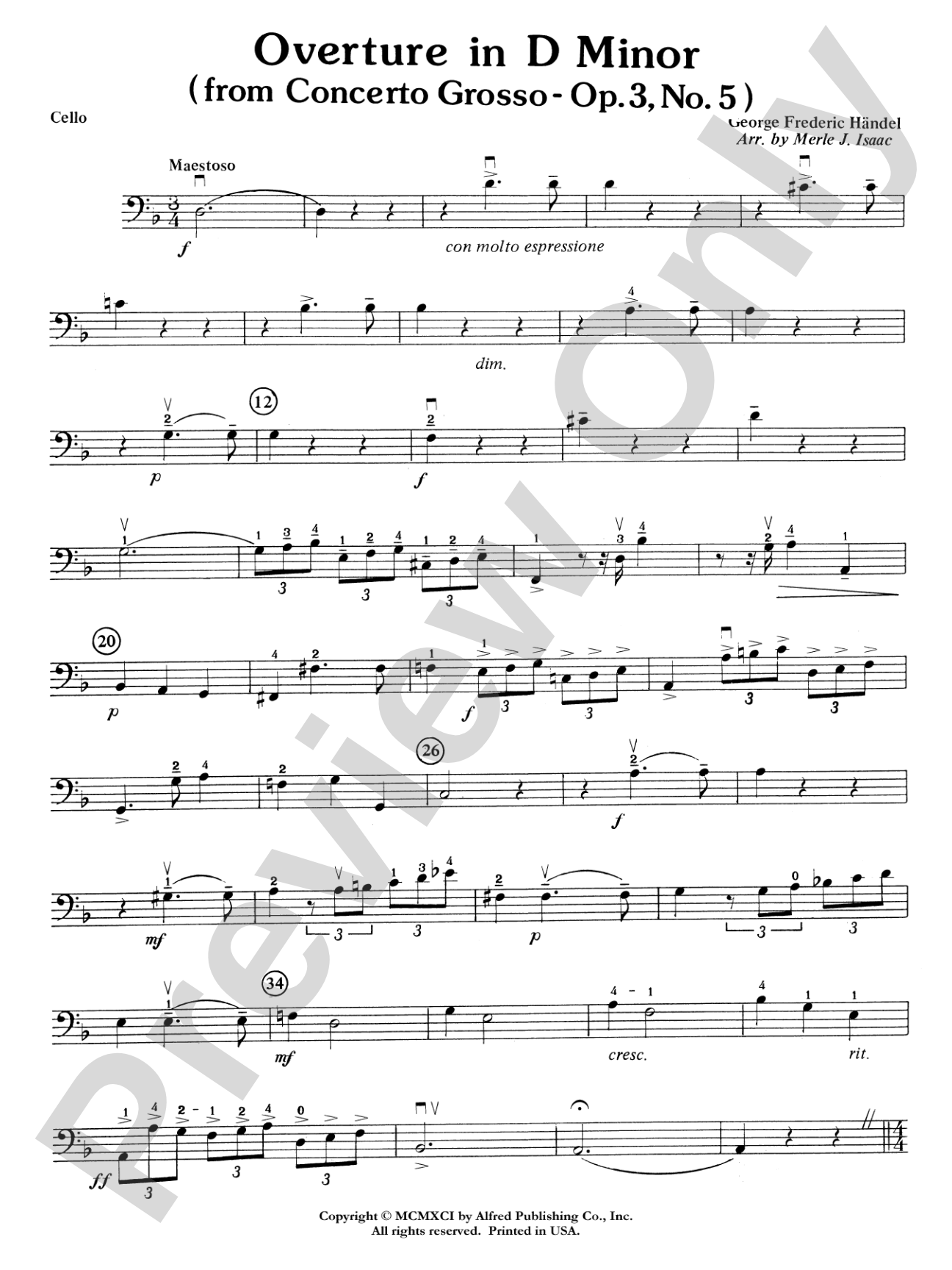
Overture in D minor (Concerto Grosso): Cello

By George Frideric Handel / arr. Merle J. Isaac

Grade: 4

Item: 00-PC-0000067_VC1

Digital Download
$3.00
Description

Don't just read it, hear it, play along with it, and watch your students grow with it. In MakeMusic Cloud, Overture in D minor (Concerto Grosso): Cello comes alive with professional accompaniment, adjustable tempo, and built-in practice tools that turn solo practice into real progress.

Sample Audio
No sample audio found.
Sample Video
Additional Details
Series: Highland/Etling Full Orchestra
Publisher: Alfred Music
Page Count: 204
SKU: 00-PC-0000067_VC1

More about this title

About the Composer: George Frideric Handel

George Frideric Handel (1685-1759) shaped the Baroque orchestra and defined the concerto grosso as a compositional form. His command of instrumental color and dramatic pacing influenced generations of composers, and his works remain central to the orchestral repertoire that serious students encounter.

Handel's mastery of contrast—between large tutti sections and intimate chamber passages—made his music ideal for teaching orchestral balance and ensemble awareness. His textures reward careful attention to part independence and voice leading, skills that transfer directly to contemporary ensemble playing.

Why we love this

Merle Isaac's orchestration opens up a cornerstone of Baroque writing to ensembles that might otherwise skip it. This arrangement respects Handel's contrapuntal architecture while distributing the texture across a full modern orchestra, making it a substantial concert work that challenges students without overwhelming them at Grade 4.

What to expect

This overture radiates the courtly elegance of the Baroque, with a sense of formal procession that unfolds through layered instrumental voices. The harmonic language is rich and grounded; the rhythmic clarity gives it drive despite its age. You hear both the grandeur of the court and the precision of the craftsman.

Who it's for

Conductors programming a substantive orchestral work at the upper intermediate level will find this arrangement makes sophisticated repertoire accessible without compromising musical integrity. It suits orchestras with capable string sections and developing winds, offering every section genuine musical content rather than padding.

How to get the most out of it

  • Balance the dialogue between the concertino (solo group) and ripieno (full ensemble) sections with careful attention to dynamic shaping. The contrast between these forces drives the formal architecture.
  • Maintain rhythmic precision in the string bowing patterns, particularly in fast passages where articulation defines the Baroque style. Mark bow divisions clearly in parts before rehearsal.
  • Shape the sustained harmonic passages with a sense of forward motion rather than stasis. Even slow-moving block chords benefit from slight dynamic swelling and careful voice leading.
  • Conduct with clarity in the faster sections so that individual lines remain audible within the full texture. Baroque counterpoint requires transparent ensemble work.

How to use it

This works as an opening concert piece that establishes an ambitious standard for the program. Pair it with a lighter contemporary work or a solo concerto to round the first half, or use it to anchor a Baroque-themed concert that might include chamber selections or a shorter overture by a contemporaneous composer.

Skills your students will build

  • Reading and balancing divided string parts in Baroque textures
  • Identifying and executing contrast between concertino and tutti sections
  • Sustaining long-lined melodic passages with rhythmic independence
  • Adjusting ensemble intonation across sustained harmonic progressions
  • Responding to conducting gestures that clarify counterpoint rather than chordal harmony

You May Also Like