Overture from The Thieving Magpie: Violin 2 Sheet Music Preview

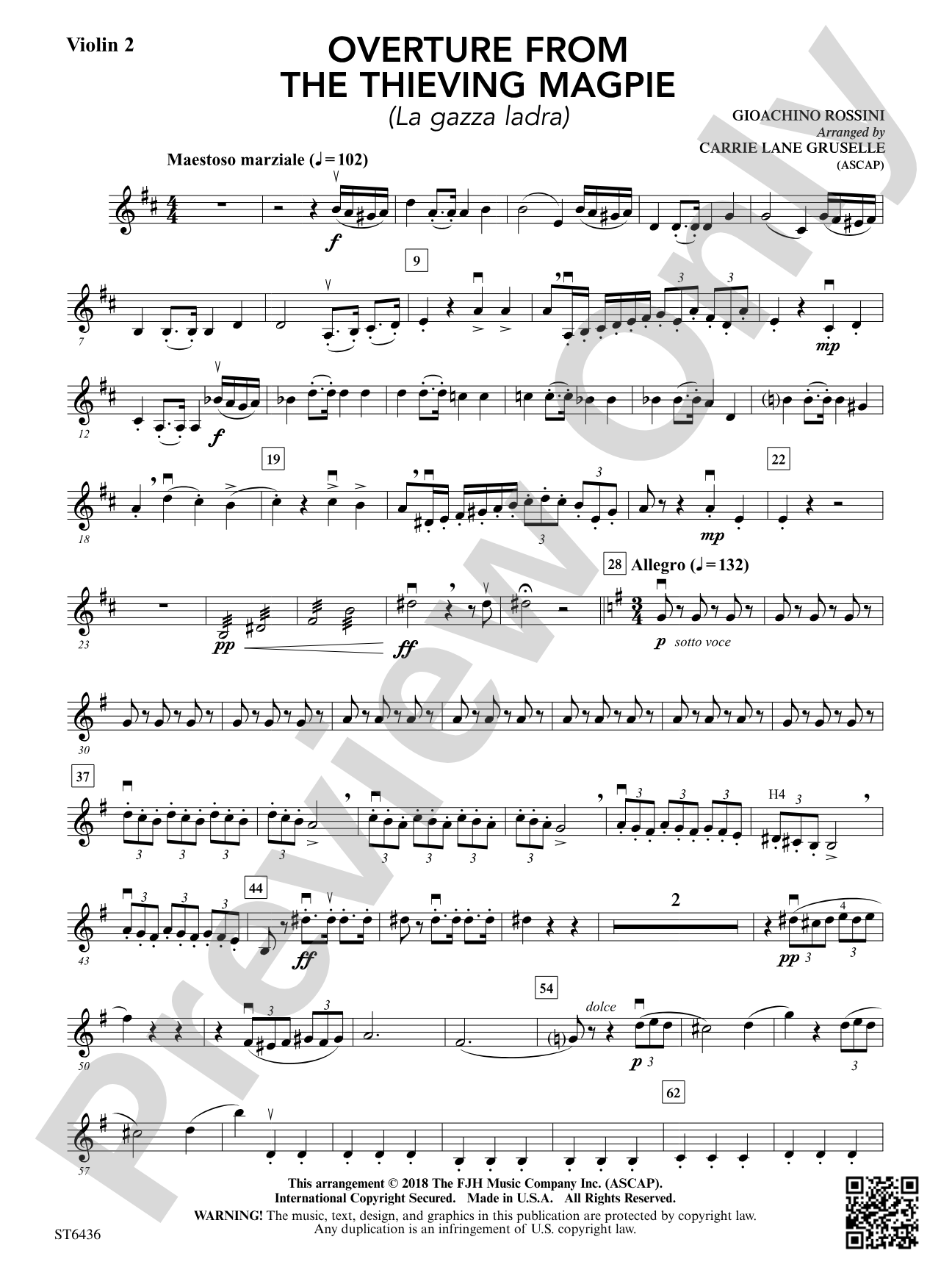
Overture from The Thieving Magpie: Violin 2

By Gioachino Rossini / arr. Carrie Lane Gruselle

Grade: 4

Item: 98-PC-DST6436_VN2

Digital Download
$7.00
Description
The Thieving Magpie is one of Rossini's most memorable and exciting opera overtures. After an aggressive and militaristic introduction comes the drama and intrigue surrounding a story centered on the theft of a silver spoon! Students will explore a full range of expression and bow strokes in this expertly orchestrated arrangement.

Don't just read it, hear it, play along with it, and watch your students grow with it. In MakeMusic Cloud, Overture from The Thieving Magpie: Violin 2 comes alive with professional accompaniment, adjustable tempo, and built-in practice tools that turn solo practice into real progress.

Sample Audio
0:00
0:00
Sample Video
Additional Details
Series: FJH String Orchestra
Publisher: The FJH Music Company, Inc.
SKU: 98-PC-DST6436_VN2

More about this title

About the Composer: Gioachino Rossini

Gioachino Rossini (1792-1868) was an Italian composer whose gift for melody and theatrical brilliance made him one of the most celebrated opera composers of the early 19th century. His operas dominated European stages during his lifetime, and his overtures became concert hall staples that remain standard repertoire today.

Rossini's style emphasizes rhythmic vitality, orchestral color, and memorable themes that audiences grasp immediately. His overtures are masterclasses in form and orchestration, which is why they appear so frequently in educational settings. The Thieving Magpie overture exemplifies his genius for building excitement through repetition, contrast, and instrumental interplay.

Why we love this

This arrangement captures everything that makes Rossini irresistible: propulsive energy, vivid orchestration, and a structure that feels both sophisticated and immediately engaging. Carrie Lane Gruselle's orchestration preserves the harmonic and melodic integrity of the original while making the demands reasonable for Grade 4 students, so your ensemble can sound polished without getting bogged down in technical complexity.

What to expect

The Thieving Magpie overture opens with bristling military fanfare before the mood shifts to dramatic intrigue and scheming. You'll hear galloping figures, witty orchestral commentary, and melodies that lodge themselves in memory. It's theatrical, driven, and fun to play.

Who it's for

String orchestra directors seeking a concert or festival piece that excites students and audiences alike. This arrangement works for Grade 4 ensembles that have solid fundamentals and are ready to tackle a famous work with genuine musical substance.

How to get the most out of it

  • Establish the tempo of the militaristic introduction with confidence and precision; this sets the character for the entire piece and signals to the audience what they're about to experience.
  • Pay close attention to the contrast between the aggressive opening and the more lyrical sections that follow. These shifts in character require clear conducting and alert musicians who understand they're telling a story.
  • Shape the melodic lines with intention. Rossini's melodies sing across the ensemble, and they should never sound mechanical or rushed even when the tempo is brisk.
  • Balance the sectional texture carefully, especially when melodic material passes between string sections. A well-balanced string orchestra will let each voice contribute without muddying the texture.

How to use it

This is an excellent choice for a concerto-style concert or festival performance, where a single polished showpiece anchors the program. It also pairs well with lighter fare or other Rossini works, or it can stand alone as a finale that leaves audiences energized and satisfied.

Skills your students will build

  • Articulation control across detached and legato bow strokes
  • Dynamic contrast and shaping within phrases
  • Rhythmic precision in fast, repetitive figures
  • Ensemble balance and sectional coordination
  • Interpretation of dramatic musical narrative

You May Also Like