
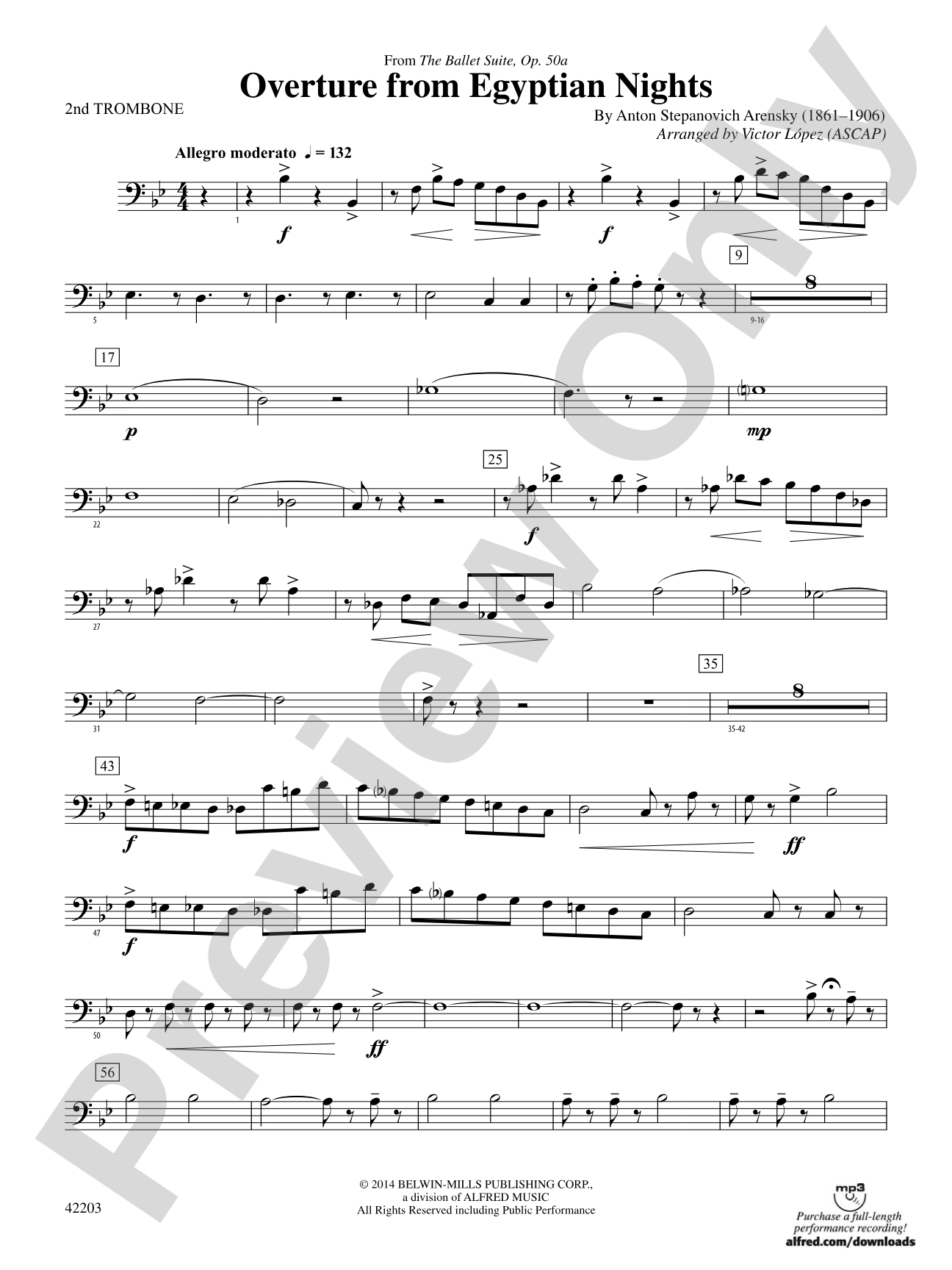

Overture from Egyptian Nights: 2nd Trombone
By Anton Stepanovich Arensky / arr. Victor López
Grade: 3.5 (Medium Easy to Medium)
Item: 00-PC-0016712_TN2
$5.99
Pickup currently not available
Description
Transcribed from the notorious Russian composer, Anton Stepanovich Arensky, this overture to his ballet suite is reminiscent of his predominantly romantic and classical repertoire. Scored with vivid colors and timbres for concert band, this charming work will be well received as a concert or contest work. (6:30)


Don't just read it, hear it, play along with it, and watch your students grow with it. In MakeMusic Cloud, Overture from Egyptian Nights: 2nd Trombone comes alive with professional accompaniment, adjustable tempo, and built-in practice tools that turn solo practice into real progress.
Open in the Player
Jump straight in and assign it today.
Start Your Free Trial
Open this title and explore the full library in minutes.
Sample Audio
1
Audio File
--:--
0:00
0:00
Sample Video
No sample videos found.
Additional Details
Series:
Belwin Concert Band
Publisher:
Alfred Music
Page Count:
258
SKU:
00-PC-0016712_TN2
More about this title
About the Composer: Anton Stepanovich Arensky
Anton Stepanovich Arensky (1861-1906) was a Russian composer and pedagogue whose gift for orchestration and lyrical melody made him one of the most performed composers of his era. His ballets, chamber works, and orchestral pieces showcase the hallmarks of Russian Romanticism: rich harmonic language, memorable themes, and sophisticated instrumental color. Arensky held significant posts at the Moscow Conservatory and directed the Imperial Court Chapel in St. Petersburg, influencing generations of musicians through both his compositions and teaching.
Arensky's output spans opera, ballet, concertos, and works for chamber ensemble and orchestra. His ballet suite Egyptian Nights exemplifies his theatrical sensibility and orchestral imagination, offering arrangers a natural vehicle for wind band transcription. Though less frequently programmed than his contemporaries Tchaikovsky and Rimsky-Korsakov, Arensky's works reward discovery with their directness, clarity, and genuine melodic appeal.
Why we love this
Victor López's transcription captures Arensky's orchestral brilliance without losing the ballet's narrative sweep and harmonic sophistication. The Grade 3.5 level makes this accessible to developing ensembles while the sophisticated scoring keeps experienced groups engaged, offering genuine interpretive challenges in balance and color. Programming this overture signals that your band plays beyond the standard symphonic wind band canon.
What to expect
Ornate and elegant, with a theatrical warmth that feels both familiar and exotic. The opening conjures scenes of pageantry and mystery; middle sections shift to lyrical introspection before building to a confident, brilliant conclusion. Colors shimmer and shift through the band as themes pass between families of instruments.
Who it's for
Concert bands at the developing to intermediate level who want to explore Russian Romantic repertoire with sophisticated orchestration and strong melodic content. Conductors seeking a work that challenges ensemble blend and phrasing without requiring virtuosic individual technique will find this transcription rewarding.
How to get the most out of it
- Balance the woodwind solos in the opening carefully; the melody belongs to the first flute and clarinet, but Arensky's inner harmonies deserve clarity from the second and third parts.
- Shape longer phrases with subtle dynamic contours rather than holding a single dynamic level. Arensky's Romantic idiom expects expressive flexibility from the ensemble.
- Let the distinctive instrumental combinations breathe. This transcription shines when contrasting sections (tutti brass against solo woodwinds, for example) are clearly delineated in rehearsal.
- Mark spots where the bass line carries harmonic motion. The low brass and reeds must lock rhythmically in the developmental passages to maintain momentum.
How to use it
Program this as a concert centerpiece alongside lighter classics or modern pedagogical works; its 6:30 duration and clear narrative arc hold audience attention without overwhelming a program. It also serves well as a contest selection for bands seeking substantive, musically sophisticated material at an achievable technical level.
Skills your students will build
- Balancing independent woodwind lines within harmonic textures
- Shaping phrases in Romantic-era harmonic language
- Blend and color in contrasting instrumental combinations
- Reading and executing dynamic subtlety across an extended form
- Stylistic flexibility and expressive phrasing