
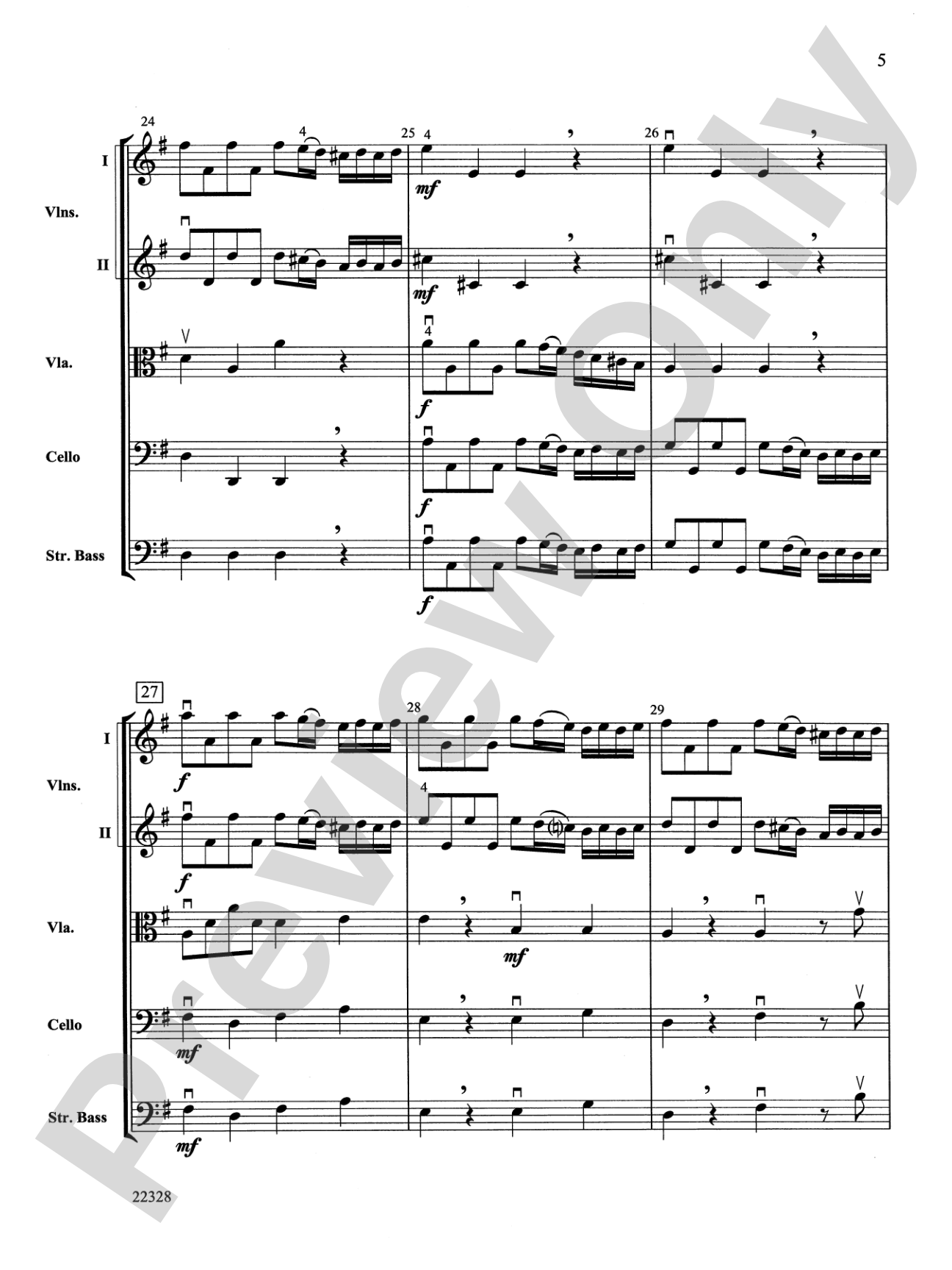
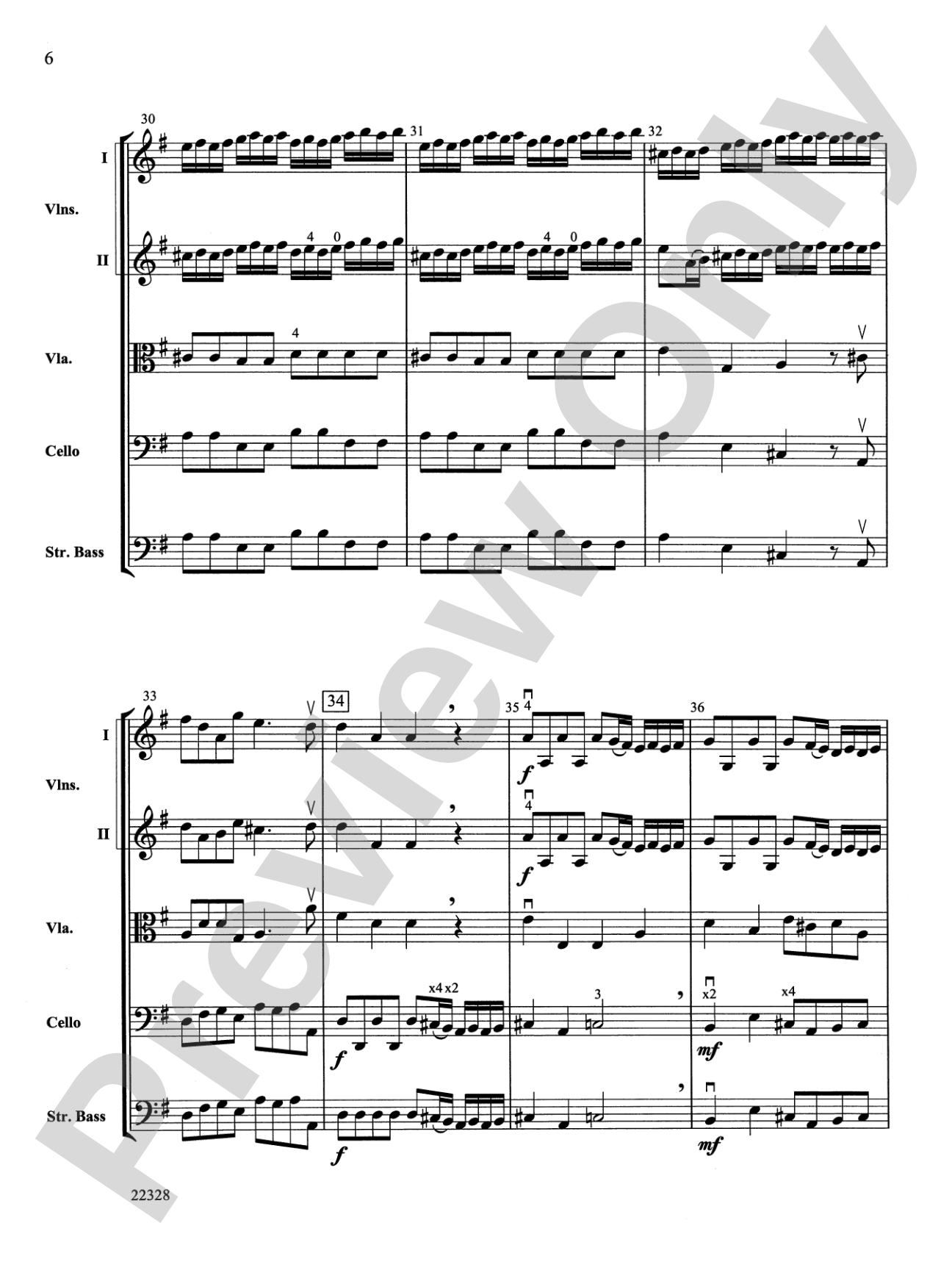
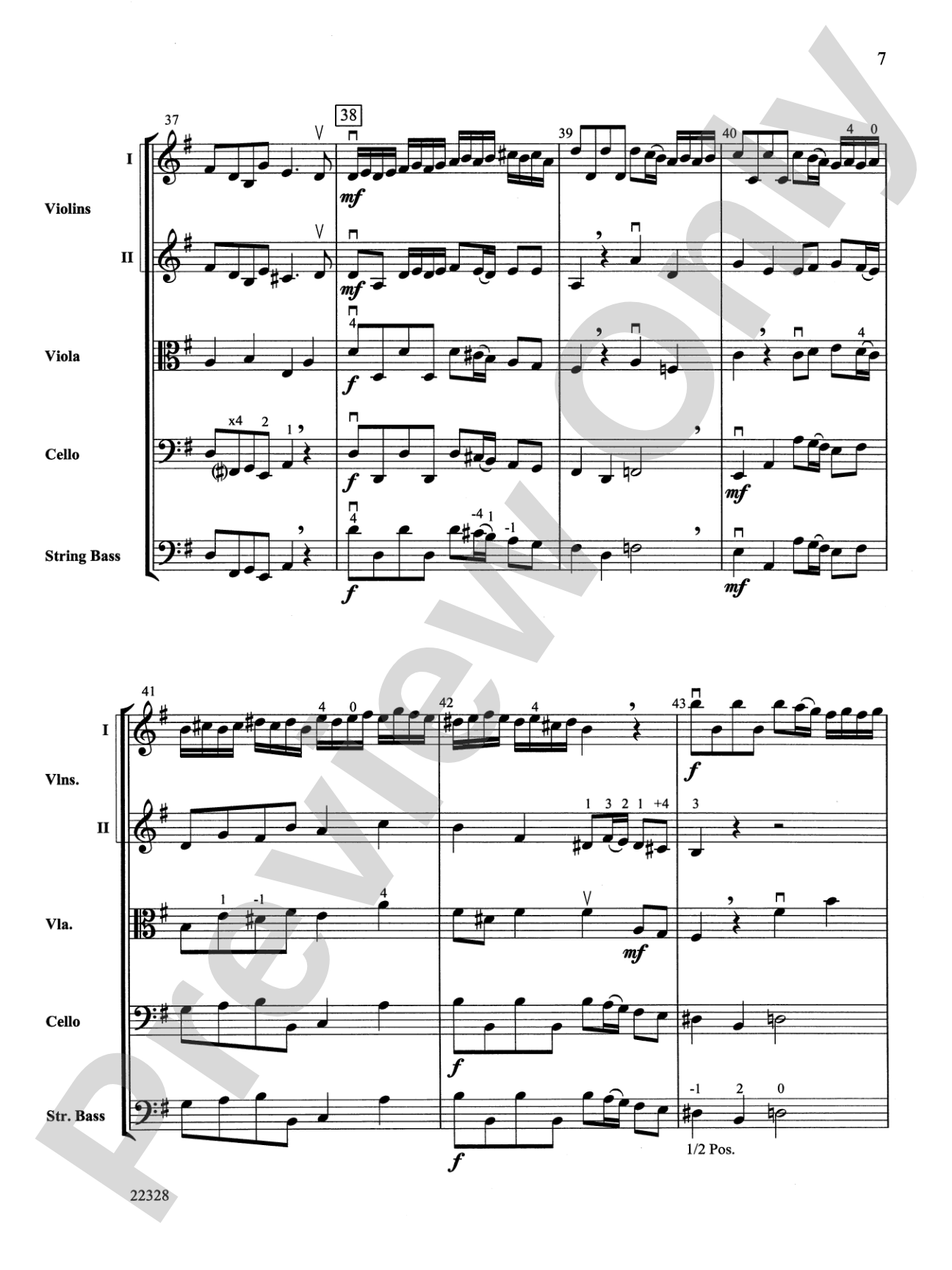
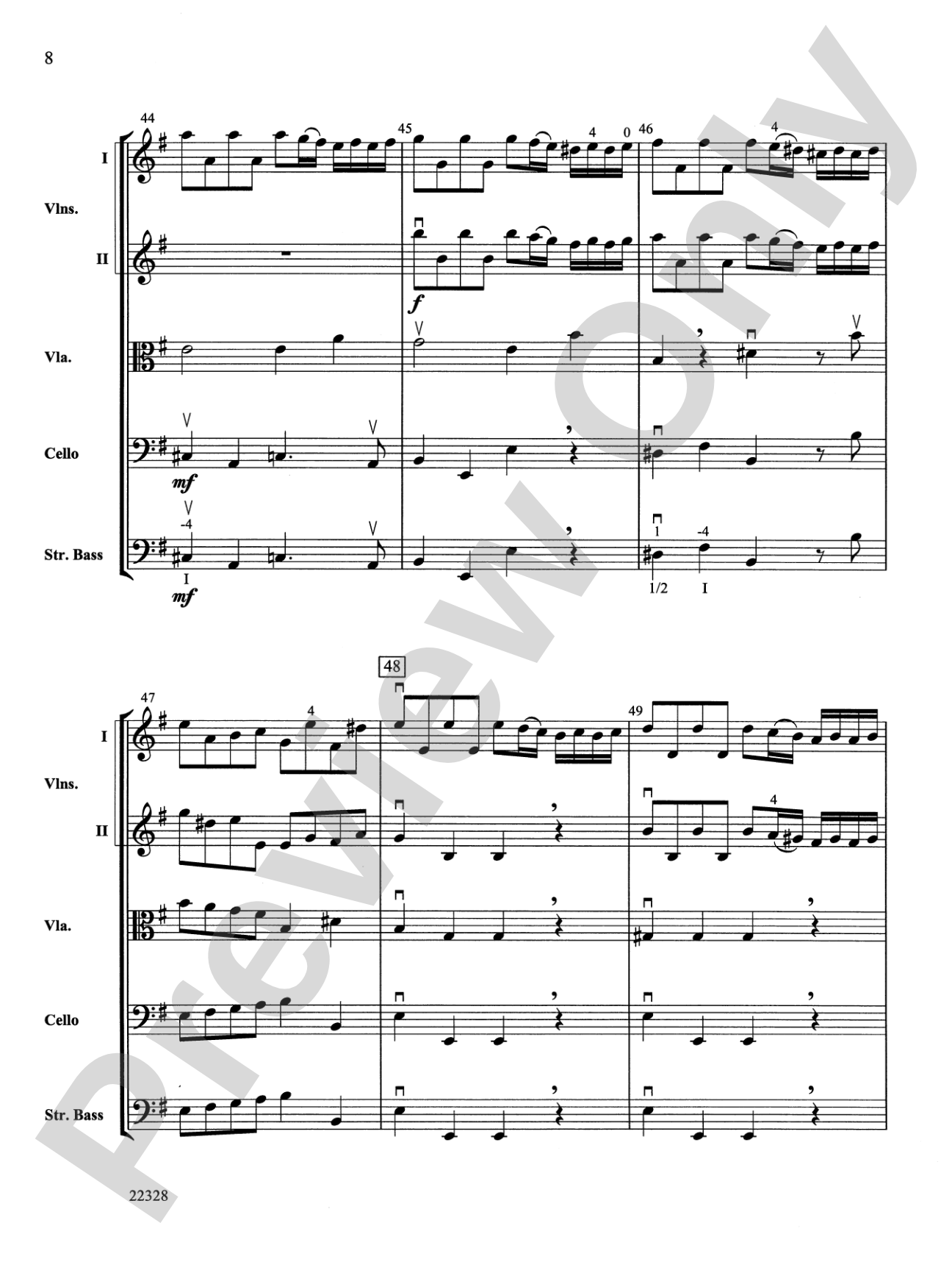
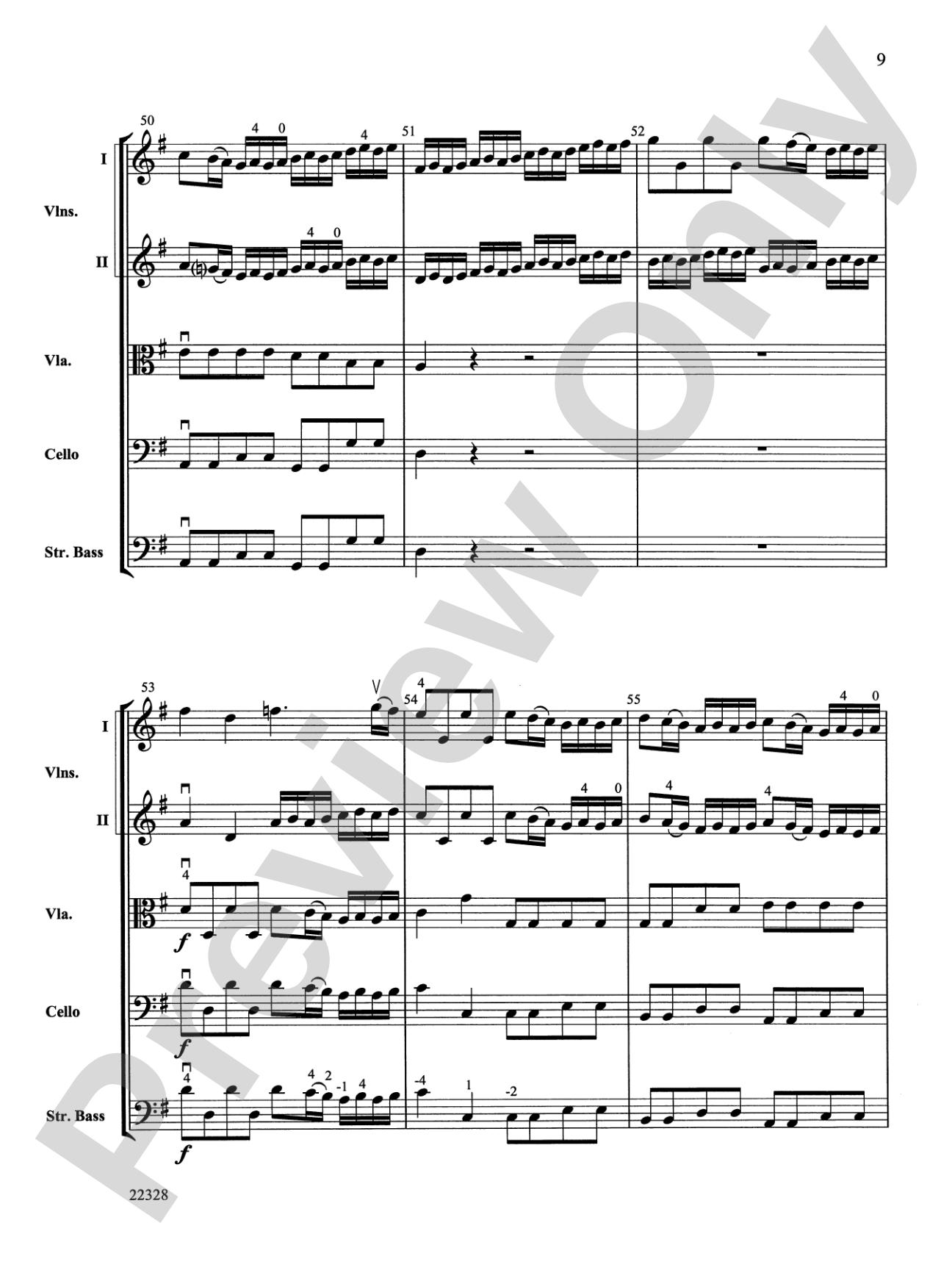
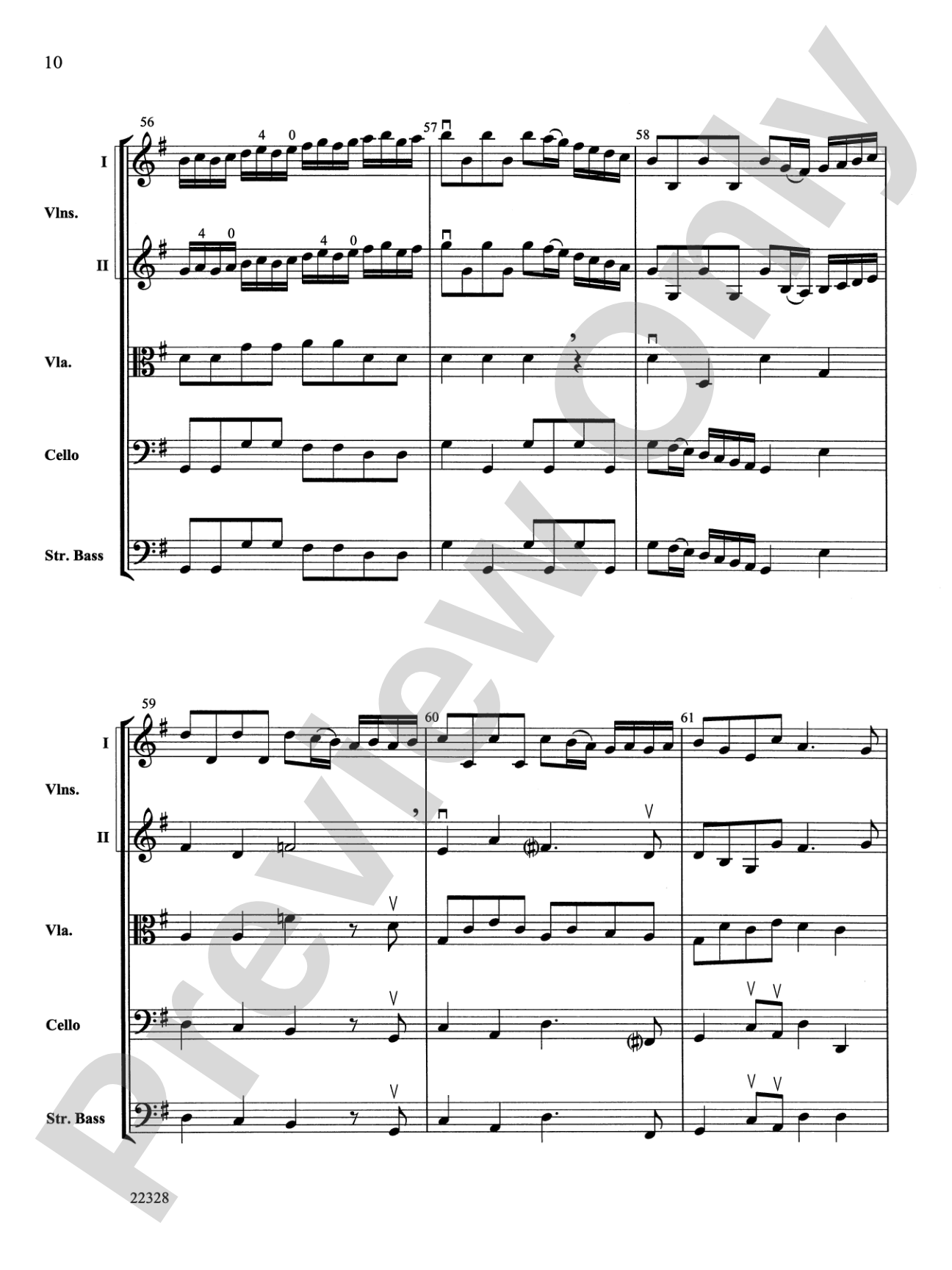
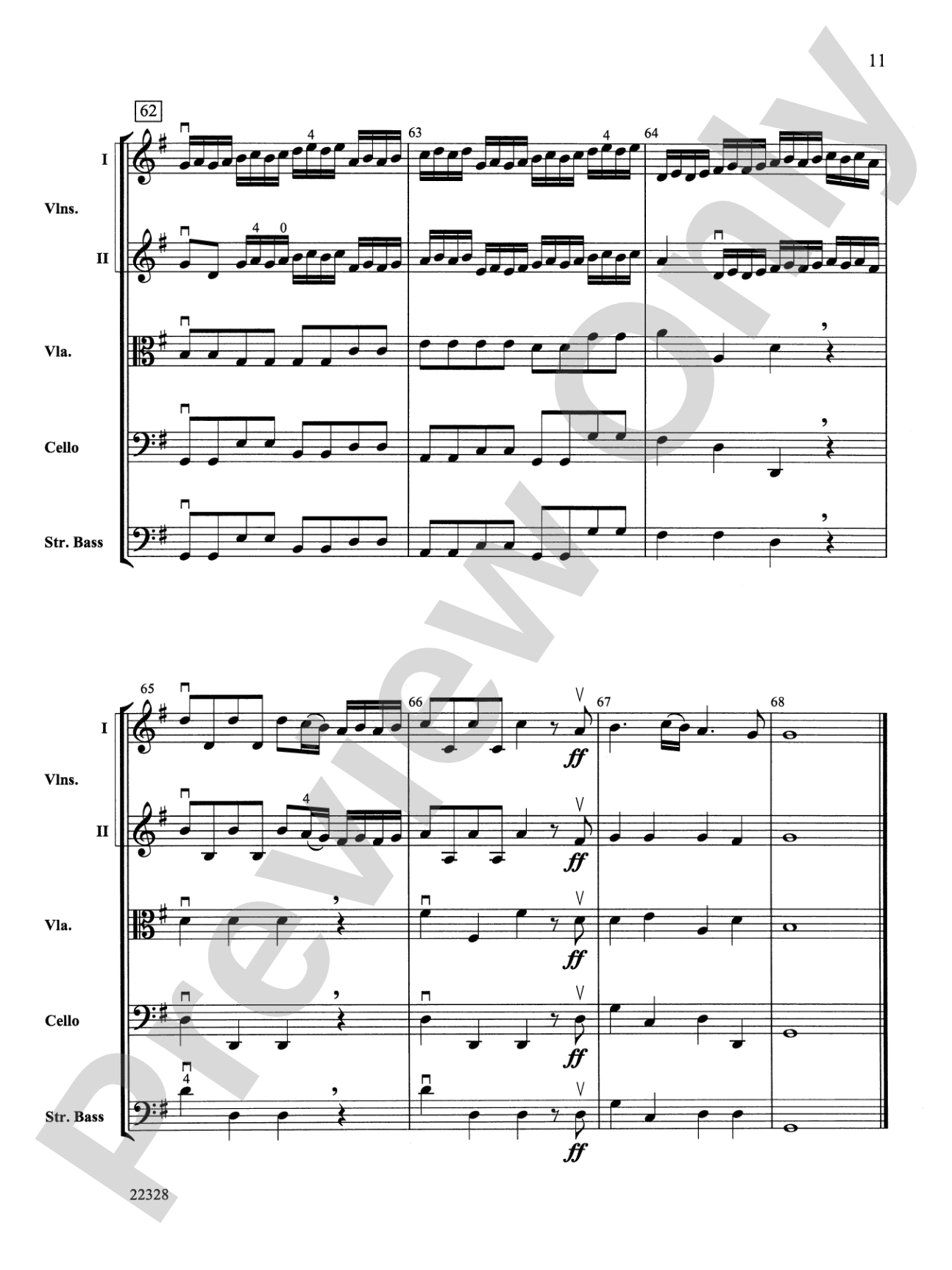


Overture from Alcina: String Orchestra Conductor Score & Parts
By George Frideric Handel / arr. Art Sheinberg
Grade: 3
Item: 00-PK-0000585

$55.00
Pickup currently not available
Buy Extra Parts (Digital PDF Download)
| Product | Price | Quantity |
|---|---|---|
| Overture from Alcina: Score | $9.00 | |
| Overture from Alcina: 1st Violin | $5.99 | |
| Overture from Alcina: 2nd Violin | $5.99 | |
| Overture from Alcina: Viola | $5.99 | |
| Overture from Alcina: Cello | $5.99 | |
| Overture from Alcina: String Bass | $5.99 |
Parts Added to Cart!
Description
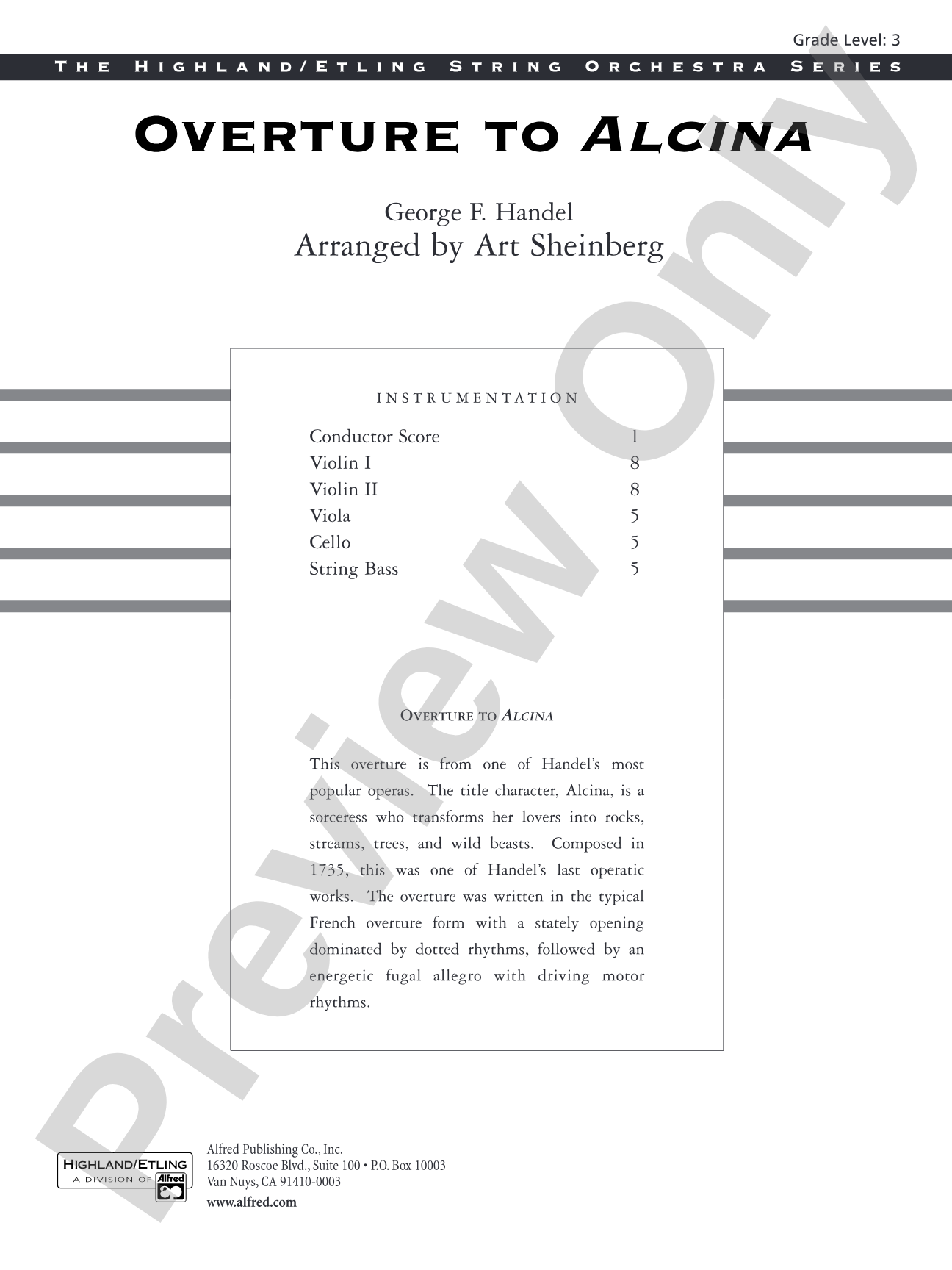
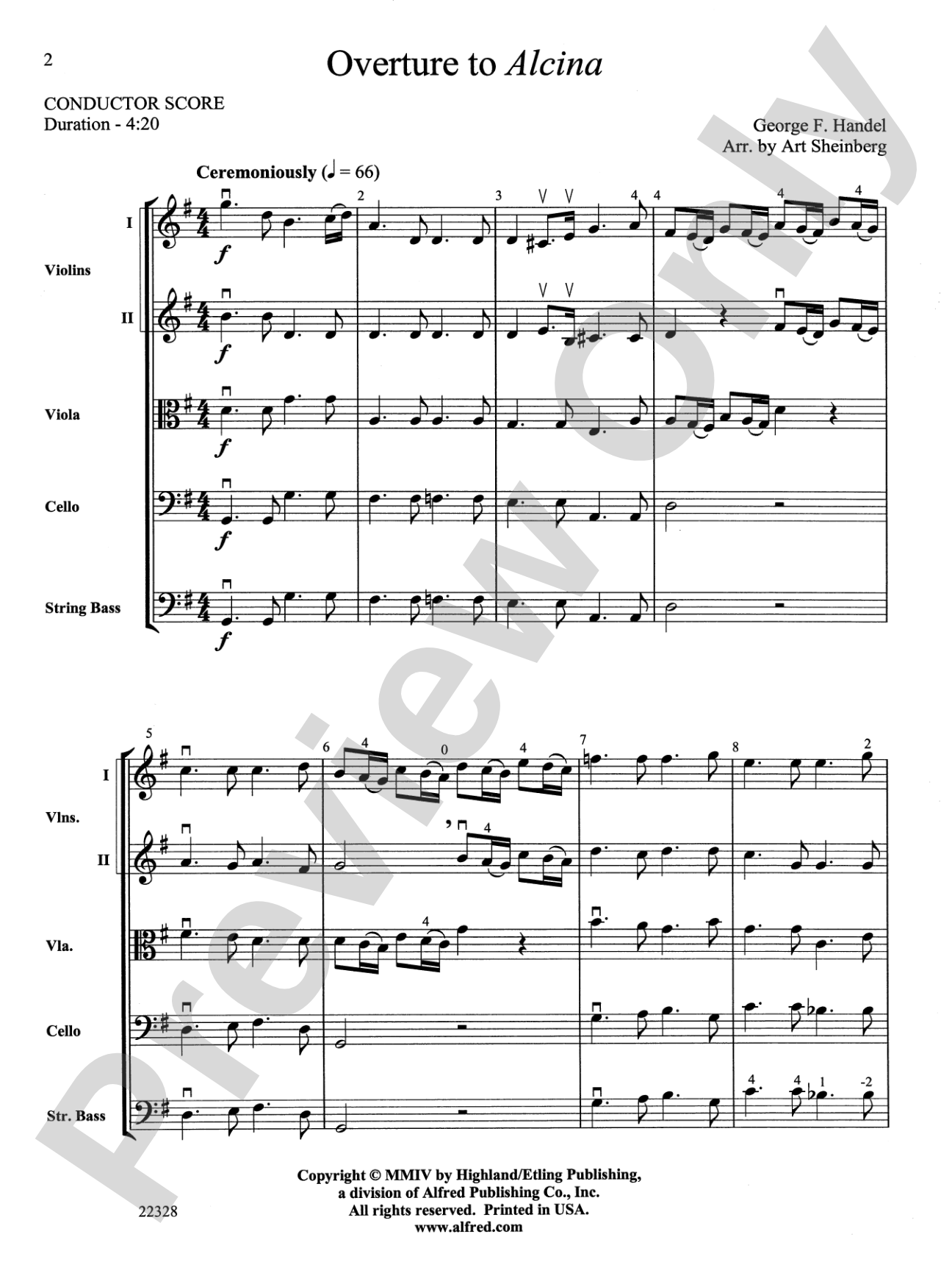
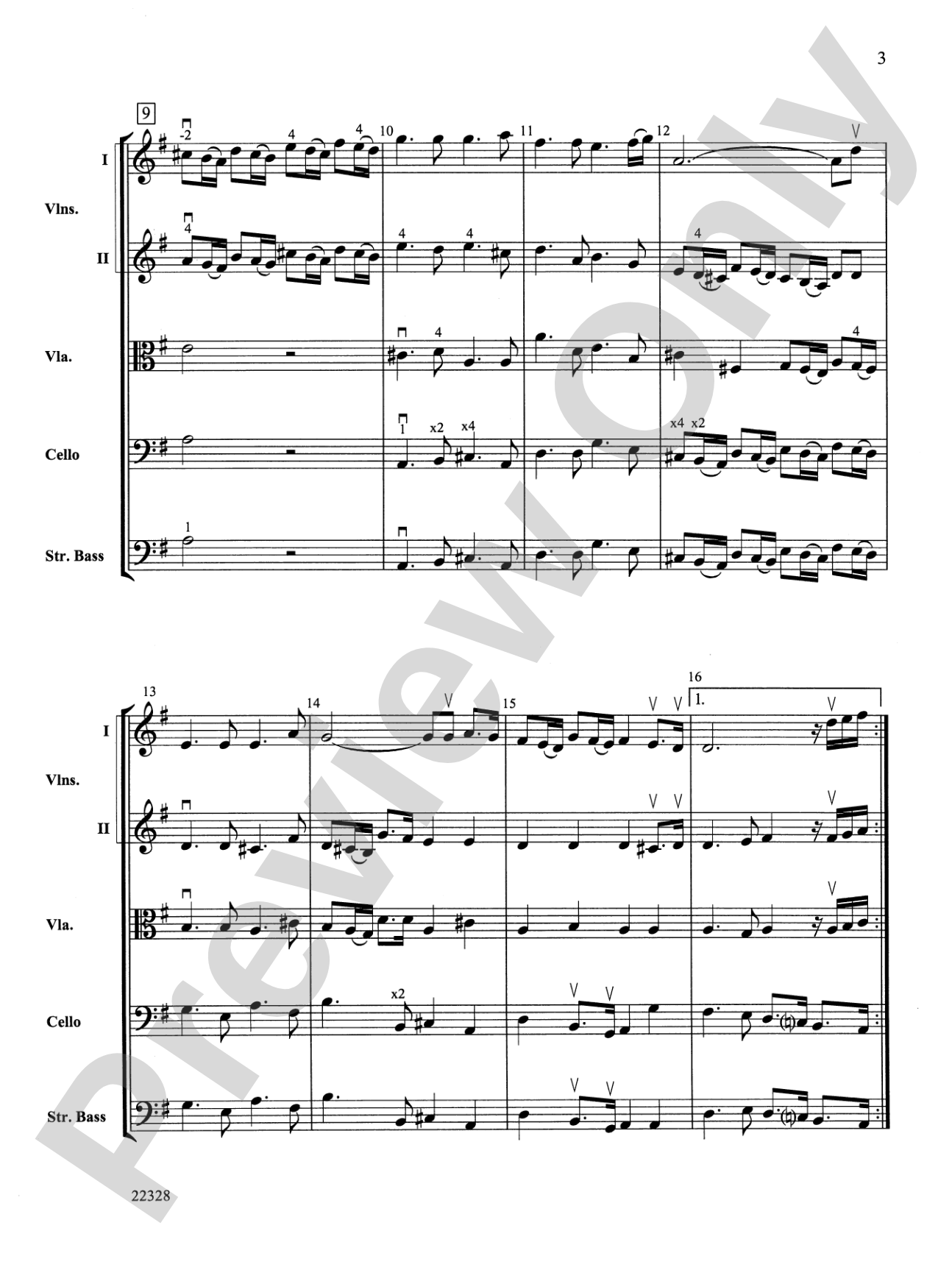
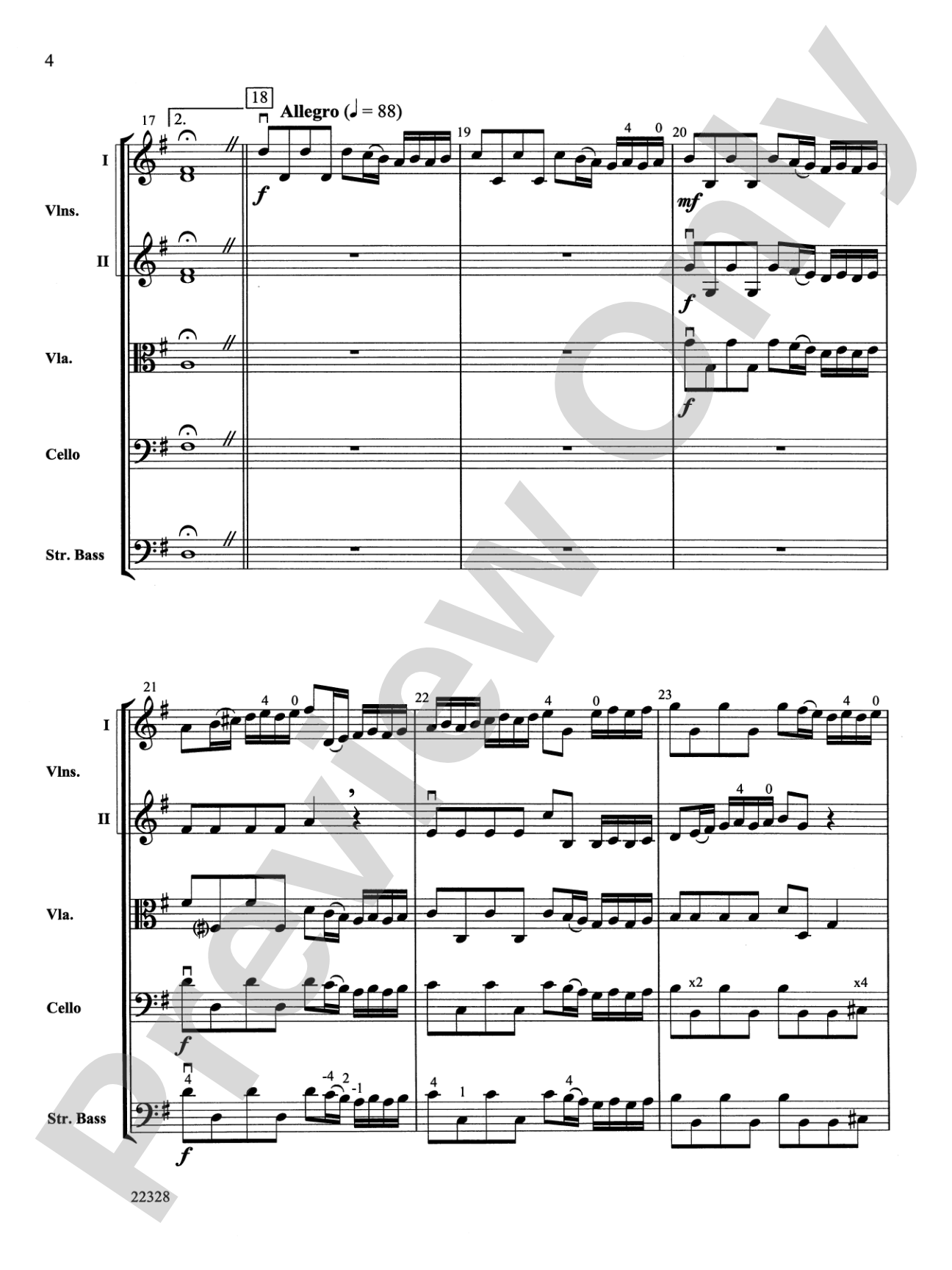
A gem from the Baroque, this Handel work is in the typical French Overture form, with a stately opening with dotted rhythms, followed by a fugal allegro. In G Major, this exhilarating work lies easily under the fingers and is a perfect introduction to Baroque bowing styles. All parts except bass are playable in first position. This title is available in MakeMusic Cloud.


Don't just read it, hear it, play along with it, and watch your students grow with it. In MakeMusic Cloud, Overture from Alcina: String Orchestra Conductor Score & Parts comes alive with professional accompaniment, adjustable tempo, and built-in practice tools that turn solo practice into real progress.
Open in the Player
Jump straight in and assign it today.
Start Your Free Trial
Open this title and explore the full library in minutes.
Sample Audio
1
Audio File
--:--
0:00
0:00
Sample Video
No sample videos found.
Additional Details
Series:
Highland/Etling String Orchestra
Publisher:
Alfred Music
Page Count:
124
SKU:
00-PK-0000585
More about this title
About the Composer: George Frideric Handel
George Frideric Handel (1685-1759) shaped the musical life of Baroque Europe through his mastery of both instrumental and vocal forms. Born in Halle, Germany, he spent much of his career in Italy and England, where he became the leading composer of opera and oratorio. His instrumental works, including the famous Water Music and Music for the Royal Fireworks, reveal a gift for memorable melody and structural clarity that made his music accessible to performers and audiences alike.
Handel's output was staggering in both quantity and quality. He composed over 40 operas, numerous concertos, and chamber works that remain performance standards today. His influence on music education extends beyond his masterworks; the clarity of his compositional voice, the architectural strength of his forms, and the singability of his melodies have made his works essential repertoire for developing musicians across centuries.
Why we love this
This arrangement captures the essence of French Overture form in a package that intermediate string orchestras can master without months of rehearsal. The opening dotted rhythms immediately establish Baroque character, while the fugal allegro provides genuine contrapuntal interest that challenges young musicians without overwhelming them. Programming a Handel masterwork signals musical literacy and gives students ownership of a work they'll recognize and respect.
What to expect
The opening Grave commands attention with its stately, processional quality; the dotted rhythms feel ceremonial and assured. When the fugal allegro erupts, the energy shifts to something brighter and more playful, with melodies tumbling across the ensemble in a conversation that feels both structured and alive.
Who it's for
String orchestras at the intermediate level (Grade 3) gain an immediate foothold in Baroque repertoire through this approachable Handel arrangement. The first-position writing for all parts except bass removes technical barriers, allowing students to focus on style, articulation, and ensemble balance rather than shifting and intonation challenges.
How to get the most out of it
- Shape the opening Grave with deliberate dotted rhythms; resist rushing the short notes that follow the dots, as this articulation defines the French Overture's courtly character.
- Bring the inner voices forward in the fugal section so the subject remains audible as it passes between parts rather than disappearing into accompaniment textures.
- Maintain rhythmic precision in the allegro without sacrificing the elegant phrasing that distinguishes Baroque style from mechanical accuracy.
- Balance the full ensemble sound in passages where all parts move together; the G Major key and first-position writing should sit easily, so any muddiness comes from over-enthusiastic vibrato or excessive bow pressure.
How to use it
Open a concert with this piece to establish a classical foundation, or pair it with later Romantic or contemporary works to create a historical arc. The relatively modest demands (Grade 3, straightforward key) make it ideal for mid-season programming when orchestras are performing regularly but before more demanding concerto-based repertoire arrives.
Skills your students will build
- French Overture style and dotted rhythm articulation
- Baroque bowing techniques and phrasing conventions
- Fugal voice leading and contrapuntal listening across ensemble parts
- Maintaining tempo and precision in quick allegro passages
- Ensemble balance when all parts move homophonically