
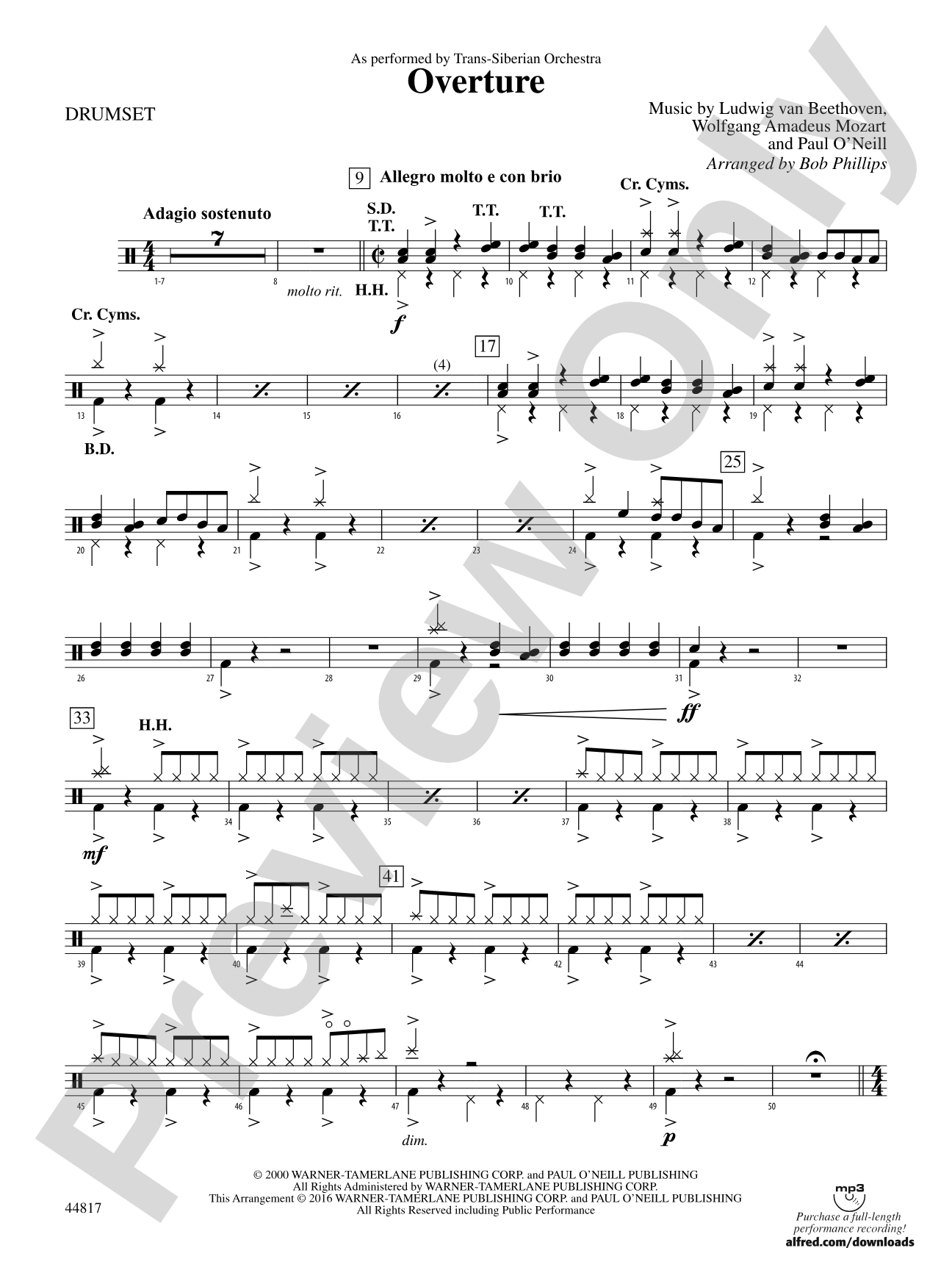

Overture: Drums
As Performed by Trans-Siberian Orchestra
Composed by Beethoven/Mozart / arr. Paul O'Neill / setting by Bob Phillips
Grade: 3
Item: 00-PC-0017334_D
$5.99
Pickup currently not available
Description
As performed by Tran-Siberian Orchestra, this playable arrangement by Bob Phillips will rock the stage at any concert! Students will love this energetic setting of classic Ludwig van Beethoven for string orchestra. An optional electric violin part provides the perfect spot to feature an electric instrument. (2:40) This title is available in MakeMusic Cloud.


Don't just read it, hear it, play along with it, and watch your students grow with it. In MakeMusic Cloud, Overture: Drums comes alive with professional accompaniment, adjustable tempo, and built-in practice tools that turn solo practice into real progress.
Open in the Player
Jump straight in and assign it today.
Start Your Free Trial
Open this title and explore the full library in minutes.
Sample Audio
1
Audio File
--:--
0:00
0:00
Sample Video
Additional Details
Series:
Pop Concert String Orchestra
Publisher:
Alfred Music
Page Count:
140
SKU:
00-PC-0017334_D
More about this title
About the Artist: Trans-Siberian Orchestra
Trans-Siberian Orchestra built their reputation on elaborate stage productions that blend classical music with rock and pop sensibilities. Founded in 1996, the group became known for their annual holiday tours and concept albums that introduced millions of listeners to orchestral arrangements of familiar songs, proving that strings and electric instruments could coexist powerfully on stage.
Their approach to arranging classical and contemporary material has made them invaluable to music educators seeking to engage students with repertoire that bridges concert hall traditions and modern popular music. The band's success demonstrates that orchestral music need not choose between artistic integrity and audience connection.
Why we love this
This arrangement captures the propulsive energy that made Trans-Siberian Orchestra's version so successful, and it does so while keeping the technical demands reasonable for a Grade 3 ensemble. The optional electric violin part gives you a genuine reason to feature that student or create a memorable solo moment without compromising the overall orchestration.
What to expect
Propulsive and dramatic, with moments of genuine grandeur alongside the rock-influenced swagger. The arrangement preserves Beethoven's harmonic language while wrapping it in contemporary energy, creating something that feels both substantial and accessible.
Who it's for
String orchestras at the intermediate level looking for a concert piece that genuinely excites students rather than simply checking off a programming box. Directors who want their students to recognize the music and feel invested in the performance will find the familiarity here works as a teaching asset, not a shortcut.
How to get the most out of it
- Treat the rhythm section as your foundation. The drive of this piece depends on tight coordination between the cellos and basses, so lock those parts early in rehearsals and return to them whenever ensemble clarity falters.
- If you're using the electric violin, run it through a solid amplification system during rehearsals so the ensemble can hear it at full volume. Players need to feel how it sits in the texture, not imagine it.
- Push the energy in the middle section without letting it fall apart. Grade 3 orchestras often struggle with maintaining precision when the tempo wants to lift, so use a click track during that transition.
- Balance the high strings against the lower parts. This arrangement works best when the melody doesn't disappear into a wall of sound.
How to use it
This works beautifully as a closer or as a bridge between traditional classical programming and more contemporary material. Consider placing it where you need both an audience draw and a confidence builder for your ensemble; the familiarity of the source material combined with the professional arrangement of a major touring ensemble sends a clear signal that your students are making real music.
Skills your students will build
- Reading parts in concert pitch with clear rhythmic precision
- Maintaining ensemble cohesion during tempo changes and dynamic shifts
- Balancing melody and accompaniment across the full string section
- Responding to the stylistic demands of rock-influenced orchestral writing
- Coordinating with optional electric instrument and amplified sound