
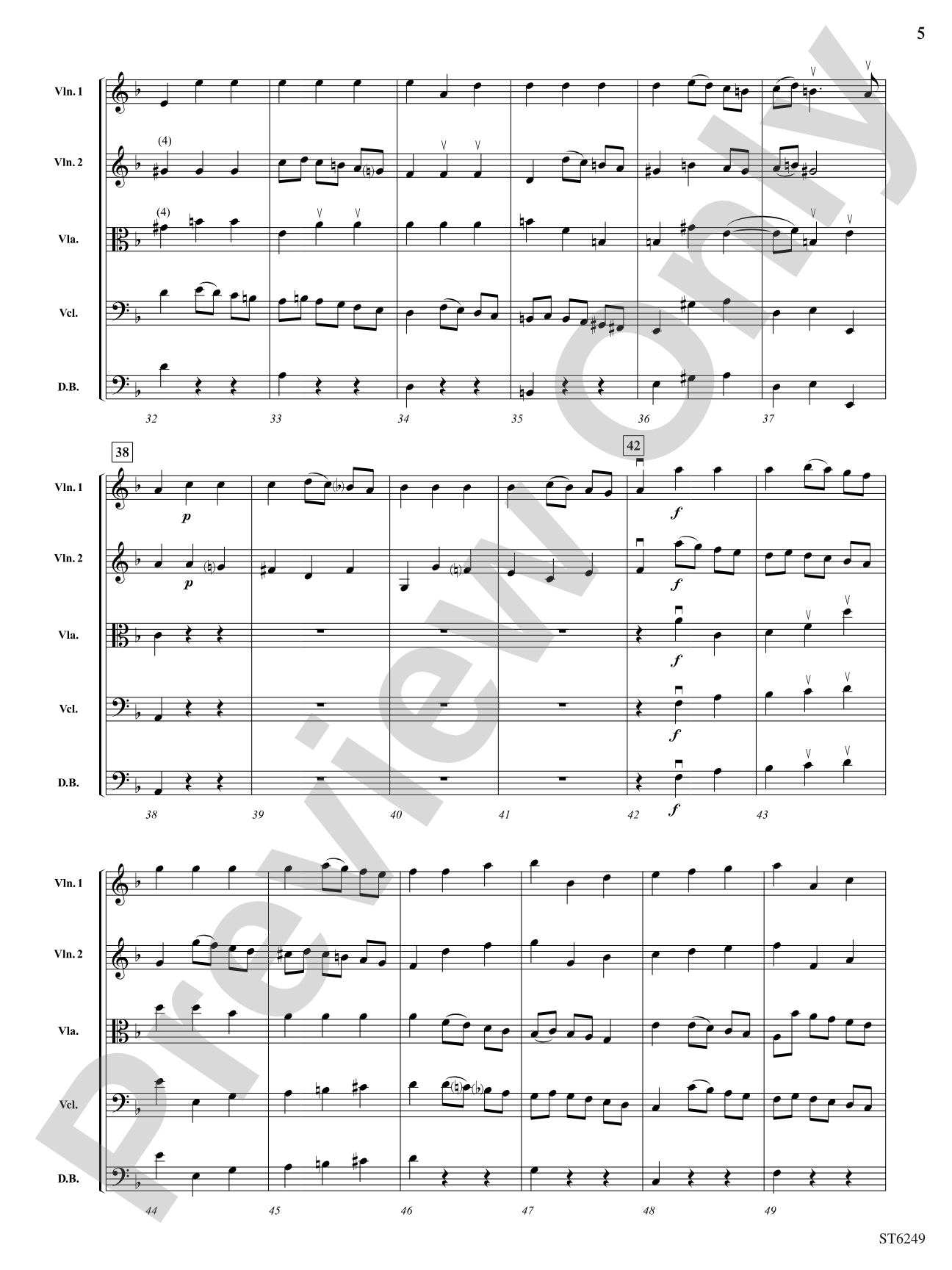
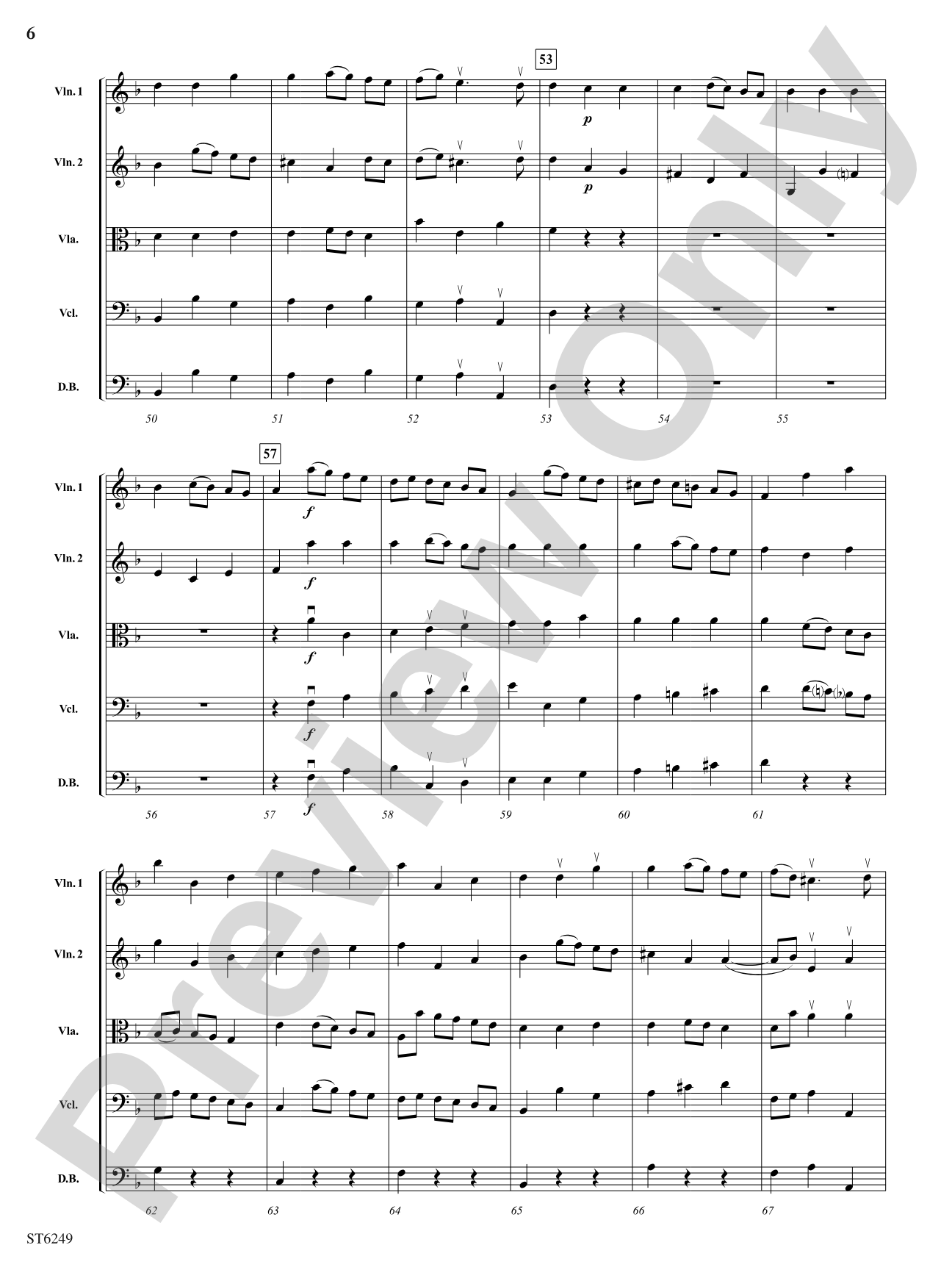
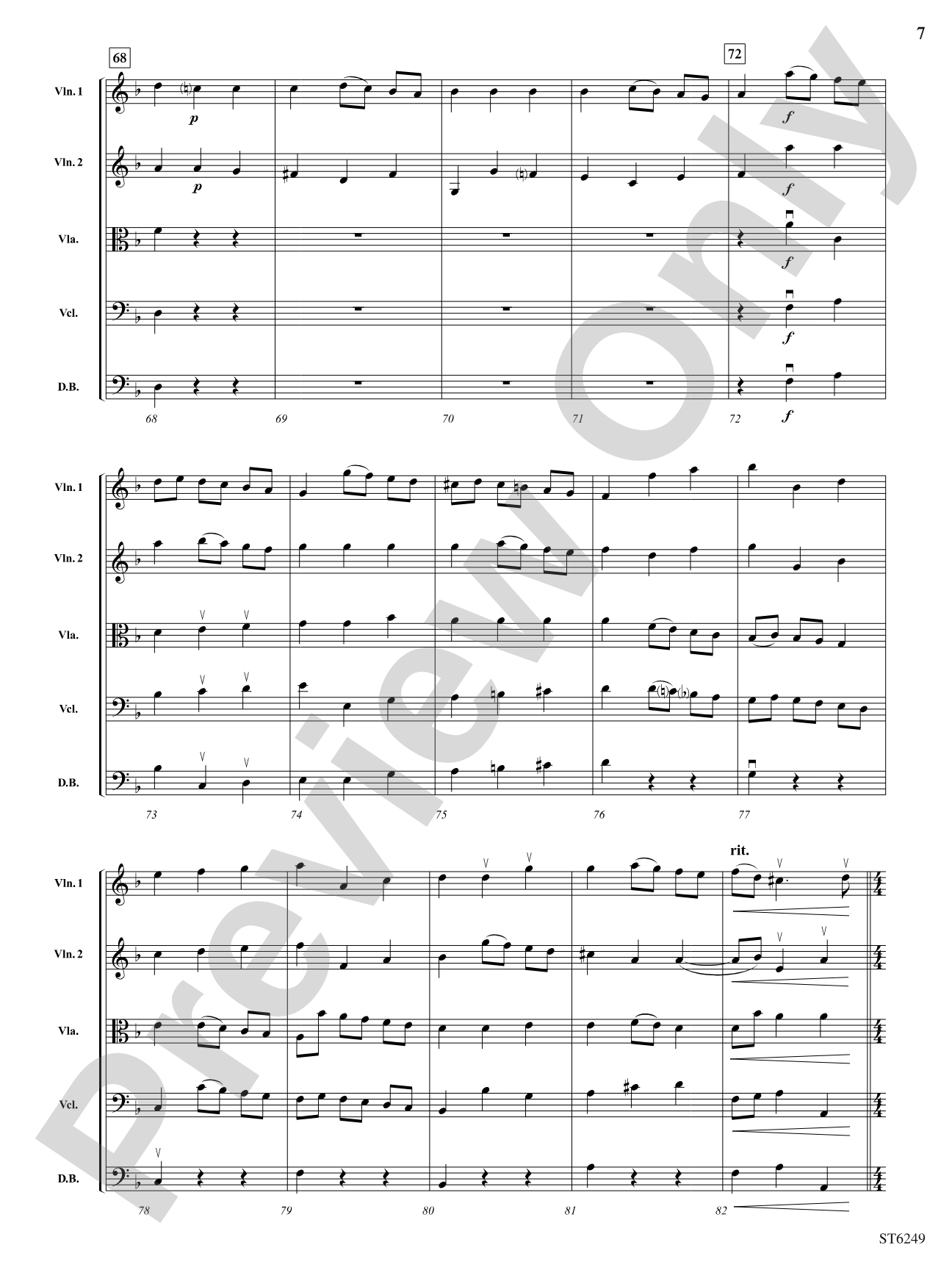
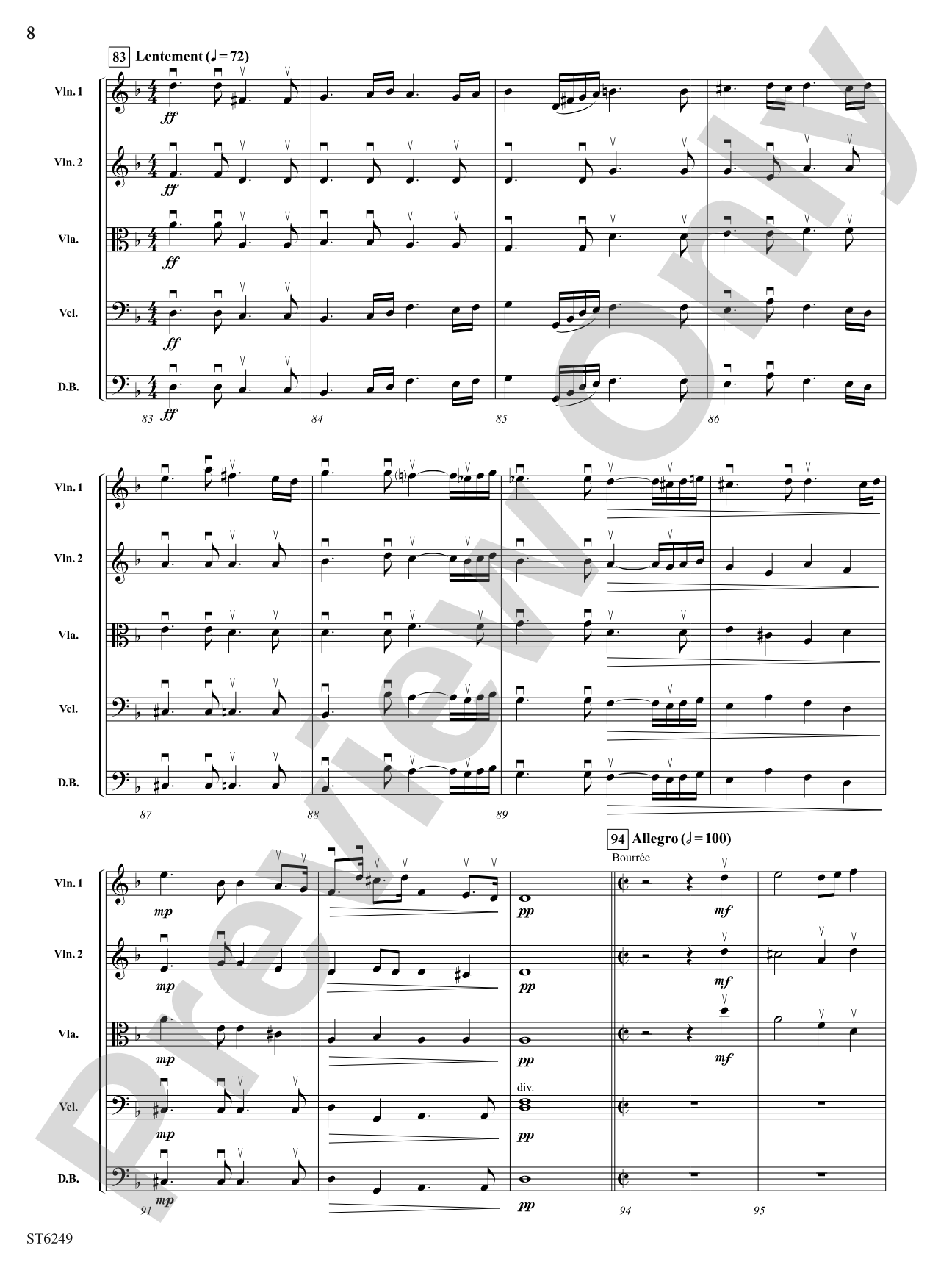
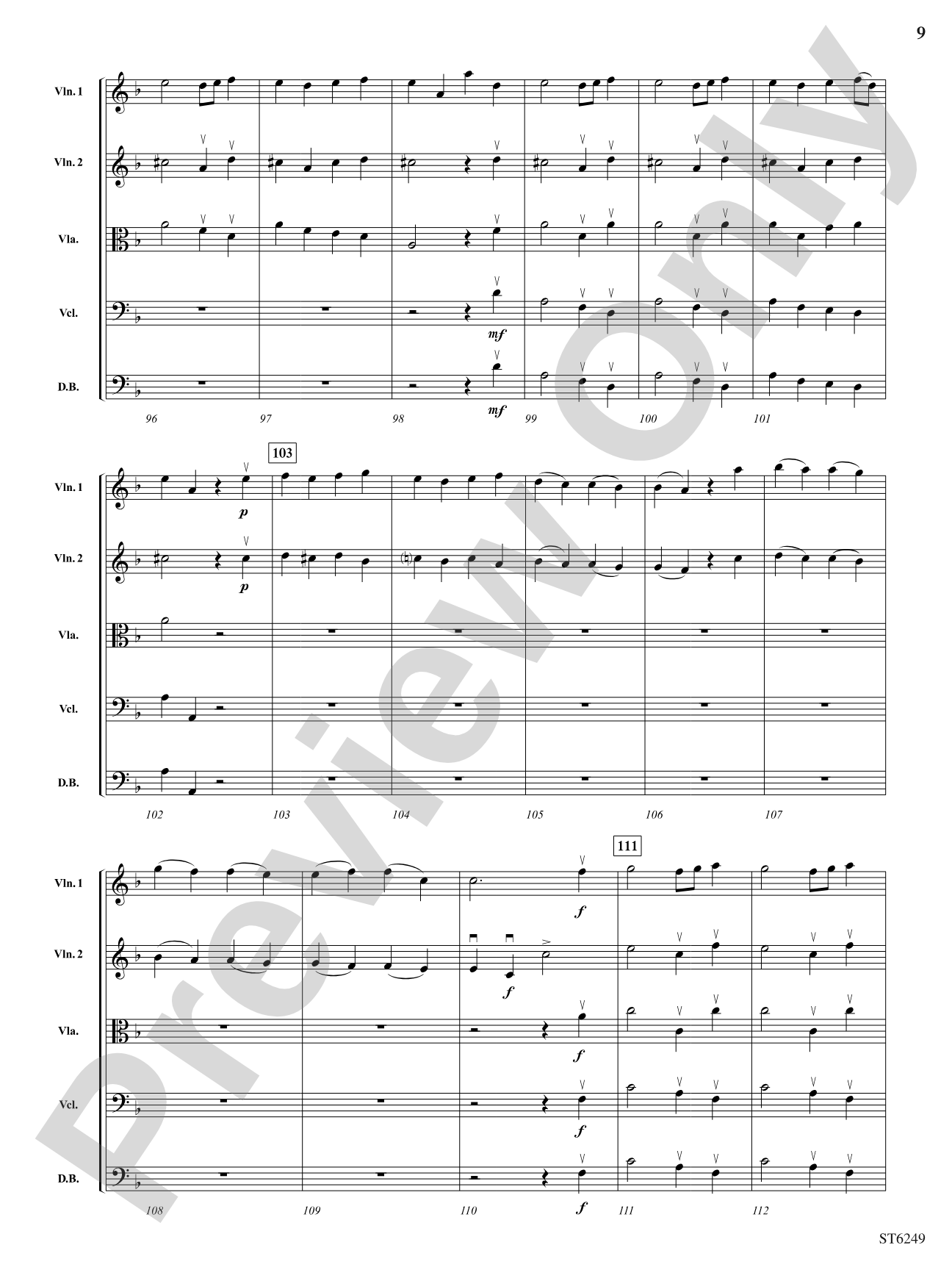
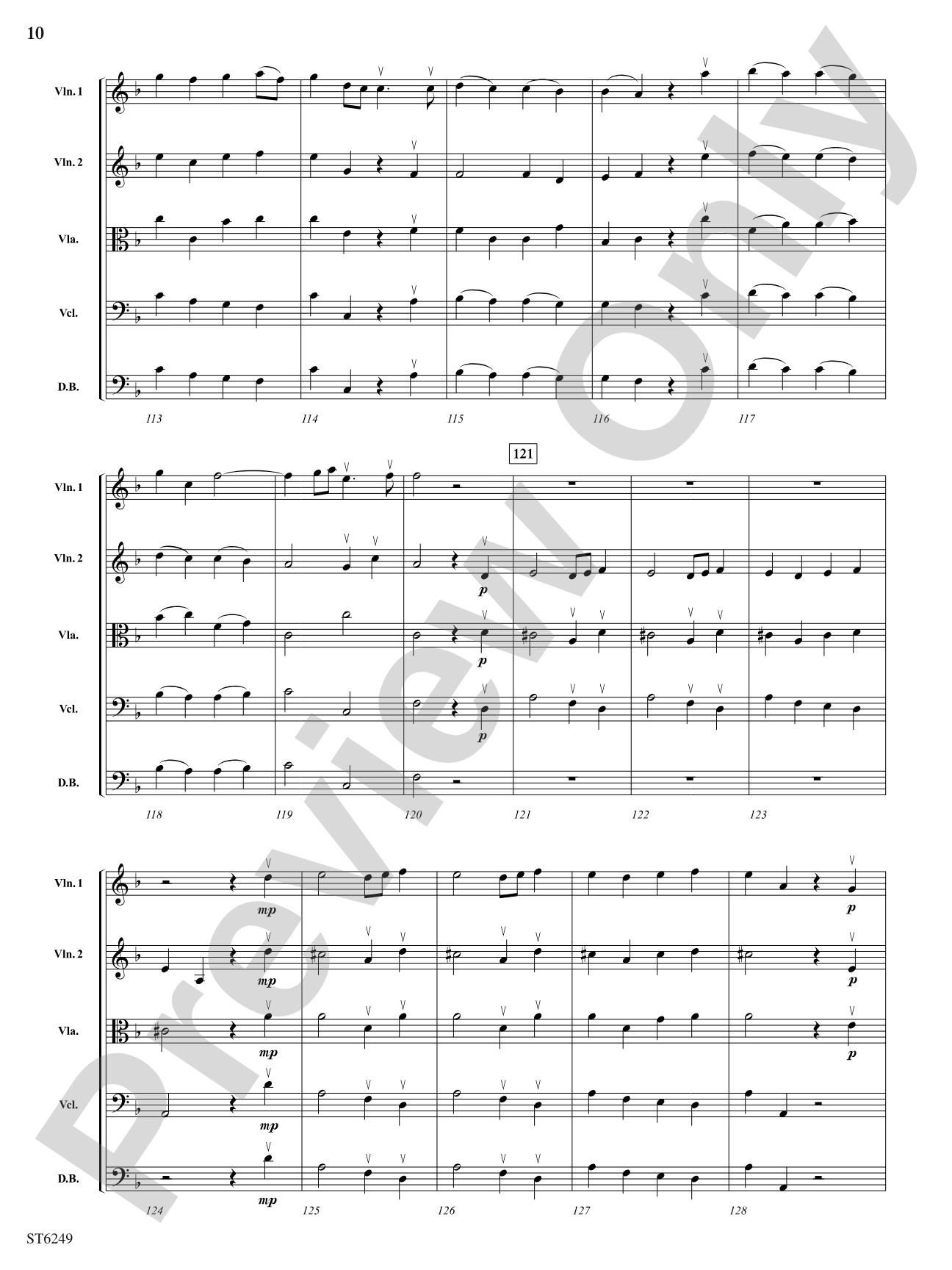
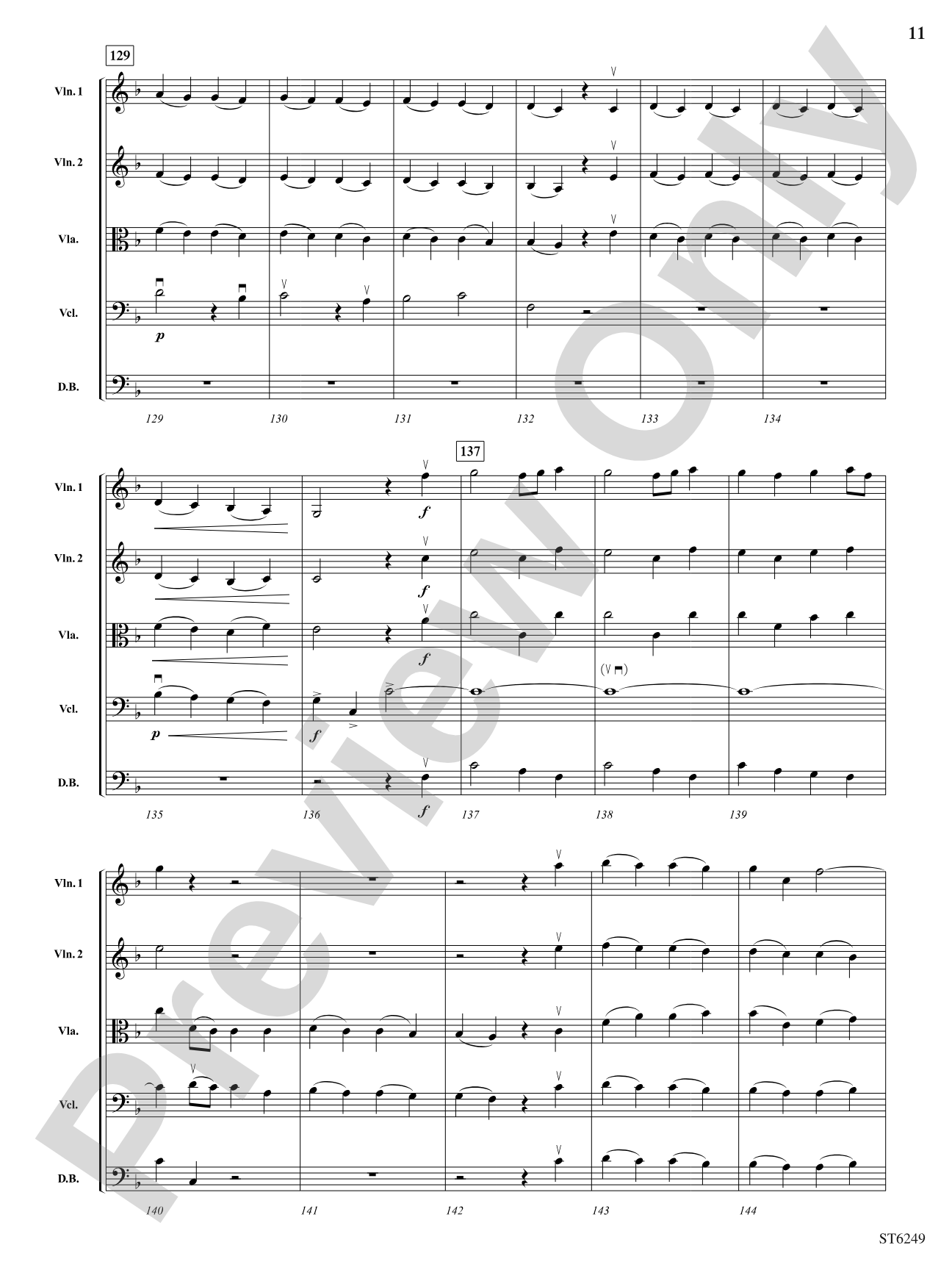
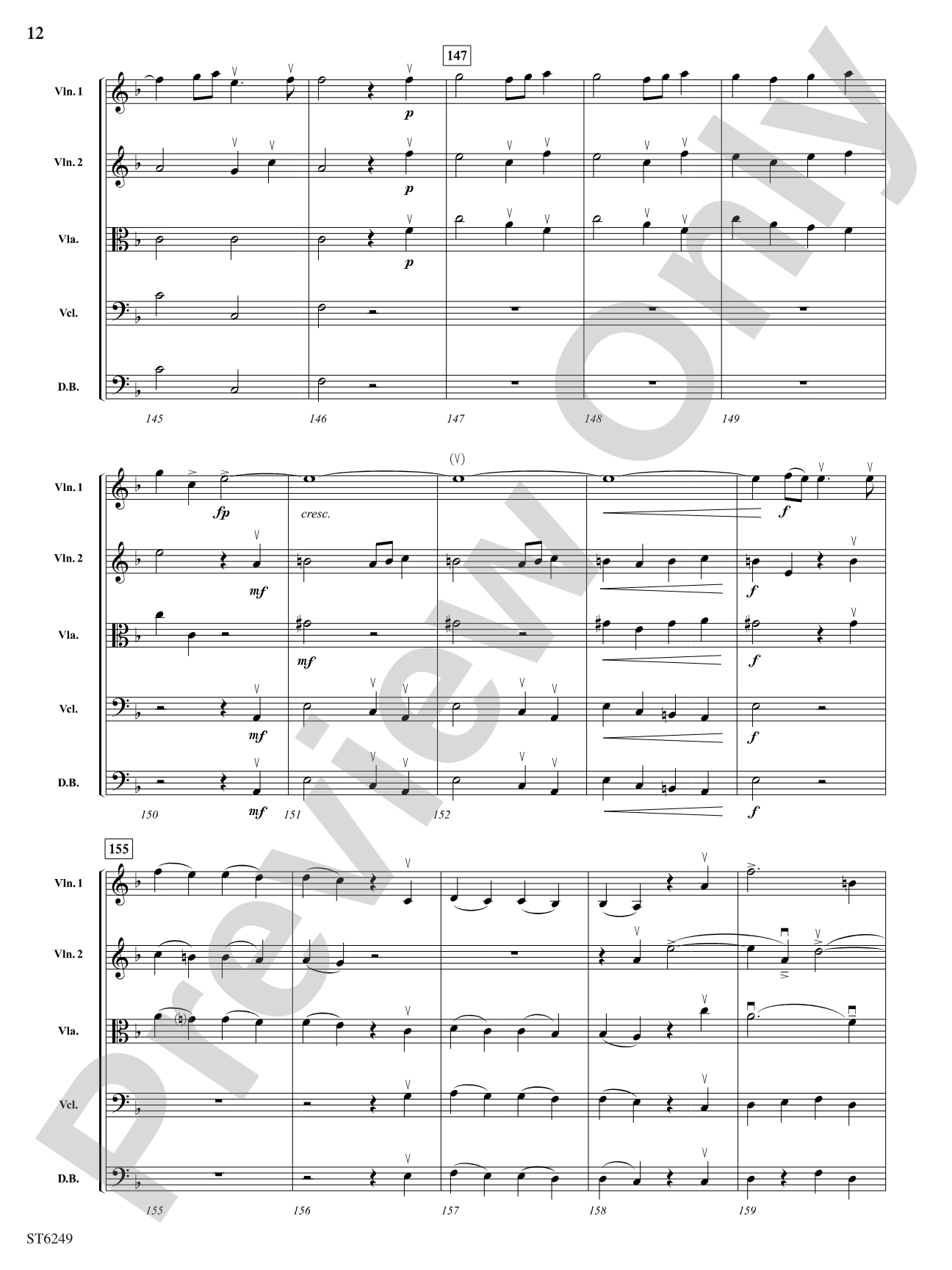
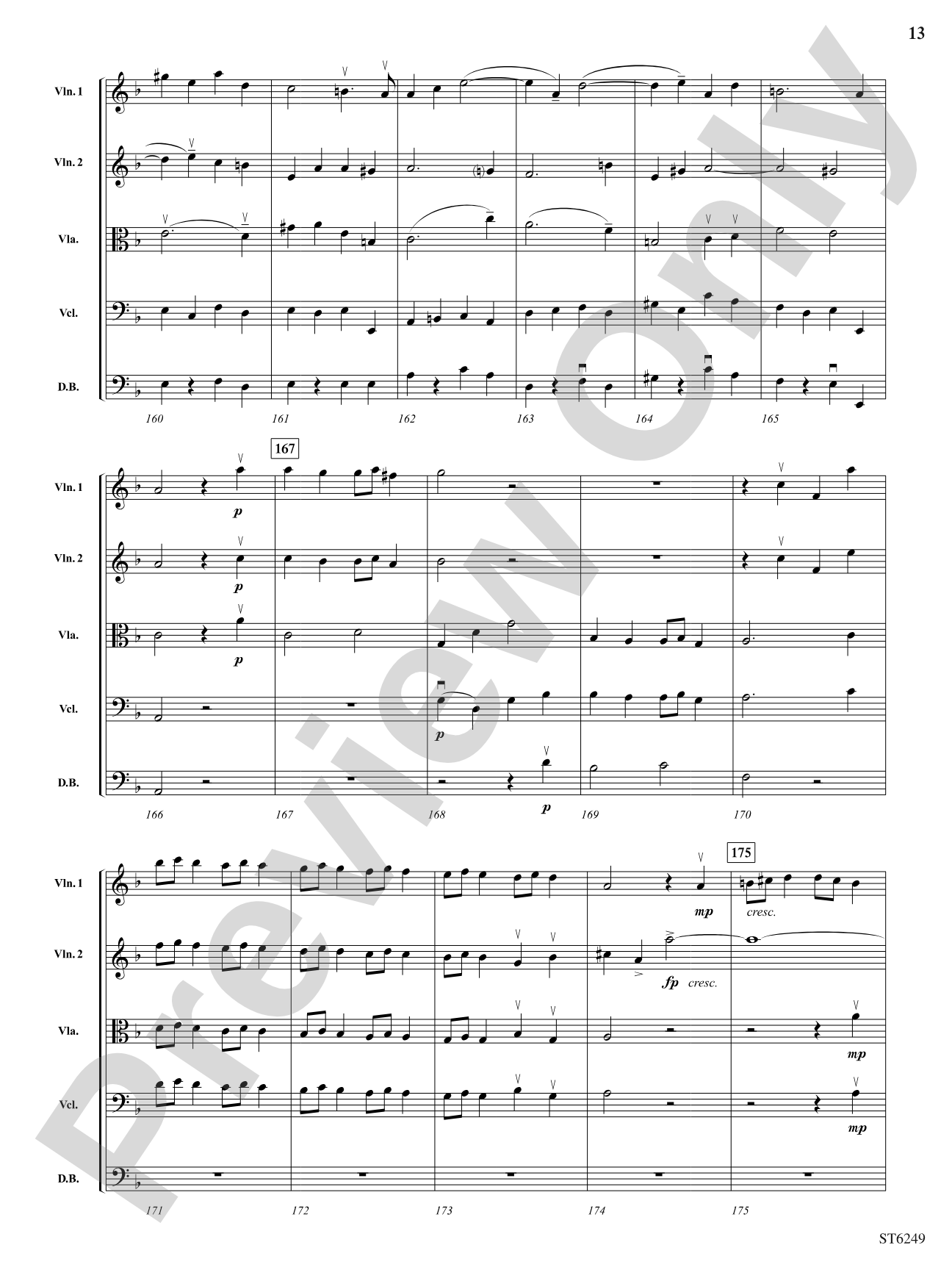
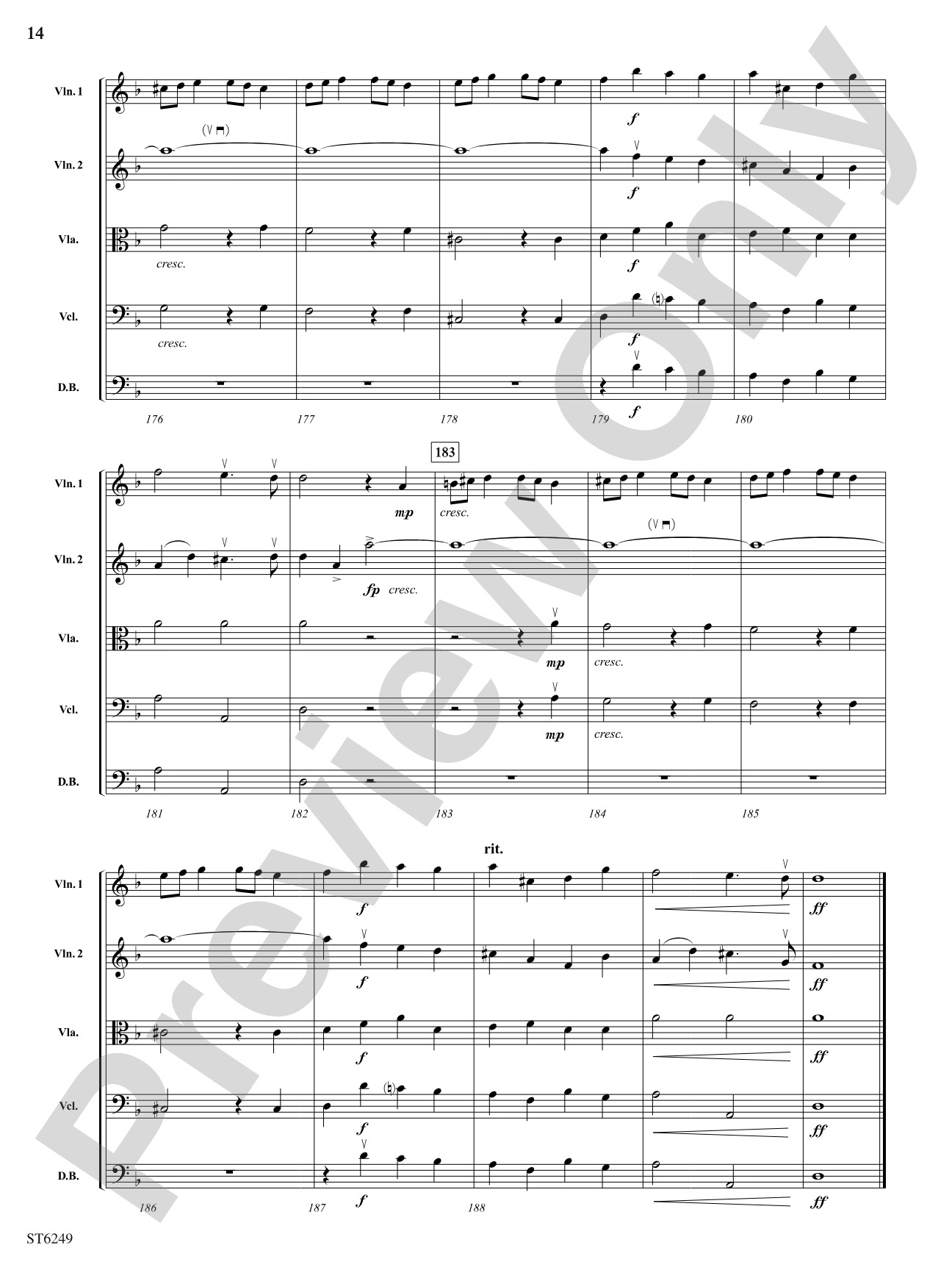

Overture and Bourree (from Il Pastor Fido): Score
from Il Pastor Fido
Arranged by Bob Lipton
Grade: 4
Item: 98-DST6249S
$5.00
Pickup currently not available
Description
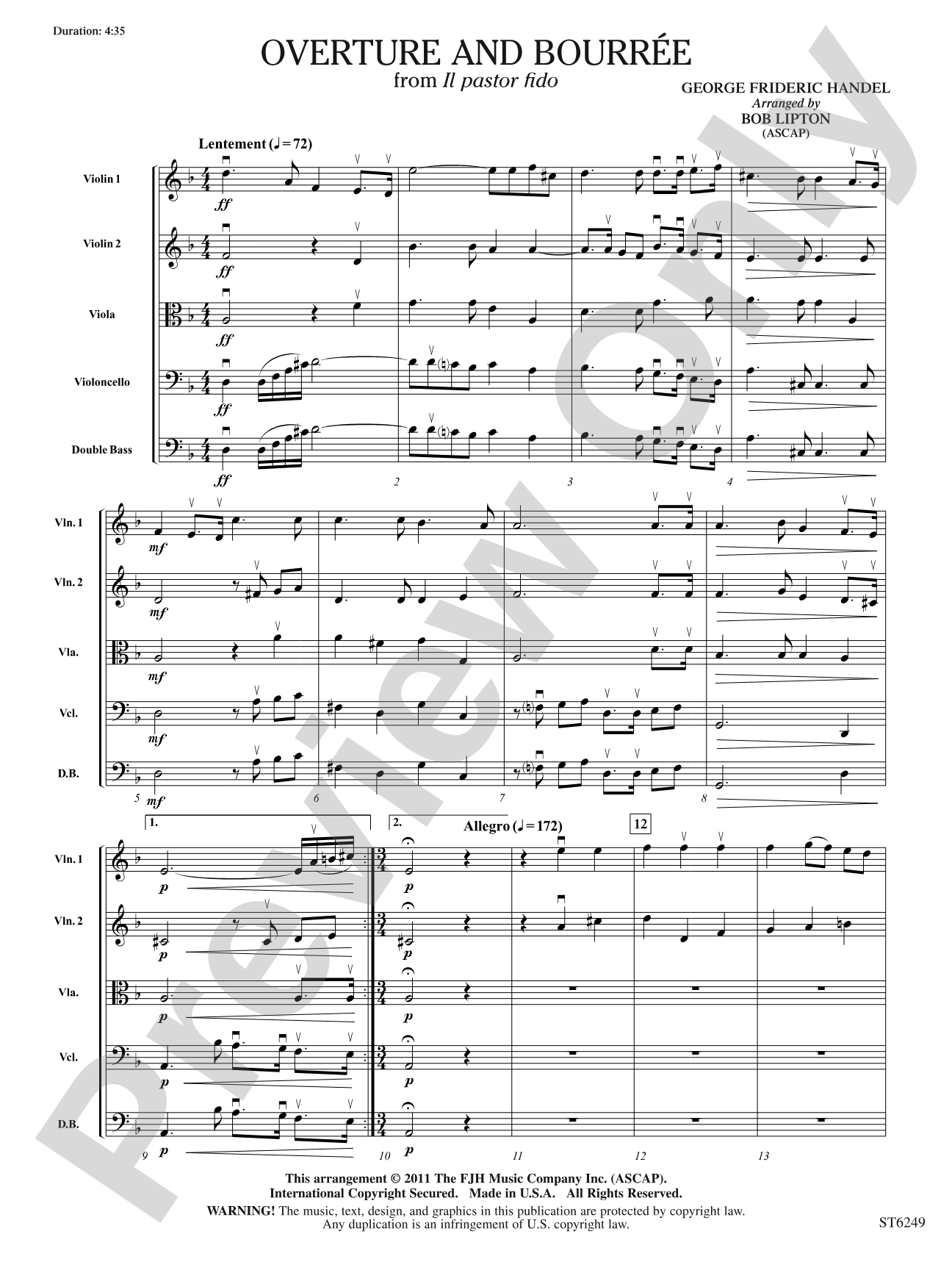
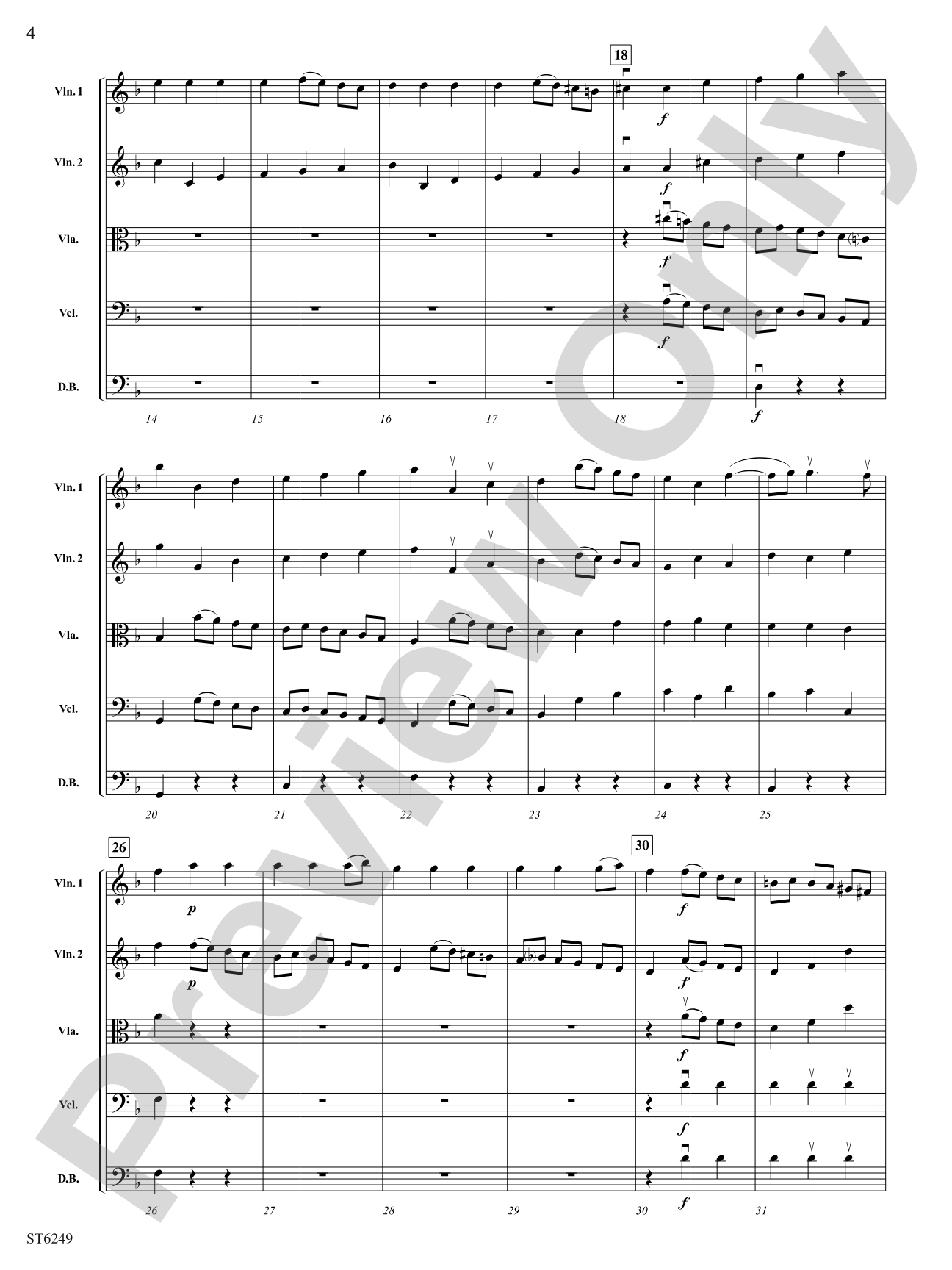
This exceptional arrangement from Handel's Il Pastor Fido is an outstanding study in Baroque style, technique and overall musicianship. Written to be very flexible, the piece can be performed in its entirety or you can focus on sections. In addition, you can feature soloists or play it with full ensemble. Regardless of how you approach it, this work is sure to be a welcome addition to your program.


Don't just read it, hear it, play along with it, and watch your students grow with it. In MakeMusic Cloud, Overture and Bourree (from Il Pastor Fido): Score comes alive with professional accompaniment, adjustable tempo, and built-in practice tools that turn solo practice into real progress.
Open in the Player
Jump straight in and assign it today.
Start Your Free Trial
Open this title and explore the full library in minutes.
Sample Audio
1
Audio File
--:--
0:00
0:00
Sample Video
No sample videos found.
Additional Details
Series:
FJH String Orchestra
Publisher:
The FJH Music Company, Inc.
SKU:
98-DST6249S
More about this title
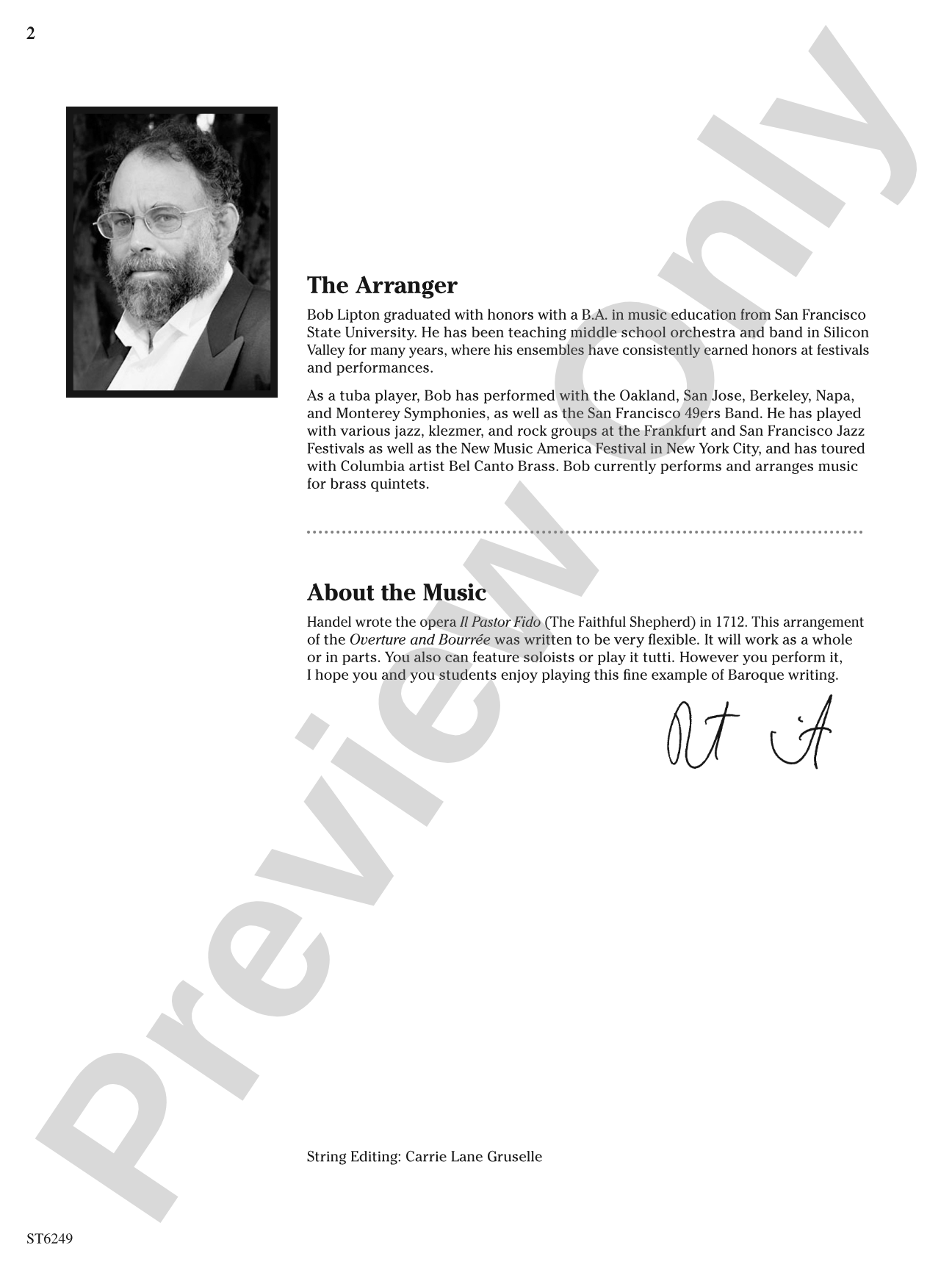
About the Arranger: Bob Lipton

Bob Lipton holds a B.M. in music education from San Francisco State University and has spent nearly two decades teaching middle school orchestra and band in Silicon Valley. His performance background spans classical, jazz, and popular music; he has appeared with regional symphonies across Northern California, performed at the San Francisco and Frankfurt Jazz festivals, and toured internationally with the Colombia Artists Bel Canto Brass.
As a tuba player and arranger, Lipton brings practical ensemble experience to his writing. His arrangements for school orchestras and bands reflect deep understanding of what student musicians can accomplish, and his work for brass quintet demonstrates facility across multiple genres and configurations.
Why we love this
Lipton's arrangement captures the elegance of Handel without overwhelming Grade 4 orchestras with technical demands. The built-in flexibility to perform complete or partial sections, feature soloists, or expand to full ensemble means you can adapt this to your ensemble's current level and your concert needs in real time.
What to expect
Handel's theatrical brilliance flows through this arrangement in elegant opening gestures and the spirited rhythmic propulsion of the Bourree. The writing balances formal sophistication with accessible technique, offering the textural clarity and rhythmic vitality that make Baroque string music so rewarding to play and hear.
Who it's for
String orchestras at the Grade 4 level working toward contest or festival performances. Directors who want to program substantial Baroque repertoire without requiring advanced technique can use this to build student musicianship across multiple movements.
How to get the most out of it
- Balance the outer voices in the Overture's opening; younger string players often bury the viola line when they should hear it as a harmonic anchor beneath the violins.
- If you program both movements, use the Overture's brighter character to establish the Baroque context before shifting into the Bourree's dance rhythm and lighter texture.
- Mark phrase endings clearly in rehearsal so players understand the architectural shape of each section; Baroque phrasing rewards clean releases that let harmony breathe.
How to use it
Feature this as a contest or festival entry where its two contrasting movements demonstrate range and musicality. It pairs well with contemporary or Romantic works on the same concert, grounding the program in historical style while honoring Handel's enduring appeal to young musicians.
Skills your students will build
- Baroque phrasing and articulation (clean attacks, shaped dynamics within measures)
- Reading and balancing multiple voice lines simultaneously
- Tempo and rhythm control in dance forms (Bourree metric precision)
- Dynamic contrast across movements (Overture brilliance versus Bourree elegance)
- Sectional independence and ensemble flexibility (full ensemble, soloists, or partial performance)