
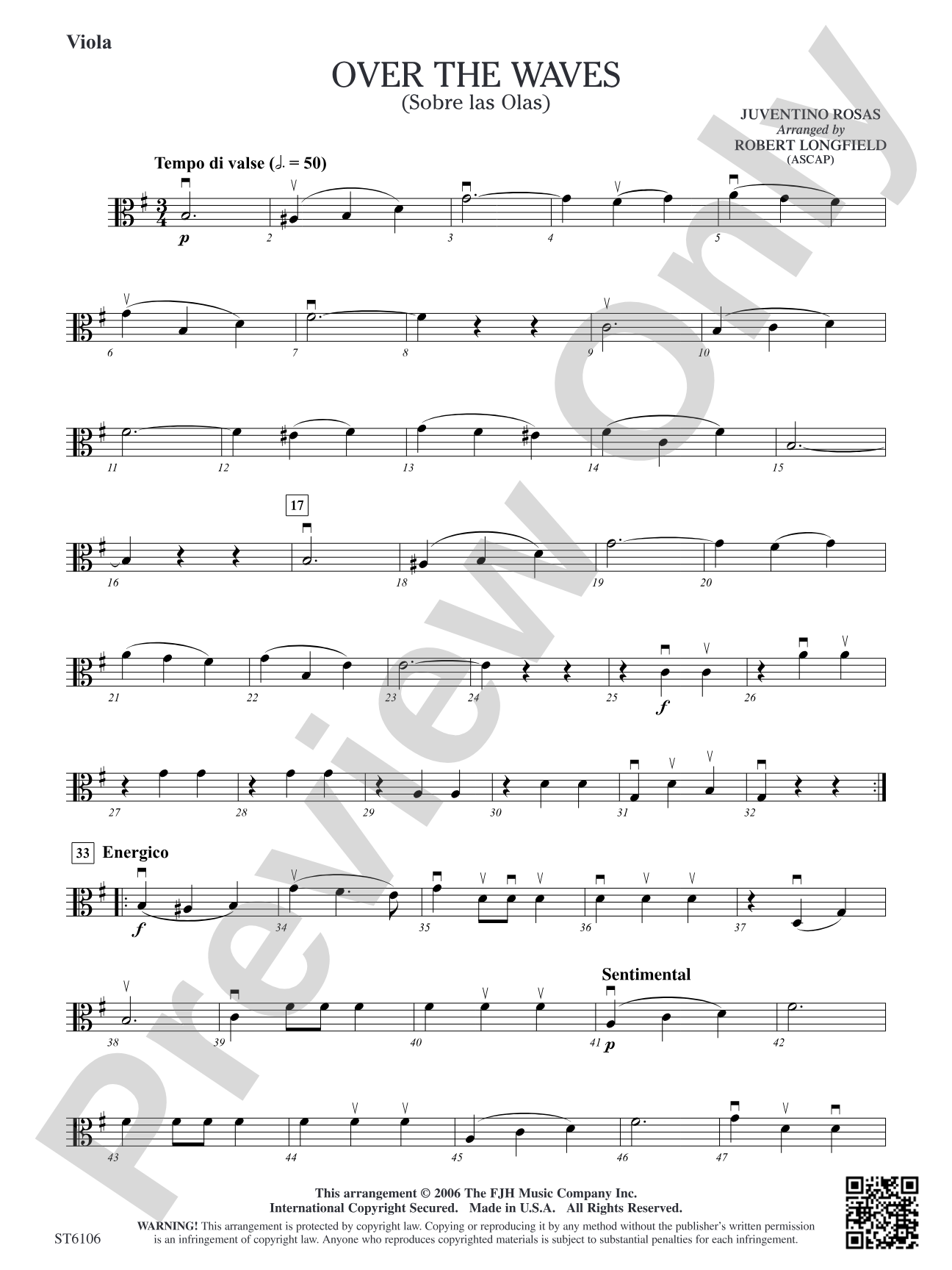

Over the Waves (Sobre las Olas): Viola
Sobre las Olas
By Juventino Rosas / arr. Robert Longfield
Grade: 2.5
Item: 98-PC-DST6106_VA1
$7.00
Pickup currently not available
Description
Over the Waves (Sobre las Olas) is the best known composition of Mexican composer Juventino Rosas. Written in a classical Viennese waltz style, this piece works exceptionally well for string orchestra. Audiences will love the familiar melodies set in an arrangement that will let your orchestra shine.


Over the Waves (Sobre las Olas): Viola isn't in MakeMusic Cloud just yet...but it could be. Let us know you'd like to see it, and you'll help shape what comes next. In the meantime, start a free trial and dive into thousands of interactive titles your students can play along with today.
Request This Title
Tell us you want it.
Start Your Free Trial
Explore everything that's ready to play right now.
Sample Audio
1
Audio File
--:--
0:00
0:00
Sample Video
No sample videos found.
Additional Details
Series:
FJH Developing Strings
Publisher:
The FJH Music Company, Inc.
SKU:
98-PC-DST6106_VA1
More about this title
About the Composer: Juventino Rosas
Juventino Rosas (1868–1894) was a Mexican composer and violinist whose brief but prolific career left an indelible mark on Latin American classical music. Born in Santa Cruz, Guanajuato, Rosas trained in Mexico City and became known for his ability to blend European classical forms with Mexican musical sensibility. His compositions include operas, orchestral works, and chamber music, but he remains best remembered for his waltzes, which captured the elegance and romanticism of 19th-century salon music.
Over the Waves stands as Rosas's most enduring work, beloved worldwide for its memorable melodies and graceful structure. Written in the Viennese waltz tradition that dominated concert halls across the Americas, this piece demonstrates his gift for crafting accessible yet sophisticated music. Though Rosas died at only 25 years old, his legacy lives on through this timeless composition, which continues to introduce new generations of students and audiences to the richness of Mexican classical composition.
Why we love this
Robert Longfield's arrangement respects the melodic strength of Rosas's original while tailoring it perfectly to developing string orchestras. The piece sits gratefully under young players' fingers and builds confidence through section writing that remains musically interesting without overextending technique. Audiences respond immediately to these iconic melodies, making it ideal for building program appeal while students develop their craft.
What to expect
Over the Waves floats with the elegance of a 19th-century ballroom, its lilting waltz melody instantly charming and accessible. The piece breathes warmth and sophistication without demanding virtuosity, allowing players to experience the satisfaction of performing a concert staple that audiences genuinely love to hear.
Who it's for
This arrangement suits Grade 2.5 string orchestras that have solid rhythmic foundation and comfortable left-hand position but are still building independence in the lower strings. It works equally well for youth orchestras, school programs, and community ensembles looking to add a recognizable masterwork to their repertoire.
How to get the most out of it
- Balance the waltz rhythm across the ensemble by rehearsing the accompaniment figures separately from the melody line; string orchestras often inadvertently bury the pulse in lower voices when parts are played together.
- Shape each phrase with a gentle swell rather than playing dynamically flat; waltzes come alive when violins lead the line and lower strings provide flexible, breathing support.
- Keep the tempo steady but not rigid; allow slight rubato at phrase endings to honor the romantic character without losing the 3/4 lift.
How to use it
This works beautifully as a concert opener or closer, particularly in spring performances when you want accessible, high-appeal programming. It pairs naturally with other Romantic-era light classics or multicultural works, and its modest technical demands make it ideal for showcasing ensemble blend and phrasing rather than individual virtuosity.
Skills your students will build
- Sustaining a waltz rhythm and sense of pulse in 3/4 time
- Balancing a melody line with independent accompaniment figures
- Shaping Romantic-era phrasing with dynamic flexibility and rubato
- Reading in multiple clefs and managing part coordination across the orchestra