
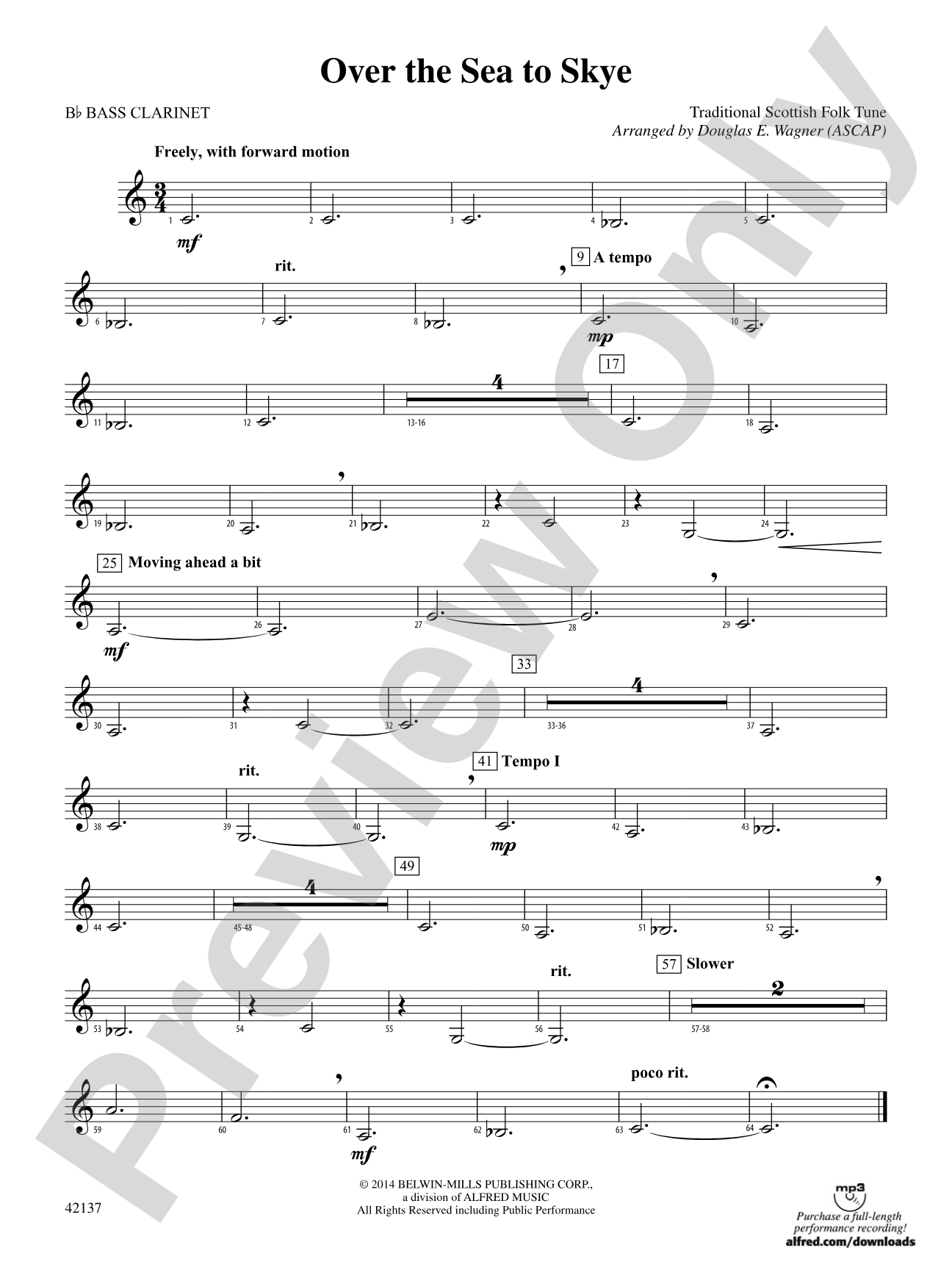

Over the Sea to Skye: B-flat Bass Clarinet
Traditional Scottish Folk Tune / arr. Douglas E. Wagner
Grade: 1 (Very Easy)
Item: 00-PC-0016517_BC
$3.00
Pickup currently not available
Description
This setting provides a rich tapestry of sound with the ability for your beginners to make real music. The traditional Scottish folk tune is scored in 3/4 time and should not pose any technical challenges for any beginning band. This charming ballad presents multiple teaching opportunities for dynamic contrasts, full value notes, and subtle tempo nuances. Most musical! (2:15) This title is available in MakeMusic Cloud.


Don't just read it, hear it, play along with it, and watch your students grow with it. In MakeMusic Cloud, Over the Sea to Skye: B-flat Bass Clarinet comes alive with professional accompaniment, adjustable tempo, and built-in practice tools that turn solo practice into real progress.
Open in the Player
Jump straight in and assign it today.
Start Your Free Trial
Open this title and explore the full library in minutes.
Sample Audio
1
Audio File
--:--
0:00
0:00
Sample Video
No sample videos found.
Additional Details
Series:
Belwin Beginning Band
Publisher:
Alfred Music
Page Count:
134
SKU:
00-PC-0016517_BC
More about this title
About the Arranger: Douglas E. Wagner

Douglas E. Wagner studied music at Butler University and spent three decades teaching and leading music programs in high schools before transitioning to full-time composition and arranging. Based in Indianapolis, he has become one of the most prolific composers in American music education, with more than 3,500 published works spanning concert band, choir, orchestra, handbell ensemble, organ, piano, and vocal music.
Wagner's output has reached an estimated seventeen million copies in circulation worldwide, with his music performed regularly in concert halls, on radio and television broadcasts, and at festivals across the United States and internationally. His work is distinguished by accessibility without sacrificing musical substance, a principle that has made his arrangements and compositions staples in school music programs for more than five decades.
Why we love this
Wagner writes beginning band music that refuses to sound like training material. This arrangement of the Scottish ballad gives young players genuine expressive choices without asking them to manage technical obstacles, so rehearsal time focuses on musicianship rather than mechanics. The scoring distributes the melody thoughtfully across the ensemble, ensuring that everyone plays a part that matters.
What to expect
Warm and nostalgic, this Scottish tune carries a gentle wistfulness that invites the band to play with intent rather than just accuracy. The 3/4 meter and simple harmonic language create a natural lilt, while the writing allows moments of quiet introspection and gentle swell that feel genuinely musical in young hands.
Who it's for
Beginning band conductors who want their students to experience genuine folk music arranged with care and respect for young players. Ensembles at Grade 1 level will find this both accessible and rewarding, offering early success in expressive playing without technical roadblocks.
How to get the most out of it
- Shape the melody line across sections; pass the tune between clarinets, saxophones, and trumpets to highlight its narrative arc and keep the texture fresh throughout the 2:15 duration.
- Establish a steady, singing quarter note pulse in 3/4 before rehearsing. The folk melody's beauty depends on a relaxed, unhurried tempo that lets the harmony breathe.
- Mark the dynamic shifts in pencil during preparation; even at Grade 1, the printed dynamics do real work in this piece, and students respond when they understand where the music softens or swells.
- Balance the lower voices carefully so the harmonic foundation supports the melody without covering it. Young trombones and low reeds often play louder than necessary in sustained chords.
How to use it
Pair this with other folk arrangements to build a concert around world traditions, or use it as an early-season piece when your band is still building technical confidence but ready to invest in tone production and phrasing. It also serves well as a closing number for a winter concert, leaving the audience with something lyrical and memorable.
Skills your students will build
- Dynamic control and contrast within phrase structures
- Sustaining full note values without rushing
- Listening to balance and blend across the ensemble
- Performing in 3/4 time with a singing, relaxed pulse
- Recognizing and interpreting subtle tempo nuances
- Passing melodic material between instrumental choirs