
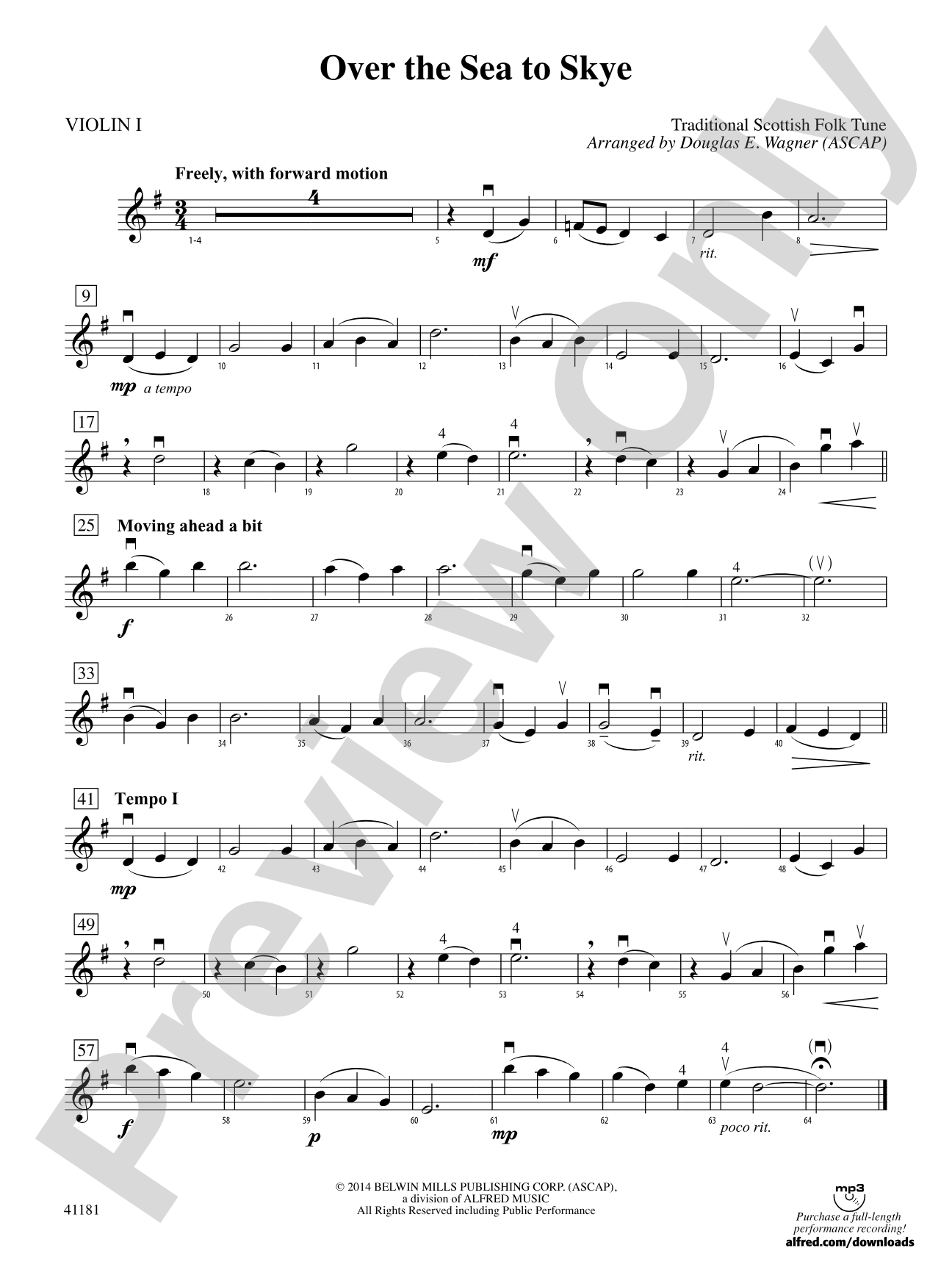

Over the Sea to Skye: 1st Violin
Traditional Scottish Folk Tune / arr. Douglas E. Wagner
Grade: 1.5
Item: 00-PC-0016309_VN1
$5.99
Pickup currently not available
Description
A warm and embracing low string sound throughout provides support to this ageless Scottish folk tune. The individual parts are easy to learn, with no subdivision of the beat and careful attention given to the needs of younger players. Focusing on independent lines to achieve a rich tapestry of sound, this setting will flatter an ensemble of any size. Here's a lovely ballad choice for concert or contest. (2:15) This title is available in MakeMusic Cloud.


Don't just read it, hear it, play along with it, and watch your students grow with it. In MakeMusic Cloud, Over the Sea to Skye: 1st Violin comes alive with professional accompaniment, adjustable tempo, and built-in practice tools that turn solo practice into real progress.
Open in the Player
Jump straight in and assign it today.
Start Your Free Trial
Open this title and explore the full library in minutes.
Sample Audio
1
Audio File
--:--
0:00
0:00
Sample Video
No sample videos found.
Additional Details
Series:
Belwin Beginning String Orchestra
Publisher:
Alfred Music
Page Count:
72
SKU:
00-PC-0016309_VN1
More about this title
About the Arranger: Douglas E. Wagner

Douglas E. Wagner has shaped music education across the United States through three decades as a high school music director and administrator before transitioning to full-time composition and arranging. Based in Indianapolis, Wagner holds degrees in music from Butler University and has become one of the most prolific composers working in educational music today, with over 3,500 published titles spanning choir, band, orchestra, handbell, organ, piano, and vocal music.
Since 1973, Wagner's music has reached far beyond the classroom. More than seventeen million copies of his works circulate globally, performed in concert halls and broadcast on radio and television across the United States and internationally. His background as a classroom teacher informs every score he writes, ensuring that music remains singable, playable, and musically rewarding for young musicians.
Why we love this
Wagner's hand here is unmistakable: he takes a beloved folk melody and clothes it in warm, independent string lines that sound far more sophisticated than the Grade 1.5 designation suggests. The low string foundation creates genuine resonance without asking young players to navigate rhythmic complexity, so your ensemble can focus entirely on blend, tone, and the satisfaction of contributing to something that sounds complete.
What to expect
A gentle Scottish breeze carrying a timeless melody, supported by a rich harmonic bed that feels both intimate and complete. The warmth of the low strings underneath creates a cradling effect, letting the tune soar without strain.
Who it's for
String orchestras at the beginning levels looking for repertoire that teaches musicality without overwhelming younger players. This arrangement welcomes developing ensembles of any size and works equally well in performance or contest settings.
How to get the most out of it
- Balance the melody against the supporting lines by rehearsing each voice separately first, then layering them gradually so students hear where their part fits in the overall tapestry.
- Shape the phrasing as you would a vocal ballad; small dynamic swells on longer notes and gentle releases between phrases will keep the tune from sounding stiff.
- Use the warm, singing quality of the low strings as your sonic anchor; encourage upper voices to listen for and match that tonal warmth rather than playing above it.
- Take time with the opening to establish the gentle character; resist the urge to rush, especially in the first phrase where students are still settling in.
How to use it
Program this as a concert ballad alongside more energetic selections to show your ensemble's range and depth of tone; it also makes an excellent contest choice for Grade 1.5 orchestras because it allows judges to hear genuine musicianship rather than technical difficulty. The two-minute-fifteen-second length fits naturally into mixed programs and serves as a perfect palate-cleanser between heavier works.
Skills your students will build
- Independent melodic and harmonic lines within a unified ensemble sound
- Sustained tone production and phrase shaping without complex rhythmic subdivision
- Listening and blending across different string registers
- Recognition of folk melody and arrangement techniques