Over the Rainbow (arr. Alison Crutchley) Sheet Music Preview

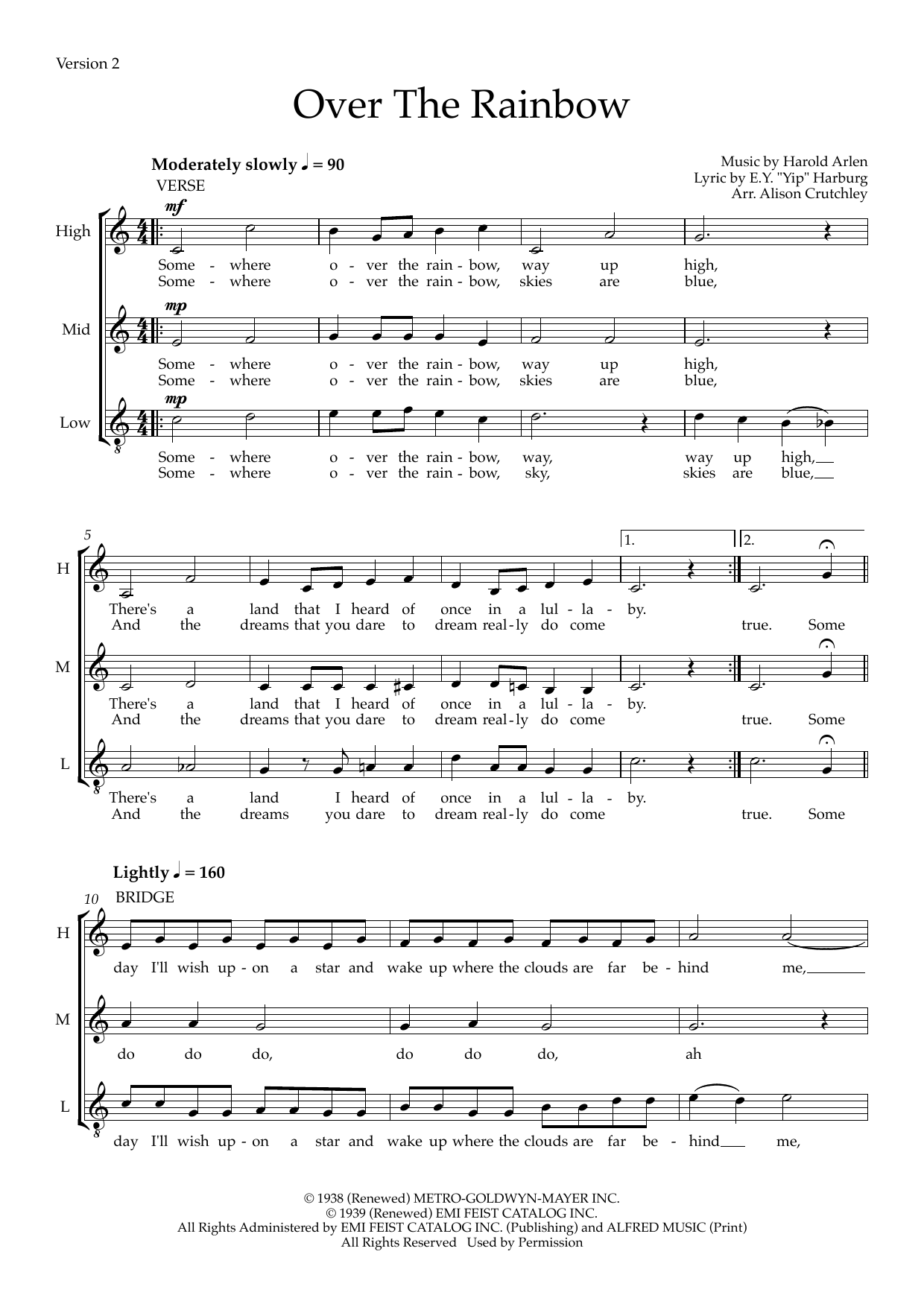
Over the Rainbow (arr. Alison Crutchley): SAA Choral Octavo

As performed by Judy Garland / Arranged by Alison Crutchley

Item: 35-DS00495792

Digital Download
$1.99
Description

Over the Rainbow (arr. Alison Crutchley): SAA Choral Octavo isn't in MakeMusic Cloud just yet...but it could be. Let us know you'd like to see it, and you'll help shape what comes next. In the meantime, start a free trial and dive into thousands of interactive titles your students can play along with today.

Sample Audio
No sample audio found.
Sample Video
Additional Details
Publisher: Hal Leonard
Page Count: 2
SKU: 35-DS00495792

More about this title

About the Artist: Judy Garland

Judy Garland's voice became synonymous with optimism and emotional depth throughout a career spanning vaudeville, film, and concert performance. Her 1939 rendition of "Over the Rainbow" from The Wizard of Oz established the song as an American standard and showcased her gift for delivering sentiment without sentimentality.

Garland's interpretive approach emphasized clear diction and natural phrasing, qualities that made her recordings invaluable reference material for vocalists and arrangers. Her influence on popular music pedagogy extends to how singers approach vulnerability and storytelling within a melody.

Why we love this

Alison Crutchley's SAA voicing transforms this iconic melody into an accessible arrangement that doesn't require tenors, making it practical for many school and community choirs. The arrangement respects the song's emotional core while creating genuine three-part writing that keeps every voice engaged and meaningful.

What to expect

Warm and wistful, with the familiar melody carrying listeners through a landscape of gentle harmonic support. The SAA voicing creates a bright, unified sound that captures both the optimism and the longing at the heart of this American classic.

Who it's for

This arrangement serves choirs seeking approachable but genuine repertoire for holiday concerts, pops programs, or community performances. It works equally well for treble choirs with limited tenor options or mixed ensembles wanting a lighter moment in a program.

How to get the most out of it

  • Shape the phrase lines through vowel weight and breath placement rather than dynamic swells. This keeps the arrangement floating and prevents the piece from feeling heavy.
  • Balance the melody against supporting parts by thinking of the altos and second sopranos as harmonic color rather than background. Each voice should feel present.
  • Allow space for the melody to breathe at phrase endings. Resist the urge to rush into the next phrase, especially in the bridge.

How to use it

Place this after a more challenging contemporary work to give audiences a moment of recognition and comfort. Its brevity (two pages) makes it ideal for filling a program slot while requiring minimal rehearsal investment, or pair it with other film standards for a nostalgic concert segment.

Skills your students will build

  • Maintaining legit tone in upper register while sustaining longer phrases
  • Blending three-part harmony without doubling or unison crutches
  • Shaping a well-known melody to avoid predictable phrasing and cliché
  • Reading and balancing independent vocal lines in close harmony

You May Also Like