Over the Rainbow Sheet Music Preview

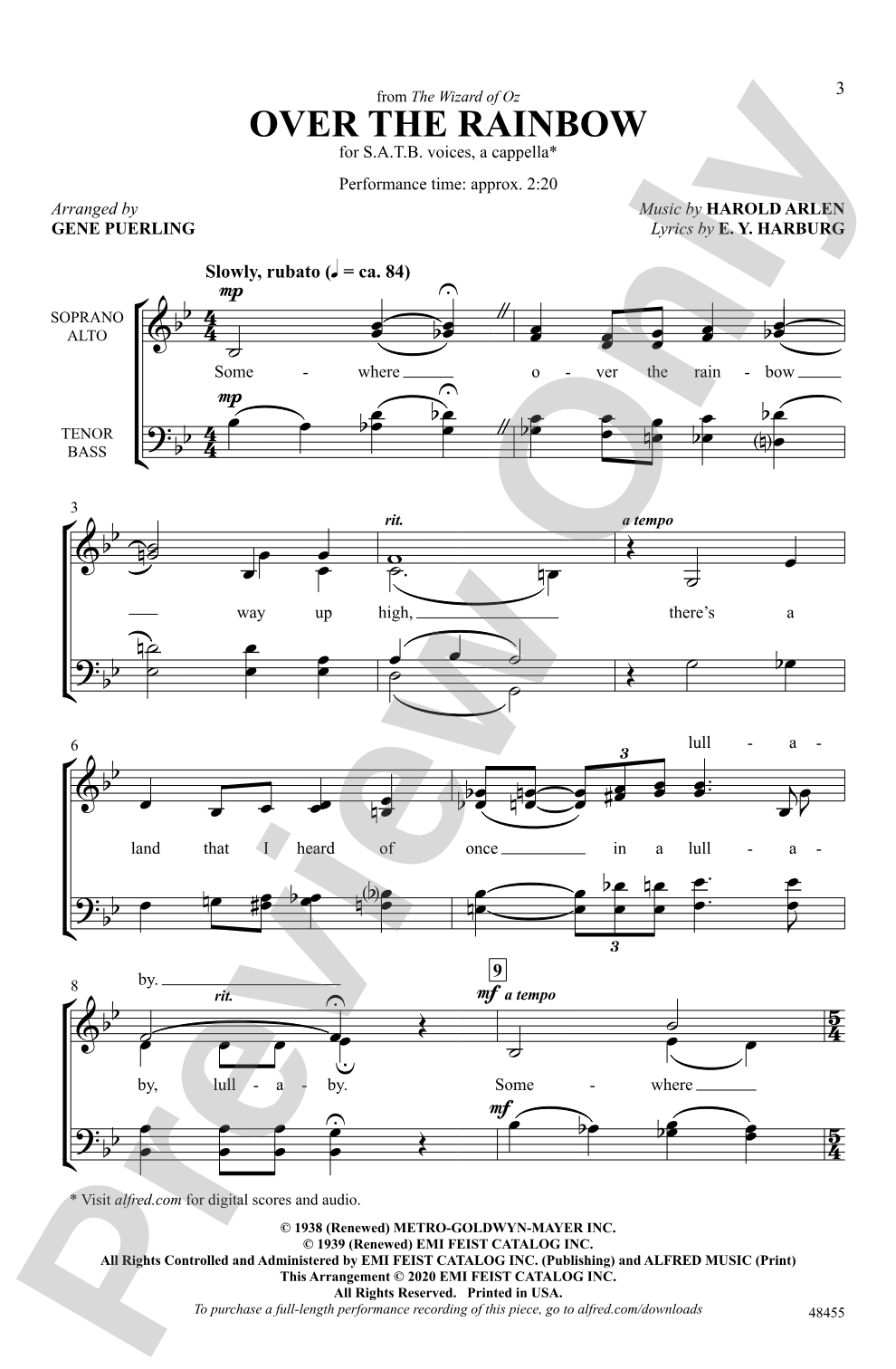
Over the Rainbow: SATB, a cappella Choral Octavo

Music by Harold Arlen, lyrics by E. Y. Harburg / arr. Gene Puerling

Item: 00-PO-0006448

Digital Download
$2.10

Minimum order quantity: 20 copies

One moment…

Description
Gene Puerling, famed vocal performer, choral arranger, and director of The Hi-Lo's and The Singers Unlimited, originally wrote this a cappella arrangement for Linda Ronstadt. Available for the first time, this newly discovered jewel is masterfully crafted with transparent jazz harmonies that bring a full spectrum of colors to the beloved and timeless classic.

Over the Rainbow: SATB, a cappella Choral Octavo isn't in MakeMusic Cloud just yet...but it could be. Let us know you'd like to see it, and you'll help shape what comes next. In the meantime, start a free trial and dive into thousands of interactive titles your students can play along with today.

Sample Audio
0:00
0:00
Sample Video
Additional Details
Series: Alfred Pop Choral Series
Publisher: Alfred Music
Page Count: 8
SKU: 00-PO-0006448

More about this title

About the Composer: Harold Arlen

Harold Arlen composed some of the most enduring melodies in American popular music, with a gift for writing songs that feel both sophisticated and immediately singable. His work for film, particularly his collaborations with lyricist E.Y. Harburg, produced standards that have outlasted their original contexts by generations.

Arlen's melodies are characterized by unexpected harmonic turns and a jazz-inflected sensibility that makes them ideal vehicles for vocal interpreters. For choral directors, his songs offer the rare combination of accessibility and musical substance, allowing singers to connect with genuinely moving material while developing their interpretive skills.

Why we love this

Gene Puerling's arrangement captures something essential about how this melody breathes: the jazz harmonies feel natural rather than imposed, and the voice leading creates genuine musical conversation rather than simply stacking chords. This is the version singers will want to learn because it treats them as musicians, not as vehicles for nostalgia.

What to expect

The transparency of the a cappella texture means every harmonic choice registers immediately. Puerling's jazz voicings create warmth and color while maintaining clarity, so the song feels spacious rather than dense. There's an intimacy here that the fully orchestrated versions can't achieve, inviting singers and listeners into something more personal and direct.

Who it's for

Choirs at the intermediate level and beyond who want to perform a standard from the Great American Songbook with harmonic sophistication and without instrumental accompaniment. This works equally well for jazz choirs, concert choirs seeking jazz repertoire, and groups preparing programs that bridge popular and concert music idioms.

How to get the most out of it

  • Balance the inner voices carefully during the harmonic passages. Puerling's writing often places important melodic motion in the altos and tenors, so resist the instinct to bury them beneath soprano and bass.
  • Shape the melody with the text's emotional arc rather than phrase-by-phrase. The journey from "Somewhere over the rainbow" to the final resolution has genuine dramatic content worth exploring with your singers.
  • Establish a relaxed, conversational tempo in rehearsal before settling on the final one. This arrangement responds to singers who feel the song's inherent swing rather than those counting mechanically.

How to use it

Pair this with other Puerling arrangements or other jazz-influenced choral standards for a complete set. It also works as a standalone closer or centerpiece in a concert mixing Great American Songbook material with contemporary choral writing. The eight-page length makes it suitable for directors building a program around songs that showcase ensemble blend and harmonic awareness.

Skills your students will build

  • Reading jazz harmony voicings and understanding voice leading within extended chord structures
  • Balancing multiple melodic lines simultaneously in a cappella texture
  • Interpreting swing and jazz phrasing conventions in a choral context
  • Adjusting vowel placement and vibrato for clarity across transparent harmonic writing

You May Also Like