
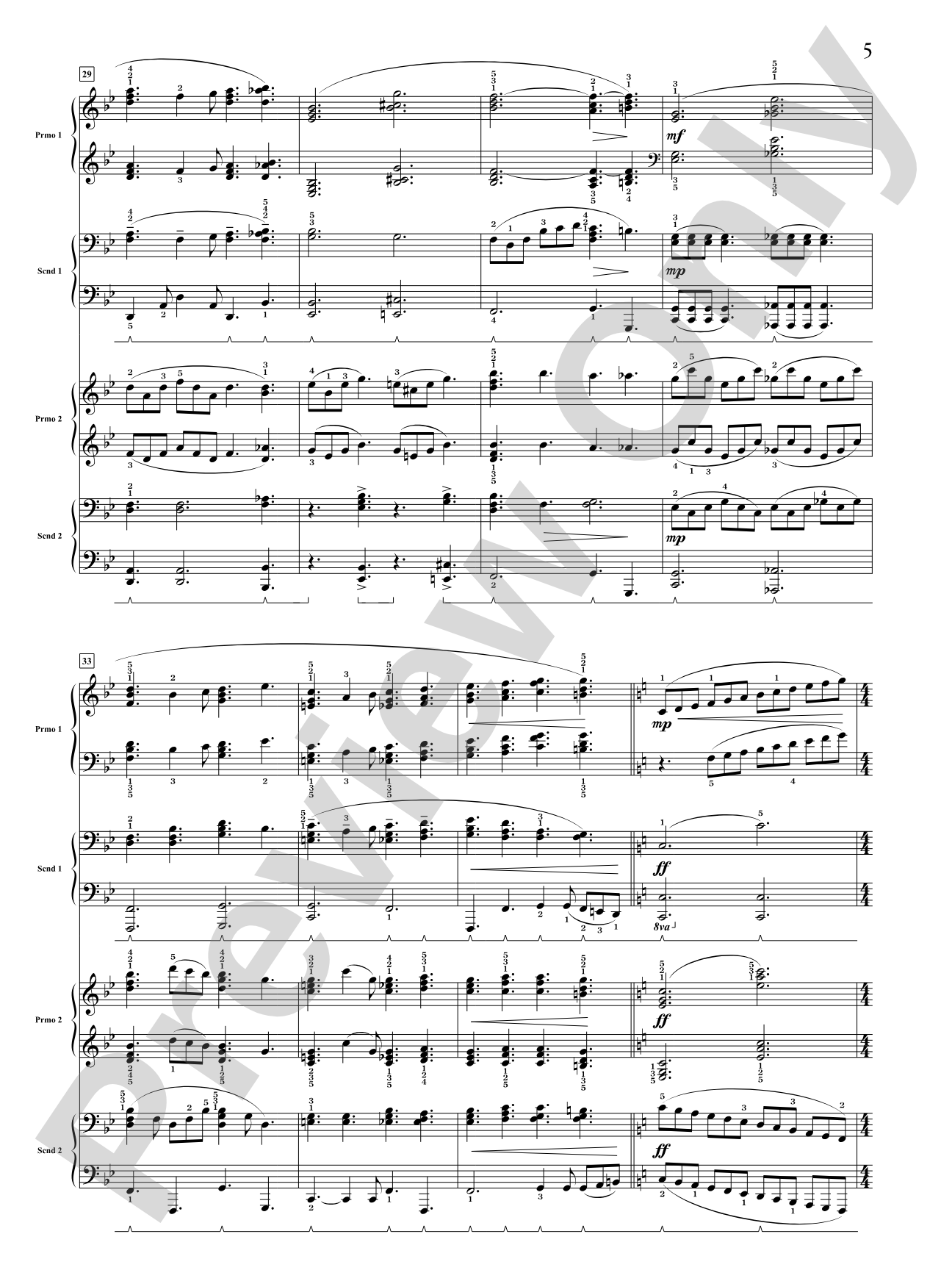
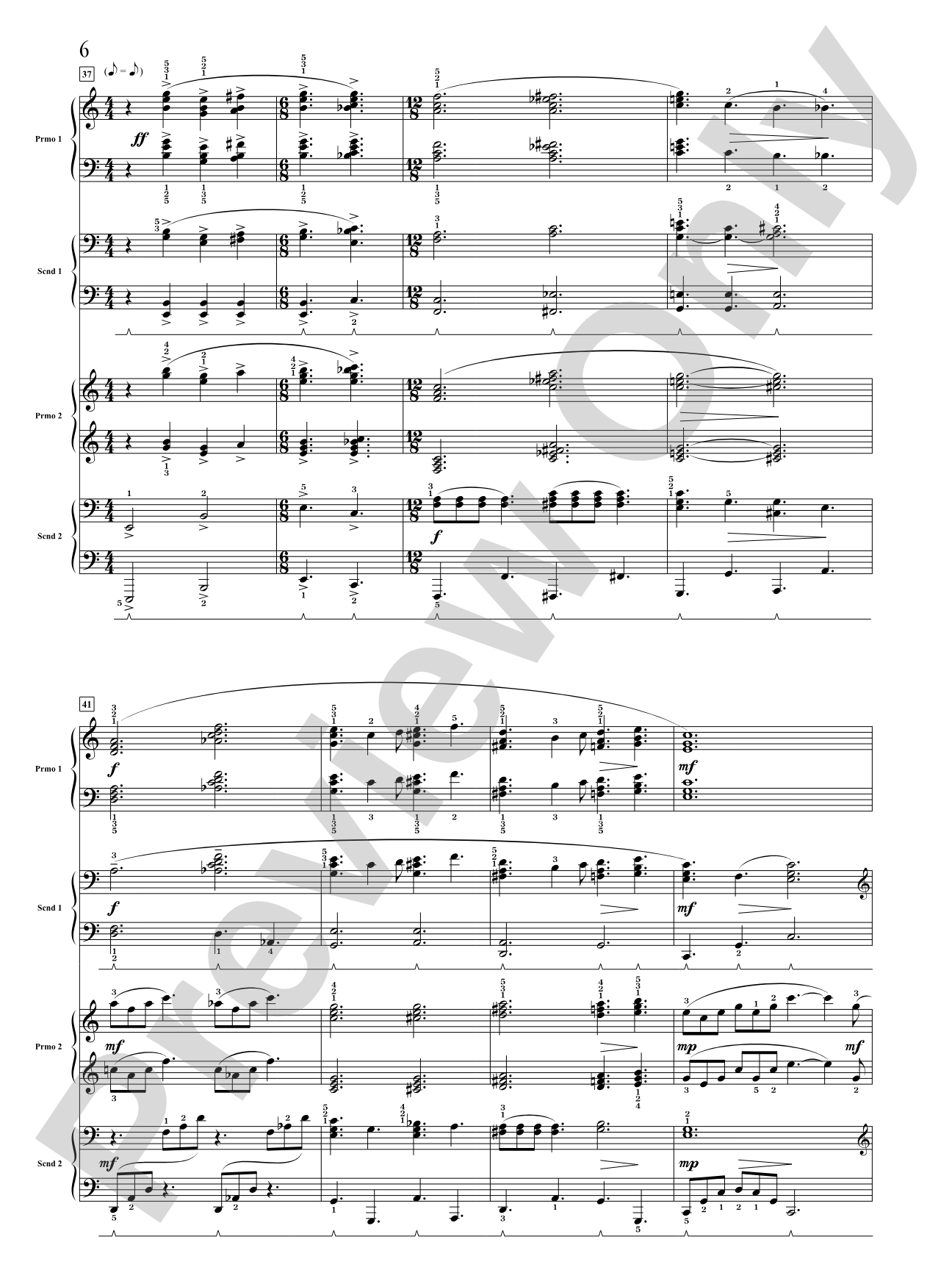
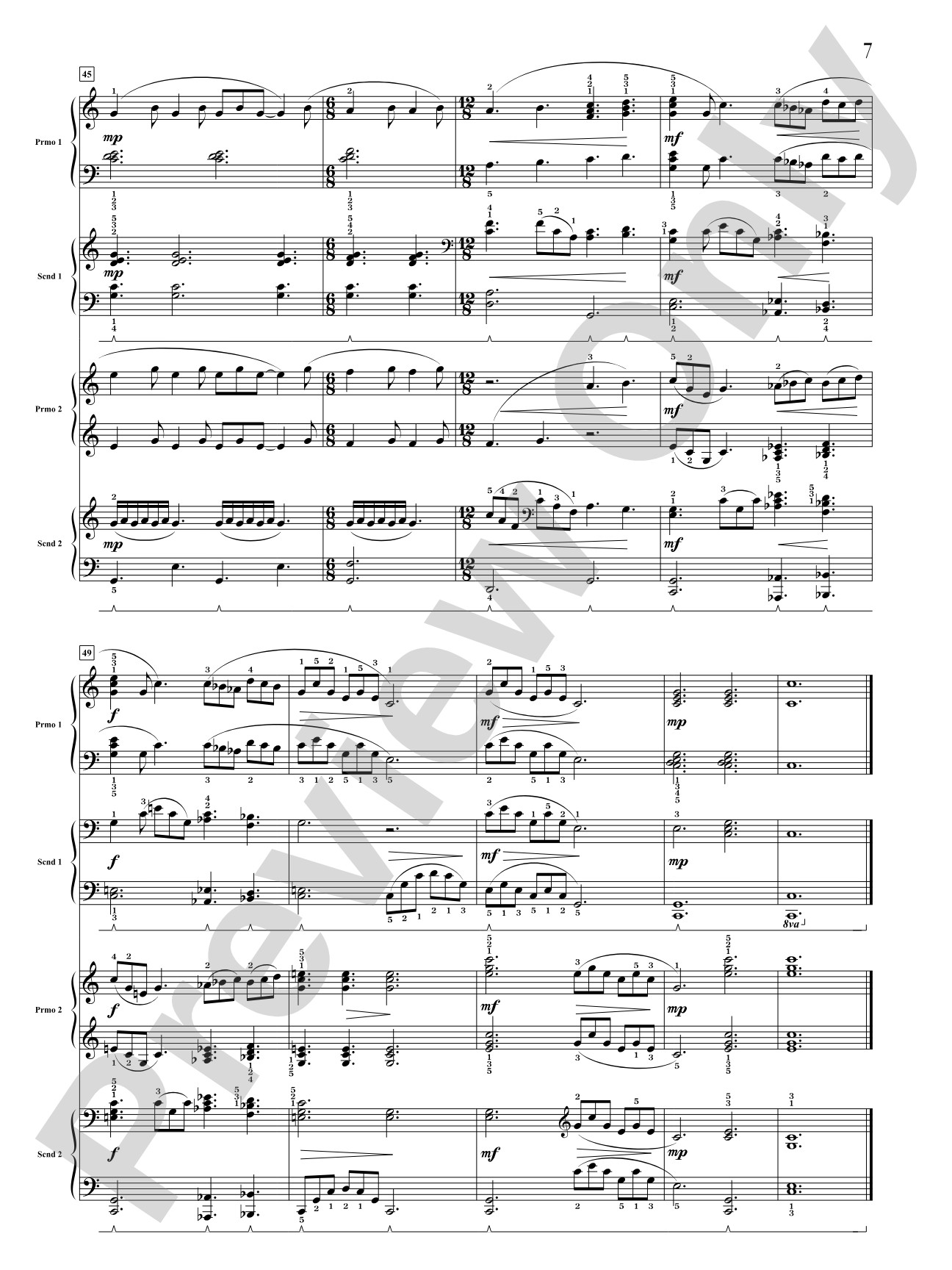


Over the Rainbow: Piano Quartet (2 Pianos, 8 Hands) Sheet (score & 4 parts included)
By Harold Arlen / arr. Melody Bober
Level: Late Intermediate
Item: 00-PK-0006752

$8.99
One moment…
Description
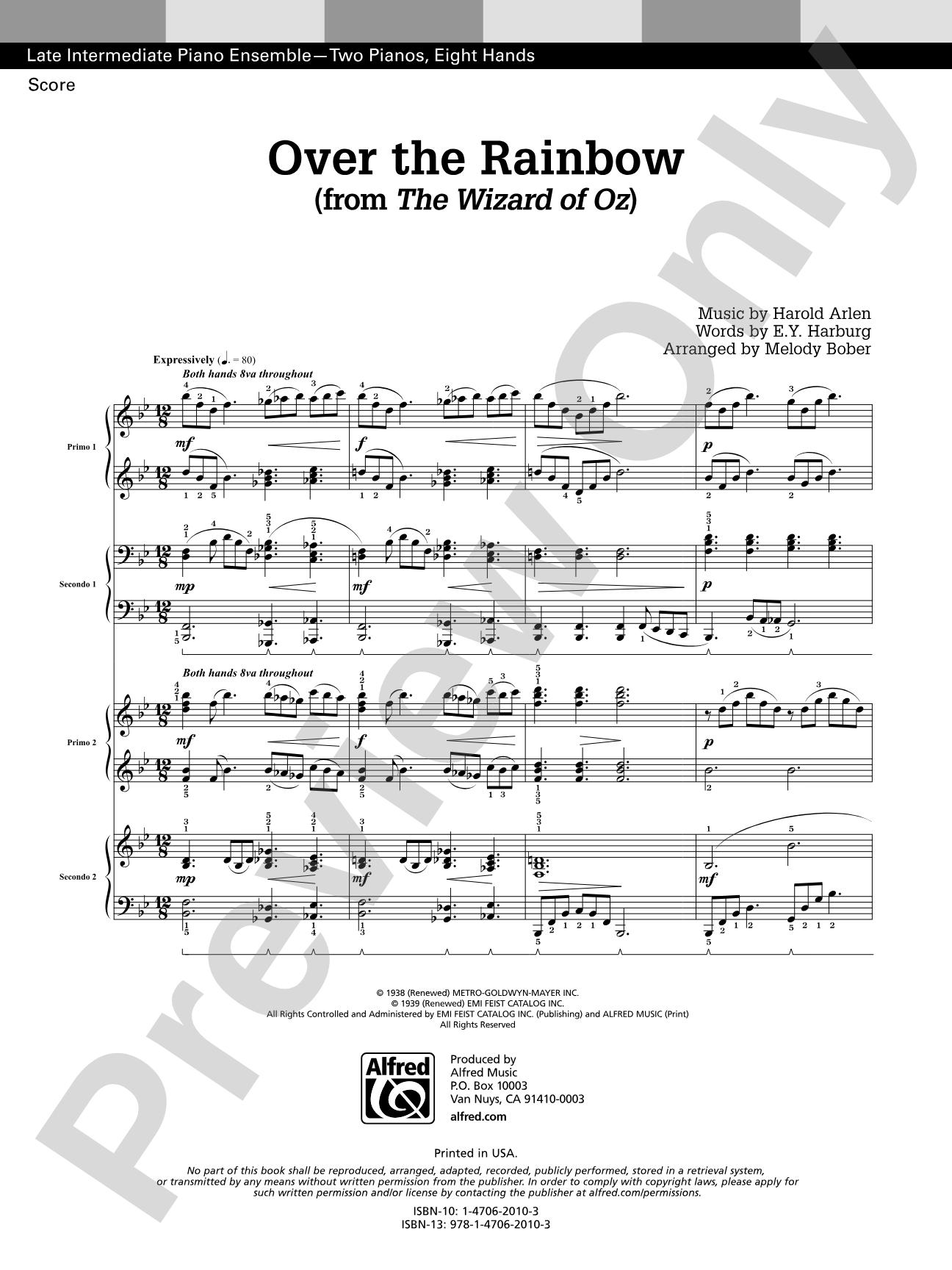
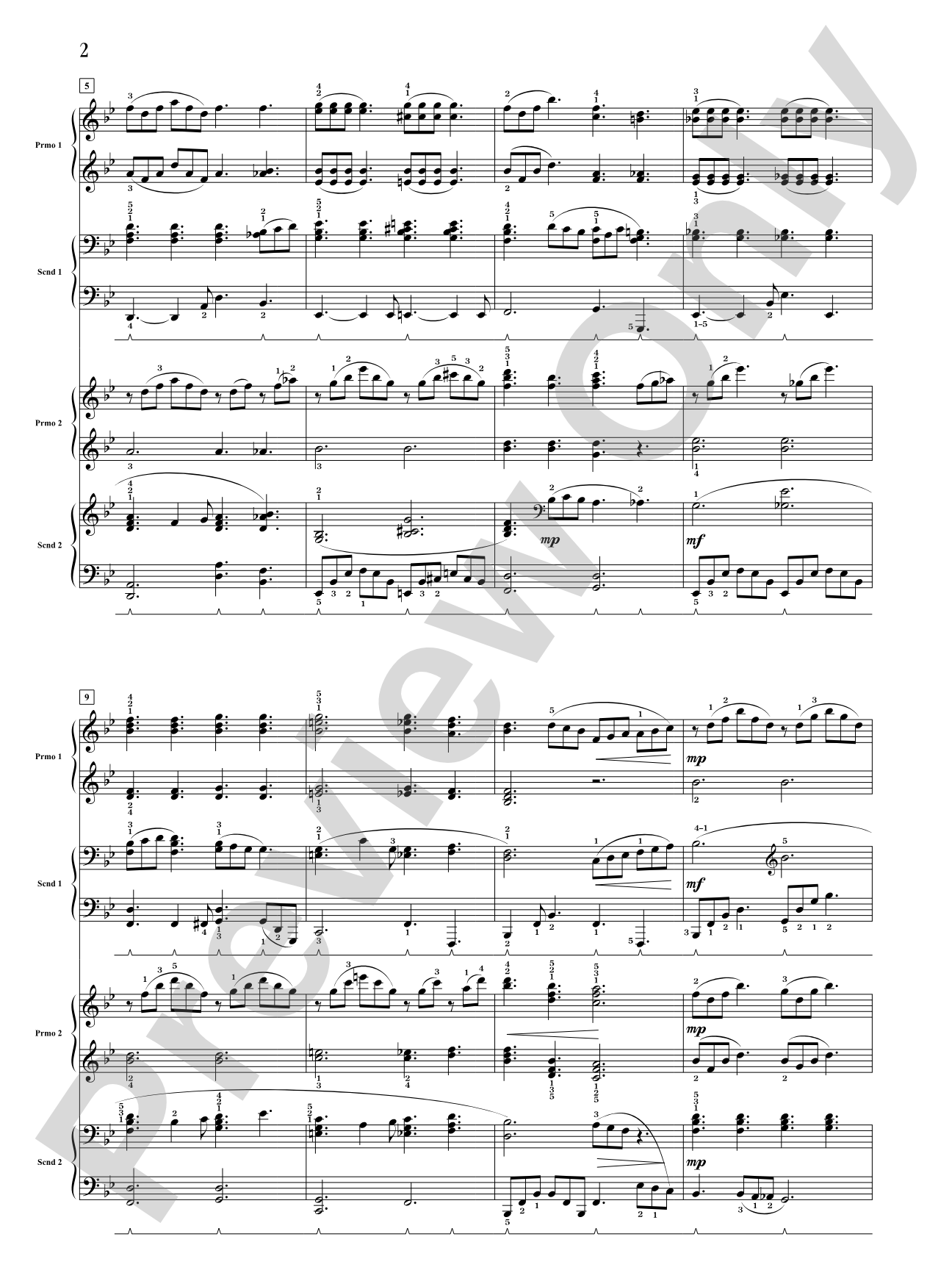
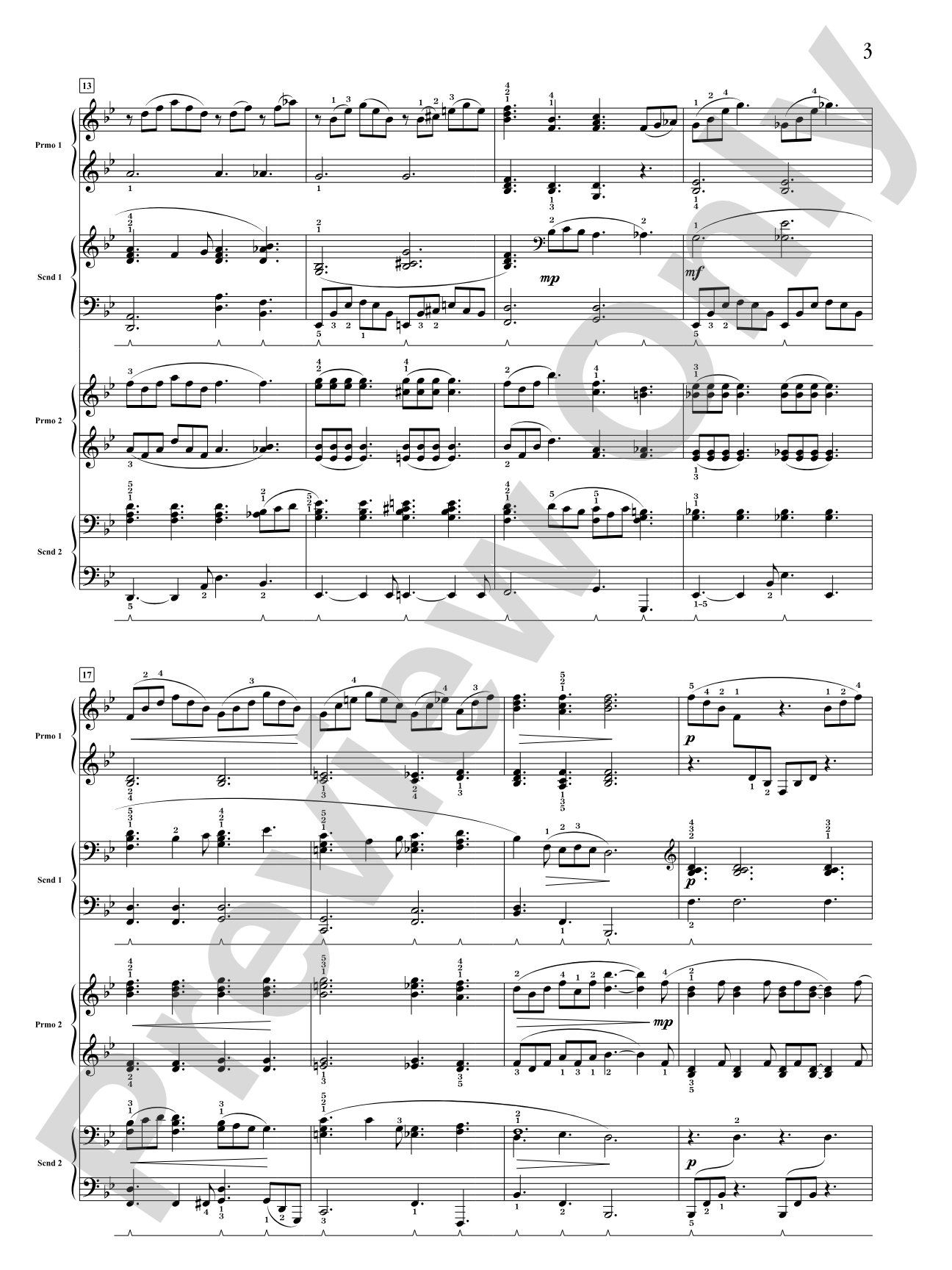
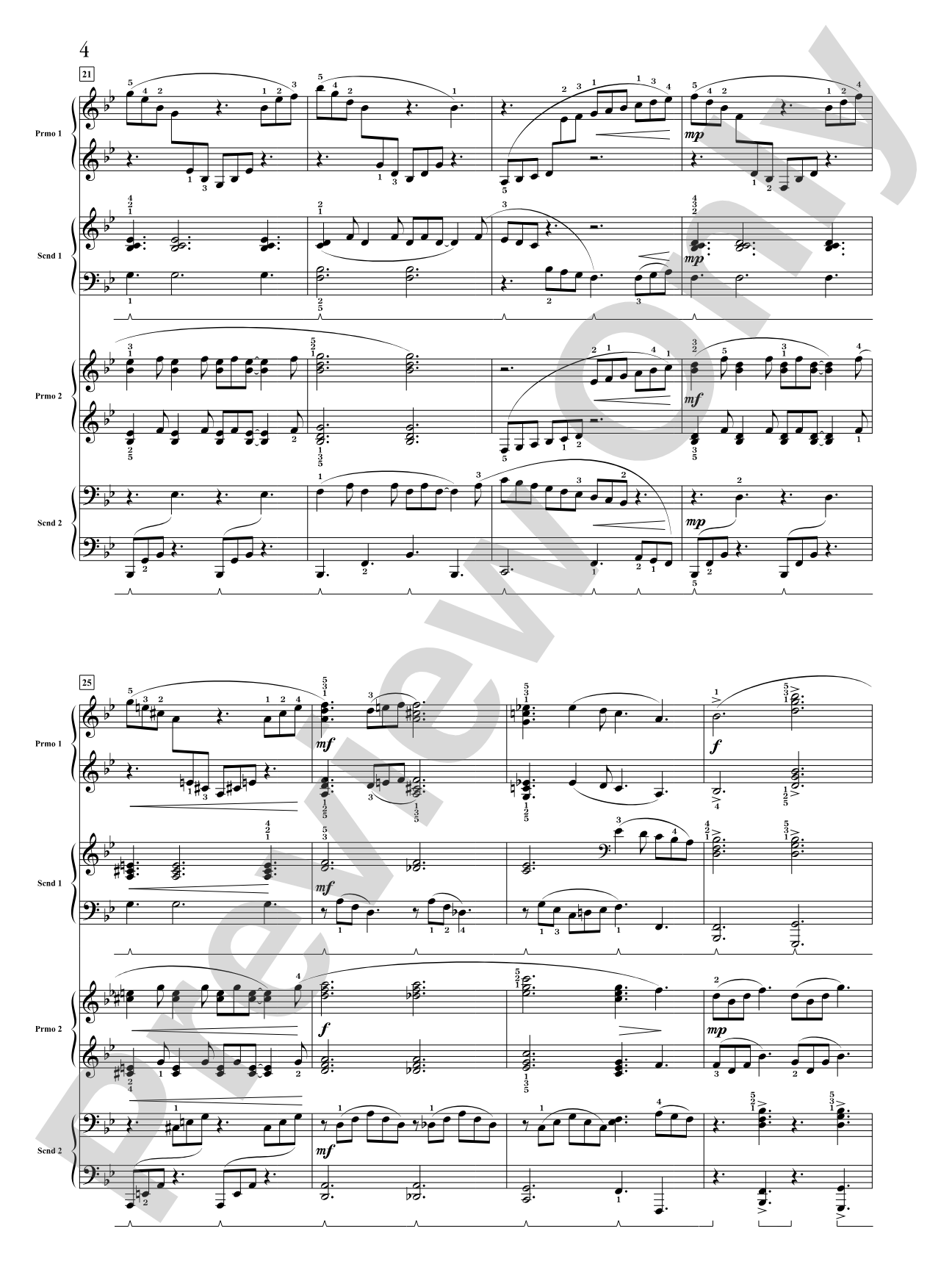
Harold Arlen's timeless tune will delight audiences of all ages. Melody Bober's arrangement for two pianos, eight hands is written for late intermediate pianists and is set up as two duets (Piano 1 and Piano 2) with primo and secondo parts on facing pages. This popular piece is fun to play and provides an opportunity to practice listening skills, technique, rhythmic control, and musicianship. "Over the Rainbow" is excellent for recitals, piano ensemble classes, and "monster" concerts. Score and four parts included. A Federation Festivals 2024-2028 selection.


Don't just read it, hear it, play along with it, and watch your students grow with it. In MakeMusic Cloud, Over the Rainbow: Piano Quartet (2 Pianos, 8 Hands) Sheet (score & 4 parts included) comes alive with professional accompaniment, adjustable tempo, and built-in practice tools that turn solo practice into real progress.
Open in the Player
Jump straight in and assign it today.
Start Your Free Trial
Open this title and explore the full library in minutes.
Sample Audio
No sample audio found.
Sample Video
No sample videos found.
Additional Details
Publisher:
Alfred Music
Page Count:
32
SKU:
00-PK-0006752
More about this title
About the Composer: Harold Arlen
Harold Arlen (1905-1986) composed some of the most recognizable melodies in American popular music, with a gift for writing songs that lodge instantly in memory. His collaboration with lyricist E.Y. Harburg on the score for "The Wizard of Oz" (1939) produced standards that have become part of the cultural fabric; "Over the Rainbow" stands as perhaps his most enduring creation, a melody that transcends its film origins to become universally beloved.
Arlen's compositional approach combined sophisticated harmonic language with accessibility, making his work both musically substantial and immediately appealing. Educators value his songs for their pedagogical richness: the melodies reward careful phrasing, the harmonies offer harmonic analysis opportunities, and the emotional directness of the writing engages performers of all levels.
Why we love this
Melody Bober's two-piano arrangement captures everything that makes this melody resonate while creating a genuinely ensemble experience. The facing-page layout for primo and secondo parts makes learning and rehearsal straightforward, and the writing acknowledges that late intermediate pianists are still building technical security; the piece challenges without overwhelming. You'll see immediate audience connection regardless of concert context, and your students will be motivated by working on such a recognized and beloved tune.
What to expect
The melody carries its signature wistful optimism, a quality that Bober's arrangement preserves through clean, song-like accompaniment writing. There's both intimacy and warmth here; playing this piece alongside another pianist creates a shared musical conversation that's deeply satisfying.
Who it's for
This arrangement serves late intermediate pianists who are ready for the musical and technical demands of ensemble playing but still benefit from clear, supportive writing. It works equally well for piano duos preparing recital repertoire, for ensemble classes looking for accessible four-hand-across-two-pianos literature, or for students developing collaborative listening skills in a group setting.
How to get the most out of it
- Balance the melody line so it speaks clearly across both pianos, especially when the primary theme shifts between primo and secondo parts. Listen carefully during rehearsals to ensure accompaniment figures stay proportionally lighter.
- Attend to the rhythmic relationship between the two pianos; even small discrepancies in timing become obvious in two-piano writing. Practice sections slowly with a metronome before bringing tempo up to performance speed.
- Shape the phrasing across both instruments as though a single musician were singing the melody. Breathe together and observe all dynamic markings as collaborative decisions, not individual ones.
- Coordinate pedal changes between pianists. Since the pianos sit separately, agree on pedal timing in advance and use verbal or visual cues during rehearsal to lock this in.
How to use it
Feature this on student recitals or ensemble concerts where you want a piece with immediate audience recognition and emotional impact. It's equally at home on a piano guild festival program, in a young pianist showcase, or as part of a larger concert where this ensemble's performance can anchor the program with a universally beloved standard. The accessibility of the melody makes it particularly effective as an opener or closer.
Skills your students will build
- Listening and balancing in two-piano ensemble contexts
- Coordinate rhythmic precision across two separate instruments
- Phrase musical lines expressively while maintaining strict tempo coordination
- Reading and executing both primo and secondo parts with musicianship
- Manage pedaling decisions collaboratively in ensemble settings