James P. Johnson (1894–1955) was a pianist and composer who became a central figure in the development of stride piano and early jazz composition. His technical innovations at the keyboard and sophisticated harmonic language influenced generations of pianists and composers. Johnson's works bridge classical training and vernacular American music, making him essential repertoire for students exploring the roots of modern piano literature.
Why we love this
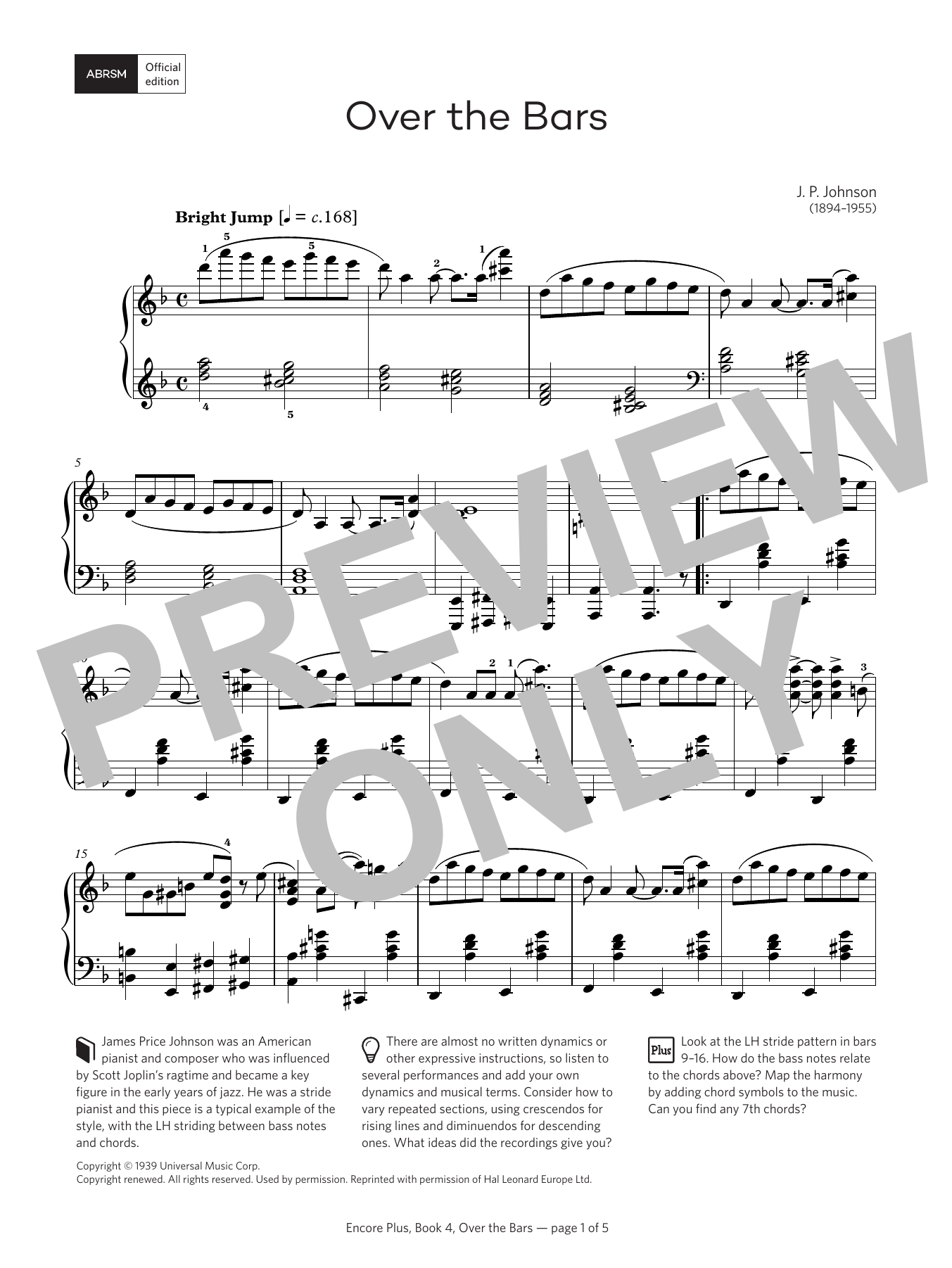
This piece captures Johnson's stride piano mastery in a form that's genuinely achievable for advanced intermediate students. Rather than overwhelming with rapid bass patterns, 'Over the Bars' maintains the character and energy of stride while staying within realistic technical reach for Grade 8 players who have solid hand independence and comfort with syncopation.
What to expect
Energetic and rhythmically buoyant, with the propulsive feel of early jazz filtered through a classical composer's ear. The stride accompaniment creates a sense of forward motion while the melody dances above it, playful but never precious.
Who it's for
Advanced intermediate pianists ready to explore stride piano and jazz-influenced classical repertoire. This piece works especially well for students who have developed hand independence and rhythmic security but are encountering syncopated classical writing for the first time.
How to get the most out of it
Establish the left-hand stride pattern first as a separate exercise. Get the rhythm of the octave-fifth bounce locked before layering the right-hand melody so the two hands feel like separate voices rather than one coordinated gesture.
Shape the melody with minimal pedal. Let the stride bass speak clearly; the clarity of that left-hand pattern is what gives the piece its personality and swing feel.
Resist the urge to rush through fast passages. Johnson's writing rewards patience and articulation; clean note separation will expose the harmony more effectively than speed ever could.
How to use it
Place this strategically in a recital or concert to introduce audiences to American vernacular forms within a classical context. It pairs well with other early 20th-century American piano repertoire and offers a natural bridge for students transitioning from conventional classical styles into jazz-influenced works.
Skills your students will build
Stride piano technique with secure octave-fifth bass patterns
Rhythmic independence between hands with syncopated phrasing
Articulation and voicing of melody against driving accompaniment
Jazz-influenced harmonic language and swing interpretation
You May Also Like
Scan to Complete Your Purchase
Use your phone's camera to scan the code below
You'll log in on your phone and the order will be added to your account