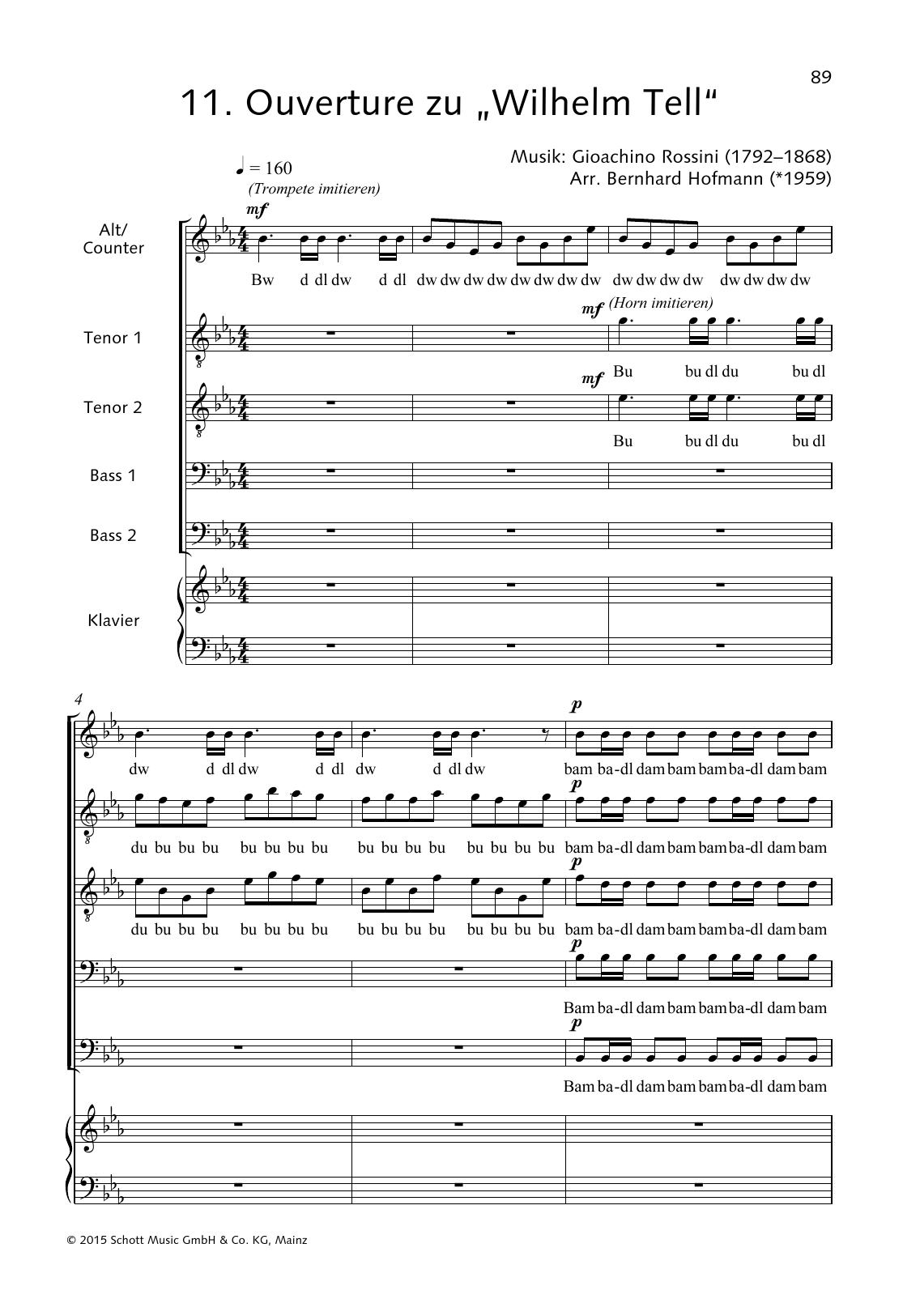
Ouverture zu Wilhelm Tell Sheet Music Preview

Ouverture zu Wilhelm Tell: Choral Octavo

By Gioacchino Rossini / Edited by Bernhard Hofmann

Item: 35-DS00370992

Digital Download
$4.99

One moment…

Description

Ouverture zu Wilhelm Tell: Choral Octavo isn't in MakeMusic Cloud just yet...but it could be. Let us know you'd like to see it, and you'll help shape what comes next. In the meantime, start a free trial and dive into thousands of interactive titles your students can play along with today.

Sample Audio
No sample audio found.
Sample Video
Additional Details
Publisher: Hal Leonard
Page Count: 23
SKU: 35-DS00370992

More about this title

About the Composer: Gioacchino Rossini

Gioacchino Rossini (1792–1868) was one of the most prolific and celebrated opera composers of the early 19th century, known for his gift for melody and mastery of orchestration. His operas like *The Barber of Seville* and *William Tell* defined the sound of his era and influenced generations of composers who followed.

Beyond his theatrical output, Rossini understood the power of instrumental music and the human voice working together. The *William Tell* overture stands as perhaps his greatest achievement in orchestral writing, and this choral arrangement makes that iconic music accessible to singers while preserving the grandeur of his original conception.

Why we love this

Rossini's *William Tell* overture is instantly recognizable and carries genuine dramatic weight that singers connect to immediately. This octavo version captures the sweeping energy and architectural clarity of the original while giving your choir a piece that sounds ambitious without requiring advanced vocal technique.

What to expect

Heroic and propulsive, with the sweeping confidence of a grand march. Singers find themselves caught up in forward-moving phrases that feel almost inevitable, punctuated by moments of lyrical beauty that reward careful voicing.

Who it's for

Choirs with moderate experience who want to perform a universally admired work without overextending vocal demands. This arrangement works equally well for community ensembles, school groups, and concert choirs seeking a substantial classical anchor for a program.

How to get the most out of it

  • Treat the rhythmic figures with precision. Rossini's style depends on crisp articulation and clean attacks to convey the forward momentum.
  • Balance the melody across your section leaders so it projects over the accompanying voices; the piece gains its power from transparency, not volume.
  • Shape the long phrases with clear breathing points, and don't rush the climactic moments. Rossini rewards patience.

How to use it

Open a concert with this to command immediate attention, or use it as the centerpiece of a classical section that might also include Verdi or Brahms. Its recognizable melody means audiences lean in from the first notes, making it an excellent programmer when you want to shift energy in a set.

Skills your students will build

  • Maintaining rhythmic precision in fast passagework
  • Blending ensemble sound while preserving individual line clarity
  • Managing phrase length and breath management across extended musical statements
  • Balancing accompaniment voices with melody
  • Stylistic understanding of early 19th-century Italian opera conventions

You May Also Like