
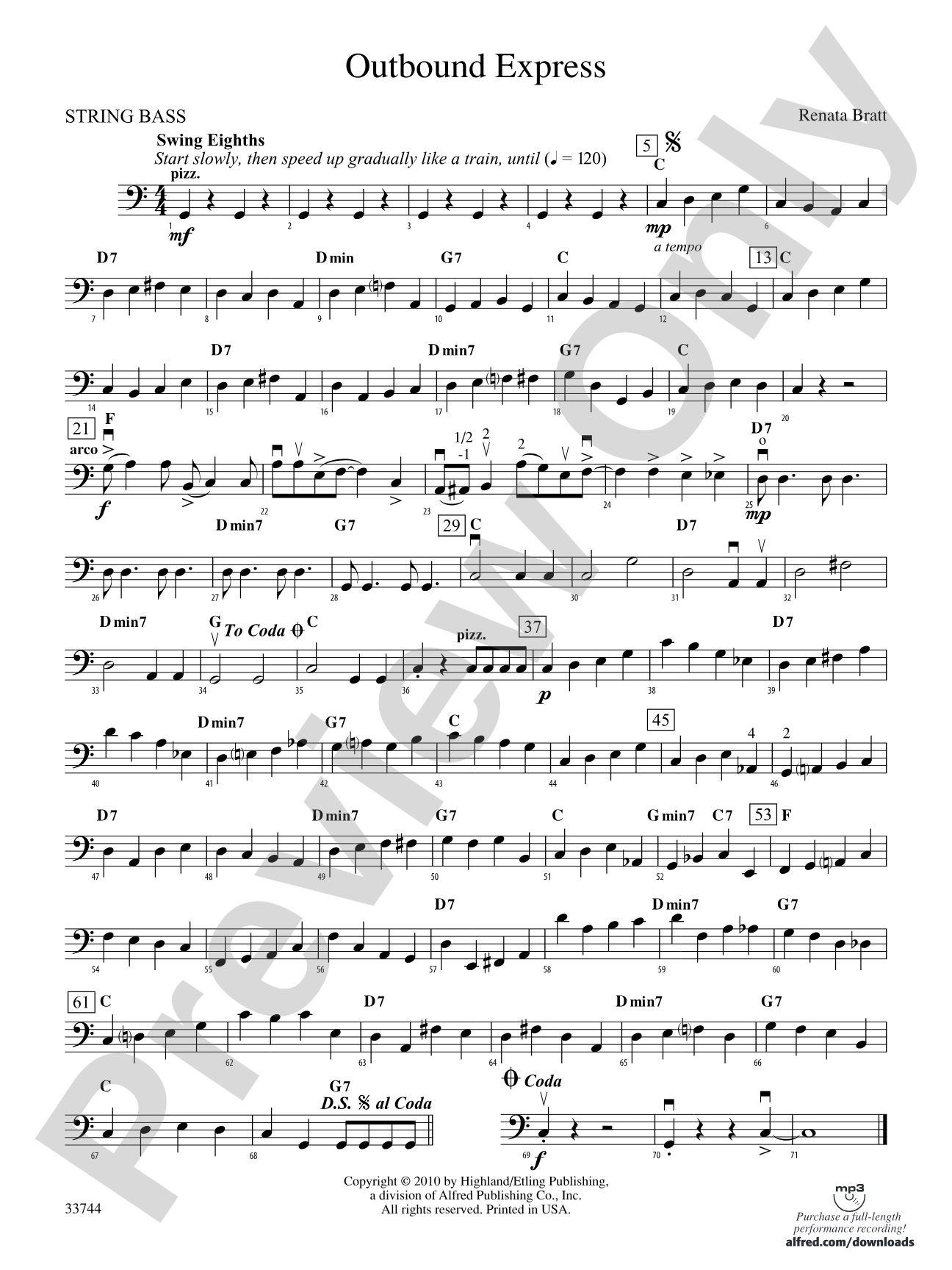

Outbound Express: String Bass
By Renata Bratt
Grade: 3
Item: 00-PC-0014528_SB
$5.99
Pickup currently not available
Description


Don't just read it, hear it, play along with it, and watch your students grow with it. In MakeMusic Cloud, Outbound Express: String Bass comes alive with professional accompaniment, adjustable tempo, and built-in practice tools that turn solo practice into real progress.
Open in the Player
Jump straight in and assign it today.
Start Your Free Trial
Open this title and explore the full library in minutes.
Sample Audio
1
Audio File
--:--
0:00
0:00
Sample Video
No sample videos found.
Additional Details
Series:
Highland/Etling String Alternatives
Publisher:
Alfred Music
Page Count:
130
SKU:
00-PC-0014528_SB
More about this title
About the Composer: Renata Bratt

Renata Bratt brings decades of experience across classical, jazz, and traditional music styles to her work as a composer and educator. A cellist and clinician based in California, she has taught at the Santa Cruz Waldorf Elementary School, Pacific Elementary School in Davenport, and through the Cabrillo Youth Strings program, while also leading clinics at major conferences including the Mark O'Connor String Conference, Alasdair Fraser's Sierra Fiddle Camp, and national ASTA, MENC, and Suzuki institutes. She holds a Ph.D. in Music from UC San Diego and served as past president of both the Suzuki Music Association of California and the International Association for Jazz Education String Caucus.
Bratt's performing career spans work with artists ranging from traditional fiddlers like Liz Carroll and Alasdair Fraser to rock and pop figures including Jimmy Page, Robert Plant, David Sanborn, and Lyle Lovett. Her publications include The Modern Cello Method, The Fiddling Cellist, and Celtic Grooves for Two Cellists, all released through Mel Bay Publications. As a member of the American String Teachers Association Alternative String Styles Advisory Committee, she champions approaches that honor both classical rigor and the broader musical traditions her students encounter in their communities.
Why we love this
Bratt's grounding in folk and alternative string styles shines through in writing that feels organic and playable rather than generic. A Grade 3 piece that draws on country and folk idioms without condescension, this score respects young players' growing musicality while giving them genuine stylistic language to explore beyond the classical canon.
What to expect
Outbound Express captures the open-road energy of its title, with melodies that move forward with purpose and accessibility. The piece balances country and folk character with the ensemble precision string players are learning, creating music that feels both approachable and genuinely stylish.
Who it's for
String orchestras at the intermediate level looking to expand beyond classical repertoire into folk and country idioms. Directors who want their students to develop stylistic flexibility and experience how string writing serves different musical traditions.
How to get the most out of it
- Shape the phrasing around the natural breath points of the melody rather than bar lines; country and folk idioms favor lyrical storytelling over metronomic precision.
- Let the rhythm section (cellos and basses) establish a relaxed groove in rehearsals before asking upper strings to lock onto it; students often play too rigidly when they're focused only on notes.
- Encourage first violins to listen for the ornamentation and slides that give this style its character; mark them lightly in parts if they're not immediately obvious from the notation.
- Balance transparency in the middle voices so the harmonic colors (particularly any pizzicato or light articulation) can breathe without drowning the melody.
How to use it
Program this as a concert closer or mid-program palette cleanser alongside more traditional repertoire. It works especially well on concerts where you're showcasing student growth across different styles, or as a way to connect with audiences who may not typically attend school music events.
Skills your students will build
- Playing with a relaxed rhythmic feel that differs from classical articulation
- Recognizing and executing country and folk stylistic conventions in string writing
- Building independence in ensemble texture (maintaining individual lines while supporting the harmonic framework)
- Listening for and responding to groove-based rhythm in orchestral context