

Out of the Silence: SATB Choral Octavo
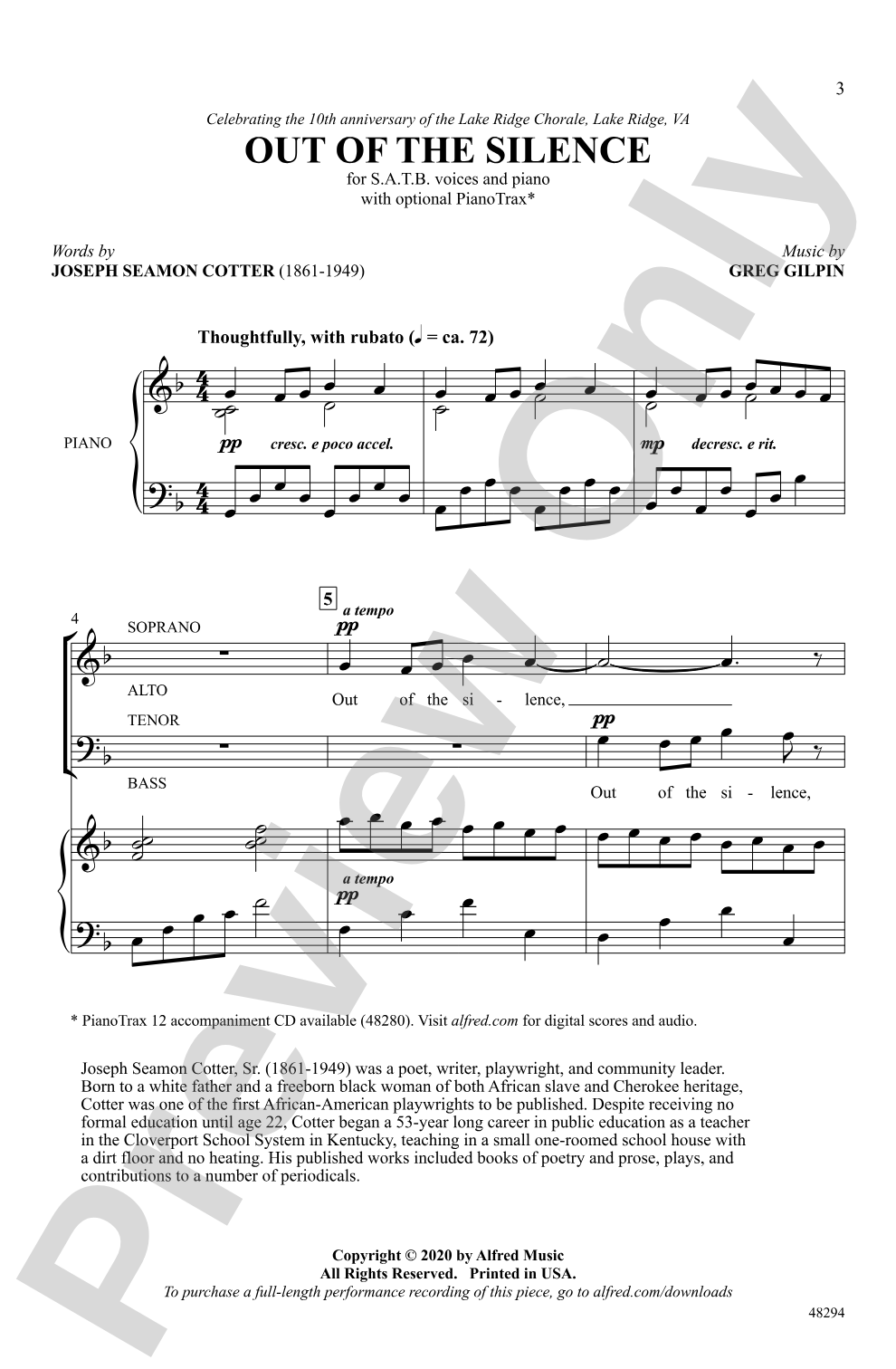
Words by Joseph Seamon Cotter, music by Greg Gilpin
Item: 00-PO-0006298
$2.05
Minimum order quantity: 20 copies
Pickup currently not available
Description
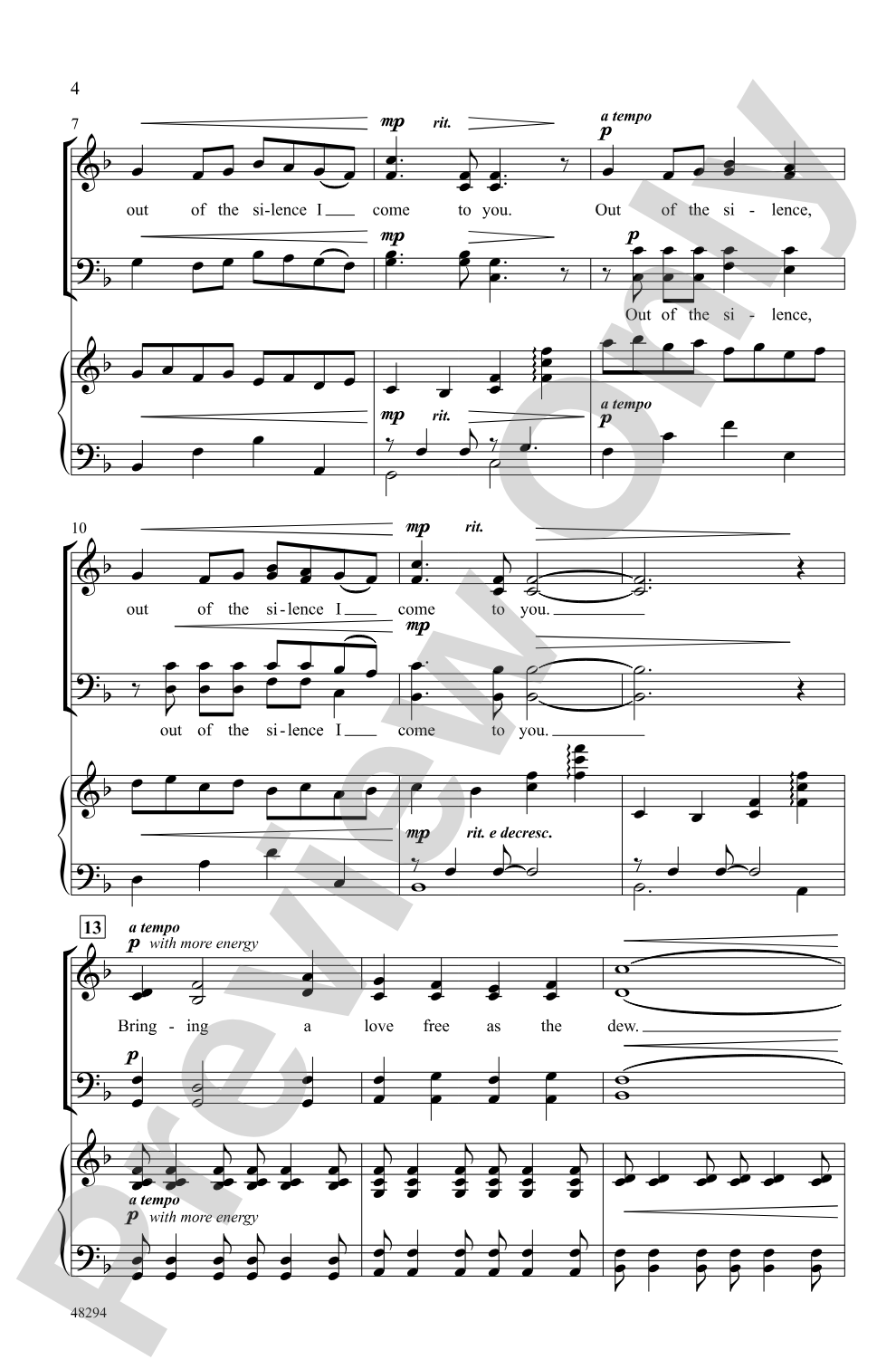
The author of this sensitive, warmhearted text was one of the first African-American playwrights ever to be published. Greg Gilpin incorporates subtle shifts of tempo and dynamics to paint a sumptuous sound picture that satisfies the soul. "But this I crave as you walk by, a smile on your lips, a light in your eye."


Out of the Silence: SATB Choral Octavo isn't in MakeMusic Cloud just yet...but it could be. Let us know you'd like to see it, and you'll help shape what comes next. In the meantime, start a free trial and dive into thousands of interactive titles your students can play along with today.
Request This Title
Tell us you want it.
Start Your Free Trial
Explore everything that's ready to play right now.
Sample Audio
1
Audio File
--:--
0:00
0:00
Sample Video
1 / 2
Additional Details
Series:
Alfred Choral Designs
Publisher:
Alfred Music
Page Count:
12
SKU:
00-PO-0006298
More about this title
About the Composer: Greg Gilpin

Greg Gilpin holds the position of Director of Educational Choral Publications for Shawnee Press and has established himself as one of the most performed choral composers in the United States. His conducting experience spans prestigious venues including Carnegie Hall, Lincoln Center, Ryman Auditorium, Sydney Opera House, Royal Festival Hall, and Harpa Concert Hall. As an ASCAP award-winning composer and arranger, he continues to create music that challenges and inspires singers at all levels.
Beyond his work in music, Gilpin has diversified his career into professional organizing and financial coaching, earning certifications in both fields and launching his own business, Maestro Organizing. His creative reach extends to film scoring; in 2021 he composed the award-winning score for the short film "Rosie's Rescue." He is an active member of ACDA, NAfME, SAG-AFTRA, and holds Life Loyal membership in Phi Mu Alpha Sinfonia.
Why we love this
Gilpin's gift for setting poetic text shines here; he pairs a profound historical voice with music that breathes and moves with genuine emotional intelligence. The subtle tempo and dynamic shifts create texture without becoming fussy, giving singers meaningful interpretive choices at every rehearsal. This is the kind of piece that rewards careful preparation and sounds exponentially better each time you perform it.
What to expect
This music carries a quiet dignity and warmth. It moves through tender harmonic landscapes with the kind of restraint and grace that creates intimacy in a large room, inviting the listener into a moment of genuine human connection. The quoted text about a smile and a light in the eye lingers long after the final chord.
Who it's for
Choirs with solid intonation and comfort with lyrical expression will find this piece deeply rewarding. It works beautifully for ensembles preparing for concert or festival performance and suits singers who respond well to text-driven interpretation rather than technical display.
How to get the most out of it
- Shape each phrase toward its emotional center rather than strictly conducting metrically; allow the text to guide your tempo flexibility and let singers respond to the natural speech rhythm within the musical line.
- Mark the dynamic peaks and valleys in rehearsal so singers understand the broader architecture; these shifts are what create Gilpin's sumptuous sound, and clarity about where to build and release makes the effect immediate.
- Listen critically to balance between sections, especially where the text becomes most intimate; the piece invites vulnerability, so sopranos should never dominate the texture when all voices are singing.
- Spend rehearsal time on the recorded accompaniment if you plan to use it, allowing singers to familiarize themselves with the harmonic support before performing with a pianist or live accompanist.
How to use it
Program this in the second half of a concert, perhaps following a set of lighter or more rhythmic work; its contemplative character allows audiences to settle into deeper listening. It pairs naturally with other pieces centered on meaningful text and social consciousness, making it an excellent anchor for a thematic program exploring human connection and dignity.
Skills your students will build
- Responding to subtle dynamic and tempo shifts within a lyrical context
- Interpreting emotionally charged text with musical restraint and authenticity
- Blending SATB voices to create a cohesive harmonic sound without sacrificing individual line quality
- Maintaining line integrity while honoring phrase-based rather than metrically strict conducting