Out Here on My Own  Sheet Music Preview

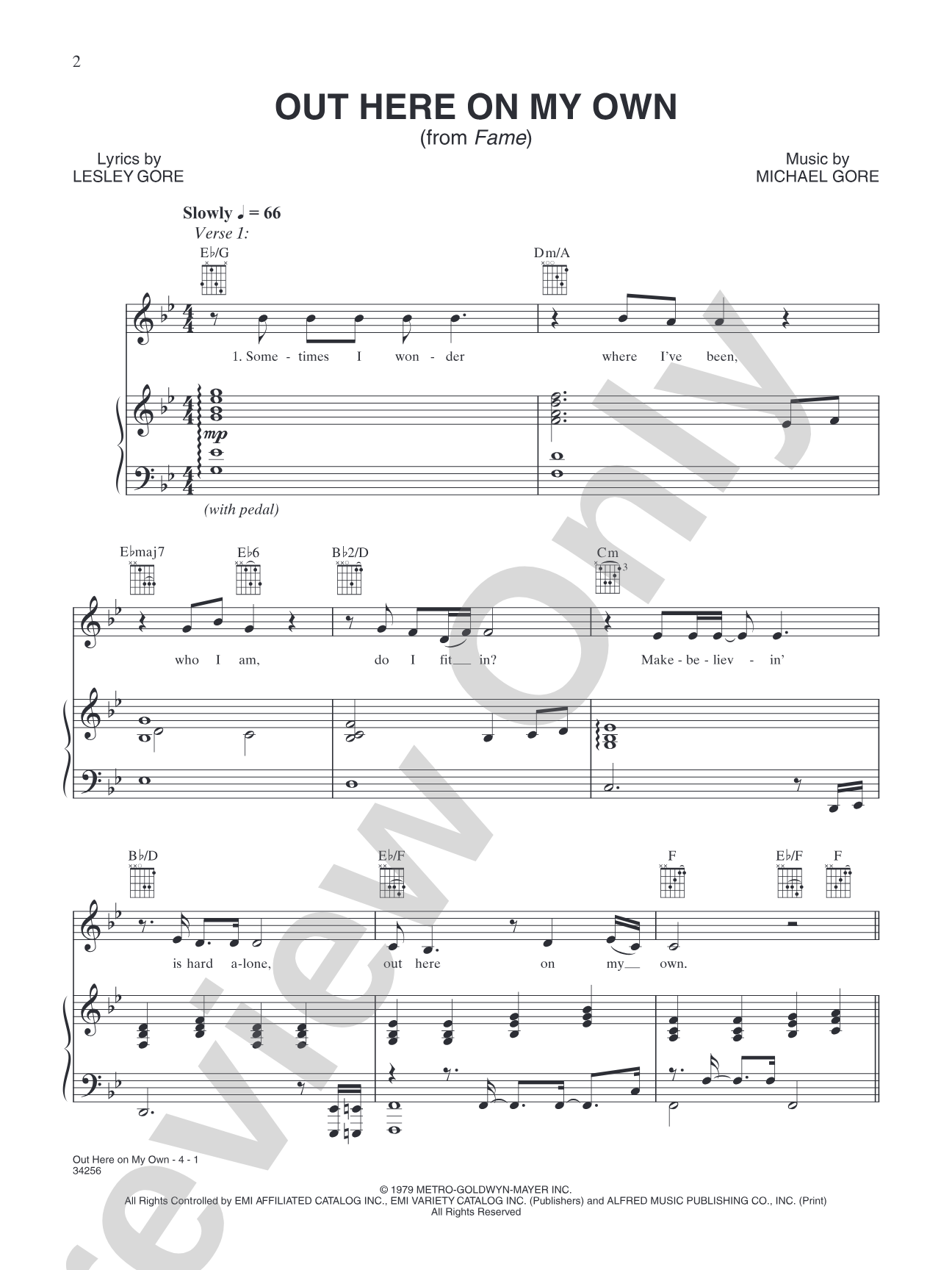
Out Here on My Own: Piano/Vocal/Chords

Music by Michael Gore, lyrics by Lesley Gore / recorded by Naturi Naughton

Item: 00-PS-0011432

Digital Download
$3.99

One moment…

Description
The exceptional musical score for the movie Fame captures the energy and drive of young artists attending an arts magnet high school. Celebrate the 2009 return of the movie with this moving and memorable power ballad.

Out Here on My Own: Piano/Vocal/Chords isn't in MakeMusic Cloud just yet...but it could be. Let us know you'd like to see it, and you'll help shape what comes next. In the meantime, start a free trial and dive into thousands of interactive titles your students can play along with today.

Sample Audio
No sample audio found.
Sample Video
Additional Details
Series: Original Sheet Music Edition
Publisher: Alfred Music
Page Count: 6
SKU: 00-PS-0011432

More about this title

About the Composer: Michael Gore

Michael Gore is an Academy Award-winning composer whose film scores have defined the sound of American cinema since the 1980s. His work on Fame earned him an Oscar for Best Original Song, and he has continued to craft music that captures emotional authenticity and theatrical energy across drama, dance, and coming-of-age narratives.

Why we love this

This power ballad sits at the intersection of contemporary pop and genuine theatrical storytelling. The chord progression and melodic arc give singers something emotionally substantial to sink their teeth into, while the piano writing remains accessible enough that students don't get buried in technical demands when they should be focusing on vocal expression and vulnerability.

What to expect

The song radiates the determination and vulnerability of young artists stepping into the spotlight. Its melodic lines balance hope with uncertainty, while the harmonic language sits comfortably in modern pop idioms. Performing it requires you to hold both technical clarity and genuine emotional conviction at the same time.

Who it's for

Pianists and singers working together on contemporary pop-ballad repertoire will find this accessible without being simplistic. It works equally well for high school singers preparing for solo competitions, community theater singers brushing up on movie musical material, or young professionals building a contemporary audition book.

How to get the most out of it

  • Shape the dynamics with intention rather than relying on volume alone. The quiet passages are just as expressive as the climactic moments, and they require precise control from both vocalist and pianist.
  • Anchor the tempo to the vocalist's emotional arc rather than locking into a rigid metronome. Small tempo adjustments during the narrative turns of the song create intimacy and prevent it from feeling mechanical.
  • Balance the piano accompaniment so it supports without overshadowing the vocal line. Use the chord voicings to color the singer's phrases rather than compete with them.
  • Connect the rhythmic drive of the song to its emotional purpose. This isn't a song to coast through; every rhythmic gesture should feel purposeful and propulsive.

How to use it

This pairs naturally with other contemporary musical theater or pop-influenced repertoire in a concert focused on young voices and stories of artistic ambition. It also works as a solo feature in a mixed recital where you want to include film music alongside traditional art song. The 2009 film revival makes it a timely choice when programming recognizable material that still carries contemporary relevance.

Skills your students will build

  • Balancing melody and accompaniment in contemporary song idioms
  • Phrasing across longer lines with minimal textual repetition
  • Emotional consistency and vulnerability in performance
  • Collaboration between vocalist and accompanist
  • Reading and interpreting chord charts in modern pop/film context

You May Also Like