
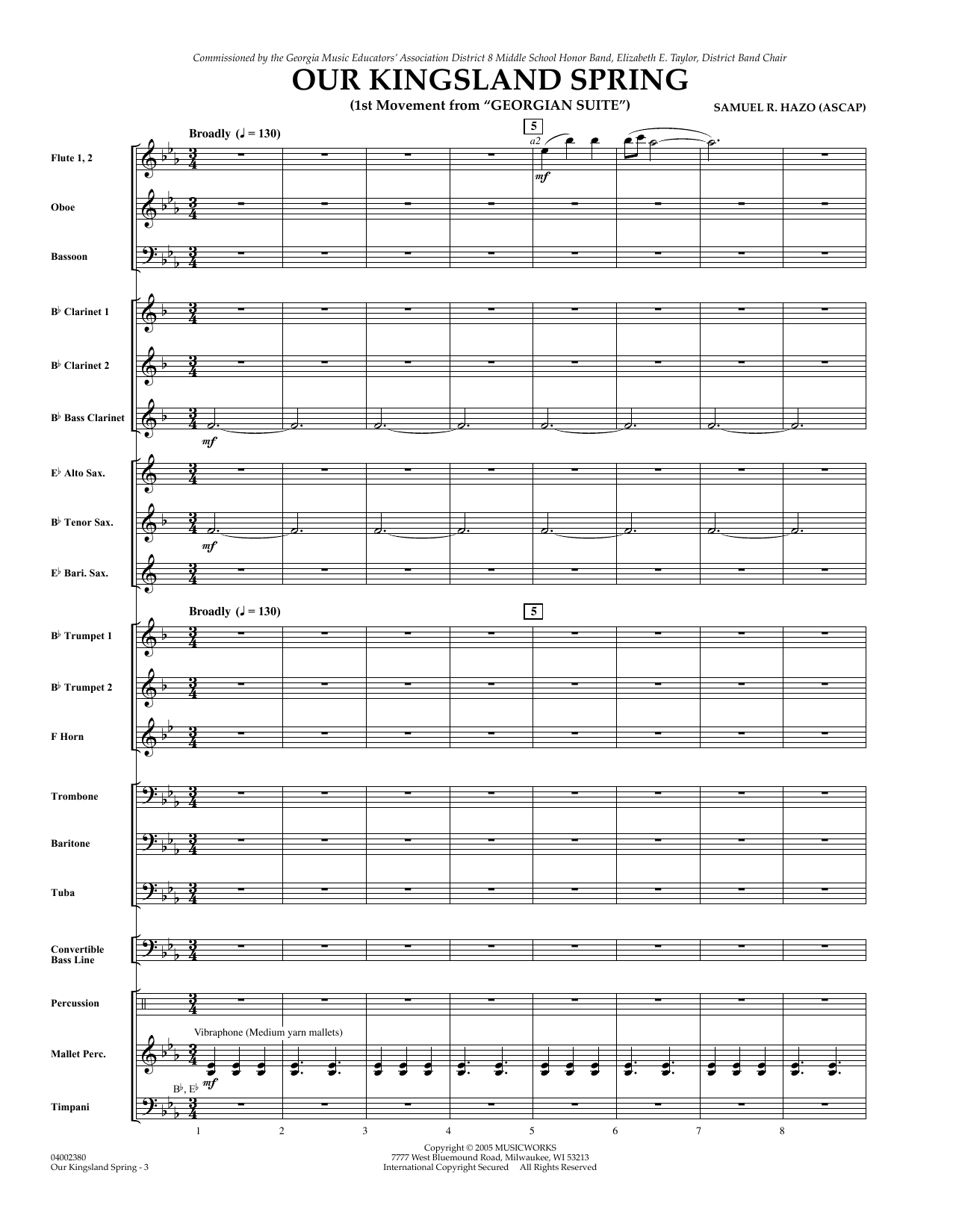

Our Kingsland Spring (Movement I of "Georgian Suite"): Concert Band Conductor Score & Parts
By Samuel R. Hazo
Grade: 2
Item: 35-PK00321862
$65.00
Pickup currently not available
Buy Extra Parts (Digital PDF Download)
Parts Added to Cart!
Description
Commissioned by the Georgia Music Educators Association District 8 Honor Band, this lyrical work uses flowing melodic lines and creative scoring to create an effective setting for young bands. Sam skillfully alternates sections of light and delicate writing with full broad-sounding chorale passages in a work that definitely sounds more impressive and complex than its easy level would indicate. Dur: 3:25


Our Kingsland Spring (Movement I of "Georgian Suite"): Concert Band Conductor Score & Parts isn't in MakeMusic Cloud just yet...but it could be. Let us know you'd like to see it, and you'll help shape what comes next. In the meantime, start a free trial and dive into thousands of interactive titles your students can play along with today.
Request This Title
Tell us you want it.
Start Your Free Trial
Explore everything that's ready to play right now.
Sample Audio
No sample audio found.
Sample Video
No sample videos found.
Additional Details
Publisher:
Hal Leonard
SKU:
35-PK00321862
More about this title
About the Composer: Samuel R. Hazo
Samuel R. Hazo has built a significant catalog of accessible band and wind ensemble works that balance musical substance with practical classroom needs. His compositions for young ensembles consistently demonstrate a gift for orchestration; he knows exactly what each section can handle and writes for maximum effect without unnecessary complexity.
Hazo's commissions from state music education organizations reflect the trust directors place in his work. His scores read clearly, parts sit well in the hands of developing musicians, and the results sound polished in performance. He represents a lineage of composers deeply invested in the teaching band repertoire.
Why we love this
Hazo resists the urge to fill every measure with notes. Instead he uses silence, space, and sectional contrast to build sophistication. A band playing this work will encounter genuine lyricism and the chance to shape longer phrases without drowning in technical demands. The commissioned origin means this was written specifically for young ensembles that needed something fresh, beautiful, and achievable.
What to expect
Gentle and flowing, with moments of warmth and substance. The opening suggests a landscape unfolding; you hear clear melodic lines floating over understated support. When the chorale enters, the texture deepens and the music carries real weight without ever becoming heavy or strained.
Who it's for
Grade 2 bands ready to move beyond purely technical repertoire and engage with genuine musical expression. This works well for groups that have solid fundamentals but need parts that don't demand advanced virtuosity. It's equally valuable for honor bands looking for something lyrical and well-proportioned.
How to get the most out of it
- Balance the melodic line in measures where multiple sections carry thematic material simultaneously. Young bands often oversplay accompanying voices; conducting with clarity about foreground and background will help.
- Treat the chorale passages as opportunities for expressive control. Ask players to listen to each other's vibrato and tone color; these broad moments are where ensemble sound quality becomes audible.
- Shape the flowing sections with attention to phrase breathing. Mark logical stopping points in rehearsal and let your section leaders conduct their own entrances during transitions.
- Record a full run-through early and listen back as an ensemble. The piece's true impression comes from how seamlessly the light and dense sections connect.
How to use it
This pairs naturally with other Grade 2 lyrical works and provides excellent contrast on a concert with march or energetic repertoire. Consider it as an opener or midsection piece where you want to shift the mood toward reflection. The modest duration makes it flexible for various concert formats, and its commissioned connection to Georgia's music education community gives it meaningful local context if your region includes GMEA members.
Skills your students will build
- Phrasing and shaping long melodic lines
- Listening for balance between primary and secondary voice parts
- Responding to sectional contrasts in texture and dynamic
- Ensemble blend in sustained chorale passages
- Following expressive conducting gestures in lyrical contexts