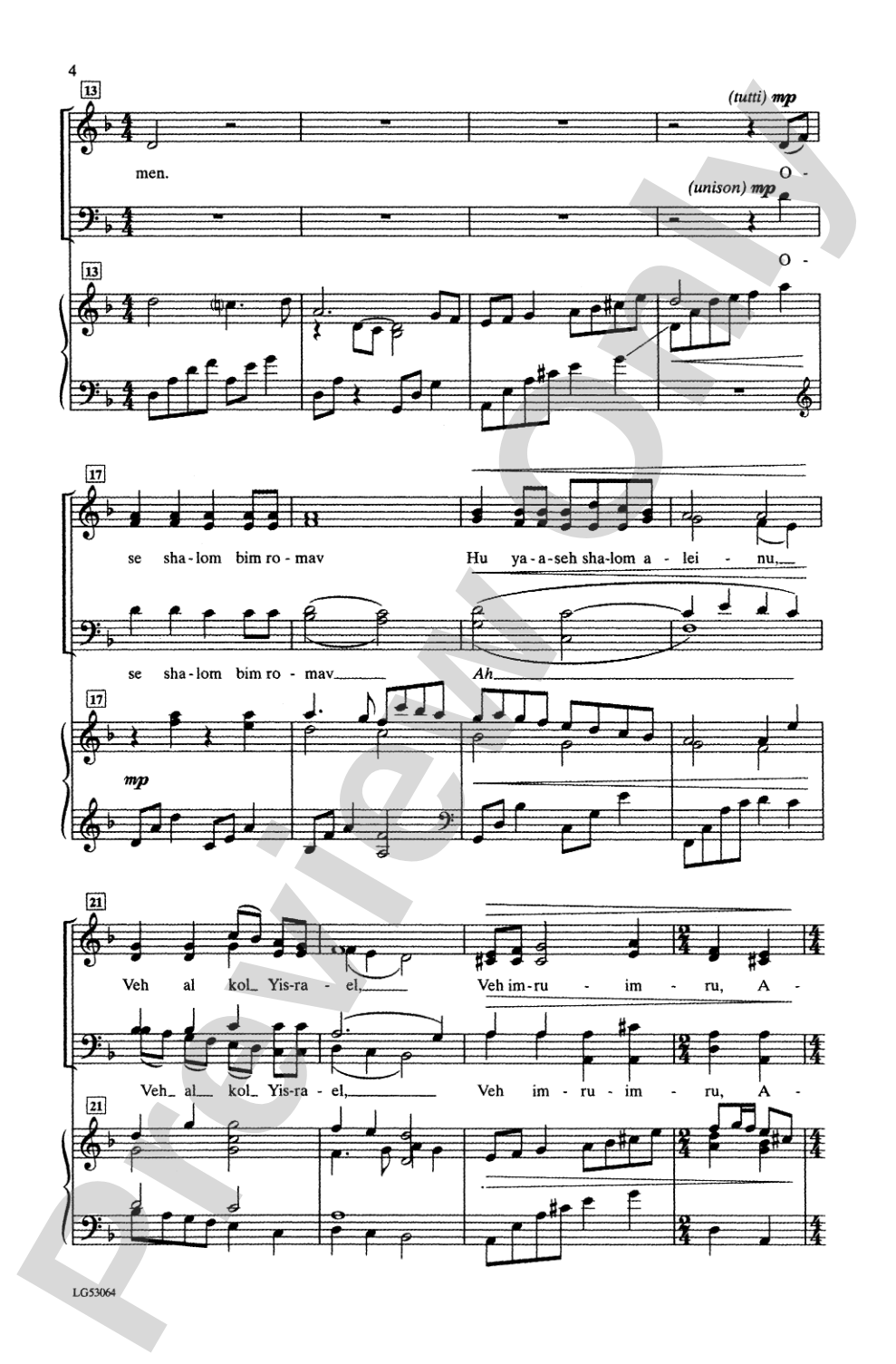
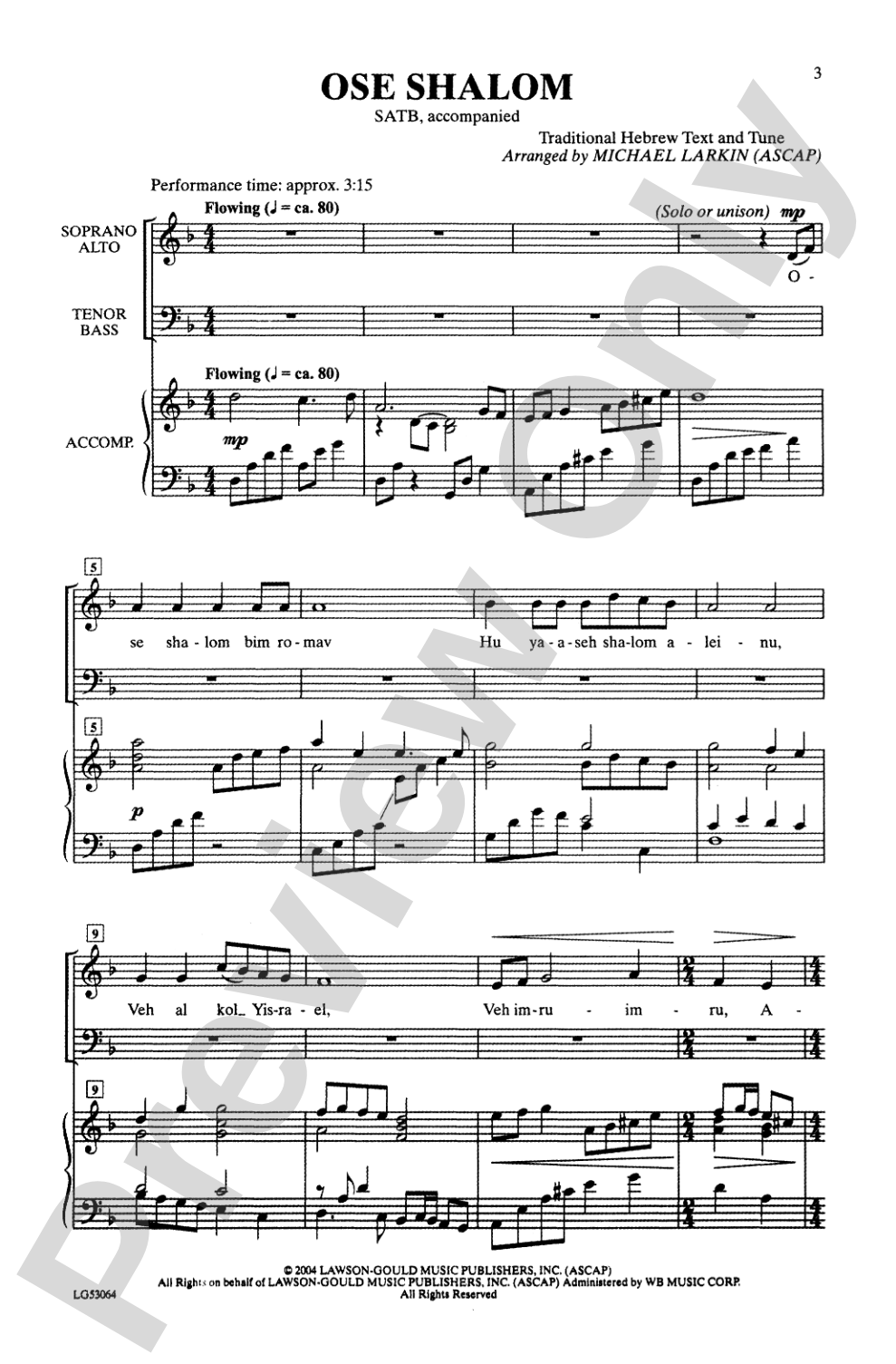
Ose Shalom Sheet Music Preview

Ose Shalom: SATB Choral Octavo

Traditional Hebrew Text and Tune / arr. Michael Larkin

Level: Moderate

Item: 00-PO-0005114

Digital Download
$2.25

Minimum order quantity: 20 copies

Description
Michael Larkin has edited and arranged the traditional Hebrew song "Ose Shalom" and turned it into an exceptional concert work. The translation of the traditional Hebrew is: "May He who establisheth peace in the heavens, grant peace unto us and unto all Israel; and say ye, Amen." This title is available in MakeMusic Cloud.

Ose Shalom: SATB Choral Octavo isn't in MakeMusic Cloud just yet...but it could be. Let us know you'd like to see it, and you'll help shape what comes next. In the meantime, start a free trial and dive into thousands of interactive titles your students can play along with today.

Sample Audio
0:00
0:00
Sample Video
Additional Details
Series: Alfred Archive Edition: Lawson-Gould Music Publishers
Publisher: Alfred Music
Page Count: 8
SKU: 00-PO-0005114

More about this title

About the Arranger: Michael Larkin

Michael Larkin

Michael Larkin shaped vocal and choral training for nearly three decades as chair of the Vocal/Choral Department at the Music School of Delaware, where he also maintained a private studio as artist faculty voice teacher. Beyond the classroom, he has conducted the New Ark Chorale as founder and music director, led the Brandywine Pops Orchestra, and directed music ministry at St. Barnabas Episcopal Church in Wilmington, Delaware.

As a baritone soloist, guest conductor, and festival clinician, Larkin has earned recognition across the region. His compositional output spans over 300 works for choir, voice, piano, and orchestra, published through major American music houses, reflecting a deep commitment to both creating and nurturing musical expression.

Why we love this

Larkin's treatment of this traditional Hebrew text brings genuine reverence without saccharine arranging. The moderate difficulty and eight-page length make it accessible for high school and community choirs while retaining the dignity the prayer demands, and its festival-ready status means it holds up beautifully under adjudication.

What to expect

A prayer set to music with quiet dignity. The traditional melody emerges clearly while the four voices create supportive harmony, giving the piece both intimacy and collective strength. There is warmth here, not bombast; the piece invites singers and listeners alike to reflect on the hope embedded in asking for peace.

Who it's for

High school and community SATB choirs seeking substantial repertoire that balances accessibility with artistic weight. This arrangement welcomes singers who are building independence in four-part writing and directors who want music that serves both concert programs and festival competitions.

How to get the most out of it

  • Emphasize the meaning of the text by shaping phrases toward the word "Amen." This arrival should feel earned, not rushed.
  • Balance the SATB voices carefully in the opening sections so no part drowns out the hymn-like quality of the melody.
  • Use the dynamic markings as guideposts for emotional arc rather than mechanical shifts; let each section breathe into the next moment of intensity.
  • If performing with accompaniment, ensure the recorded version or live accompanist locks the tempo with your conductor's interpretation early in rehearsals.

How to use it

Program this as a centerpiece in a concert devoted to world music or sacred traditions, where it can stand alongside other faith-based repertoire. It also serves as a strong festival selection for choirs preparing contest materials at the intermediate level, offering judges clarity of part-writing and emotional authenticity.

Skills your students will build

  • Four-part SATB balance and voice independence
  • Singing texts in Hebrew with accurate pronunciation and phrasing
  • Building sustained legit tone across dynamic changes
  • Understanding the relationship between text meaning and musical expression
  • Reading and executing moderate complexity with traditional harmonic language

You May Also Like