Orinoco Cocoa: E-flat Baritone Saxophone Sheet Music Preview

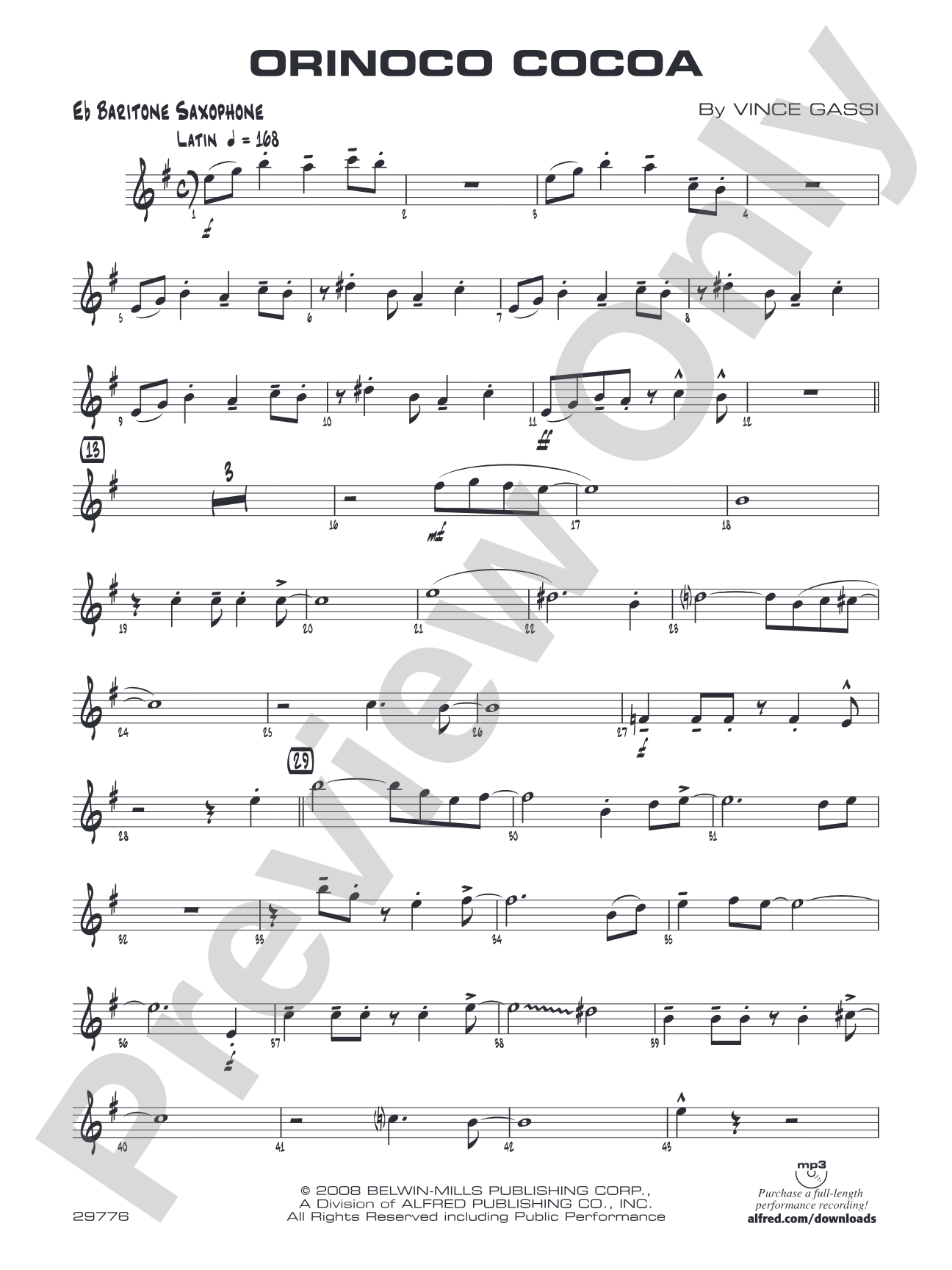
Orinoco Cocoa: E-flat Baritone Saxophone

By Vince Gassi

Grade: 1 (Easy)

Item: 00-PC-0017132_BTX

Digital Download
$3.00
Description
An easy Latin chart for the young player, composer/arranger Vince Gassi blended Orinoco Cocoa just right, with a terrific melody that sticks in your head, written out alto sax and trombone solos, 1st trumpet range to written F top line and a fun piano part. This one has a great Latin essence and is accessible. (4:24) This title is available in MakeMusic Cloud.

Don't just read it, hear it, play along with it, and watch your students grow with it. In MakeMusic Cloud, Orinoco Cocoa: E-flat Baritone Saxophone comes alive with professional accompaniment, adjustable tempo, and built-in practice tools that turn solo practice into real progress.

Sample Audio
0:00
0:00
Sample Video
Additional Details
Series: First Year Charts for Jazz Ensemble
Publisher: Alfred Music
Page Count: 82
SKU: 00-PC-0017132_BTX

More about this title

About the Composer: Vince Gassi

Vince Gassi

Vince Gassi holds a Bachelor of Music from the University of Western Ontario and has studied composition and arranging at the Dick Grove School of Music in Los Angeles. He earned his Ph.D. from York University in Toronto, where he continues to be active in the music education community.

With more than 100 published works to his name, Gassi has built a reputation for writing music that engages young musicians while maintaining artistic integrity. His compositions and arrangements appear regularly on festival and contest programs across North America, Europe, and Japan. As a clinician, guest conductor, and adjudicator, he leads workshops on creative engagement and digital workflow strategies for music directors. His teaching background spanning twenty-five years in instrumental music at the elementary and secondary levels directly informs the accessibility and pedagogical strength of his work.

Why we love this

Gassi knows exactly what a first-year jazz ensemble needs to sound polished without getting bogged down in technical obstacles. The melodic hook is strong enough that students hear themselves making music immediately, and the written-out solos for alto sax and trombone give younger improvisers a concrete model to build from while still allowing for personalization. This is the kind of chart that builds genuine enthusiasm for jazz in a young program.

What to expect

Bright and infectious, with a rhythmic warmth that comes from Gassi's sure understanding of Latin grooves. The melody sticks because it's shaped for young voices and young ears, memorable without being simplistic, and the Latin essence runs through every part, not just the rhythm section.

Who it's for

Jazz ensembles in their first or second year of playing together, or any young ensemble building foundational jazz vocabulary. This works equally well for students encountering Latin jazz for the first time and for programs that need reliable, engaging material for festival or concert programming.

How to get the most out of it

  • Balance the melody across the trumpet section so it doesn't overpower the rest of the ensemble; the top line sits high (written F), so voice the voicings beneath it with intention.
  • Lock the Latin feel with your rhythm section early in rehearsal. The piano part carries much of the groove, so make sure the pianist and bass understand the clave pattern before full ensemble runs.
  • Give the alto sax and trombone soloists time to internalize their written passages before asking them to add interpretation; once secure, encourage them to phrase naturally rather than mechanically.

How to use it

Program this as a standalone feature at a pops or jazz concert to showcase your ensemble's growing maturity in the idiom. It pairs well with other accessible jazz fare and works beautifully as a festival or contest selection where judges expect solid fundamentals and genuine musicianship from newer players.

Skills your students will build

  • Latin rhythmic feels and clave patterns
  • Reading and playing written jazz solos
  • Balancing melody against jazz voicings
  • Ensemble cohesion in small-group and full-section contexts
  • Fundamental swing articulation in a Latin context

You May Also Like