
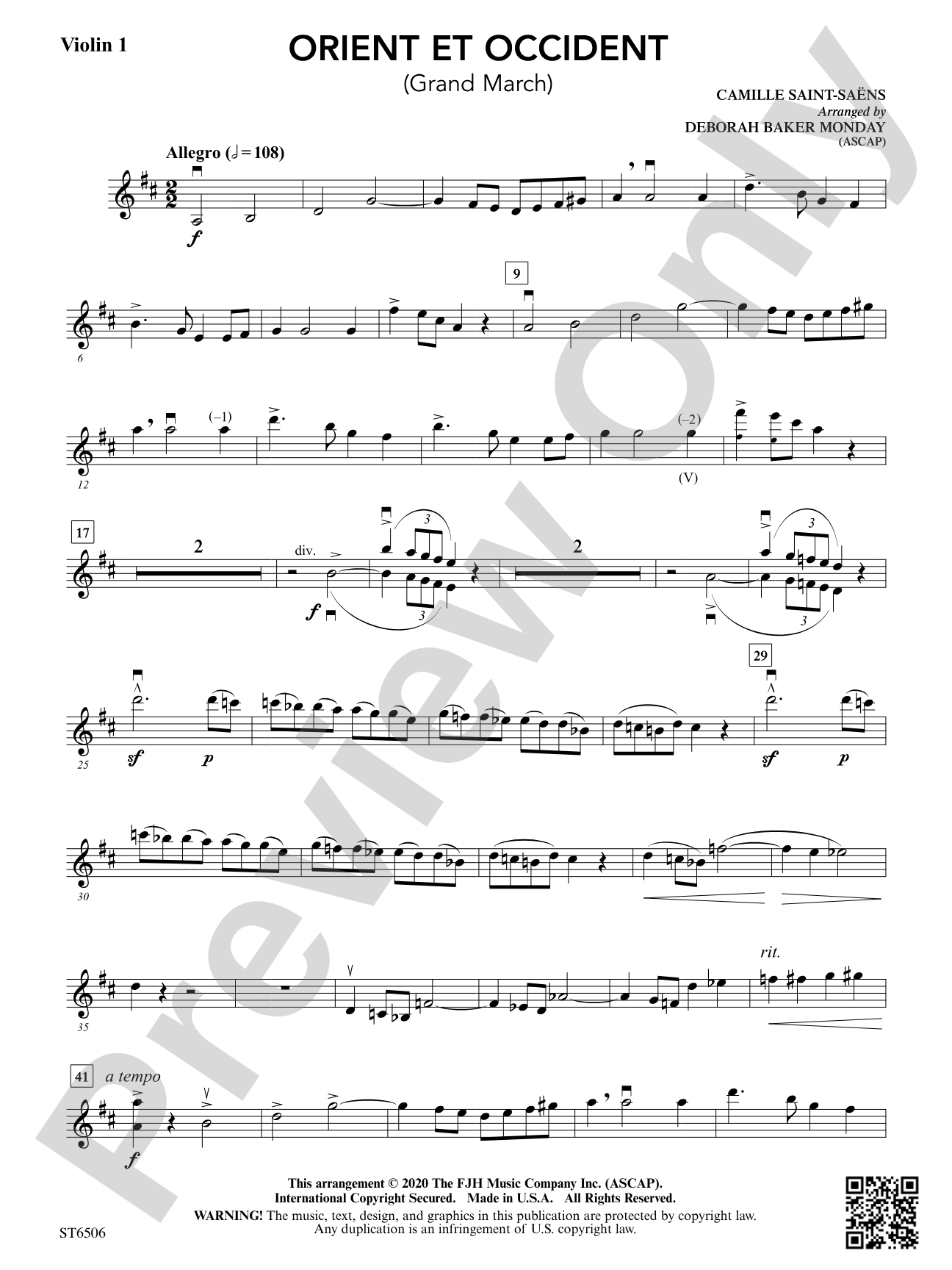

Orient et Occident (Grand March): Violin 1
Grand March
By Camille Saint-Saëns / arr. Deborah Baker Monday
Grade: 3.5
Item: 98-PC-DST6506_VN1
$7.00
Pickup currently not available
Description
This brilliant march in grand concert style works beautifully for strings! A powerful melodic line combines with strong rhythms and moving harmonic shifts as the piece unfolds. After a wonderful exchange of the opening themes, the piece moves into an energetic coda with a riveting ending. A perfect performance piece at concert or festival as well as an ideal change of pace for any program!


Don't just read it, hear it, play along with it, and watch your students grow with it. In MakeMusic Cloud, Orient et Occident (Grand March): Violin 1 comes alive with professional accompaniment, adjustable tempo, and built-in practice tools that turn solo practice into real progress.
Open in the Player
Jump straight in and assign it today.
Start Your Free Trial
Open this title and explore the full library in minutes.
Sample Audio
1
Audio File
--:--
0:00
0:00
Sample Video
Additional Details
Series:
FJH String Orchestra
Publisher:
The FJH Music Company, Inc.
SKU:
98-PC-DST6506_VN1
More about this title
About the Composer: Camille Saint-Saëns
Camille Saint-Saëns (1835-1921) was a French composer of exceptional versatility and prolific output. His catalog spans operas, symphonies, concertos, chamber music, and solo works, and his compositional voice ranged from conservative romanticism to experimental modernism. Saint-Saëns had a gift for memorable melody and orchestral color that made his music immediately appealing to audiences, and his technical mastery influenced generations of musicians.
For string educators, Saint-Saëns remains an essential figure because his writing for strings balances accessibility with genuine sophistication. His melodies sing naturally on the instrument, his harmonies reward careful listening, and his structural clarity teaches young musicians how ideas develop and transform. This march exemplifies his ability to write music that feels grand without demanding virtuosity.
Why we love this
Deborah Baker Monday's arrangement brings Saint-Saëns' orchestral brilliance within reach of a young string ensemble, capturing the march's ceremonial grandeur and energetic momentum. The piece trades none of its character for accessibility; the powerful thematic exchanges and harmonic shifts remain intact and engaging. It's a legitimate concert work that holds the attention of both performers and audience, not a simplified excerpt.
What to expect
A processional energy meets concert elegance. The opening establishes a dignified, forward-moving character with strong harmonic anchors, while the exchange of themes creates dialogue and moment. As the coda arrives, the tempo lifts and the orchestration gains urgency, building to a conclusion that feels both satisfying and celebratory.
Who it's for
String orchestras at the Grade 3.5 level seeking a concert piece with real musical substance and memorable character. Directors programming festivals or concert performances will find an arrangement that delivers impact without overextending young players. This works equally well as a centerpiece or as a program refresher that offers stylistic contrast.
How to get the most out of it
- Shape the opening melodic line with gentle swells rather than dramatic dynamics; let the harmonic movement and orchestration create the sense of scale.
- Emphasize rhythmic precision in the theme exchanges so each section lands cleanly and the conversation between voices feels intentional.
- Build steady momentum toward the coda rather than rushing; the energetic conclusion needs the contrast of measured pacing in what comes before.
- Balance the moving inner voices with your principal melodists; these harmonic shifts are what give the march its harmonic sophistication.
How to use it
Program this as a concert opener or closer where you want to make a statement; it has the stature to anchor a set. Pair it with Baroque or contemporary works to highlight how Saint-Saëns bridges tradition and sophistication. It also serves as an excellent choice for festival competitions where judges value both musicality and clear ensemble control.
Skills your students will build
- Phrasing in march style while maintaining harmonic awareness
- Responding to thematic dialogue and motivic exchange
- Balancing primary melody with sustained inner harmony
- Building and controlling tempo changes toward a climactic conclusion
- Reading parts that shift between melodic and accompanying roles