Opus One Sheet Music Preview

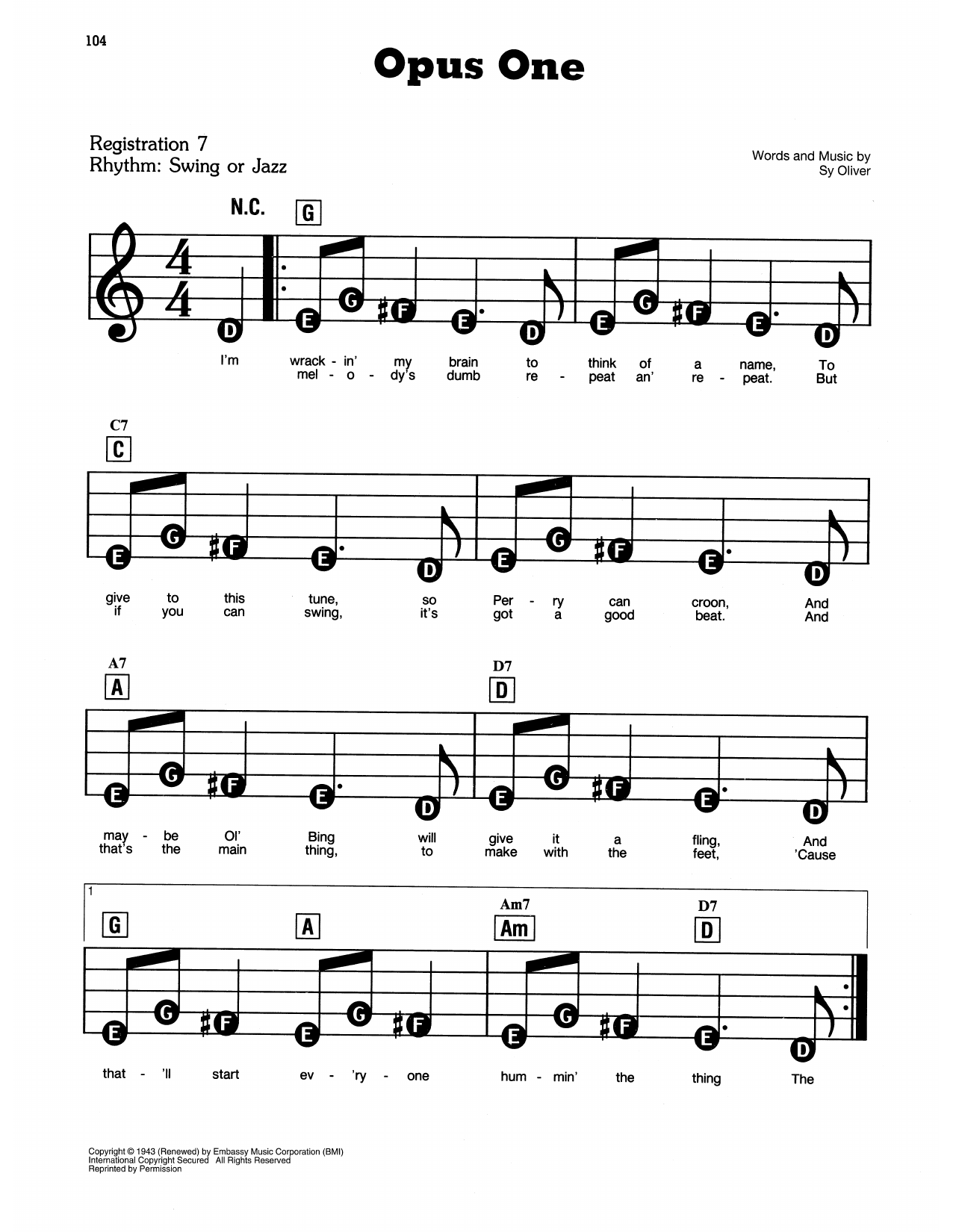
Opus One: E-Z Play Today

As performed by Sy Oliver

Item: 35-DS01862108

Digital Download
$4.99
Description

Opus One: E-Z Play Today isn't in MakeMusic Cloud just yet...but it could be. Let us know you'd like to see it, and you'll help shape what comes next. In the meantime, start a free trial and dive into thousands of interactive titles your students can play along with today.

Sample Audio
No sample audio found.
Sample Video
Additional Details
Publisher: Hal Leonard
Page Count: 3
SKU: 35-DS01862108

More about this title

About the Artist: Sy Oliver

Sy Oliver was a legendary arranger, composer, and bandleader whose work shaped the sound of American big band and jazz music from the 1930s onward. His arrangements for Count Basie, Tommy Dorsey, and his own orchestras became blueprints for how to balance sophistication with swing, earning him recognition as one of the most influential voices in orchestration during jazz's golden age.

Oliver's compositions and arrangements are studied in music education because they demonstrate how to voice chords for maximum impact, how to write memorable lines that serve the ensemble, and how to maintain clarity within complex harmonic textures. His legacy lives on in every jazz program that values both musicianship and accessibility.

Why we love this

Sy Oliver's compositions translate beautifully to solo piano, and this three-page arrangement captures the swagger and sophistication of big band writing without demanding orchestral forces. Pianists gain insight into how professional arrangers think about voicing and comping while playing something genuinely stylish.

What to expect

Sleek and purposeful, with the kind of harmonic sophistication that makes you sound better than you might expect. The arrangement swings without apology and carries the unmistakable confidence of music written by someone who knew exactly how orchestras function.

Who it's for

Intermediate to advanced pianists working in jazz styles who want to learn from a master arranger's approach to orchestration. Teachers introducing students to big band history through playable repertoire will find this especially useful.

How to get the most out of it

  • Listen to Oliver's original big band recordings to understand the groove and phrasing before mapping it onto the keyboard. The rhythmic feel matters as much as the notes themselves.
  • Treat the left hand comping as conversation rather than accompaniment. It should breathe and respond to the melody, not lock into a rigid pattern.
  • Balance clarity in the voicings by letting the treble line sing. In big band arrangements translated to piano, the top note often carries the tune's personality.

How to use it

Feature this as a solo piano interlude between larger ensemble pieces, or assign it to a pianist preparing for jazz auditions or competitions. It also works beautifully as a teaching example when discussing how big band voicings adapt to smaller ensembles.

Skills your students will build

  • Reading and voicing jazz chord symbols
  • Comping in the stride and modern jazz piano styles
  • Interpreting big band arranging concepts at the keyboard
  • Building rhythmic independence between hands
  • Recognizing and executing swing feel in performance

You May Also Like