Opus de Funk: 2nd Baritone T.C. Sheet Music Preview

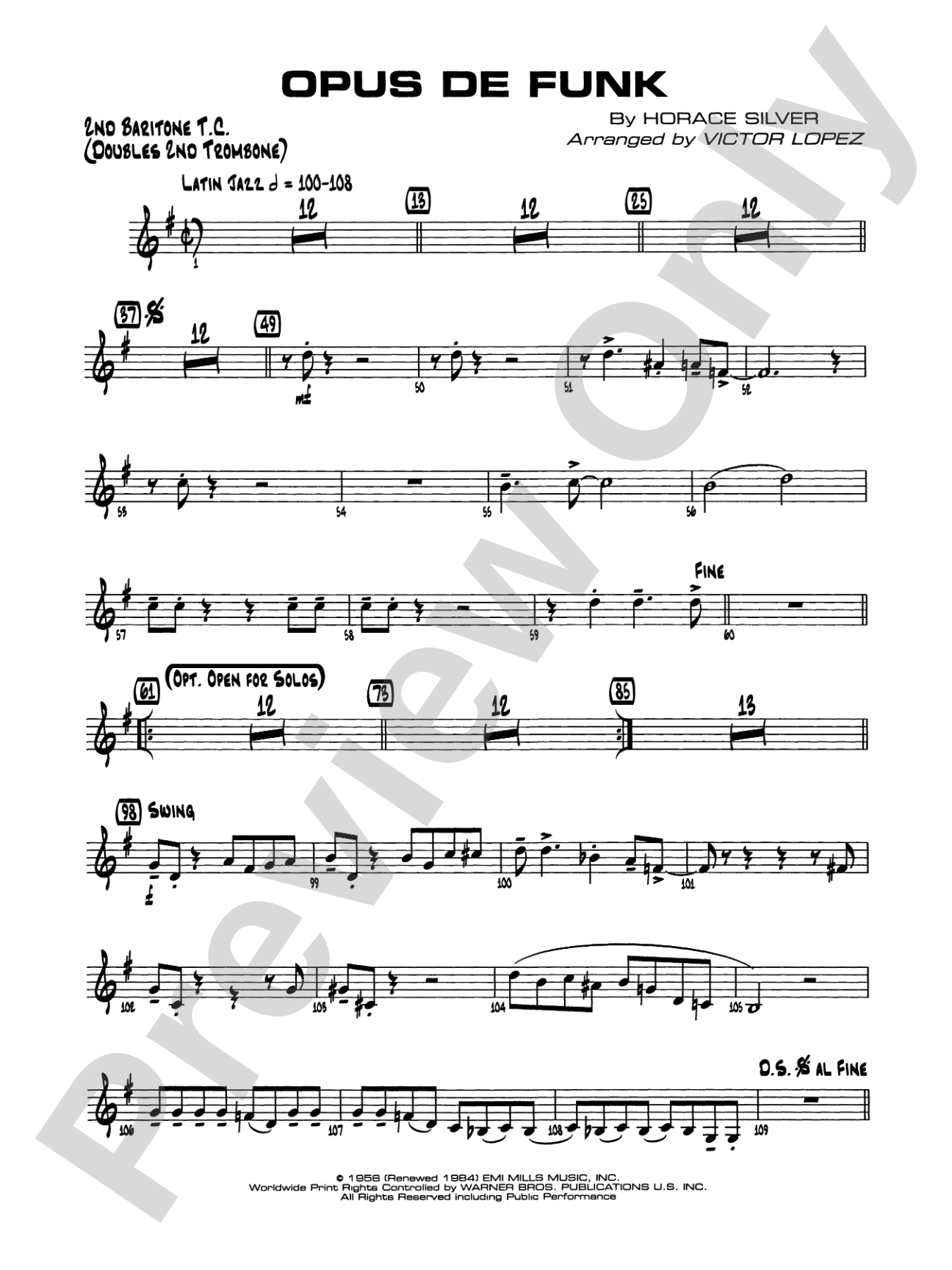
Opus de Funk: 2nd Baritone T.C.

By Horace Silver / arr. Victor López

Grade: 3 (Medium)

Item: 00-PC-0002449_BTC2

Digital Download
$3.00
Description
Opus de Funk is a hard driving Latin-swing featuring alto and trumpet. Arranger Victor López has tamed this very hip Horace Silver jazz tune for the Jazz Band Series. With a sax soli, a trombone and tenor soli, alto solo, trumpet solo, and bass solo there's plenty of action in this chart. Trumpet range to written G, bone to F. This chart has style! (3:02)

Don't just read it, hear it, play along with it, and watch your students grow with it. In MakeMusic Cloud, Opus de Funk: 2nd Baritone T.C. comes alive with professional accompaniment, adjustable tempo, and built-in practice tools that turn solo practice into real progress.

Sample Audio
0:00
0:00
Sample Video
Additional Details
Series: Jazz Band Series
Publisher: Alfred Music
Page Count: 66
SKU: 00-PC-0002449_BTC2

More about this title

About the Composer: Horace Silver

Horace Silver (1928-2014) was a pianist and composer whose harmonic sophistication and accessible melodic gifts made him one of hard bop's defining voices. His tunes have become jazz standards, recorded hundreds of times across decades, and his facility for blending blues feeling with modern harmony created a template that shaped countless players and arrangers. In the classroom, Silver's compositions offer students a direct entry into jazz composition that rewards both technical study and intuitive musicality.

Why we love this

Victor López has captured all of Silver's rhythmic vitality and harmonic snap while keeping the chart playable for working jazz bands. The solos are generous and varied enough that every section gets a moment, and the Latin-funk pocket sits comfortably in the rehearsal room without losing the hipness that makes this tune endure.

What to expect

Funky, propulsive, and irrepressibly hip. The Latin-swing feel is hypnotic and makes you want to move; it's the sound of a small-group jazz session that got turned up loud and shaped for the big stage. Fresh and sly without trying too hard.

Who it's for

Jazz ensemble directors who want a swinging, accessible hard bop chart that sits at a realistic difficulty level for secondary school or community jazz bands. The solos are manageable for developing improvisers, and the ensemble writing stays clear enough that young musicians can hear the harmony and lock into the groove.

How to get the most out of it

  • Lock the ride cymbal and kick drum into the same backbeat pocket; this chart lives and dies on that groove staying true. Record a click at the exact tempo and listen back after rehearsals to check how far the ensemble drifts.
  • Balance the sax soli so the melody floats over the ensemble voicings rather than getting buried. Tenor and trombone need enough air to cut through, especially during their featured moments.
  • Let soloists shape their own time over the rhythm section rather than stiffening the ensemble accompaniment. The best renderings of this tune have flex and conversation between the soloist and the band.
  • Pay attention to the written ranges: trumpet goes to G, trombone to F. Make sure your lead trumpet has the chops and your lead trombone is comfortable up there, and give them advance notice so they can prepare.

How to use it

This works as a high-energy centerpiece on a jazz concert, especially when paired with ballads or straighter swing tunes that let you showcase range. It's equally at home as a festival or clinic performance piece where a short, punchy chart (just over three minutes) leaves the audience smiling and wanting more.

Skills your students will build

  • Latin-funk groove coordination between rhythm section and ensemble
  • Improvisation over blues-based changes with modern harmony
  • Sectional independence: reading and balancing soli while maintaining ensemble groove
  • Jazz articulation and phrasing appropriate to funk and hard bop idioms
  • Reading and executing a conducted jazz arrangement with dynamic contrast

You May Also Like