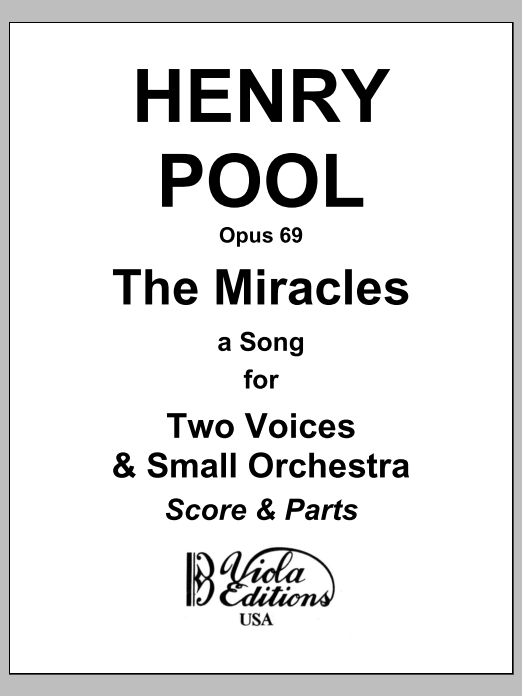
Opus 69,  "The Miracles", a Song for Two Voices  Small Orchestra Sheet Music Preview

Opus 69, "The Miracles", a Song for Two Voices Small Orchestra: String Orchestra Conductor Score & Parts

Arranged by Henry Pool

Item: 35-PK00279140

Digital Download
$9.75

Buy Extra Parts (Digital PDF Download)

Parts Added to Cart!

Description
Duration: 05:00

Opus 69, "The Miracles", a Song for Two Voices Small Orchestra: String Orchestra Conductor Score & Parts isn't in MakeMusic Cloud just yet...but it could be. Let us know you'd like to see it, and you'll help shape what comes next. In the meantime, start a free trial and dive into thousands of interactive titles your students can play along with today.

Sample Audio
No sample audio found.
Sample Video
Additional Details
Publisher: Hal Leonard
SKU: 35-PK00279140

More about this title

Why we love this

Pool's orchestration gives this piece remarkable transparency without sacrificing warmth. The two-voice writing sits naturally within a string ensemble texture, making it equally rewarding for chamber-sized groups or full orchestras. It's a sophisticated arrangement that respects the original while creating something distinctly orchestral.

What to expect

Graceful and introspective, with the kind of clarity that comes from writing for two distinct melodic lines within a unified string texture. The five-minute duration unfolds with unhurried pacing, inviting listeners into a contemplative space rather than demanding attention through virtuosity.

Who it's for

String orchestras at the intermediate to advanced level seeking repertoire that develops part independence and refined ensemble listening. This works equally well for school orchestras looking to program something substantial or chamber orchestras wanting a modern classical arrangement with genuine musical weight.

How to get the most out of it

  • Balance the two melodic lines carefully during unison passages; they should feel like distinct voices even when moving together rather than blending into one.
  • Work the string sections separately first, particularly the accompanying parts, to establish a steady harmonic foundation before bringing the soloists in.
  • Watch for intonation shifts where the two voices move apart; assign a principal player from each section to lock in pitch and lead the ensemble.

How to use it

Pair this with Baroque or early Classical works to highlight how modern arrangers approach period material, or program it alongside other contemporary string orchestra pieces to show your ensemble's range. It also serves as an excellent encore piece or standalone concert opener.

Skills your students will build

  • Sustaining independent melodic lines within ensemble context
  • Balancing lyrical phrasing across sectional parts
  • Listening for harmonic support while maintaining individuality
  • Intonation awareness in sustained string writing

You May Also Like