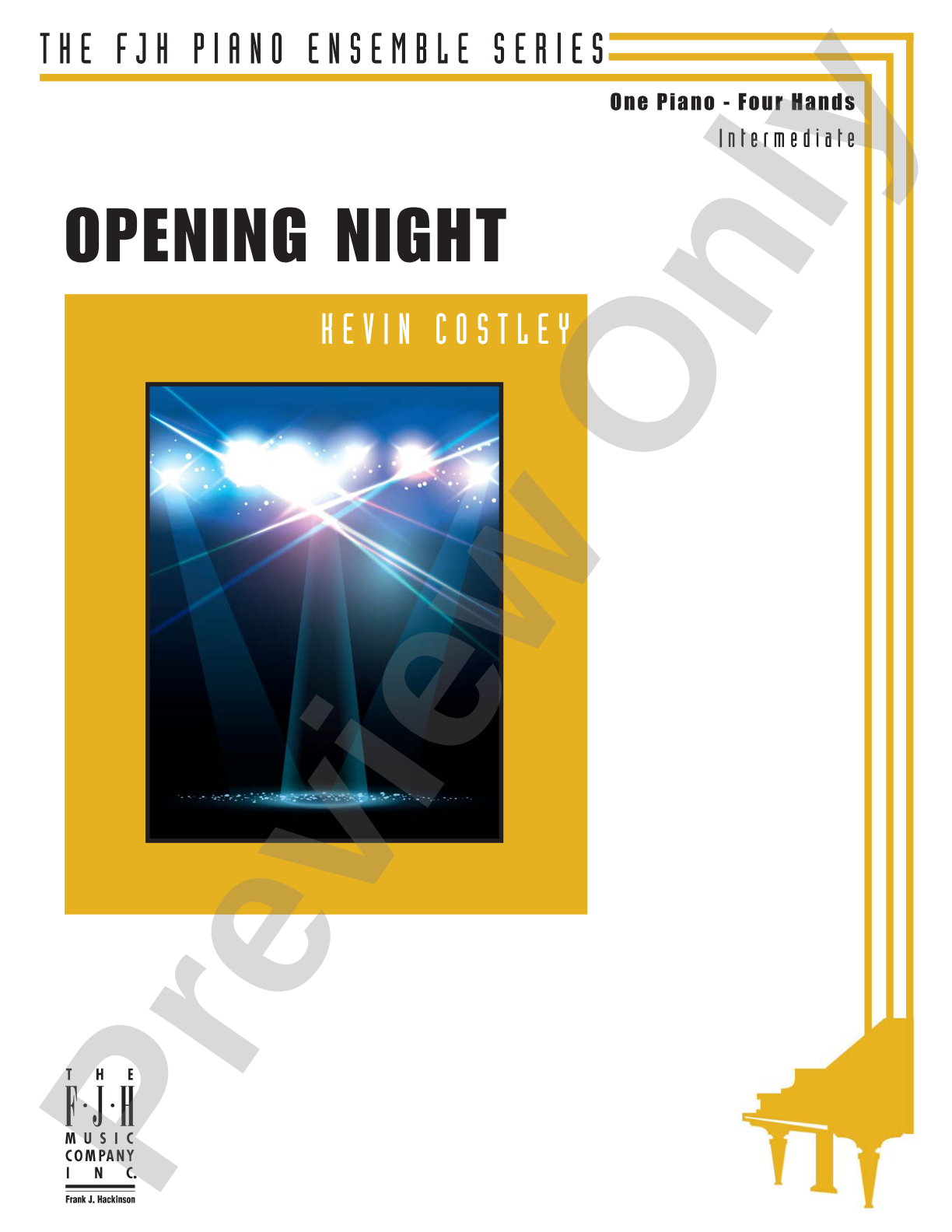
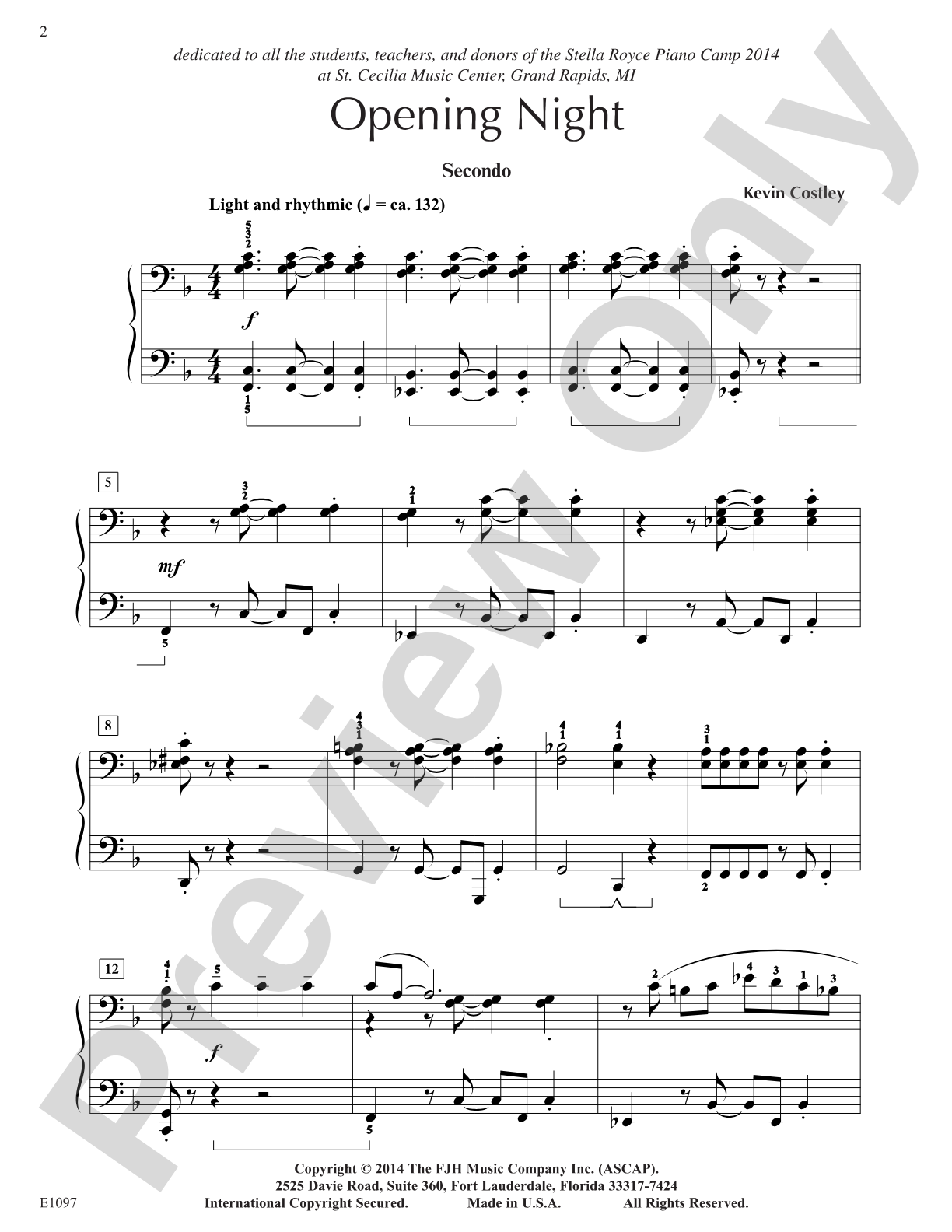
This light, rhythmic duet in the key of F major passes the melody between the Secondo and Primo a few times. The syncopation, thick sonority, and frequent accidentals give it a twinge of Latin jazz. The cheerful upbeat tempo makes this a nice opener or closer for any recital.
Discover MakeMusic Cloud: thousands of interactive titles your students can play along with today.
The Latin jazz inflection lifts this duet well above standard intermediate repertoire without demanding virtuosity. Costley balances accessibility with genuine rhythmic sophistication, giving both players moments in the spotlight while the syncopation keeps the piece driving forward. It's the kind of piece that sounds far more impressive than it is to learn, which makes it genuinely fun to teach.
What to expect
Opening Night captures that moment before the curtain rises, all anticipation and energy. The melody dances between the primo and secondo parts with a relaxed sophistication, and the Latin undertones give the piece a worldly warmth that keeps it from feeling purely classical. Thick textures and strategic syncopation create momentum without ever feeling rushed.
Who it's for
This duet works beautifully for intermediate students who are ready to pass the lead between hands and explore rhythmic subtlety without getting lost in technical passages. It's equally valuable for studio teachers pairing students of similar level or for ensemble recitals where you want something that feels polished and cohesive.
How to get the most out of it
Lock the syncopated rhythms between parts first. Play the piece on a single pitch if needed to ensure both players feel the same pulse before adding melody and harmony.
Let the accidentals breathe naturally rather than overemphasizing them. They should flavor the F major tonality, not fight against it.
Tempo matters enormously here. The cheerfulness lives in the steadiness of the upbeat pace, so find a tempo both players can maintain comfortably without rushing through the syncopation.
How to use it
Save this for a position where you need immediate engagement. The upbeat character and bright sonority make it an ideal opening statement for a recital, or use it as a finale to leave the audience with something memorable and rhythmically alive. It pairs well in a program alongside other duet work, showing range without demanding an awkward key change to reset the room.
Skills your students will build
Syncopation across two coordinated parts
Passing melodic material between primo and secondo
Reading accidentals in a primarily major key context
Maintaining ensemble cohesion at a steady upbeat tempo
Balancing thick sonority without muddying the rhythm
You May Also Like
Scan to Complete Your Purchase
Use your phone's camera to scan the code below
You'll log in on your phone and the order will be added to your account