Open Arms: 1st B-flat Clarinet Sheet Music Preview

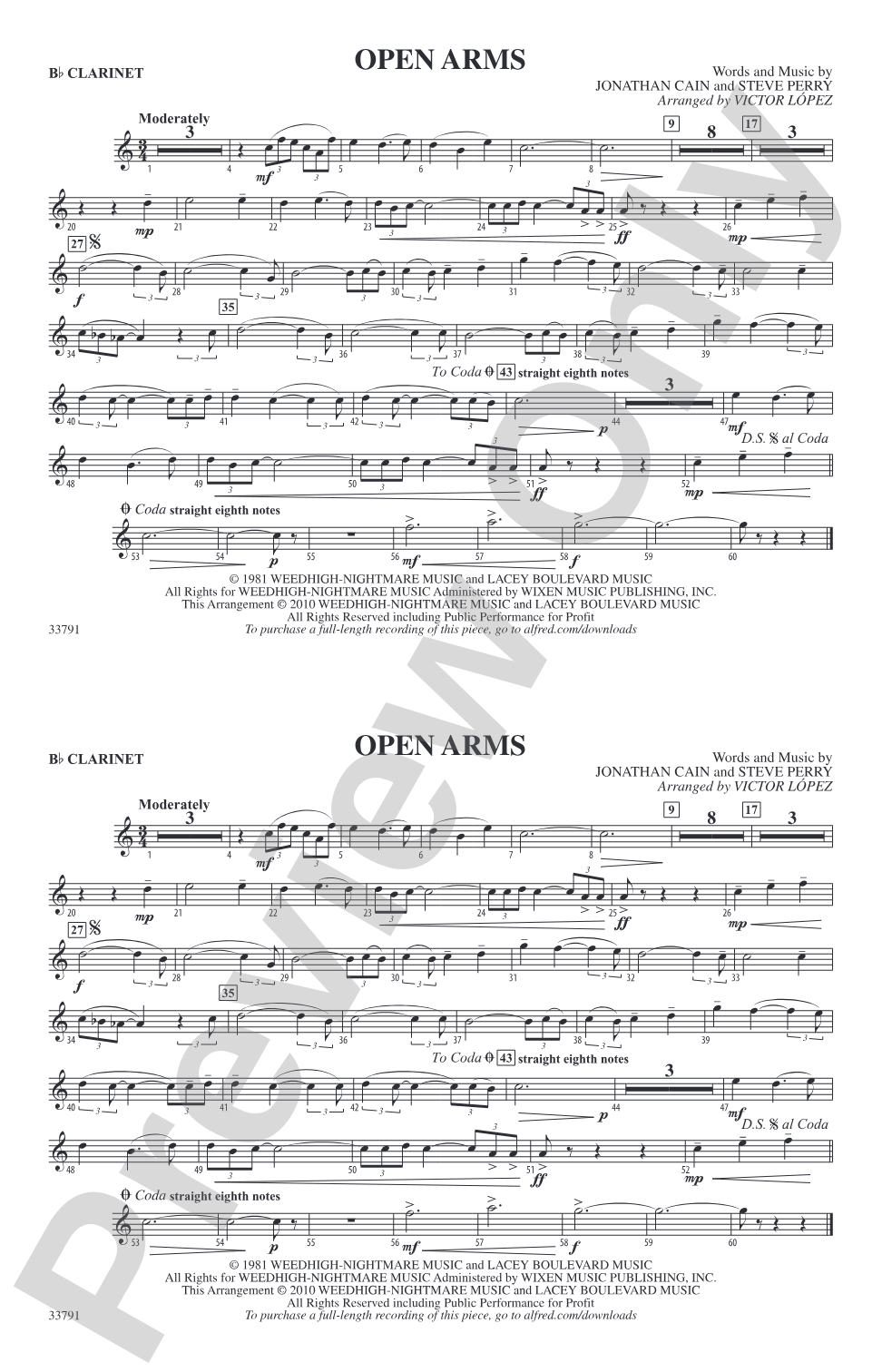
Open Arms: 1st B-flat Clarinet

Words and music by Jonathan Cain and Steve Perry [Journey] / arr. Victor López

Grade: 3 (Medium)

Item: 00-PC-0018222_C1

Digital Download
$3.00
Description
One of the best power ballads ever written is now ready for your marching band! This Victor López arrangement of the song made famous by Journey would be perfect in a halftime show as well as during homecoming festivities. Featuring easy low brass and trumpet solos, this will be a fan favorite for years to come. (2:48)

Don't just read it, hear it, play along with it, and watch your students grow with it. In MakeMusic Cloud, Open Arms: 1st B-flat Clarinet comes alive with professional accompaniment, adjustable tempo, and built-in practice tools that turn solo practice into real progress.

Sample Audio
0:00
0:00
Sample Video
Additional Details
Series: Mega Sounds for Marching Band
Publisher: Alfred Music
Page Count: 110
SKU: 00-PC-0018222_C1

More about this title

About the Composer: Jonathan Cain

Jonathan Cain joined Journey as keyboardist in 1980 and became one of the band's primary songwriters during their most commercially successful era. His gift for crafting memorable melodies and emotionally resonant arrangements helped define the arena rock sound of the 1980s, with "Open Arms" standing as one of his most enduring compositions.

Cain's work continues to influence popular music and appears regularly in educational settings, where his strong harmonic sensibilities and accessible melodic writing make his songs valuable teaching tools for ensemble directors.

Why we love this

Victor López has created an arrangement that captures the sweeping emotional arc of the original without requiring advanced technique from your ensemble. The Grade 3 level keeps the work accessible while the strategic placement of solos gives your brass section meaningful spotlight moments that audiences recognize immediately. This is the kind of piece that energizes a halftime show because the crowd already knows and loves it.

What to expect

The piece opens with gentle intimacy before building steadily toward a powerful, anthemic conclusion. Lush harmonic writing creates a cinematic quality that sits somewhere between a rock ballad and a concert band sound, giving your field a moment of genuine emotional lift rather than continuous high energy.

Who it's for

High school marching bands seeking stadium-ready material that connects with audiences beyond the ensemble itself. Directors programming halftime shows or special events will find this especially valuable because students already know the song, which accelerates learning and increases their investment in the performance.

How to get the most out of it

  • Balance the vocal melody line among your upper woodwinds and trumpets so the tune cuts through the harmonic foundation without overwhelming it.
  • Let the low brass solos breathe; resist rushing these passages even though they're relatively simple, since the emotional weight comes from space and deliberate phrasing.
  • Use the full 2:48 runtime to shape the arc from quiet opening through to the powerful conclusion; avoid any temptation to drive tempo throughout.
  • Assign your strongest intonation players to the sustained harmonic parts, as stationary chords in a ballad expose tuning issues that faster passages might mask.

How to use it

This works best as a centerpiece halftime selection where it can anchor a show thematically or emotionally. It also serves well during pep rallies, senior night tributes, or homecoming performances where the recognizable melody strengthens community connection. Consider pairing it with contrasting uptempo material to demonstrate your ensemble's range.

Skills your students will build

  • Balancing melody against harmonic accompaniment in an ensemble texture
  • Shaping long phrases within a slow tempo without losing rhythmic cohesion
  • Executing solo passages with confidence and musical maturity
  • Sustaining tone quality and intonation during held chords
  • Interpreting emotional dynamic direction rather than following only written dynamics

You May Also Like