
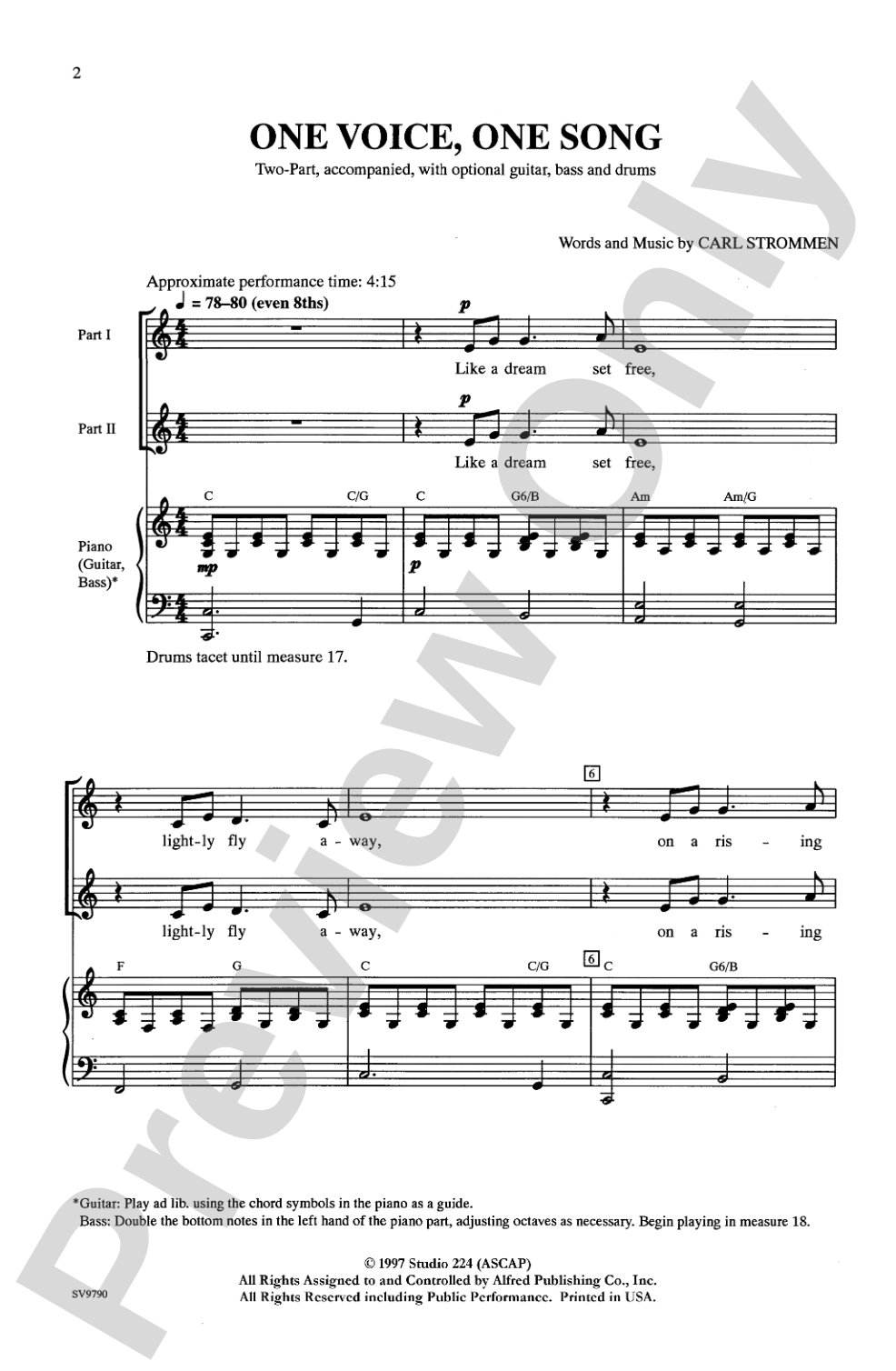
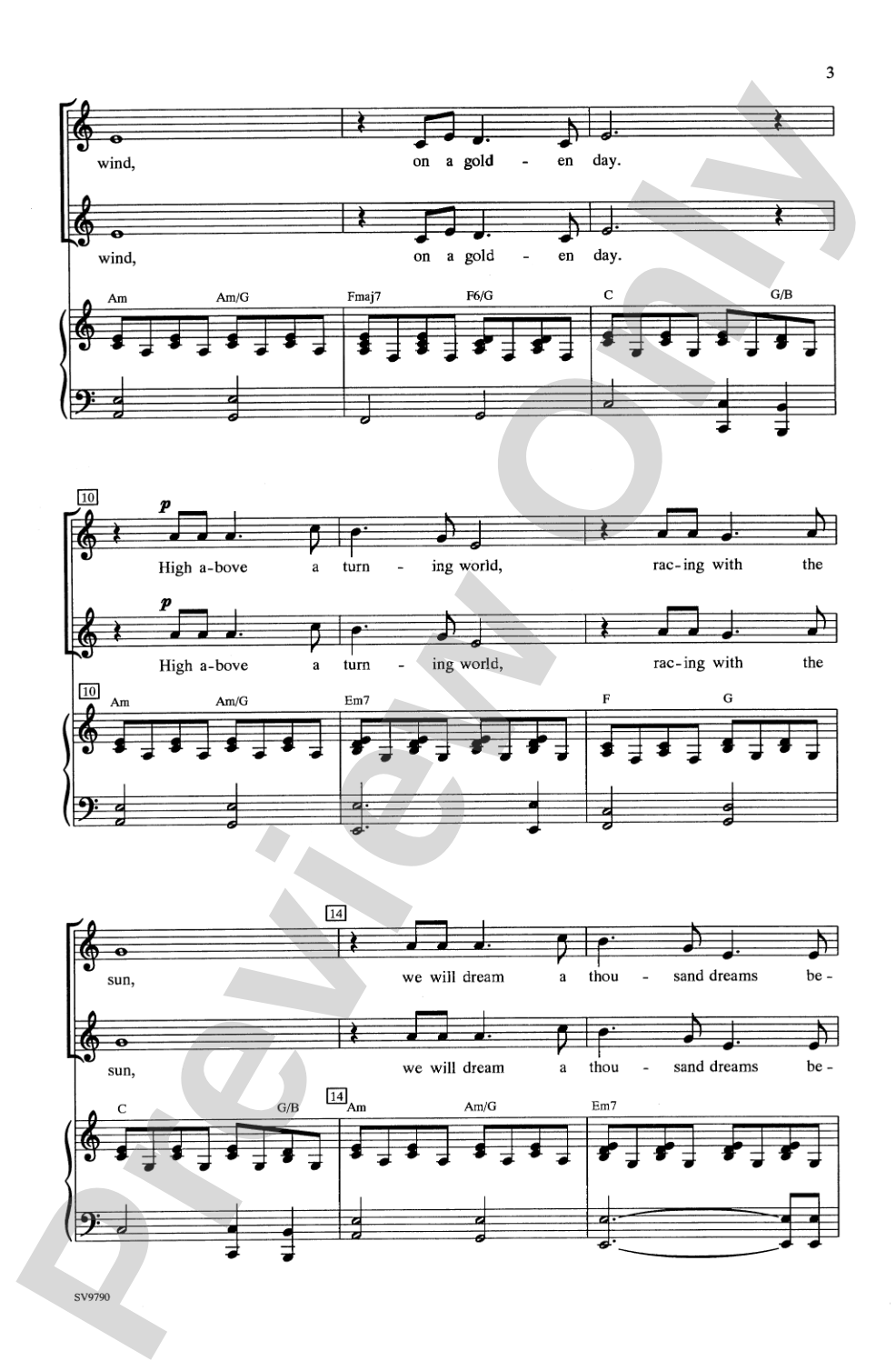

One Voice, One Song: 2-Part Choral Octavo
Words and music by Carl Strommen
Item: 00-PO-0005270
$2.25
Minimum order quantity: 20 copies
Pickup currently not available
Related Items
One Voice, One Song: 3-Part Mixed Choral Octavo |
$2.25
|
View |
Description
Carl Strommen at his choral-writing best! For more than 20 years Carl has been creating some of the most widely performed original choral selections for choirs at all levels. His 'Like an Eagle' has been performed by thousands of choirs around the world. Now, for 1997, Carl has created 'One Voice, One Song,' the perfect addition to any choir's performance. Don't miss this one!


One Voice, One Song: 2-Part Choral Octavo isn't in MakeMusic Cloud just yet...but it could be. Let us know you'd like to see it, and you'll help shape what comes next. In the meantime, start a free trial and dive into thousands of interactive titles your students can play along with today.
Request This Title
Tell us you want it.
Start Your Free Trial
Explore everything that's ready to play right now.
Sample Audio
No sample audio found.
Sample Video
No sample videos found.
Additional Details
Series:
Alfred Archive Edition: Studio PR Catalog
Publisher:
Alfred Music
Page Count:
12
SKU:
00-PO-0005270
More about this title
About the Composer: Carl Strommen
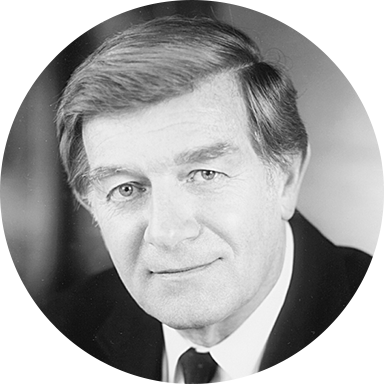
Carl Strommen's output spans band, orchestra, jazz ensemble, and choral music, establishing him as one of the most widely performed composers and arrangers working today. His works appear regularly in concert halls, on television, and in film scoring. He serves as an adjunct professor of orchestration and composition at the C.W. Post Campus of Long Island University and receives the ASCAP Standard Writers Award annually, recognition of his sustained creative output across multiple genres.
Strommen's accessibility to the choral community stems from his deep understanding of what works in rehearsal and performance. He remains active as both a clinician and commission writer, keeping his finger on the pulse of what directors and singers need. Based on Long Island, he maintains strong ties to the academic world while building a national reputation for music that sounds more sophisticated than it is to prepare.
Why we love this
Strommen writes 2-part music that feels complete rather than stripped-down. The piece balances accessibility with genuine musicality, making it equally suitable for developing choirs building confidence and experienced singers looking for quality repertoire that doesn't demand virtuosity. At 12 pages, it's substantial enough to anchor a concert but digestible for groups with limited rehearsal time.
What to expect
The piece carries warmth and unity in its title and theme. The music feels inclusive rather than challenging, welcoming singers into a straightforward harmonic landscape where both voices contribute equally to the emotional arc. There's an earnest quality to Strommen's writing here, straightforward and genuine without oversimplification.
Who it's for
This octavo works for middle school through adult choirs, particularly those new to part-singing or looking to build 2-part confidence without sacrificing musical substance. Community choirs, church choirs adding secular repertoire to their programs, and school choirs preparing festival or concert performances will find it reliable and rewarding.
How to get the most out of it
- Shape phrases with dynamic momentum rather than holding back on the lower part; Strommen's voicing thrives when both lines sing with equal commitment and presence.
- Use the text as your phrasing guide. Clear diction on 'one voice' and 'one song' creates the thematic anchor that ties the piece together.
- Balance the parts vertically so neither voice dominates. The strength of this arrangement depends on both parts sounding like partners, not a melody with accompaniment.
- Work the harmonic changes slowly in rehearsal. Strommen's chord progressions are functional but reward singers who understand where each voice lands in the harmony.
How to use it
Position this in a concert where you want to showcase your developing singers or shift to lighter, uplifting material. The piece works well in mixed-repertoire programs, offering a bridge between unison and more complex voicings. Consider programming it alongside folk-style arrangements or contemporary secular pieces to highlight your choir's range and accessibility.
Skills your students will build
- Singing independent melodic lines while maintaining harmonic awareness
- Part independence and listening to a second vocal line
- Ensemble blend and balance between two equal voices
- Interpretation of longer sustained phrases in a secular context