
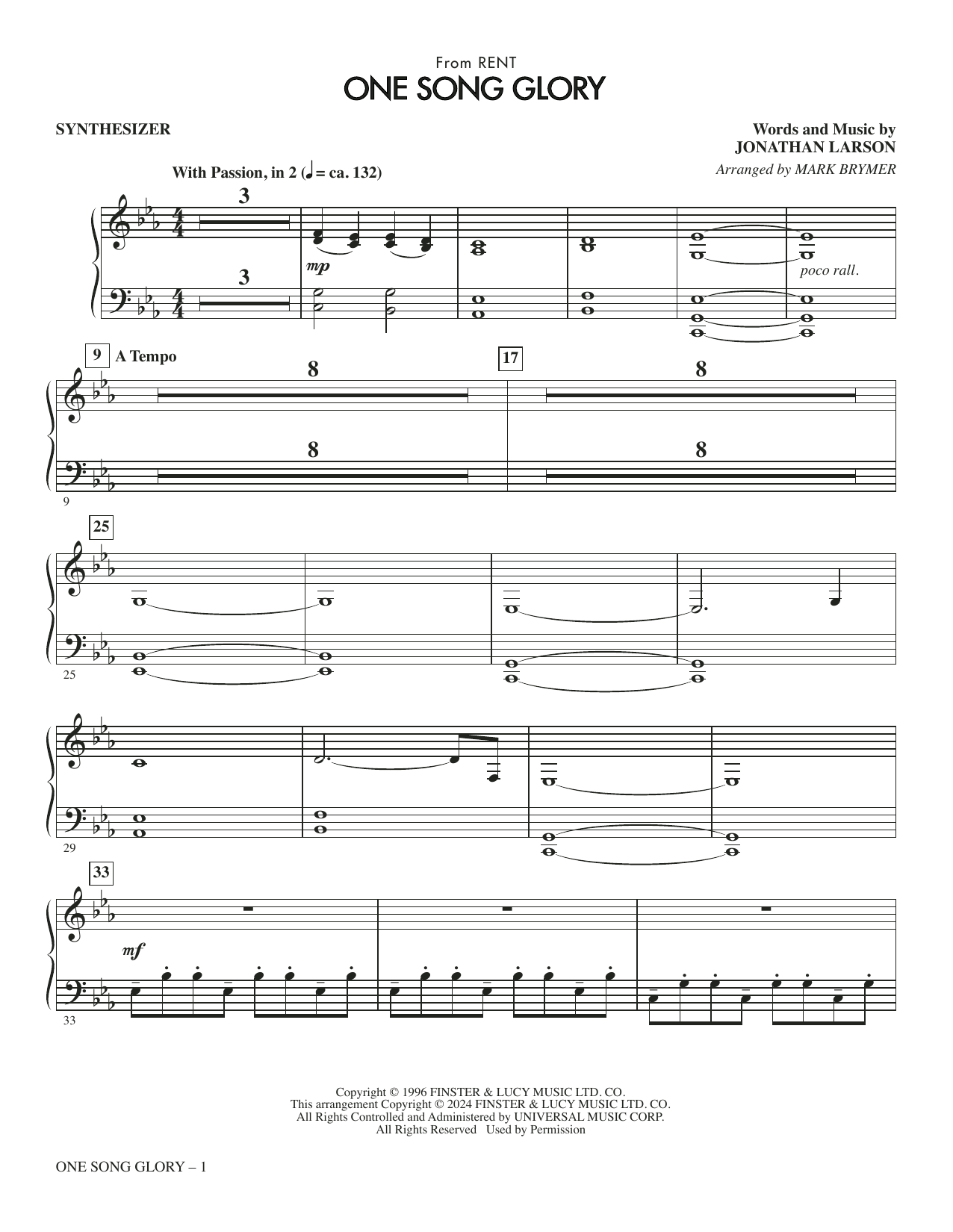

One Song Glory (from Rent) (arr. Mark Brymer): Choral Instrumental Pak
By Jonathan Larson / Arranged by Mark Brymer
Item: 35-PK01524334
$28.00
Pickup currently not available
Buy Extra Parts (Digital PDF Download)
Parts Added to Cart!
Description
A masterful concert choral setting of a hard-hitting, profound song. Mark Brymer's arrangement of "One Song Glory" from the modern Broadway classic "Rent" captures all the powerful emotion of the original, from the desperation of regret and meaninglessness to the comfort of redemption. "Find glory in a song that rings true."


One Song Glory (from Rent) (arr. Mark Brymer): Choral Instrumental Pak isn't in MakeMusic Cloud just yet...but it could be. Let us know you'd like to see it, and you'll help shape what comes next. In the meantime, start a free trial and dive into thousands of interactive titles your students can play along with today.
Request This Title
Tell us you want it.
Start Your Free Trial
Explore everything that's ready to play right now.
Sample Audio
No sample audio found.
Sample Video
No sample videos found.
Additional Details
Publisher:
Hal Leonard
SKU:
35-PK01524334
More about this title
About the Composer: Jonathan Larson
Jonathan Larson revolutionized musical theater by writing music that spoke directly to his generation's anxieties and hopes. His operatic sensibility, rooted in classical training, collided with rock, pop, and musical storytelling to create something genuinely new. "Rent" became a cultural phenomenon precisely because Larson refused to separate emotional depth from accessibility.
Larson's sudden death in 1996, just before "Rent" opened off-Broadway, transformed the show into a memorial to his vision. For music educators, his work demonstrates how contemporary music can tackle profound themes like mortality, identity, and art without sacrificing musicality or emotional honesty. His songs have become standards in the modern choral and theater repertoire.
Why we love this
Mark Brymer's arrangement honors the raw vulnerability of Larson's original while giving choirs the space to deliver a genuinely moving performance. The song's arc from despair to redemption translates powerfully to the concert stage, and students connect immediately to music from their own cultural moment. Programming this signals that your choir engages with the full landscape of American musical storytelling.
What to expect
Urgency meets ache. The piece captures that specific desperation of an artist confronting meaninglessness, then pivots toward something like grace. There's rawness here, but also craft; students feel the difference between self-pity and authentic reckoning.
Who it's for
Choirs seeking repertoire with contemporary relevance and genuine emotional substance. This works for advanced high school groups, college choirs, and community ensembles ready to engage with modern Broadway on its own terms rather than through a classical lens.
How to get the most out of it
- Shape the dynamic contour carefully. The progression from isolation to hope requires singers to find emotional specificity in softer passages, not just the climactic moments.
- Allow the rhythm section to anchor the ensemble rather than rushing. The groove matters as much as the melody.
- Encourage soloists and choir to inhabit the character's psychological journey. This isn't concert hall detachment; it's witnessing someone's internal transformation.
- Balance the modern production elements with clear diction. "Glory" has to cut through the accompaniment so audiences hear exactly what drives this character.
How to use it
Pair this with other contemporary works to showcase how modern musical theater functions as serious art. It also works beautifully as an emotional centerpiece in a concert exploring themes of struggle and resilience. The familiarity of "Rent" gives audiences permission to enter unfamiliar concert hall conventions.
Skills your students will build
- Sustaining emotional intensity through text interpretation and character work
- Balancing choir blend with soloist clarity in a contemporary pop-influenced harmonic language
- Coordinating with rhythm section accompaniment (drums, bass) rather than relying solely on piano
- Navigating Broadway-style phrasing and rhythmic flexibility within a notated score
- Understanding how contemporary musical theater uses harmony and melody to serve psychological narrative