
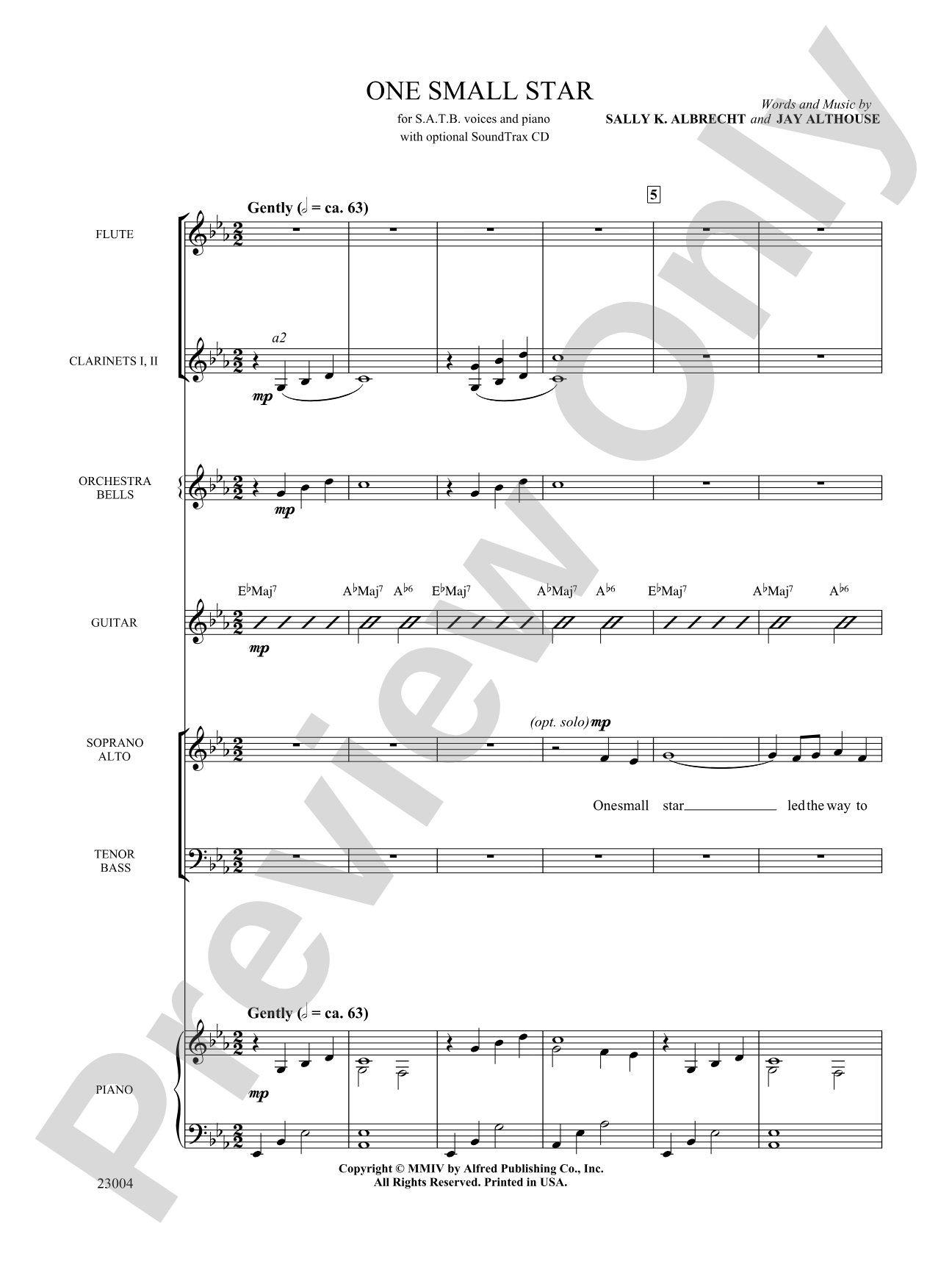
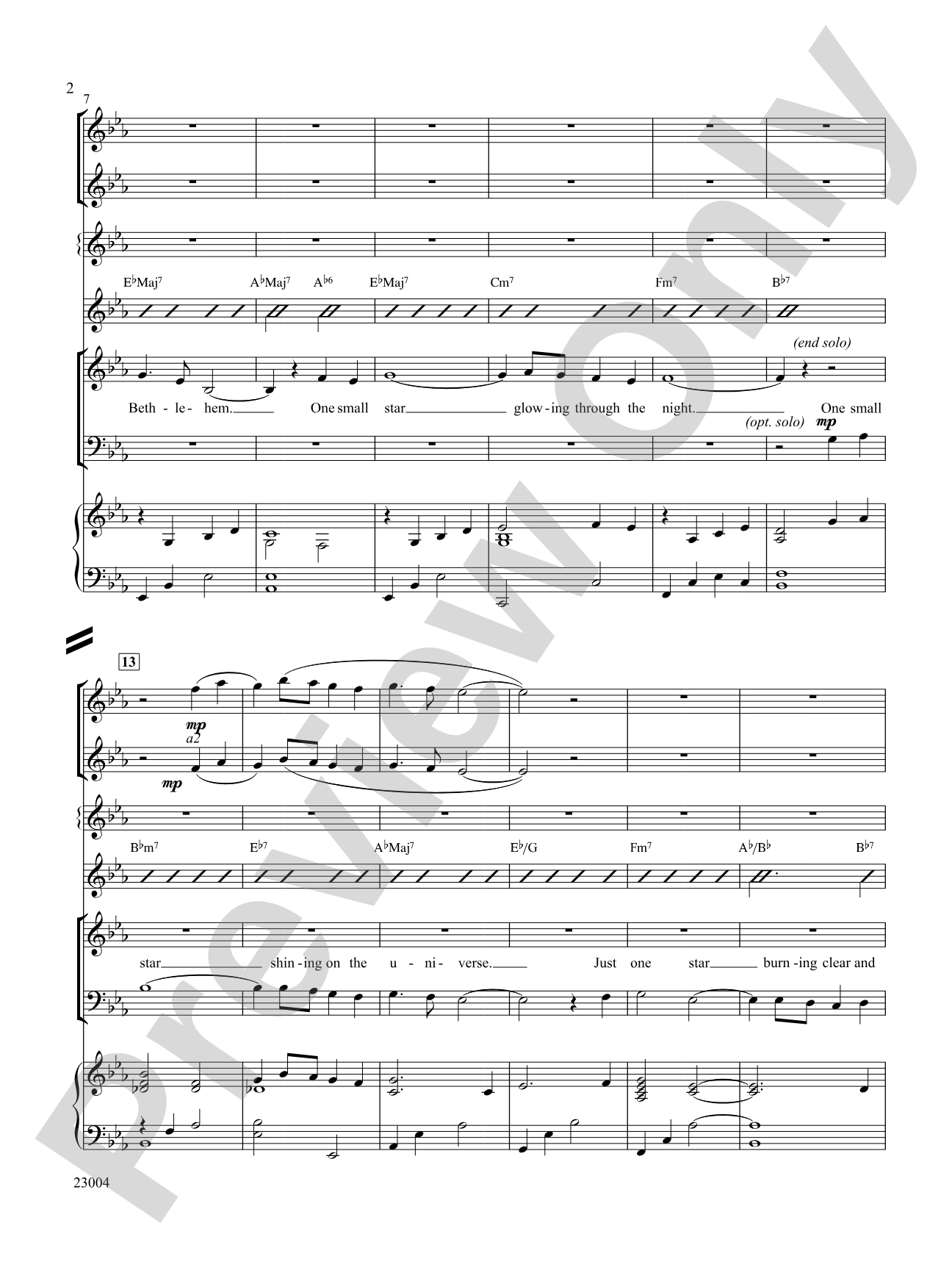
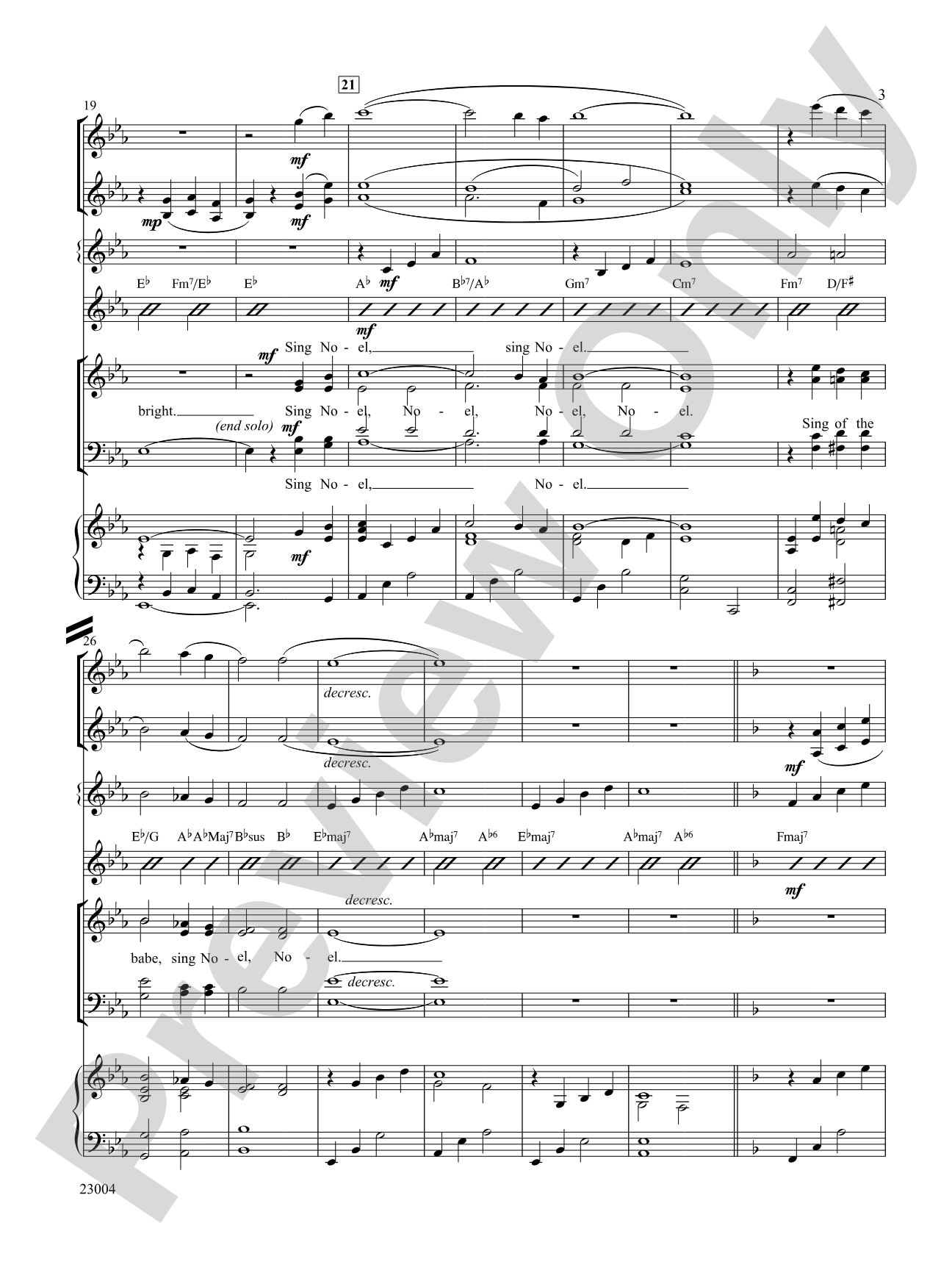
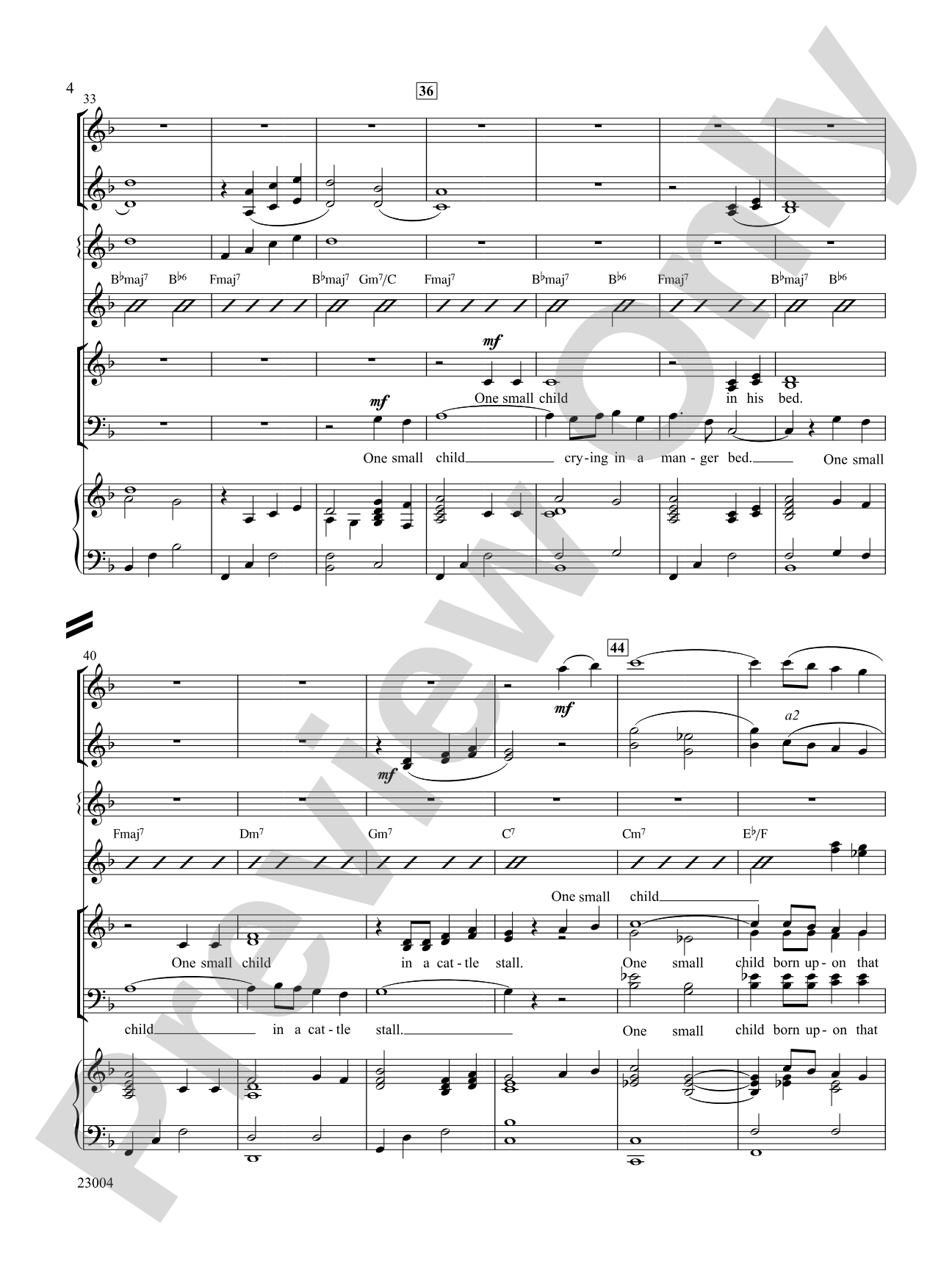
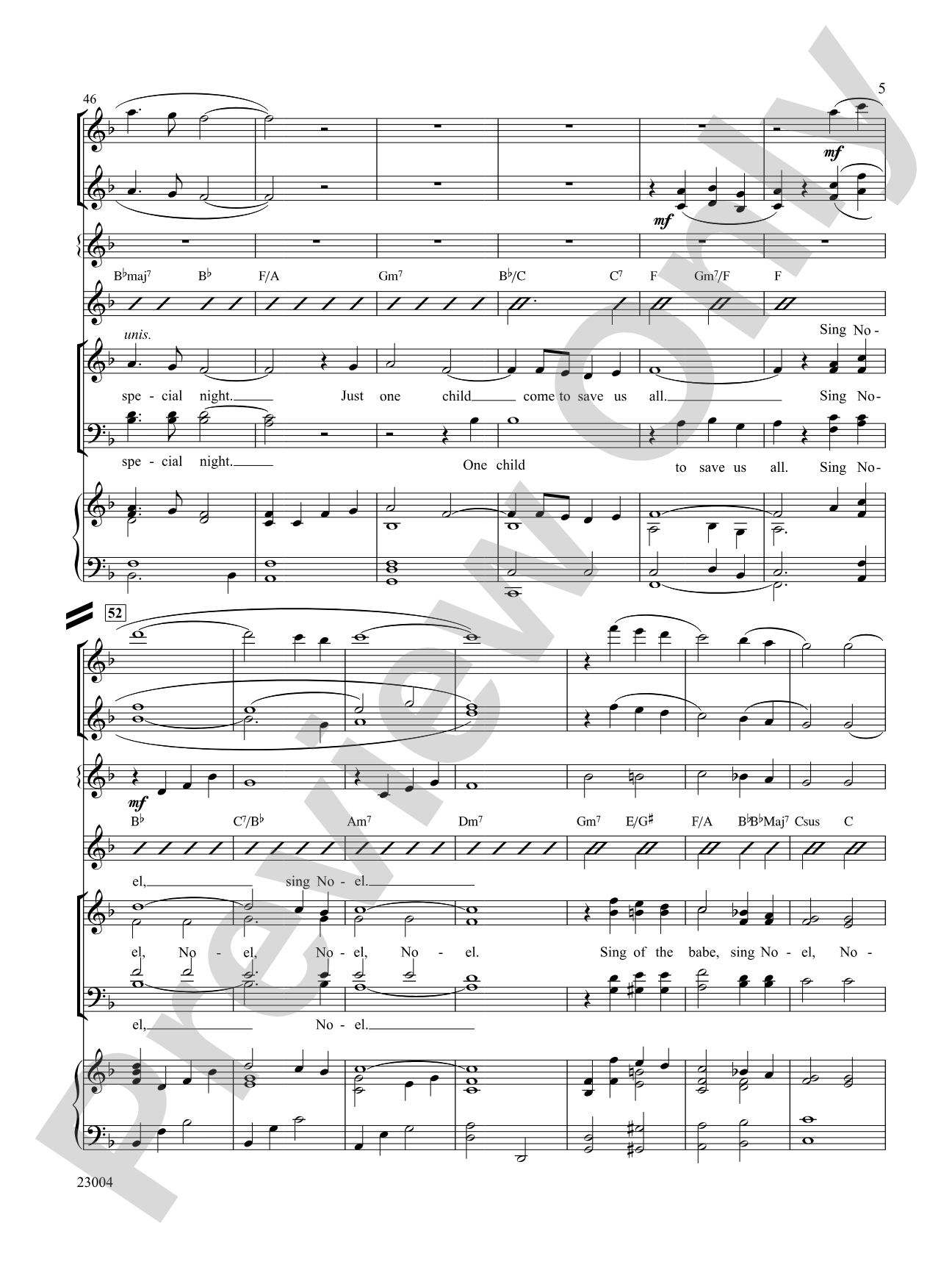
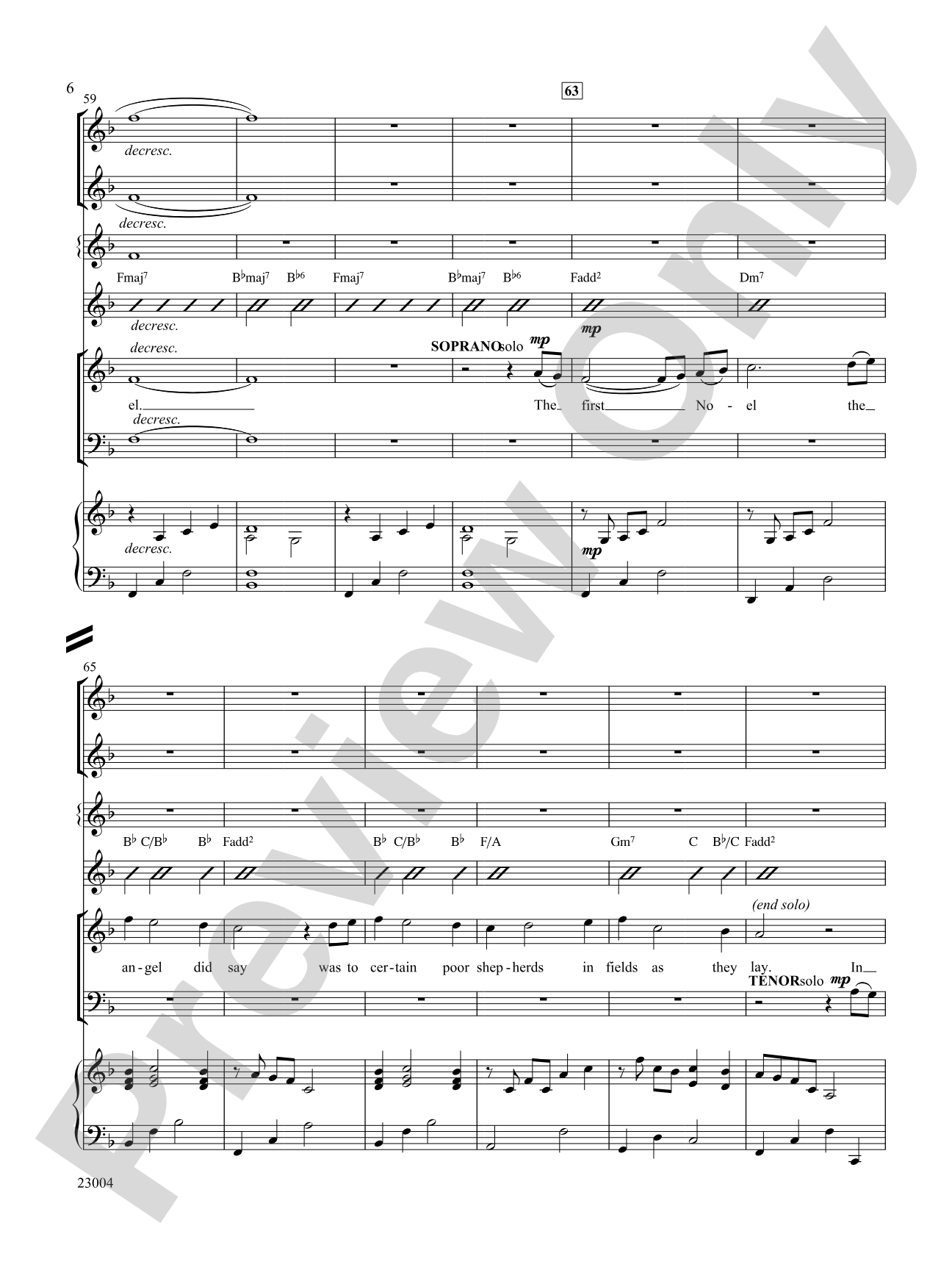
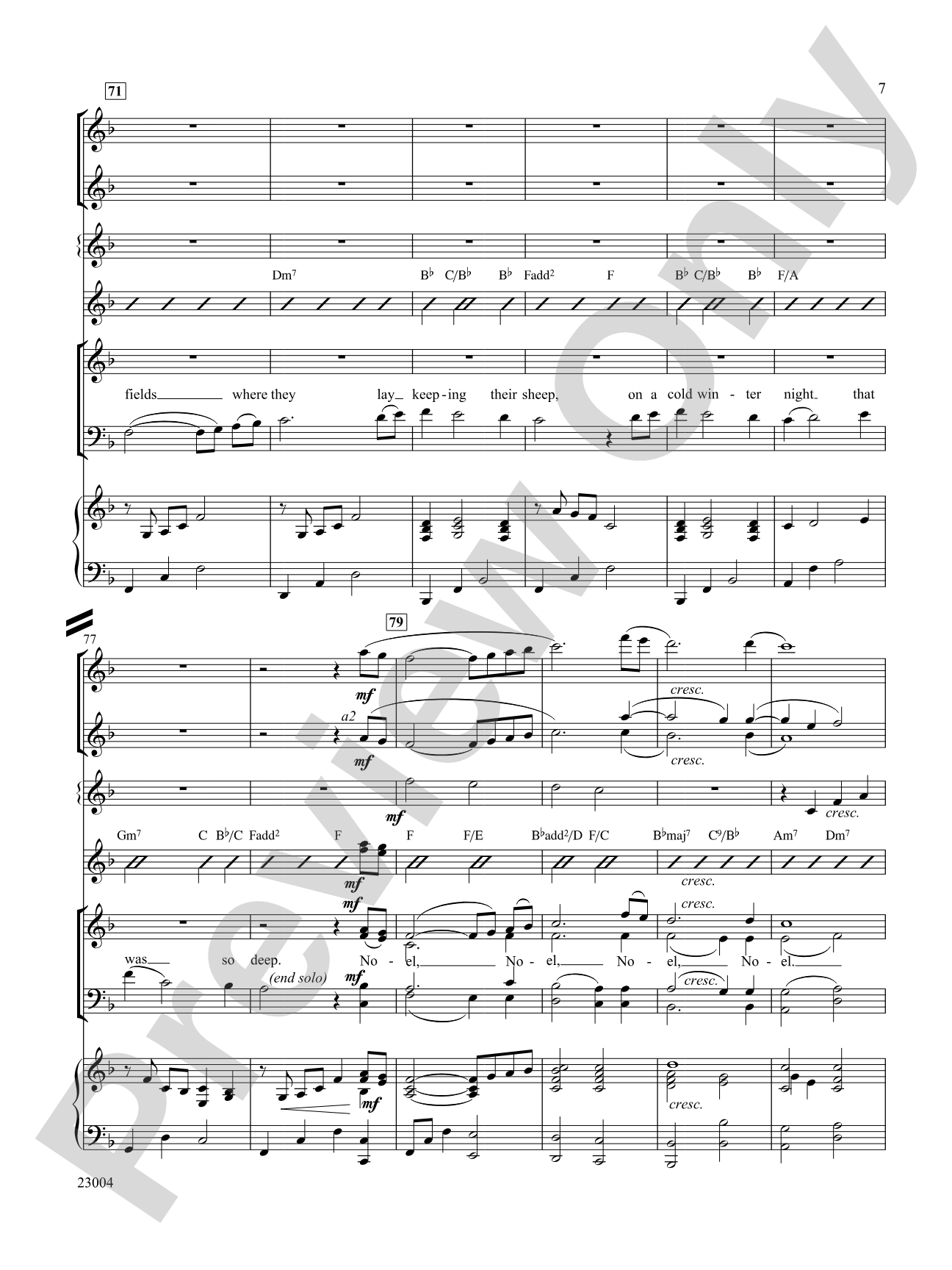
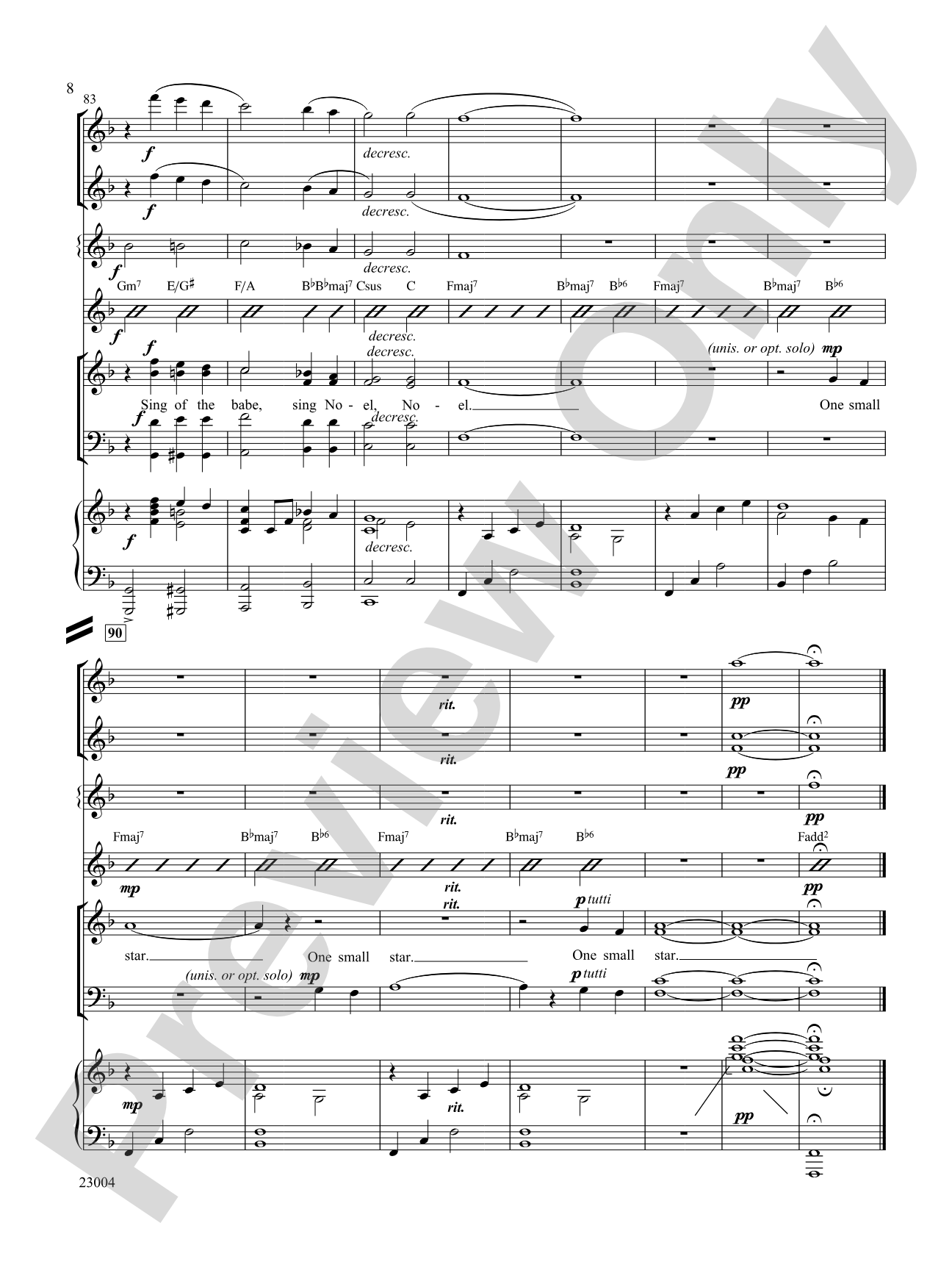

One Small Star
Music by Sally K. Albrecht and Jay Althouse
Item: 00-PK-0000621

$20.00
Pickup currently not available
Buy Extra Parts (Digital PDF Download)
| Product | Price | Quantity |
|---|---|---|
| One Small Star: Score | $8.00 | |
| One Small Star: Flute | $3.00 | |
| One Small Star: 1st B-flat Clarinet | $3.00 | |
| One Small Star: 2nd B-flat Clarinet | $3.00 | |
| One Small Star: Guitar | $3.00 | |
| One Small Star: Bells | $3.00 |
Parts Added to Cart!
Description
Includes parts for flute, 2 clarinet, orchestra bells, and guitar.


Don't just read it, hear it, play along with it, and watch your students grow with it. In MakeMusic Cloud, One Small Star comes alive with professional accompaniment, adjustable tempo, and built-in practice tools that turn solo practice into real progress.
Open in the Player
Jump straight in and assign it today.
Start Your Free Trial
Open this title and explore the full library in minutes.
Sample Audio
1
Audio File
--:--
0:00
0:00
Sample Video
No sample videos found.
Additional Details
Series:
Alfred Choral Designs
Publisher:
Alfred Music
SKU:
00-PK-0000621
Instrumentation:
SoundPax
More about this title
About the Composer: Sally K. Albrecht

Sally K. Albrecht has shaped choral music education for over three decades as Director of School Choral, Vocal, and Elementary Publications at Alfred Music and other major publishers. A sought-after clinician and conductor, she has led honor choirs at prestigious venues including Lincoln Center, Carnegie Hall, and The Kennedy Center, and has received the ASCAP Special Music Award annually since 1987. Her catalog includes more than 600 choral publications alongside 75 larger works for stage and concert.
Albrecht holds degrees from Rollins College (B.A. in Music and Theater, 1976), the University of Miami (M.A. in Drama, 1977; M.M. in Accompanying, 1979), and has taught at Oakland University, Jersey City State College, and Meredith College. She is particularly known for integrating movement into choral performance. A native of Cleveland, Ohio, she lives in Wake Forest, North Carolina, with her husband, composer and arranger Jay Althouse. In 2021, she received the Distinguished Alumna Award from both the University of Miami Frost School of Music and Rollins College, where she serves on the Board of Trustees.
Why we love this
Albrecht and Althouse craft a carol that balances accessibility with genuine musical substance. The integration of optional instrumental parts gives you flexibility to perform with full ensemble support or voices alone, and the SoundPax accompaniment makes rehearsal and performance straightforward in any setting. The reverent simplicity of the text matches music that feels both fresh and deeply rooted in the carol tradition.
What to expect
The piece captures quiet wonder and gentle reverence. Warm instrumental colors emerge alongside the choir's voice, creating an atmosphere of intimate contemplation rather than grand celebration. The text unfolds with clarity and sincerity, inviting the listener into a moment of peace.
Who it's for
Choir directors seeking an accessible yet musically satisfying Christmas piece for mixed or treble ensembles. This works equally well for school, church, and community choirs performing at winter concerts, services, or seasonal events.
How to get the most out of it
- Balance the choir's entrance with the instrumental introduction so the flute and clarinet parts enhance rather than overshadow the opening vocal line.
- Use the orchestra bells strategically during key moments to add shimmer without cluttering the texture; resist the urge to double every phrase.
- Let the guitar anchor harmonic support underneath; if amplification is available, keep it subtle to maintain the intimate carol quality.
- Shape the melody with gentle dynamic contours rather than driving toward climactic moments, allowing the text's message to carry the performance.
How to use it
Position this as a reflective anchor in a Christmas concert, pairing it with either more energetic carols or a cappella works to showcase tonal contrast. Its accessibility makes it ideal for opening a program or creating a poignant second half. The optional instruments give you a natural way to vary texture across your concert repertoire.
Skills your students will build
- Balancing vocal and instrumental textures in ensemble settings
- Singing with restraint and lyrical phrasing
- Reading and responding to cues from instrumental parts
- Performing with recorded accompaniment (SoundPax) while maintaining independence