One Short Day (from Wicked) Sheet Music Preview

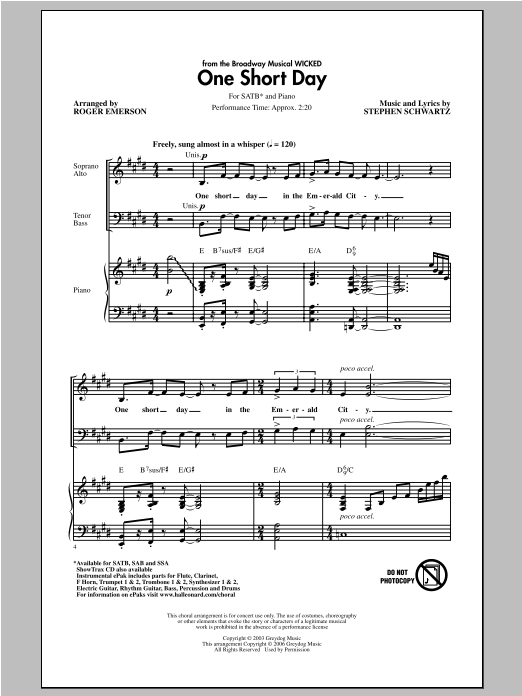
One Short Day (from Wicked): SATB Choral Octavo

As performed by Stephen Schwartz / Arranged by Roger Emerson

Item: 35-DS00265243

Digital Download
$2.99
Description

One Short Day (from Wicked): SATB Choral Octavo isn't in MakeMusic Cloud just yet...but it could be. Let us know you'd like to see it, and you'll help shape what comes next. In the meantime, start a free trial and dive into thousands of interactive titles your students can play along with today.

Sample Audio
No sample audio found.
Sample Video
Additional Details
Publisher: Hal Leonard
Page Count: 11
SKU: 35-DS00265243

More about this title

About the Artist: Stephen Schwartz

Stephen Schwartz has shaped contemporary musical theater through works that balance emotional depth with accessibility. His gift for writing melodies that lodge themselves in listeners' minds while carrying genuine dramatic weight has made him one of the most performed composers in school and community choirs today.

Why we love this

Roger Emerson's arrangement captures the infectious energy and joy that defines this song without losing the character development embedded in Schwartz's original melody. The SATB voicing sits comfortably for mixed choirs while preserving the moment's theatrical spark, making it equally effective in concert settings or as a lighter complement to heavier repertoire.

What to expect

This arrangement glows with the wonder and possibility of a perfect day in a magical city. The harmonies feel open and warm, inviting singers and listeners alike into a moment of pure, uncomplicated joy.

Who it's for

Choirs with solid blend and basic music-reading skills will find this accessible and rewarding to perform. It works well for groups looking to include contemporary musical theater without requiring extensive dramatic staging or complex choreography.

How to get the most out of it

  • Keep the rhythmic drive steady and slightly buoyant; this song lives on momentum, and pulling back will drain its personality.
  • Blend the harmony parts so the melody line (likely in sopranos and tenors at key moments) reads clearly without sounding isolated from the rest of the choir.
  • Pay attention to vowel consistency across parts, especially in unison or near-unison passages, to maintain the unified excitement the arrangement asks for.

How to use it

Pair this with other musical theater selections to create a thematic concert, or use it as an energizing closer that sends the audience home smiling. It also works beautifully as a contrast piece alongside more serious choral works, giving your program dynamic shape.

Skills your students will build

  • Singing melodic lines that sit naturally across register changes
  • Maintaining rhythmic precision in rhythmically active arrangements
  • Balancing melody and harmony in a commercial music idiom
  • Performing with stylistic awareness of contemporary musical theater conventions

You May Also Like