One-Octave Harmonic Minor Scales and Arpeggios Sheet Music Preview

One-Octave Harmonic Minor Scales and Arpeggios: Piano

By Edwin McLean

Item: 98-DTS1005

Digital Download
$3.50
Description
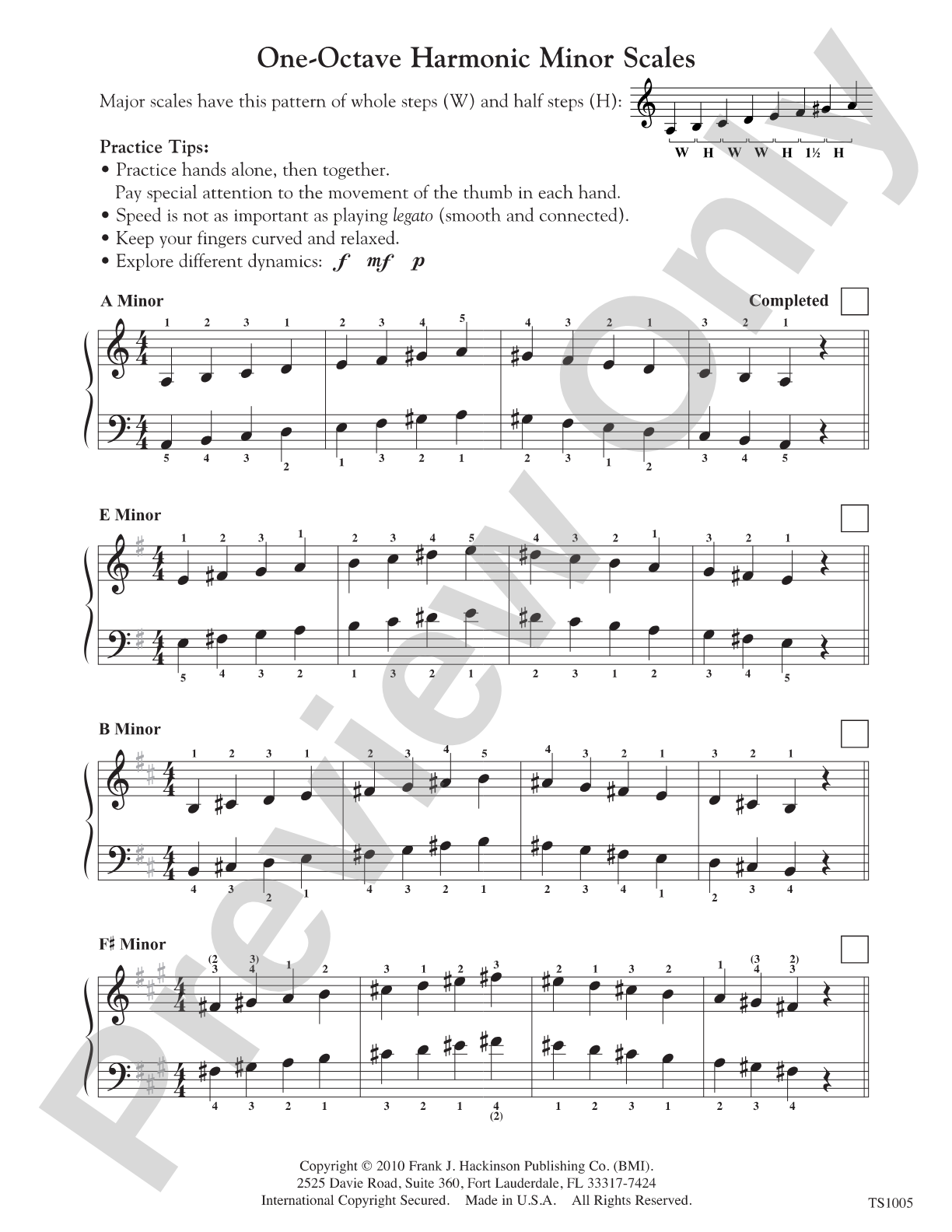
Convenient and easy to use, the Basic Technique Sheets provide an organized way for students to become proficient in necessary technical skills: major and minor pentascales, arpeggios, cadence chords, and one-octave scales. Each Technique Sheet includes valuable practice tips, check-off boxes, and brief explanations on the construction of scales, arpeggios, and cadence chords.

Teachers will be pleased with the organized and clear presentation of these sheets, and students will feel a sense of accomplishment as they check off each technique they master!

One-Octave Harmonic Minor Scales and Arpeggios: Piano isn't in MakeMusic Cloud just yet...but it could be. Let us know you'd like to see it, and you'll help shape what comes next. In the meantime, start a free trial and dive into thousands of interactive titles your students can play along with today.

Sample Audio
No sample audio found.
Sample Video
Additional Details
Series: FJH Basic Technique Sheets
Publisher: The FJH Music Company, Inc.
SKU: 98-DTS1005

More about this title

Why we love this

The check-off system transforms technique practice from a chore into a tangible achievement. Students see immediate progress, and teachers get a clear record of what's been mastered without hunting through notebooks or memory.

What to expect

Purposeful and methodical. The harmonic minor scale has that distinctive raised seventh that creates forward momentum; practicing it across the octave feels complete rather than fragmentary.

Who it's for

Early intermediate pianists building foundational technique through organized, systematic practice. Teachers who want a structured approach to scale and arpeggio work without designing their own materials.

How to get the most out of it

  • Start each session by reviewing the construction explanation. Understanding why the harmonic minor scale has a raised seventh degree makes the fingering pattern stick faster than rote repetition.
  • Practice the arpeggios broken and blocked in the same session. The blocked version builds hand position memory; the broken version develops fluidity.
  • Use the check-off boxes strategically by requiring three consecutive clean runs before marking a technique complete. This prevents premature checking and builds consistency.
  • Alternate between scales and arpeggios within a practice session rather than drilling one for the full time. The variety keeps focus sharp and prevents fatigue.

How to use it

Assign one technique sheet per week as a core part of lesson repertoire. The digital format lets you download and print only the scales or arpeggios students need, keeping lesson prep efficient and practice focused.

Skills your students will build

  • One-octave harmonic minor scales with proper fingering patterns
  • Harmonic minor arpeggios across the octave
  • Understanding scale construction (identification of the raised seventh degree)
  • Hand position stability in minor tonalities
  • Consistent finger independence and articulation in scalar passages

You May Also Like