
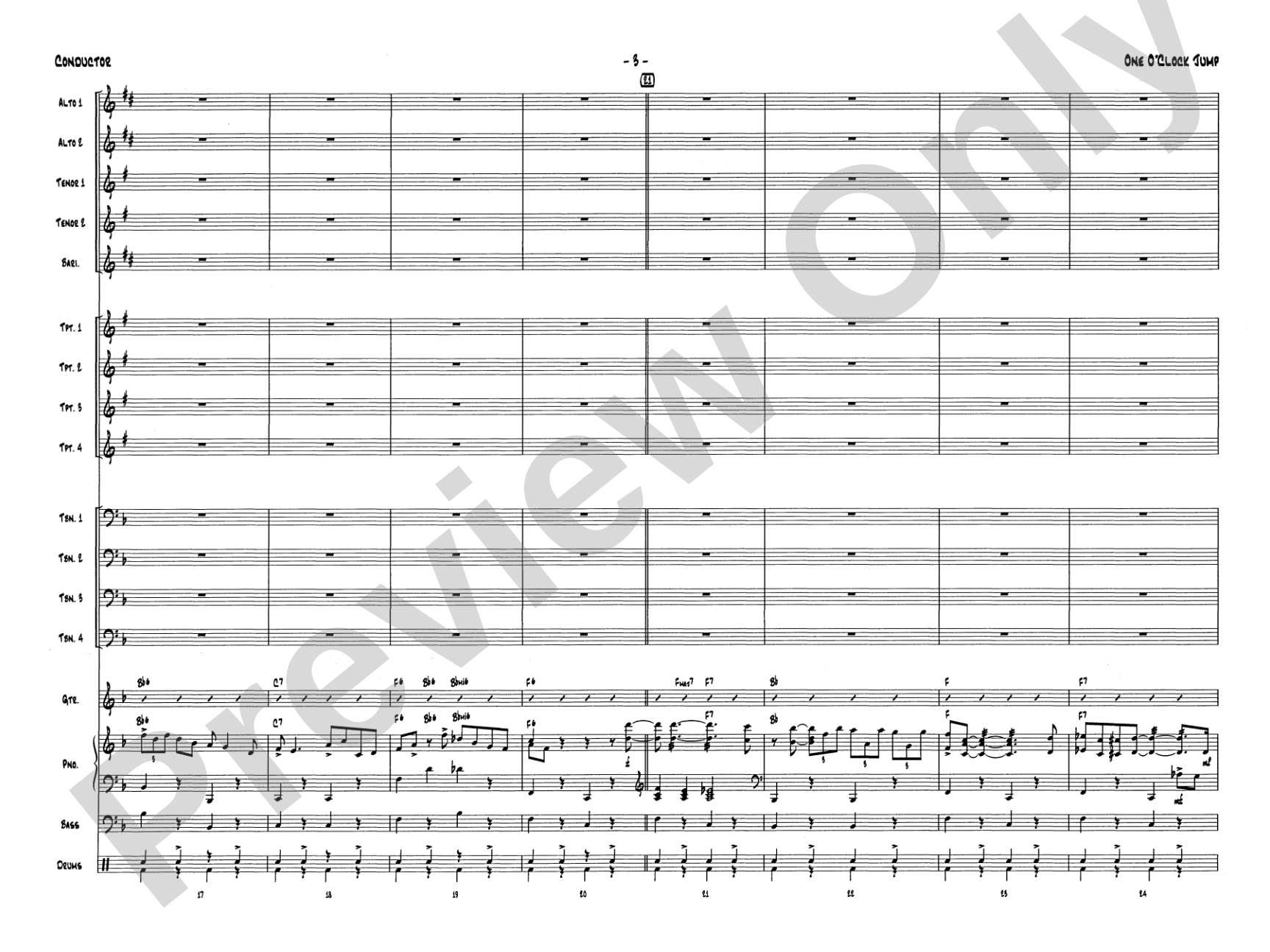
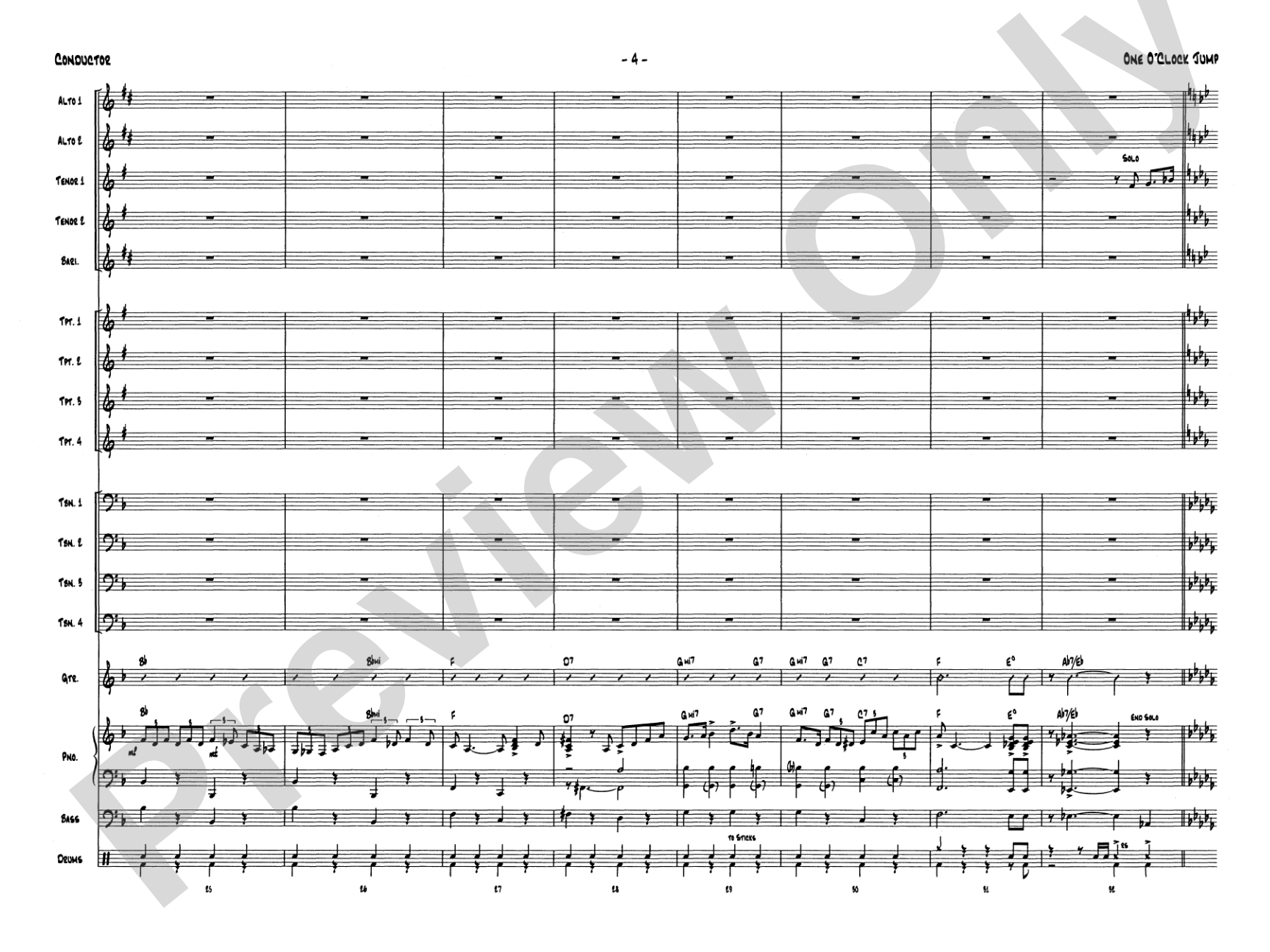
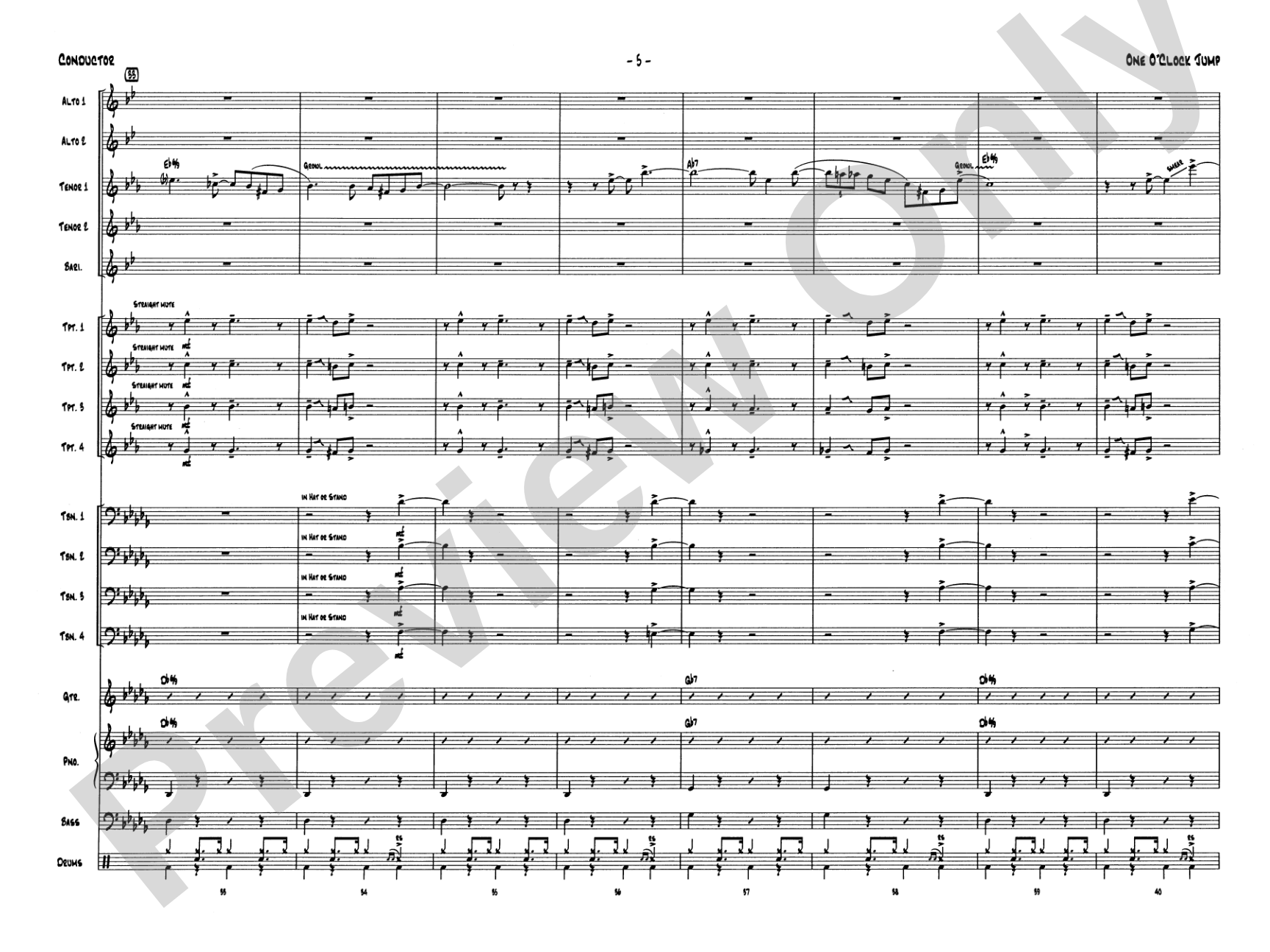
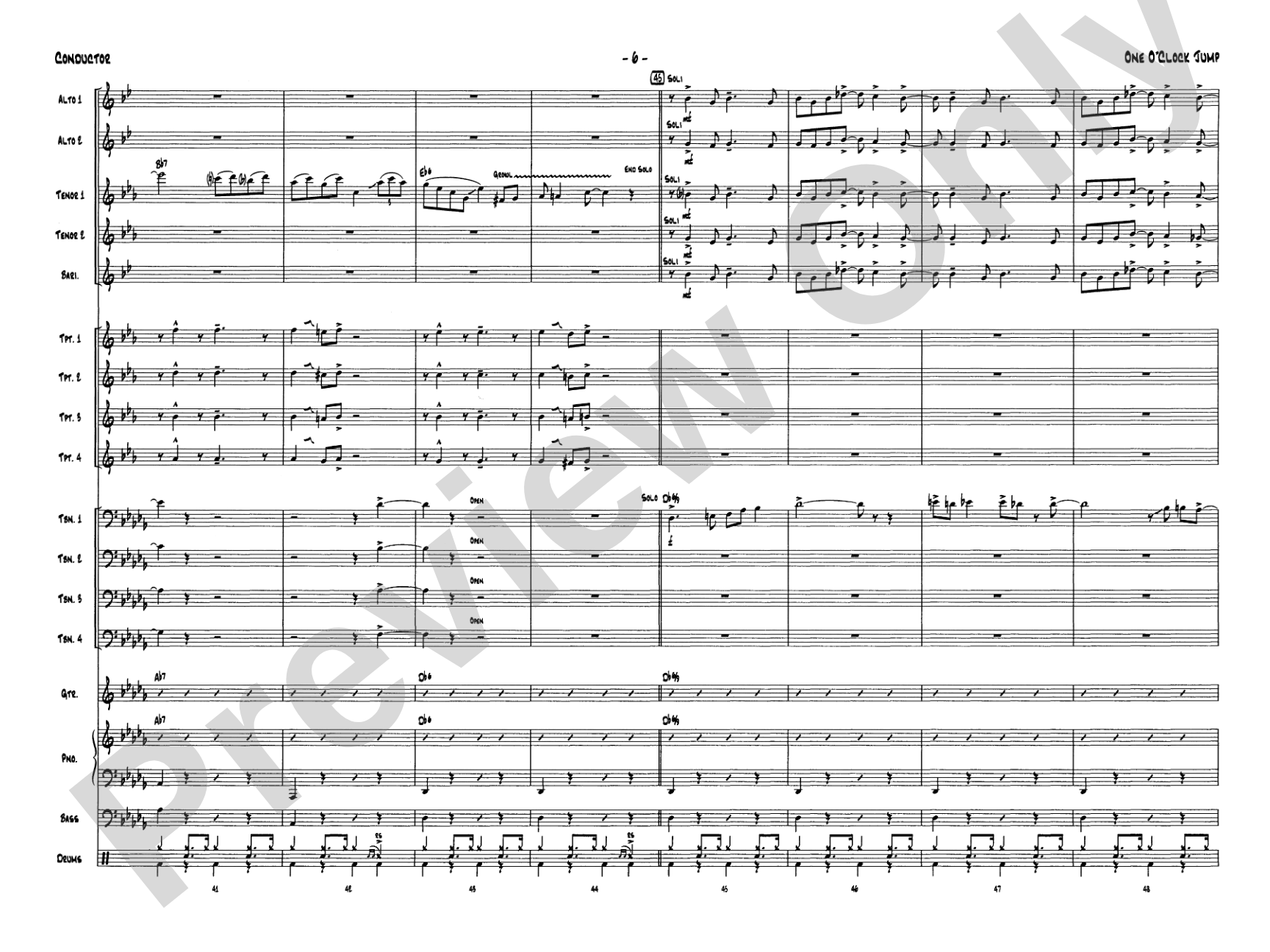
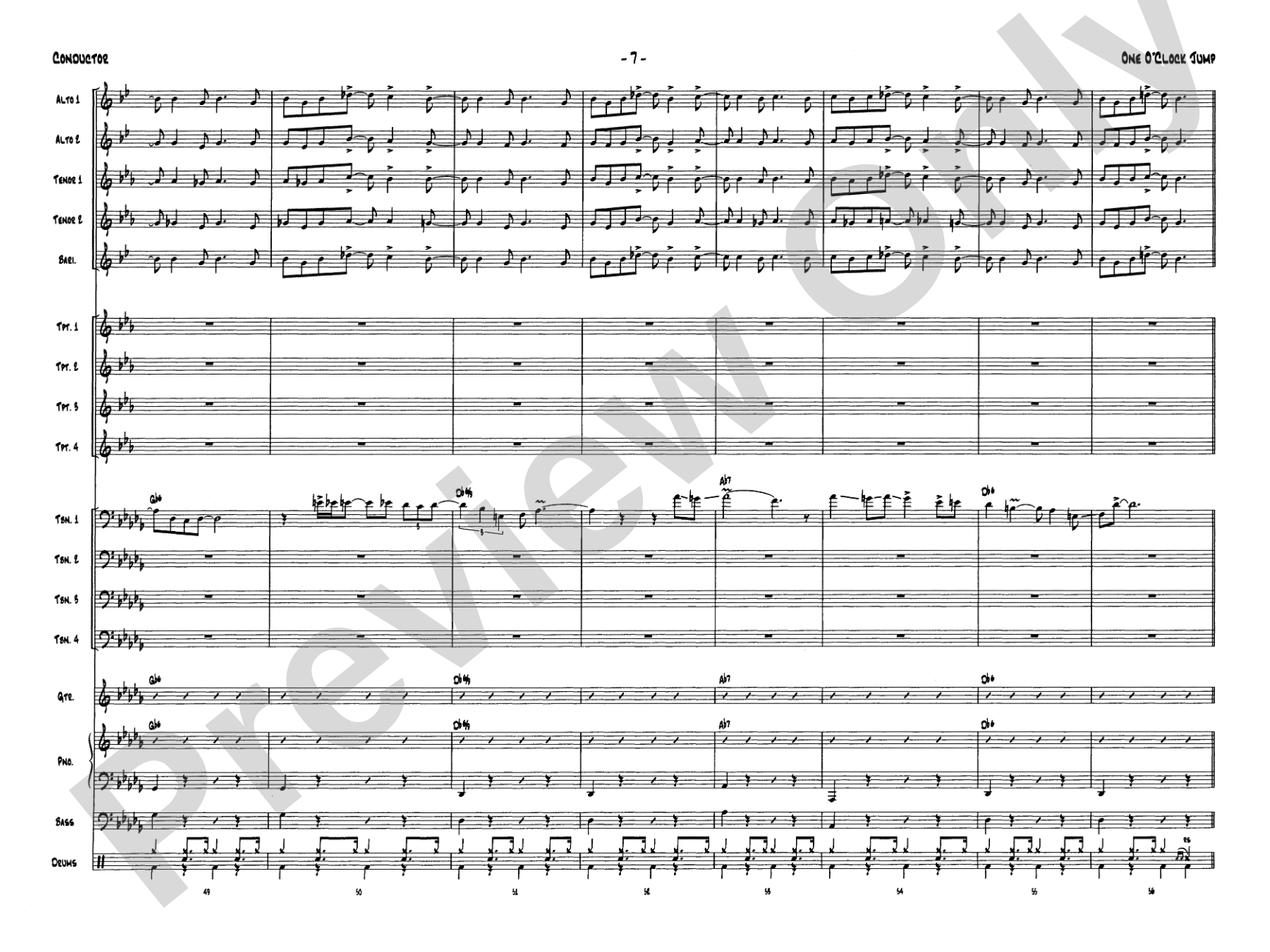
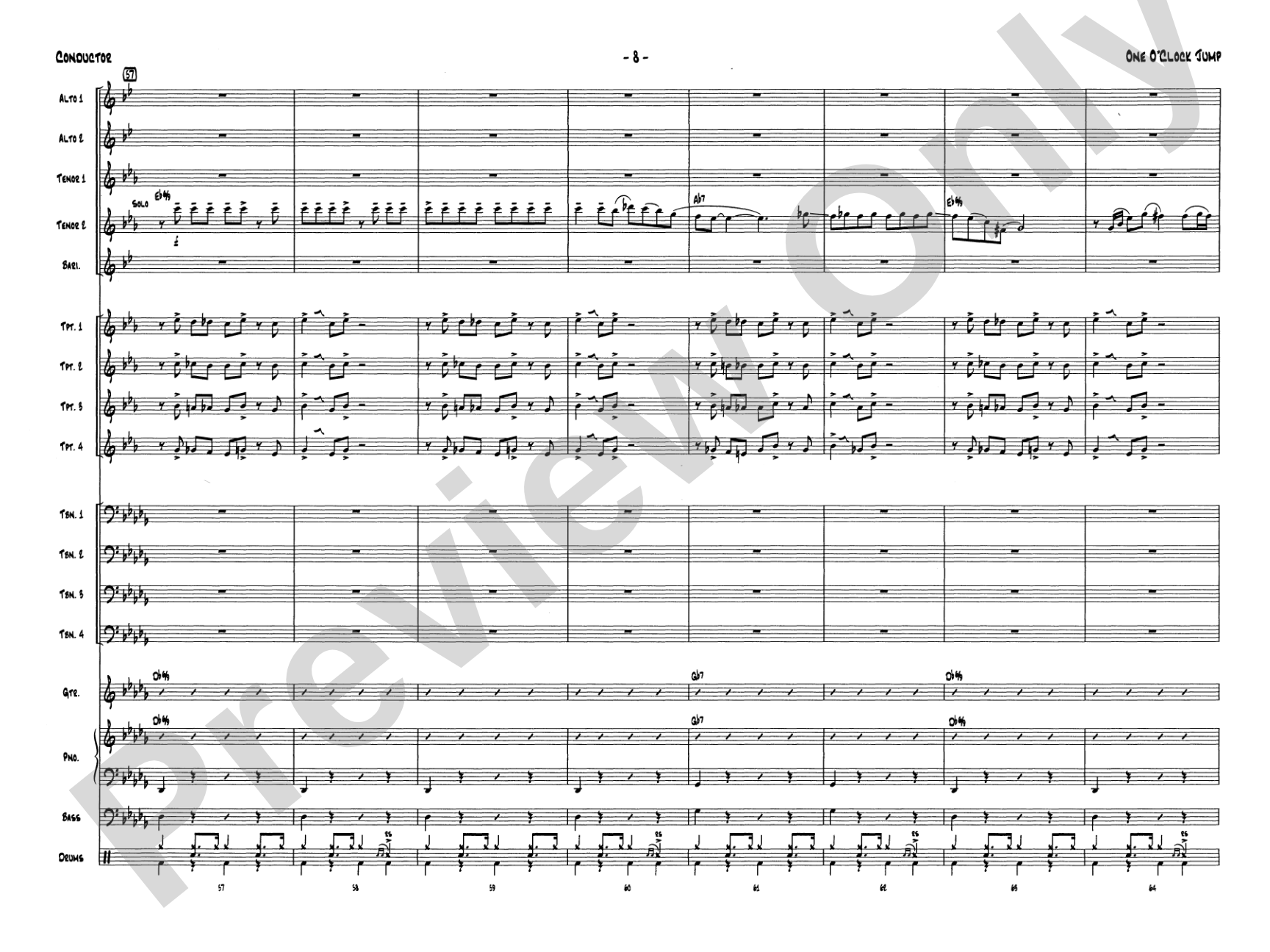
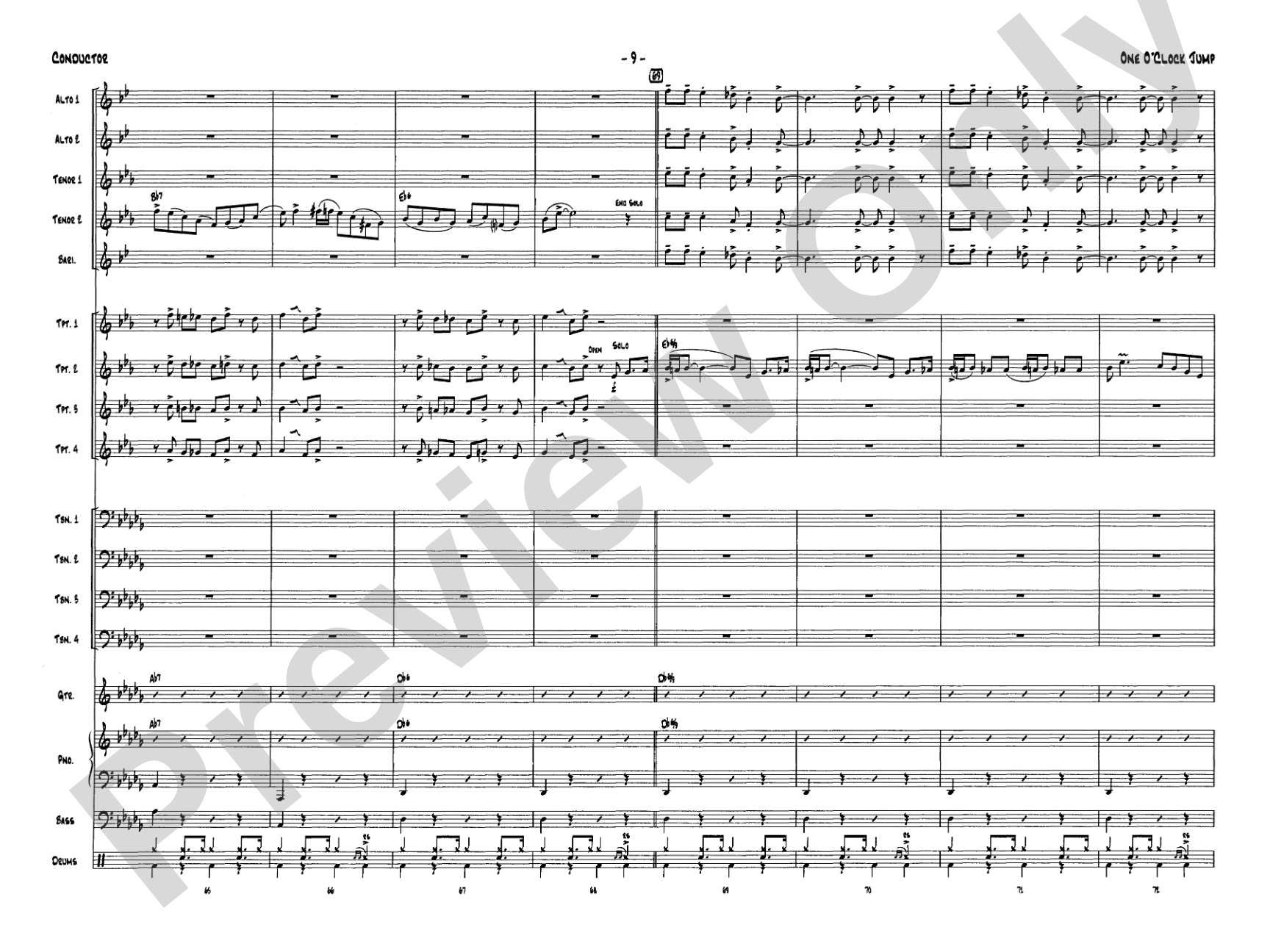
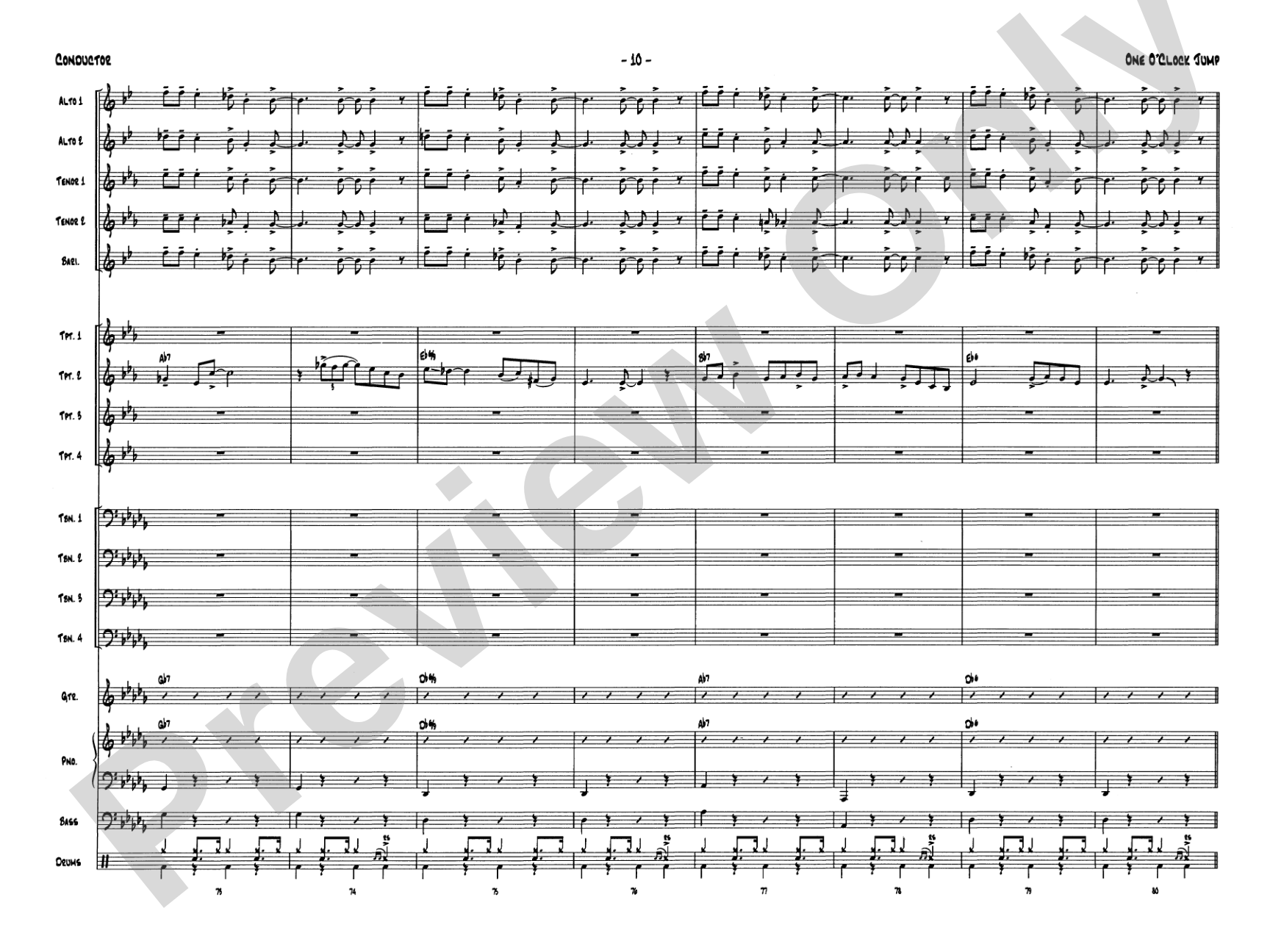
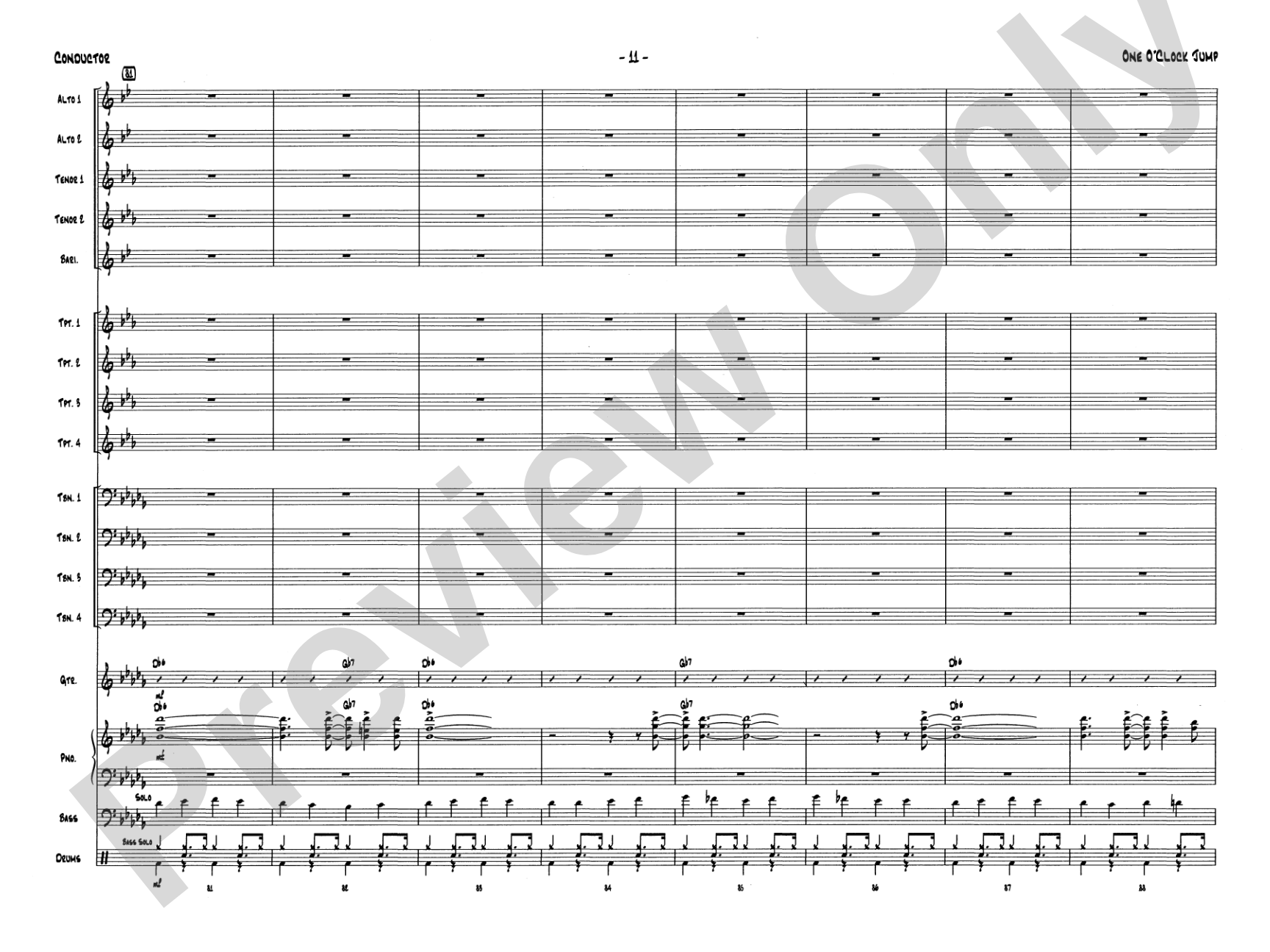
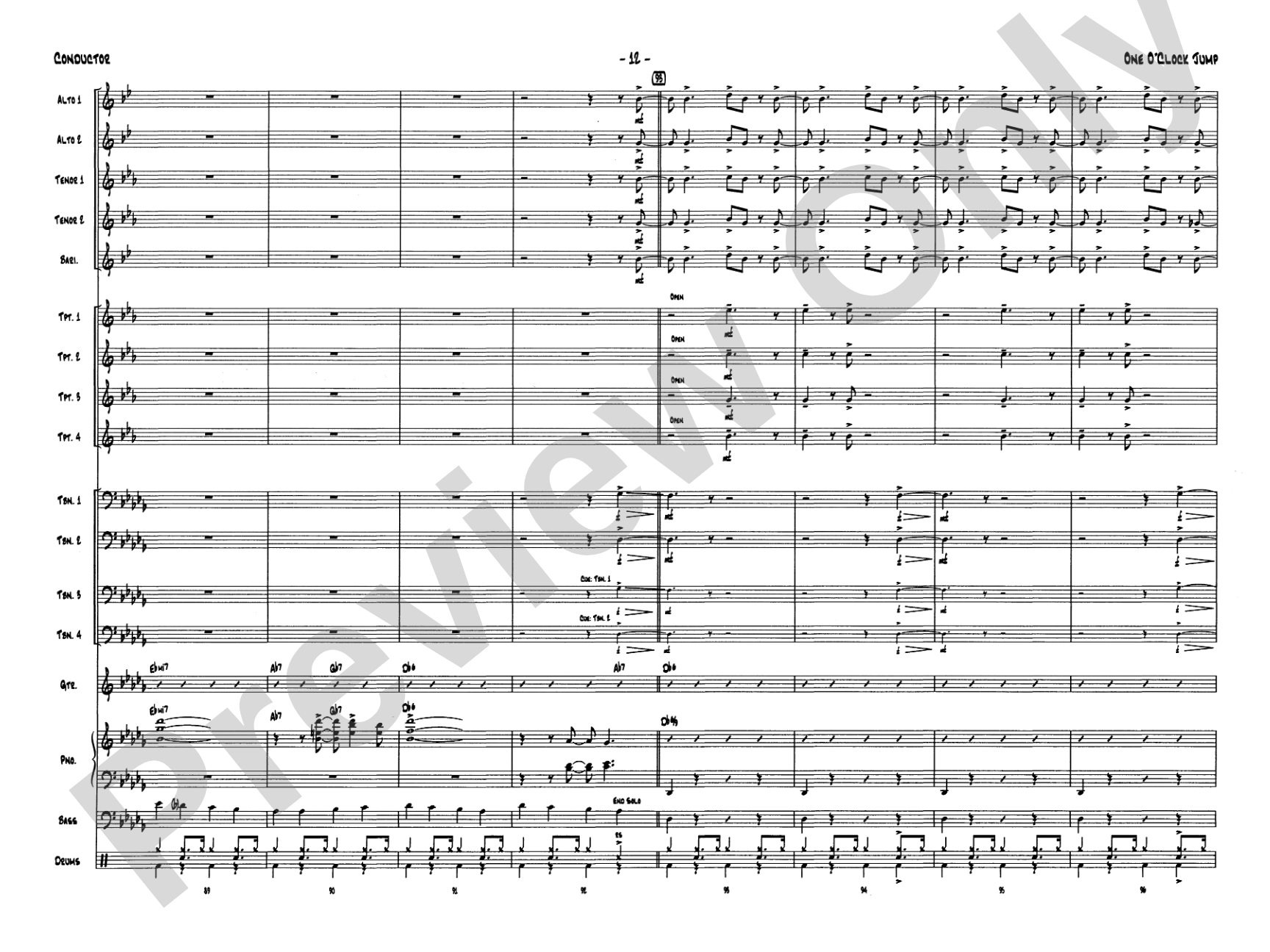
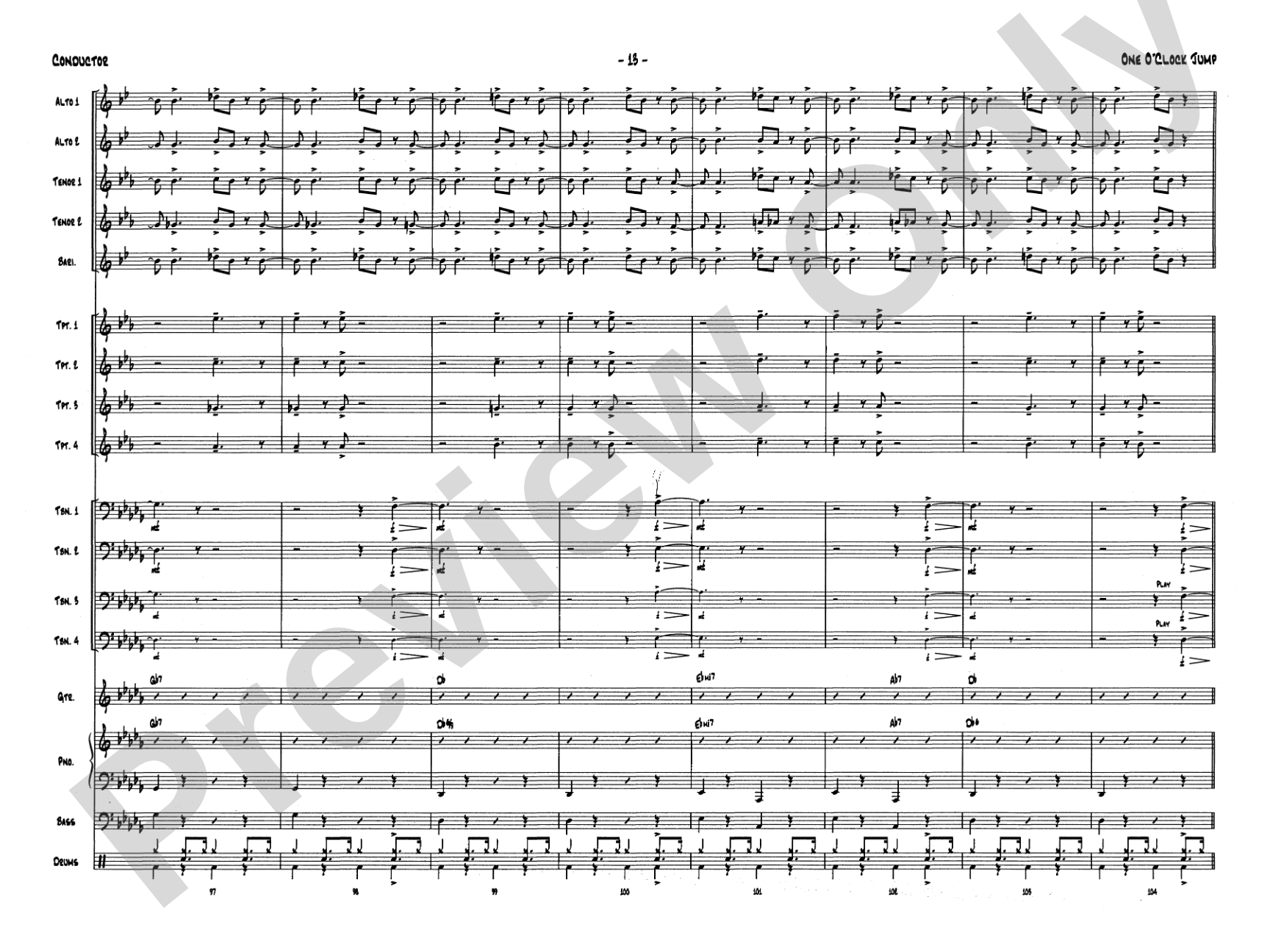
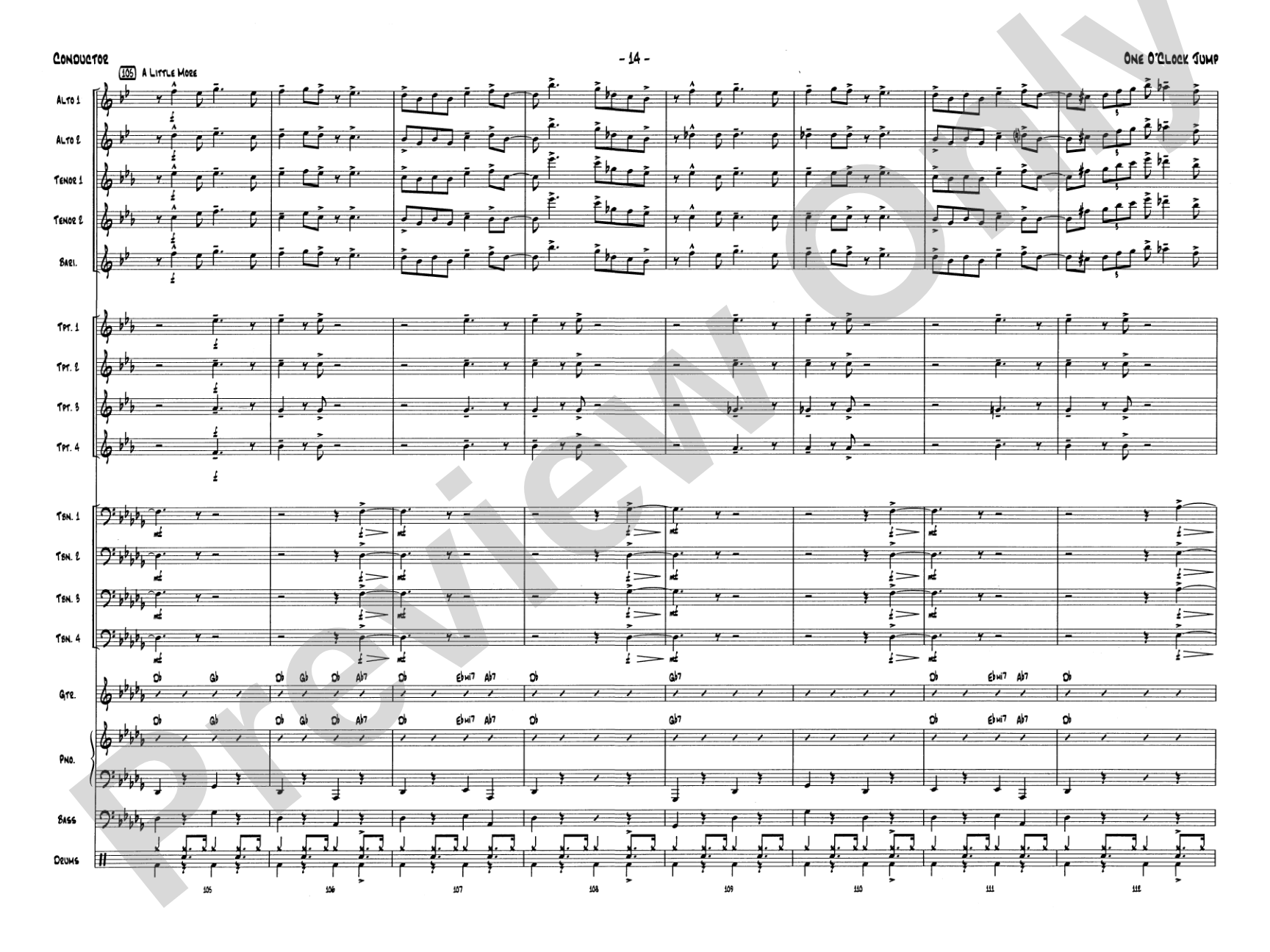
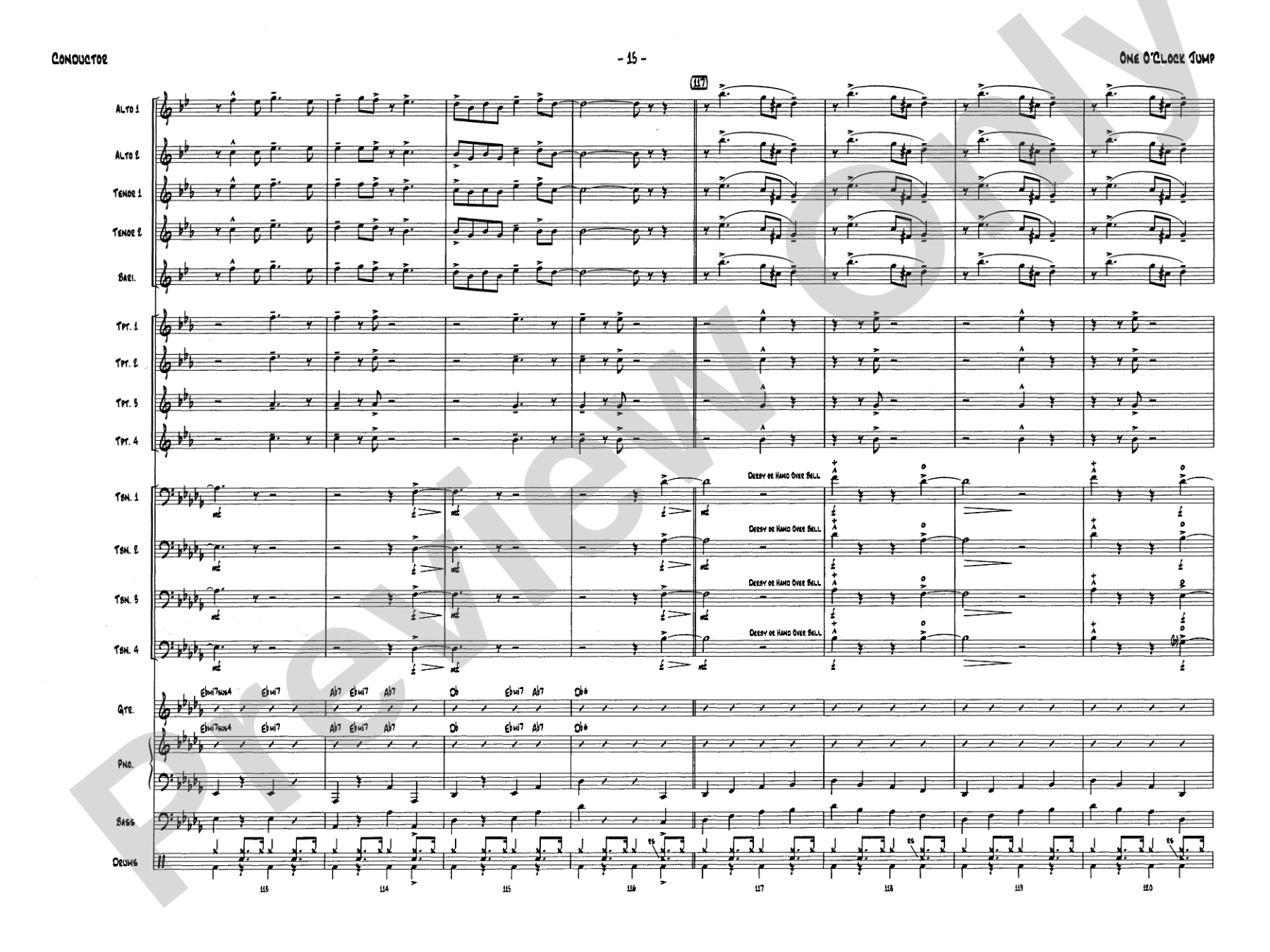
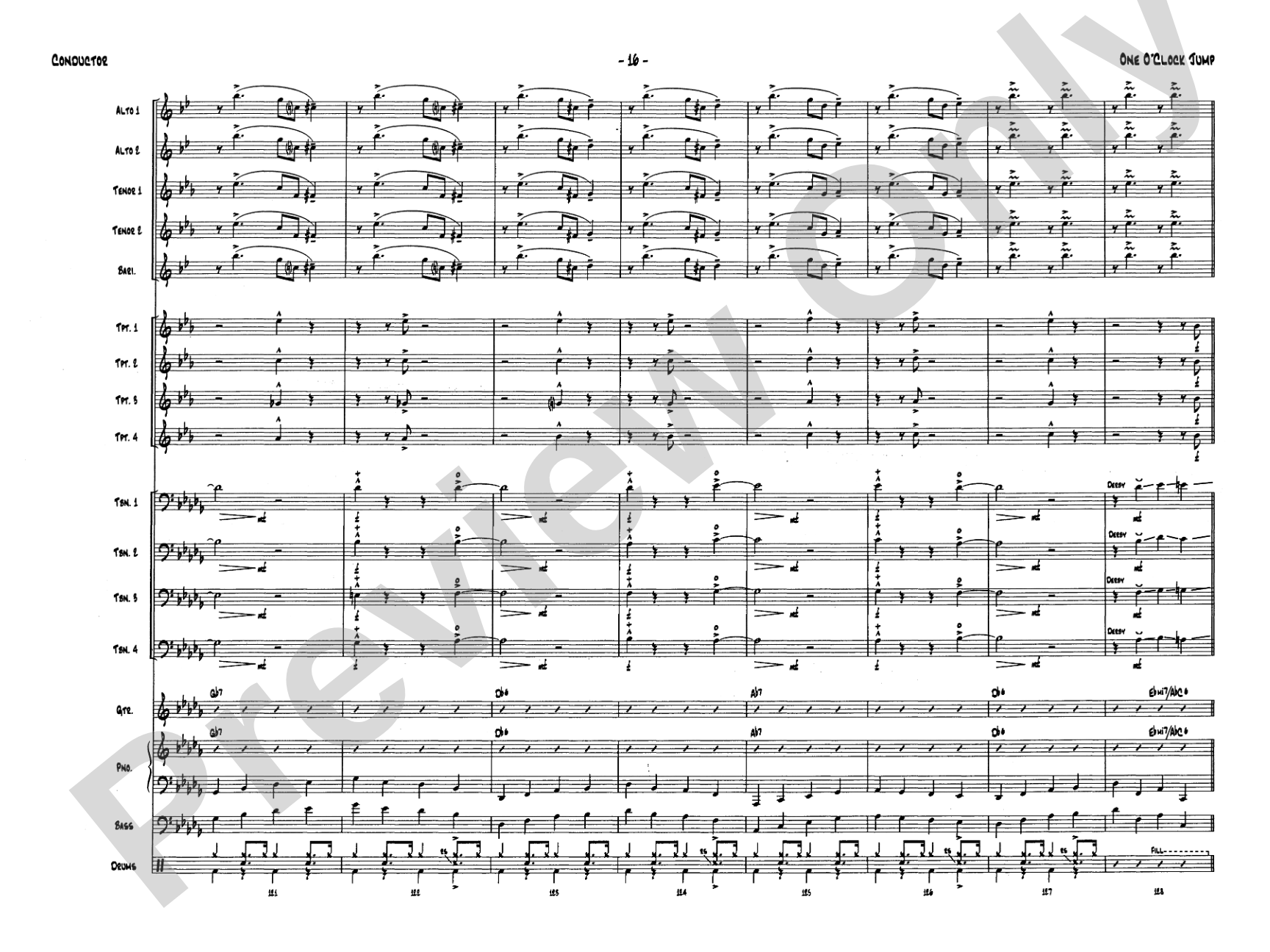
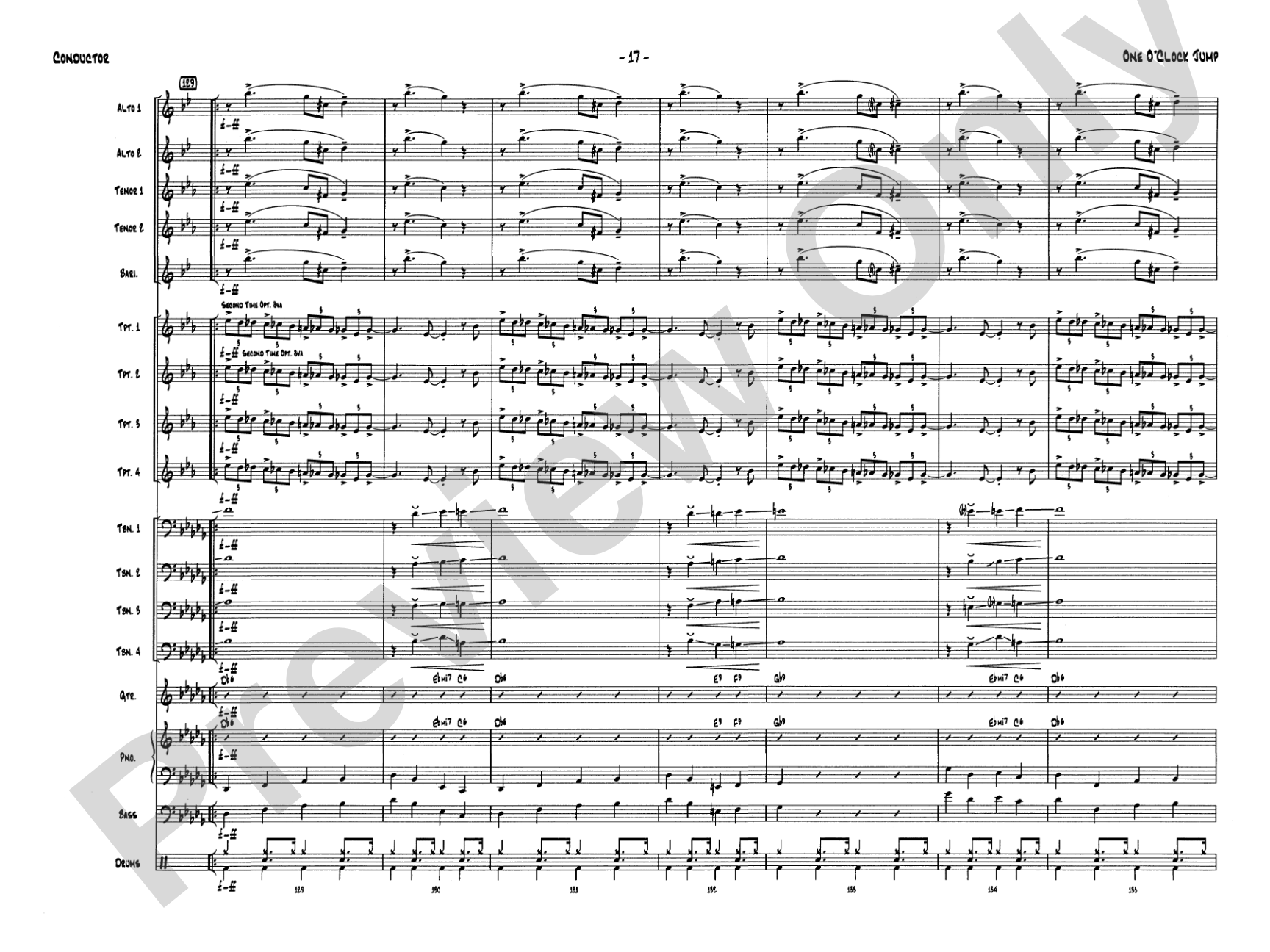
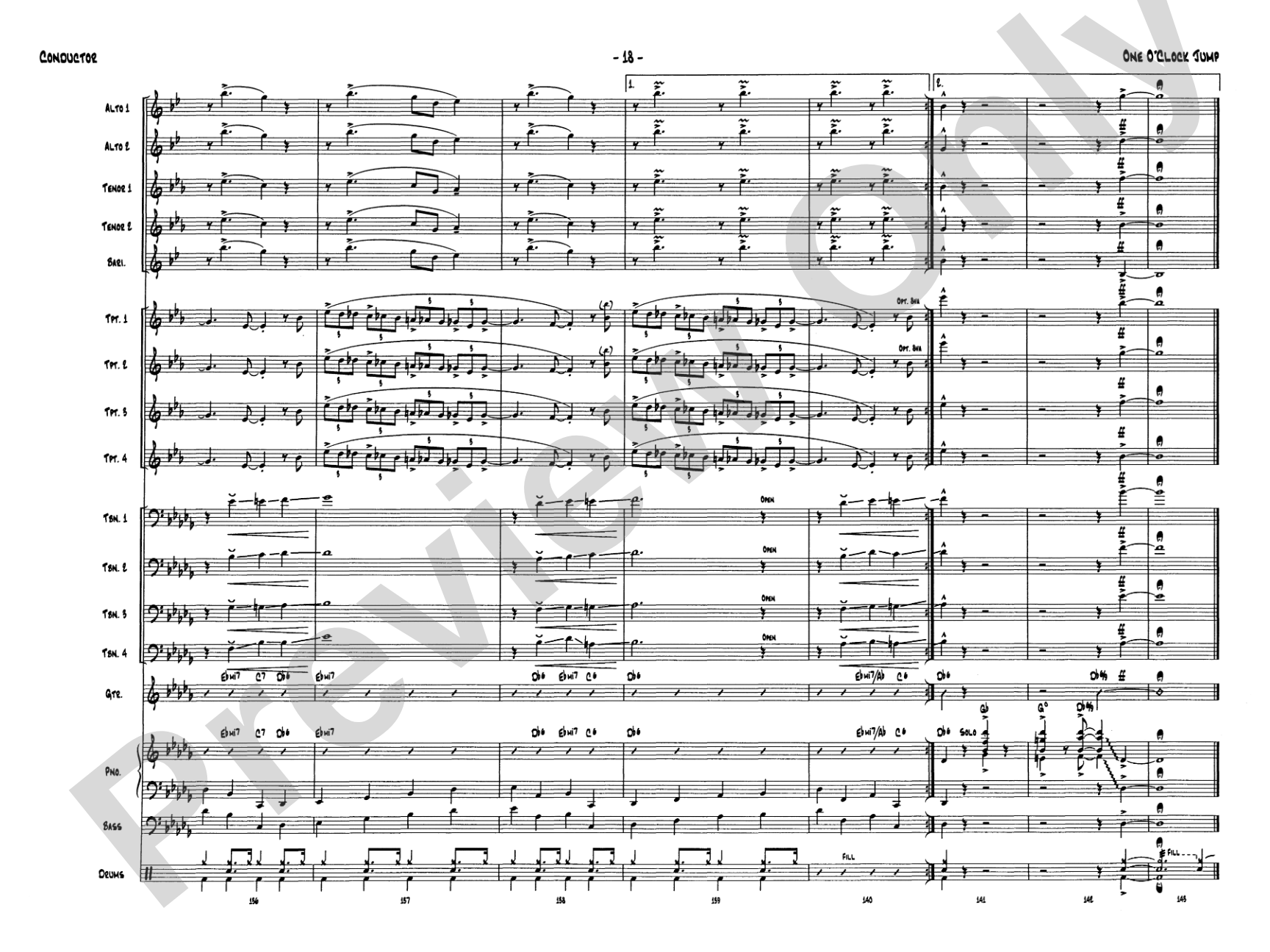

One O'Clock Jump: Jazz Ensemble Conductor Score & Parts
By Count Basie / arrangement re-created by Jeff Hest
Grade: 4.5 (Medium Advanced / Difficult)
Item: 00-PK-0004434

$60.00
One moment…
Description
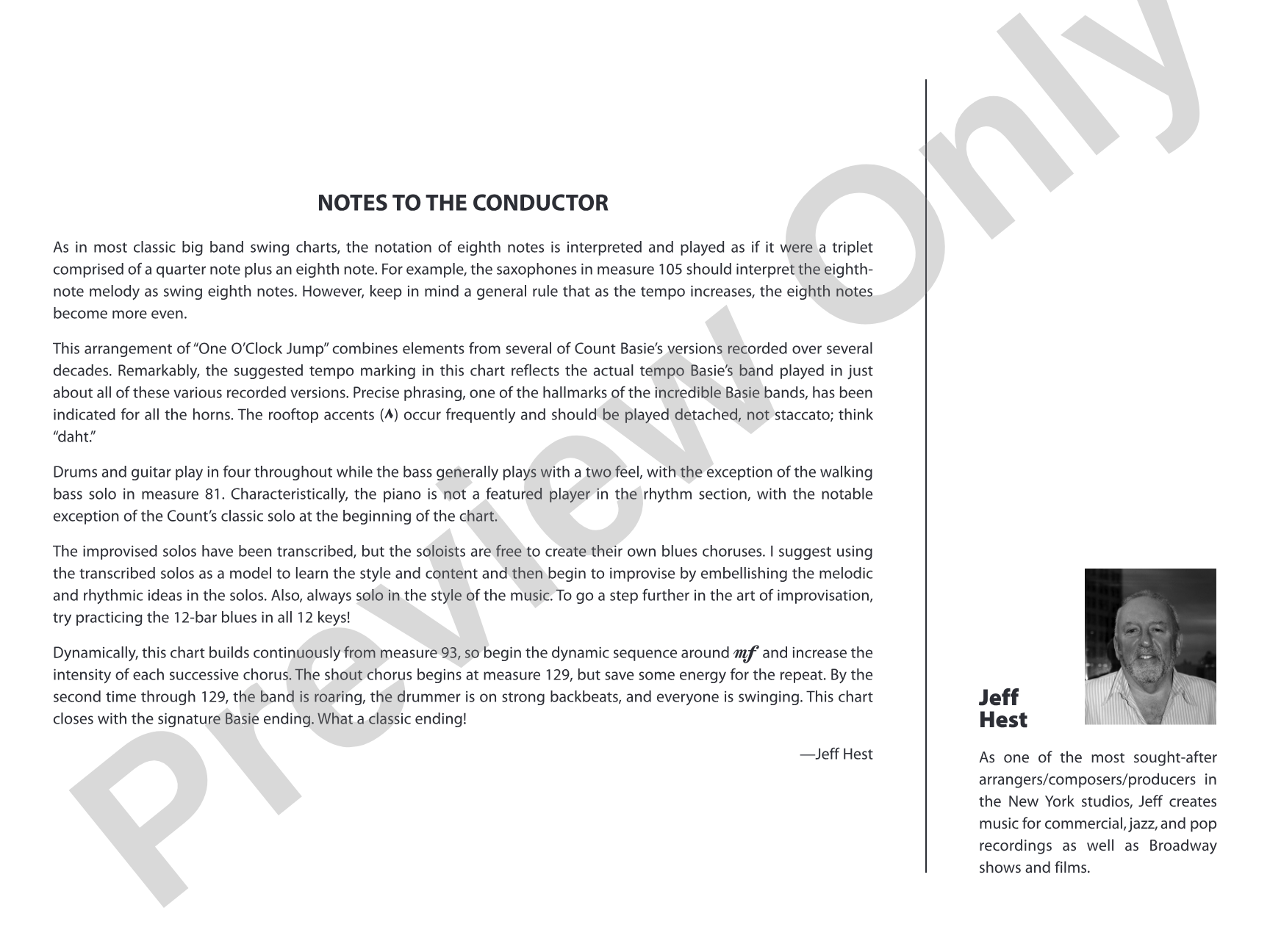
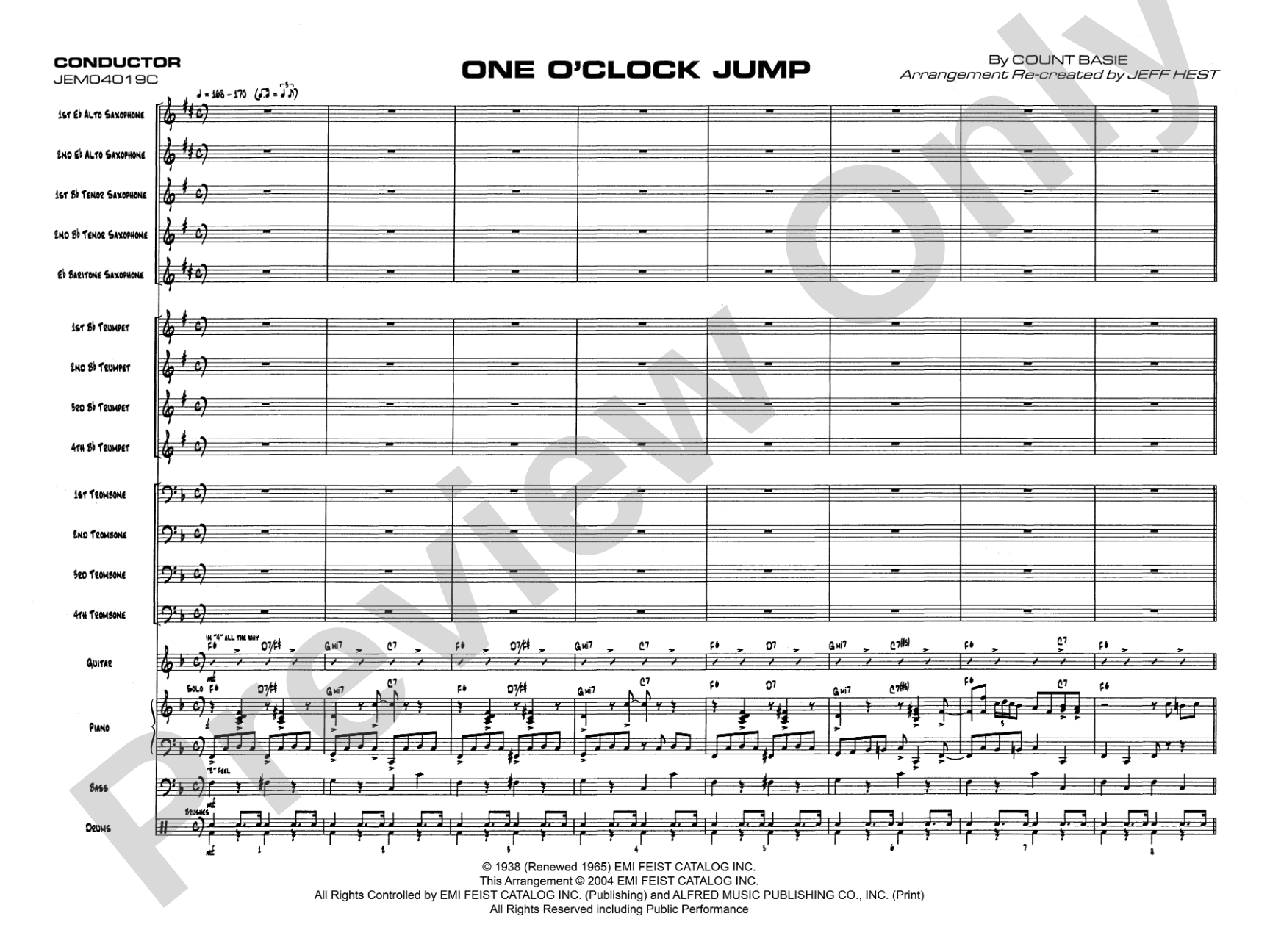
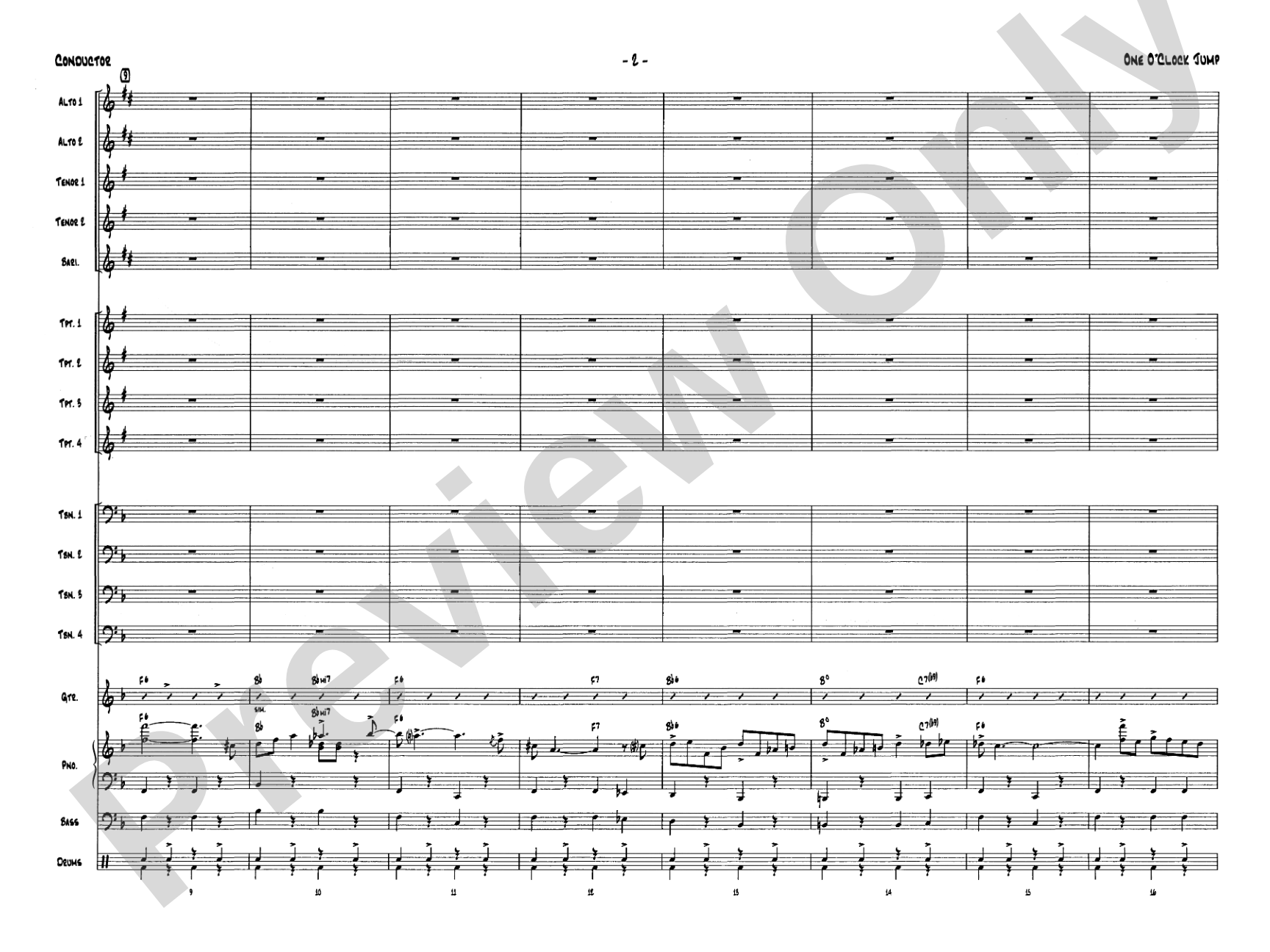
You want Count Basie? Nothing says Basie more than the original "One O'Clock Jump" arrangement recreated here by Jeff Hest. Meticulously notated with Basie's simple but timeless piano solo plus transcribed solos for tenors 1 and 2, trombone, trumpet, bass and the mother of all Basie swinging shout choruses. (3:37)


Don't just read it, hear it, play along with it, and watch your students grow with it. In MakeMusic Cloud, One O'Clock Jump: Jazz Ensemble Conductor Score & Parts comes alive with professional accompaniment, adjustable tempo, and built-in practice tools that turn solo practice into real progress.
Open in the Player
Jump straight in and assign it today.
Start Your Free Trial
Open this title and explore the full library in minutes.
Sample Audio
1
Audio File
--:--
0:00
0:00
Sample Video
Additional Details
Series:
Premier Jazz Series
Publisher:
Alfred Music
Page Count:
74
SKU:
00-PK-0004434
More about this title
About the Composer: Count Basie
Count Basie (1904-1984) led one of the most influential big bands in jazz history, reshaping how ensembles approached swing and the role of the rhythm section. His deceptively spare piano playing and the band's streamlined approach to blues-based riffing made complex orchestration feel effortless, fundamentally changing what audiences expected from a large jazz ensemble.
Why we love this
Jeff Hest has captured the essence of the original recording without softening any of Basie's swagger. This arrangement demands serious musicianship from your section players—the solos are transcribed, not simplified—while the final shout chorus sits exactly where it needs to in terms of ensemble power and precision. Programming this signals that your band can handle the real thing.
What to expect
Elemental and swinging. The piece moves with a propulsive rhythm section underneath solos that weave in and out of an anchoring blues form, building toward a climactic ensemble moment where the entire band swings as one machine. It feels like witnessing something genuine, not a recreation or a school version.
Who it's for
Jazz ensembles at the medium-advanced level or above, particularly those with strong soloists who can handle transcribed melodic lines and navigate changes with security. Directors working toward a concert that includes canonical big band repertoire will find this an uncompromising choice that respects both student capability and the historical record.
How to get the most out of it
- Build the swing feel gradually through the opening section. The rhythm section should establish the groove before soloists enter; rush the tempo and you lose the pocket entirely.
- Balance the transcribed solos carefully. These lines have specific harmonic and rhythmic relationships to each other; a dominant tenor solo must sit slightly ahead of the trombone break, not trade exact phrases.
- Approach the shout chorus with restraint at first, then swell. The impact comes from collective precision and gradual dynamic lift, not from starting loud.
- Lock the comping figures in the piano and guitar parts. Basie's style depends on what he didn't play; clean rhythmic silence is as important as the notes themselves.
How to use it
Place this in a jazz concert where it stands alongside or contrasts with other big band material; its straightforward blues structure reads completely differently when heard after modal or bebop-influenced pieces. It works equally well as an opener that establishes swing and energy or as a closer that leaves the audience with the essential sound of the Basie era.
Skills your students will build
- Swing phrasing and rhythmic nuance in soloing
- Reading and executing transcribed melodic lines over jazz changes
- Ensemble balance and precision in unison and sectional writing
- Blues form comprehension and harmonic navigation
- Comping techniques and rhythmic silence as a compositional tool
- Building and sustaining dynamic shape across ensemble sections