
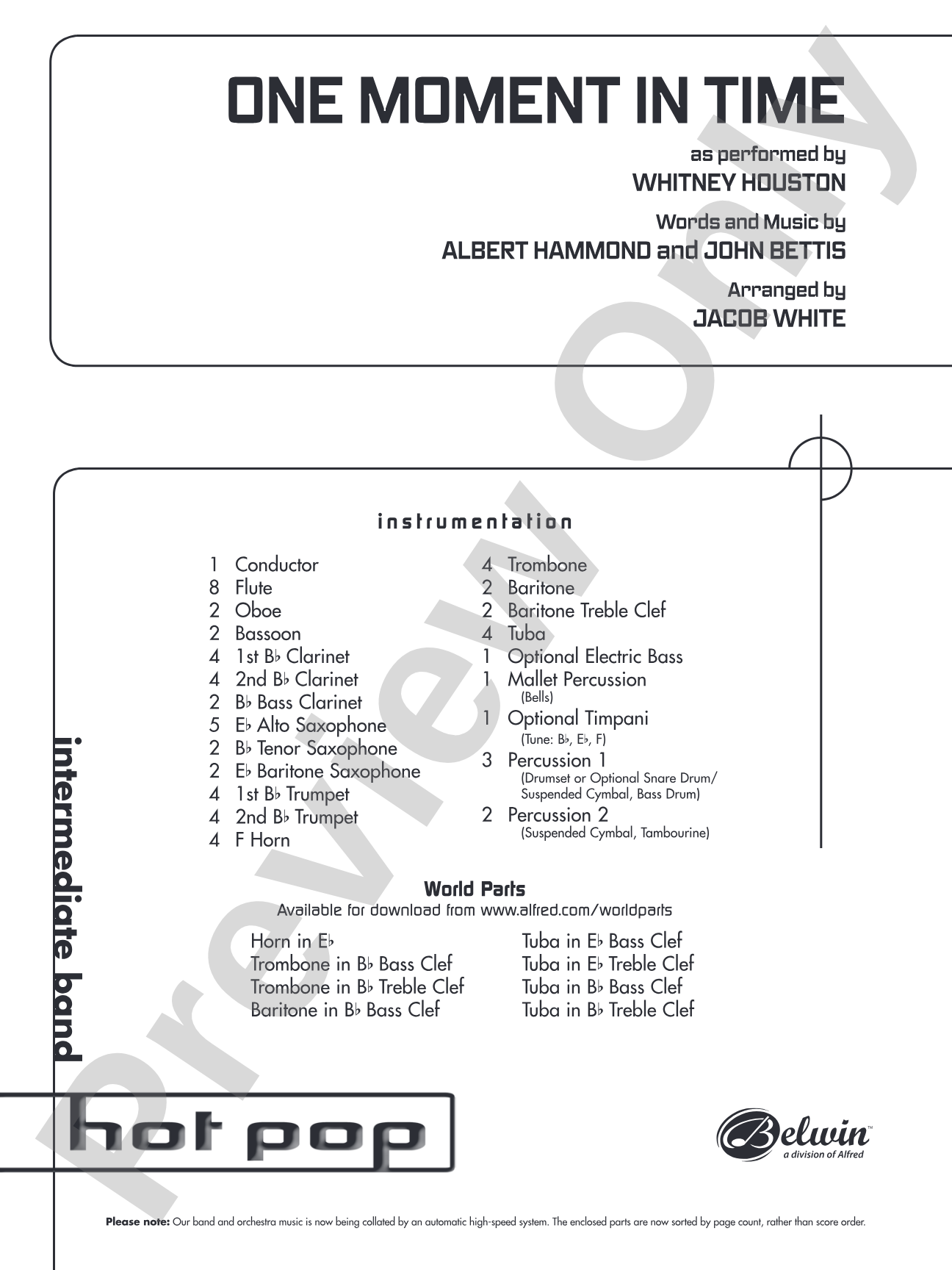
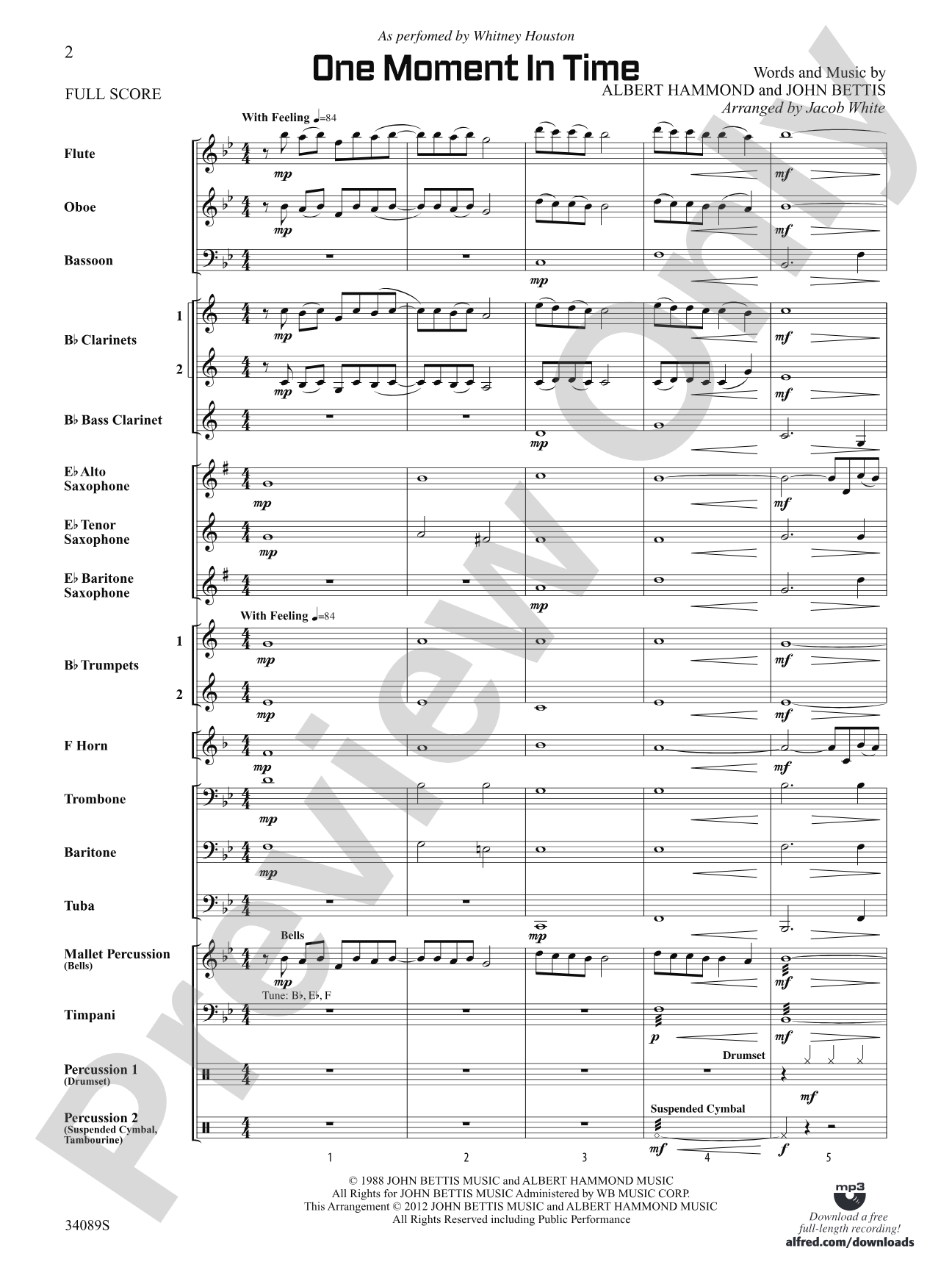
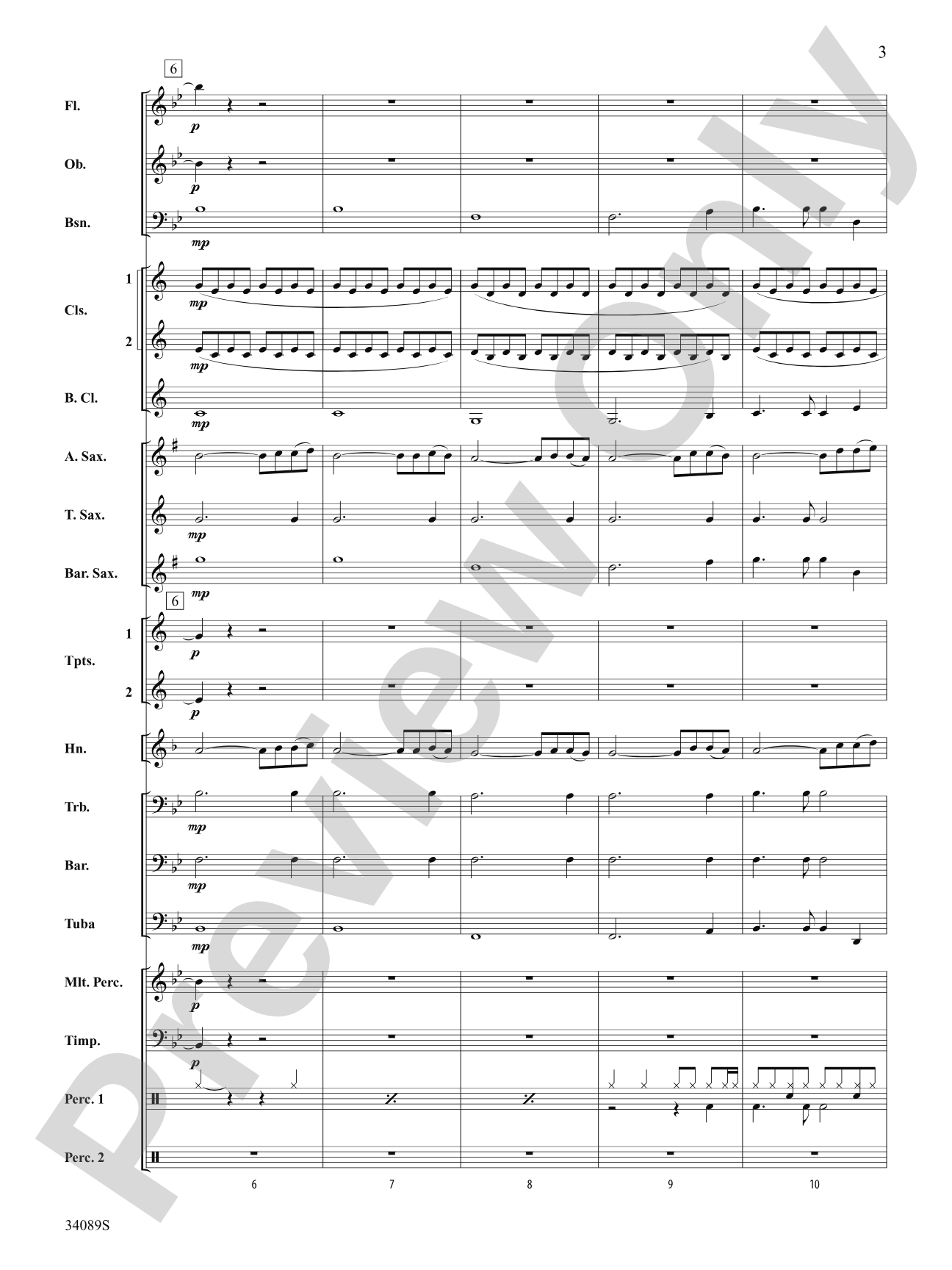
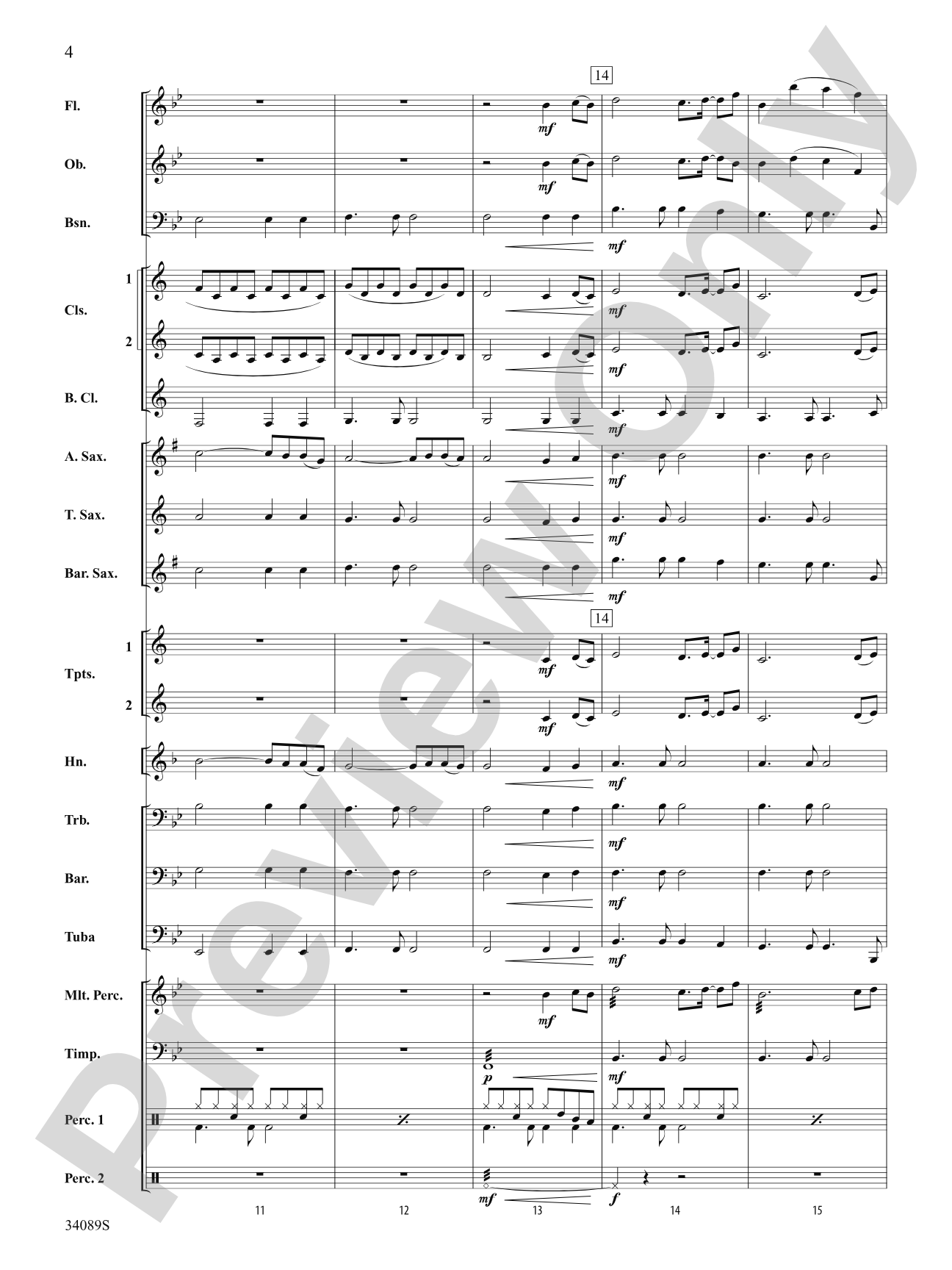
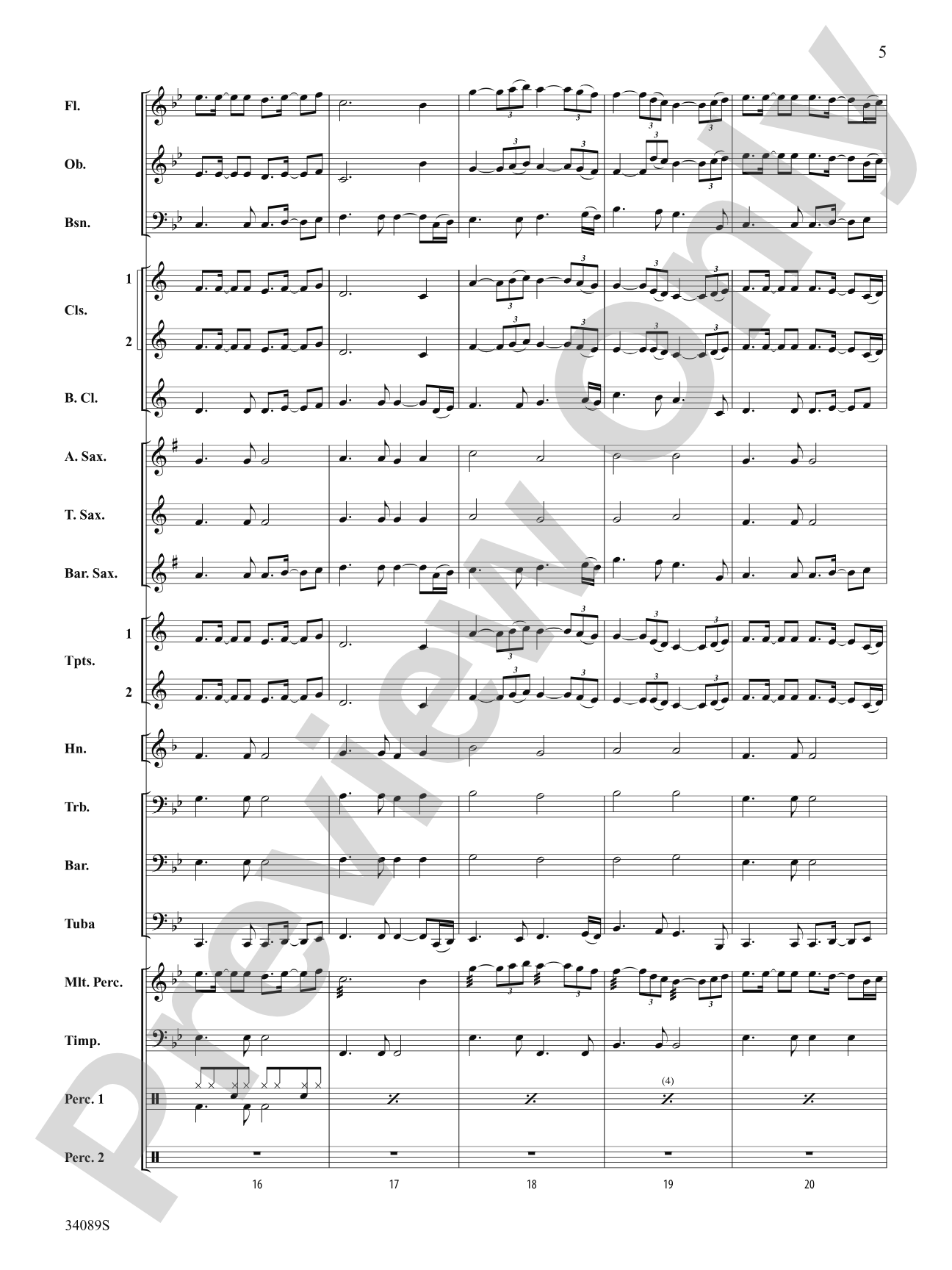
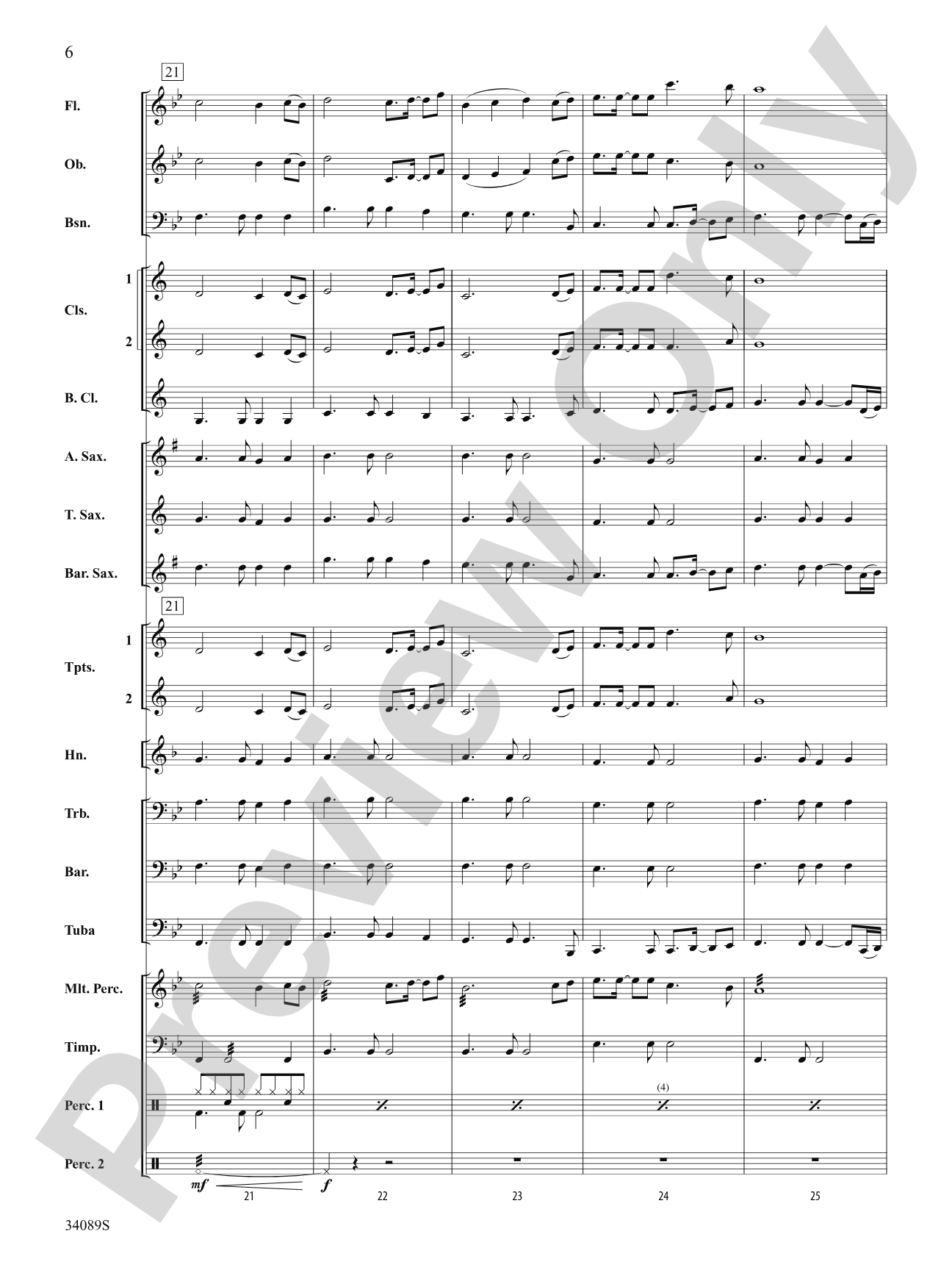
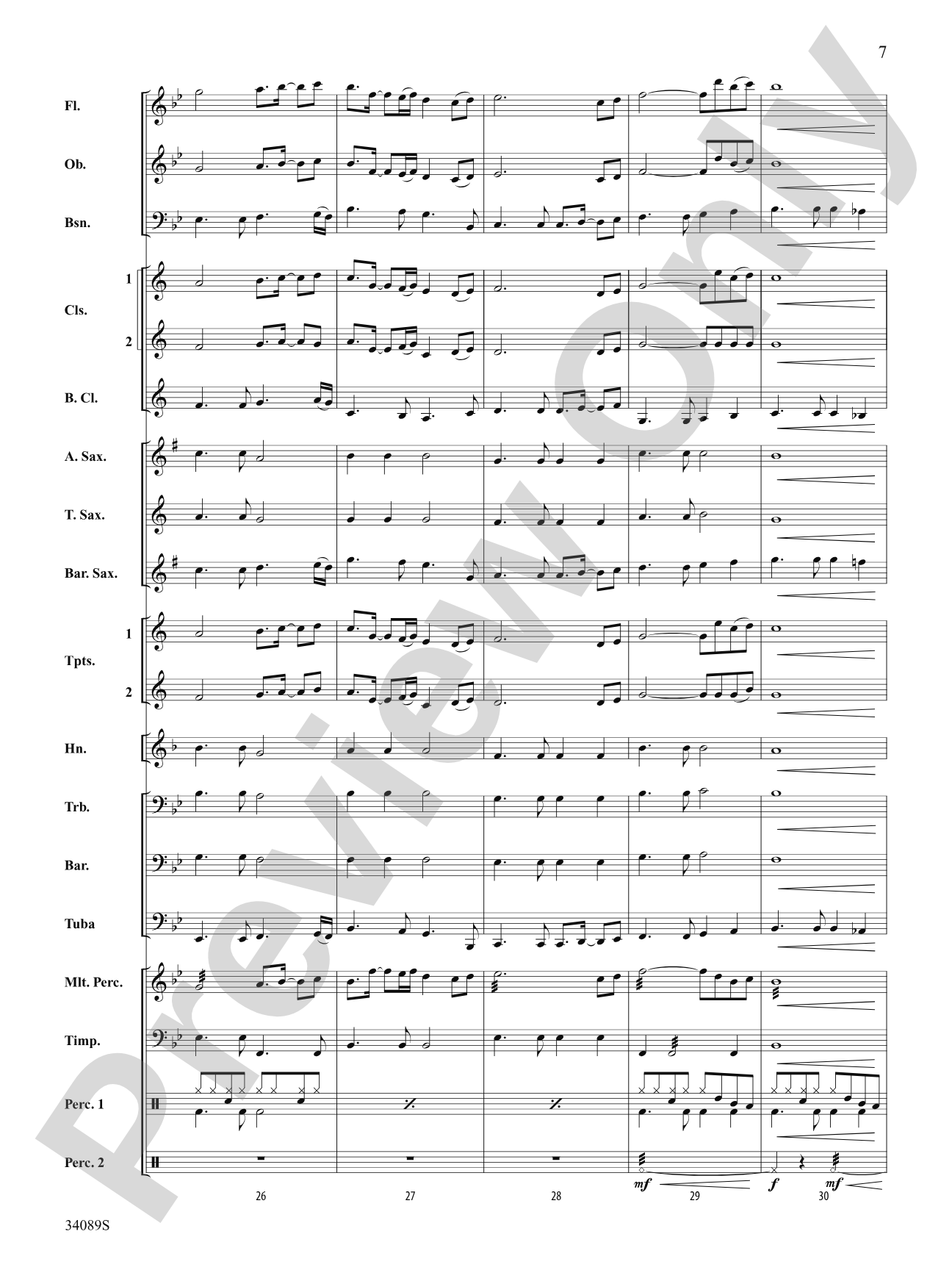
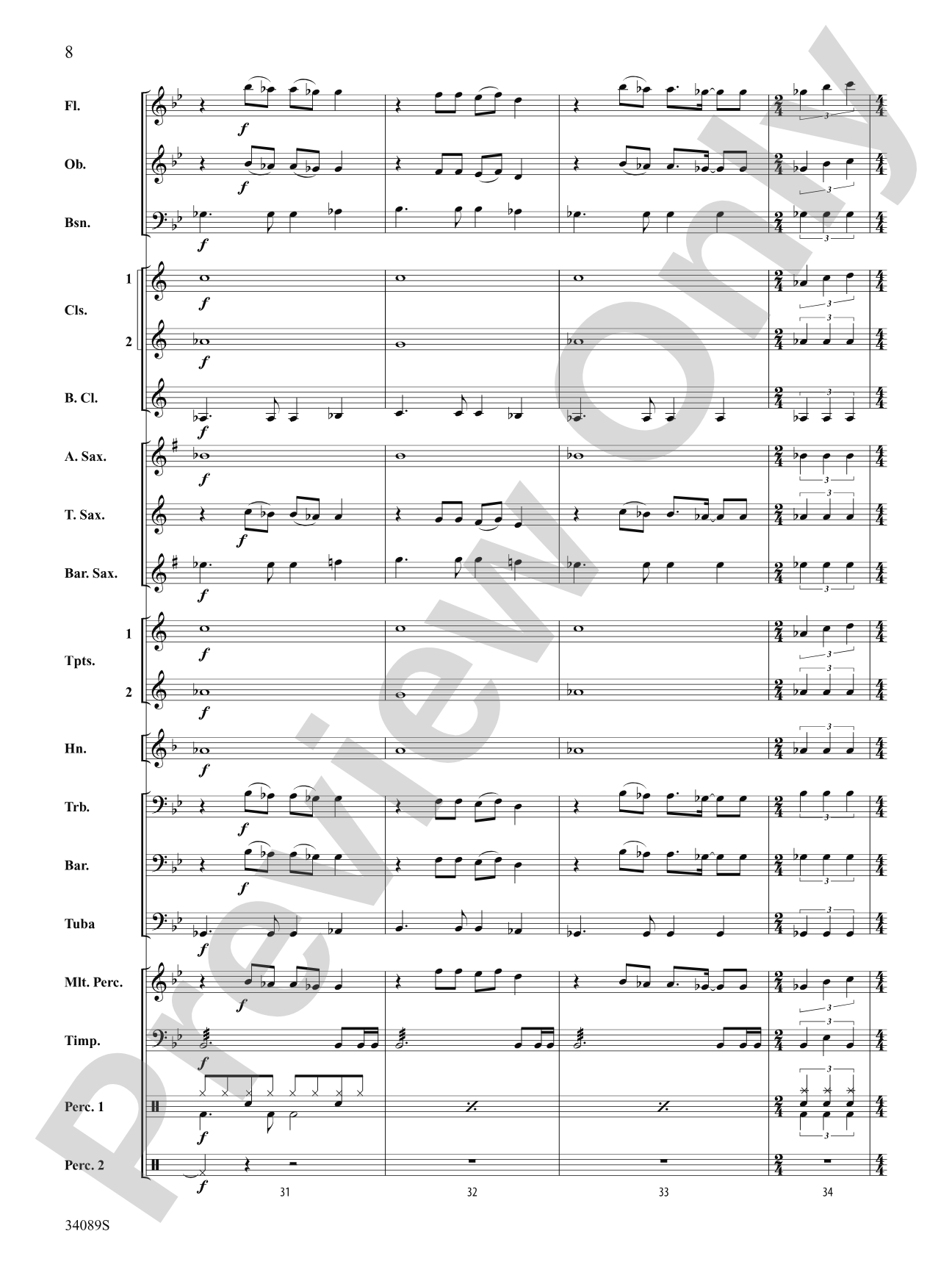
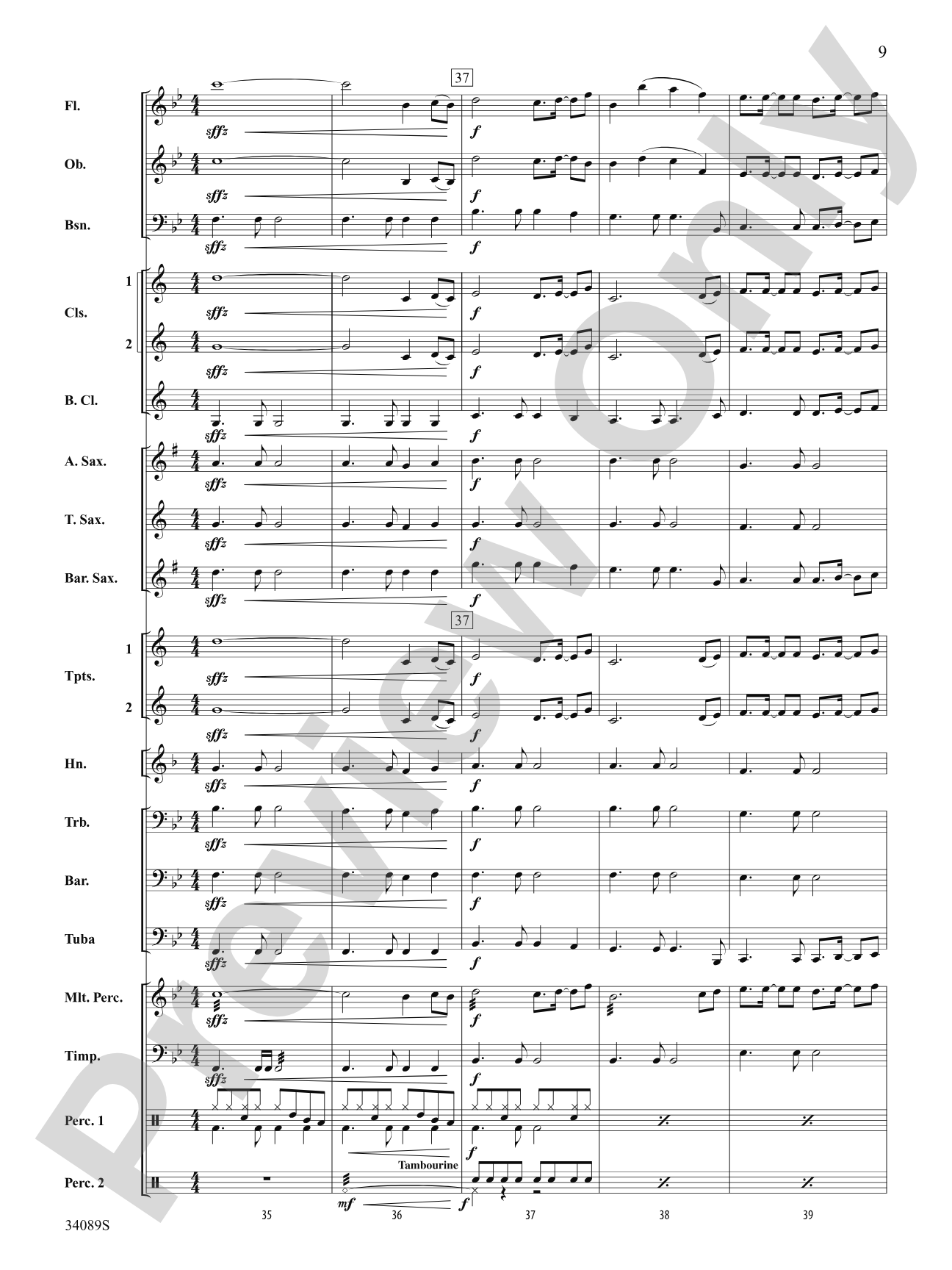
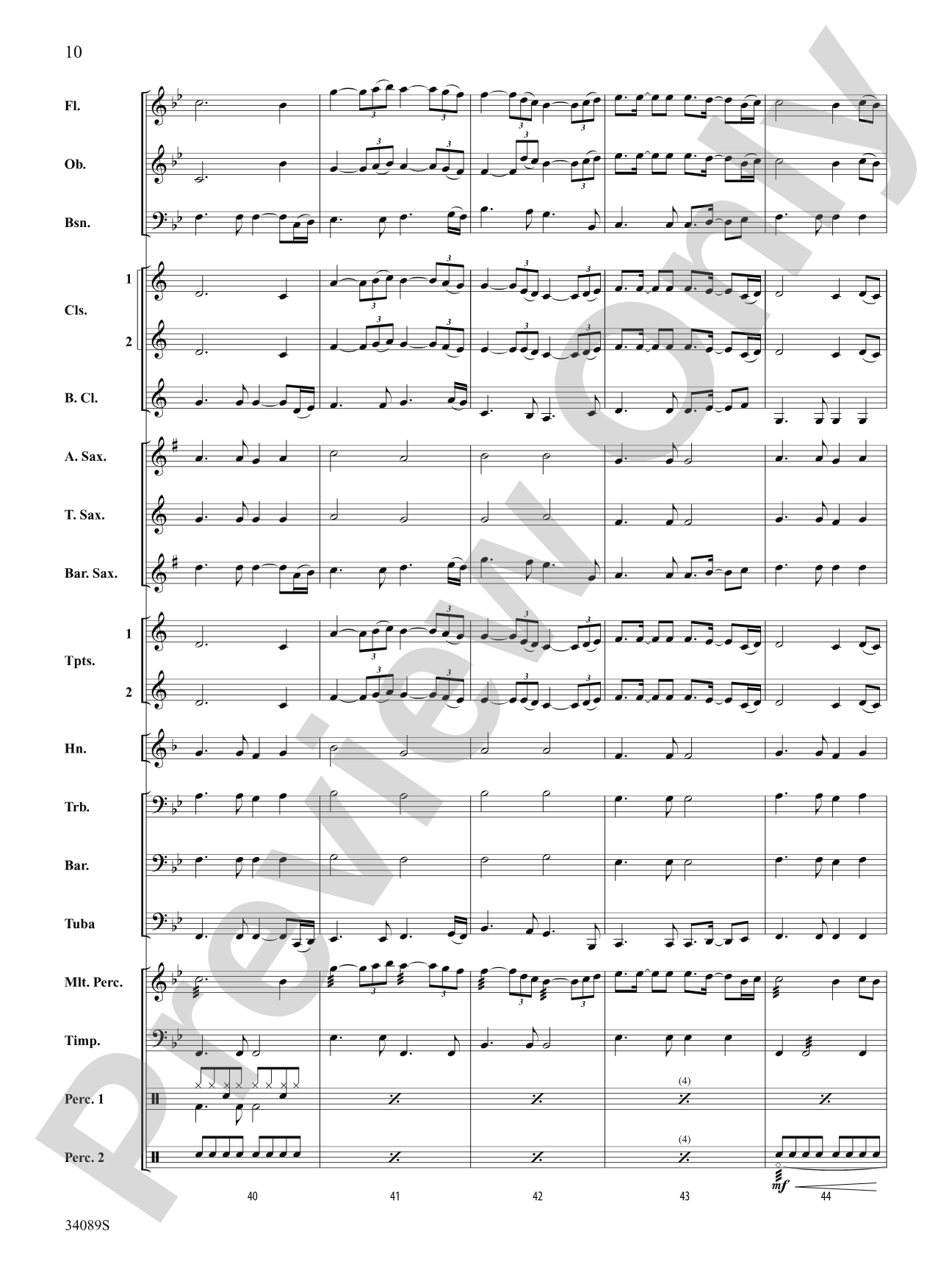
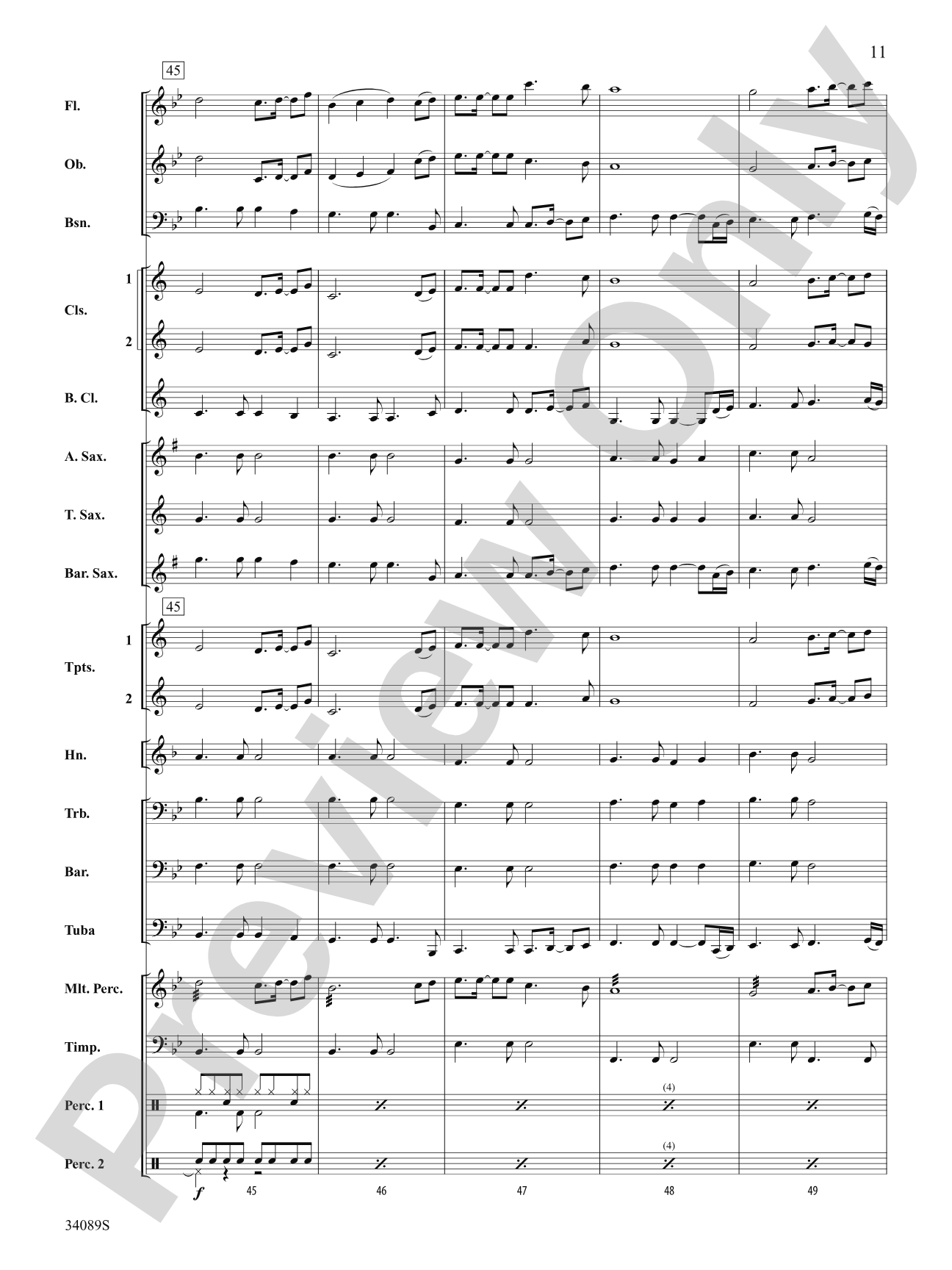
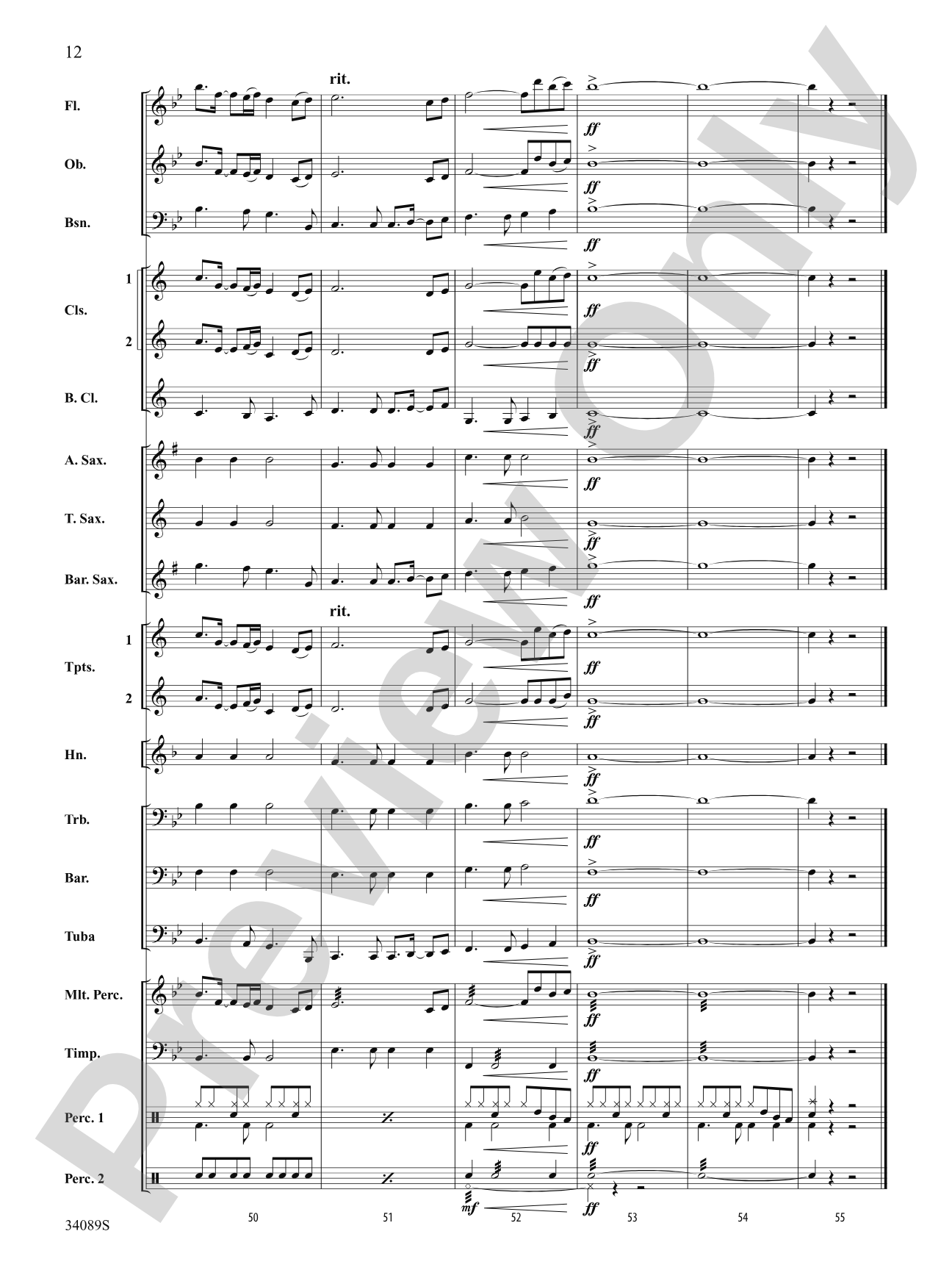

One Moment in Time: Concert Band Conductor Score & Parts
As performed by Whitney Houston
Words and music by Albert Hammond and John Bettis / arr. Jacob White
Grade: 2 (Easy)
Item: 00-PK-0005037

$50.00
One moment…
Description
Released in August 1988, this was the first single from The 1988 Summer Olympics Album: One Moment in Time, the soundtrack to the Games in Seoul, South Korea. It peaked at number five on the Billboard Hot 100, becoming Whitney Houston's tenth top 10 hit. The timeless melody and lush harmonies are brought to your concert ensemble in this beautiful new arrangement! (2:30)


Don't just read it, hear it, play along with it, and watch your students grow with it. In MakeMusic Cloud, One Moment in Time: Concert Band Conductor Score & Parts comes alive with professional accompaniment, adjustable tempo, and built-in practice tools that turn solo practice into real progress.
Open in the Player
Jump straight in and assign it today.
Start Your Free Trial
Open this title and explore the full library in minutes.
Sample Audio
1
Audio File
--:--
0:00
0:00
Sample Video
No sample videos found.
Additional Details
Series:
Hot Pop Band
Publisher:
Alfred Music
Page Count:
126
SKU:
00-PK-0005037
More about this title
About the Composer: Albert Hammond
Albert Hammond is a British-American songwriter and producer whose work spans pop, rock, and film music. His collaborative songwriting, often with lyricist John Bettis, yielded some of the most recognizable hits of the 1980s and 1990s. Hammond's gift for crafting memorable melodies with emotional resonance made him a sought-after composer for major label artists and soundtrack projects.
Beyond the studio, Hammond's compositions have been recorded by artists ranging from Whitney Houston to the Carpenters, establishing him as a trusted voice in commercial pop songwriting. His work on "One Moment in Time" exemplifies his ability to create music that inspires and uplifts, qualities that translate powerfully to concert band arrangements.
Why we love this
Jacob White's arrangement captures the emotional lift of this Olympic anthem while remaining fully playable for Grade 2 ensembles. The lush harmonies and accessible voicing make this an excellent choice for programming uplifting material without sacrificing musicality. Directors get a piece that sounds substantial in performance while students experience success with a globally recognized tune.
What to expect
The arrangement radiates optimism and determination, honoring the original's Olympic spirit while giving it an ensemble warmth. Broad harmonic colors and a flowing melodic line create an accessible yet polished sound that invites audiences in immediately. This is music that lifts spirits without demanding virtuosity.
Who it's for
This arrangement serves concert bands in Grades 2-3 who want to program familiar, inspiring material that engages audiences without requiring advanced technical skills. It works well for ensembles building confidence in pop and contemporary styles, as well as for directors seeking repertoire that connects with school communities through recognizable melodies.
How to get the most out of it
- Shape the melodic line with gentle dynamic swells that follow the lyrical contour of the original vocal line; resist the urge to play it straight through.
- Balance the harmonic texture by ensuring lower voices support without overwhelming the primary melody, especially during transitions between sections.
- Use the 2:30 runtime as a guide for pacing; maintain steady tempo throughout to preserve the song's emotional momentum.
- Allow space for breathing in the ensemble, particularly at phrase endings, to prevent the arrangement from feeling rushed despite its moderate length.
How to use it
Program this as a centerpiece for a contemporary or popular music concert, pairing it with other accessible pop arrangements to create a themed set. It also works effectively as a concert closer when you want to send audiences out feeling energized. The piece's recognizability makes it an excellent choice for community concert contexts where audience connection matters.
Skills your students will build
- Balancing melody and harmony in mixed voicings
- Sustaining lyrical phrasing across multiple measures
- Maintaining steady tempo and rhythmic precision in pop idioms
- Reading and performing Grade 2 concert band arrangements
- Responding to dynamic shaping that mirrors vocal expression