
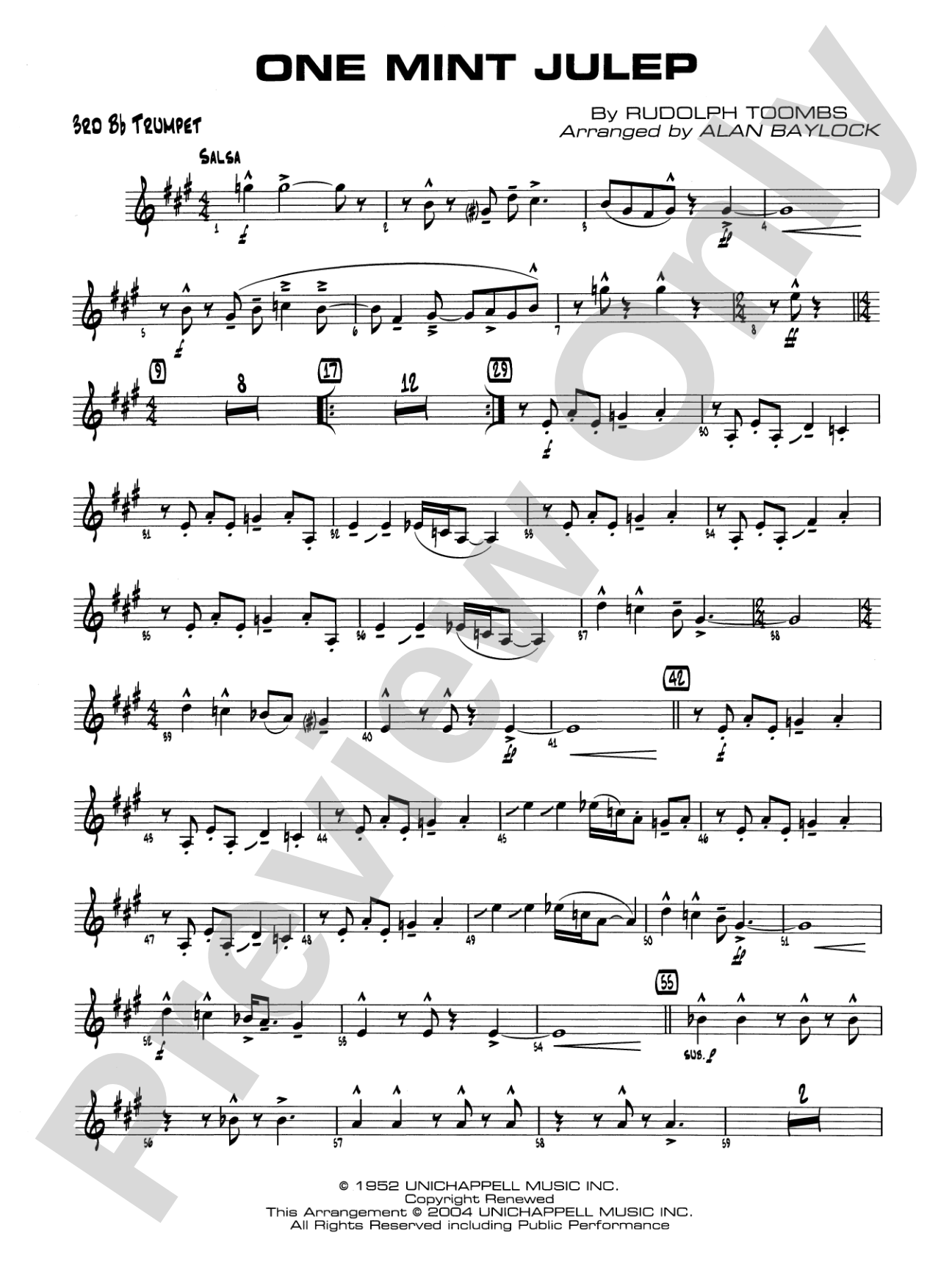

One Mint Julep: 3rd B-flat Trumpet
By Rudolph Toombs / arr. Alan Baylock
Grade: 4.5 (Medium Advanced / Difficult)
Item: 00-PC-0014726_T3
$3.00
Pickup currently not available
Description
Brilliant arranger/composer Alan Baylock puts a very hip spin on "One Mint Julep." A greasy salsa with a hint of Thad Jones-Mel Lewis, Alan's arrangement provides solo space for alto 1, trumpet 2, and bone 1. The rhythm section will have fun with the salsa groove and few meter changes. This is a must-have chart! This recording is taken from the Alan Baylock CD, TWO SECONDS TO MIDNIGHT, available on Seabreeze Records. (6:04)


Don't just read it, hear it, play along with it, and watch your students grow with it. In MakeMusic Cloud, One Mint Julep: 3rd B-flat Trumpet comes alive with professional accompaniment, adjustable tempo, and built-in practice tools that turn solo practice into real progress.
Open in the Player
Jump straight in and assign it today.
Start Your Free Trial
Open this title and explore the full library in minutes.
Sample Audio
1
Audio File
--:--
0:00
0:00
Sample Video
Additional Details
Series:
Premier Jazz Series
Publisher:
Alfred Music
Page Count:
70
SKU:
00-PC-0014726_T3
More about this title
About the Arranger: Rudolph Toombs
Rudolph Toombs was an American R&B songwriter and pianist whose work helped define the sound of rhythm and blues in the 1950s. His composition 'One Mint Julep' became a classic of the genre, recorded memorably by the Clovers in 1952 and covered by numerous artists across decades. Toombs' melodic sensibility and understanding of groove have made his songs enduring vehicles for reinterpretation across jazz, pop, and soul contexts.
Why we love this
Baylock takes a well-known R&B standard and transforms it into something that feels completely fresh without losing the song's infectious pocket. The arrangement balances solo spotlight (three separate features) with an ensemble that stays locked in a propulsive salsa groove, making it equally rewarding for soloists and section players. The meter changes and rhythmic sophistication push a Grade 4.5 ensemble without sounding academic.
What to expect
This is pure groove with an edge. The salsa rhythm moves with a greasy, swinging pocket that draws from both Latin and R&B traditions, then gets spiced up by Thad Jones-Mel Lewis-influenced horn voicings that keep things modern and slightly unpredictable. It swings hard without pretense, making the room want to move.
Who it's for
Advanced high school and college jazz ensembles looking for a chart that combines accessibility with real musical substance. Directors who want a piece with strong solo opportunities without sacrificing ensemble cohesion will find this particularly valuable.
How to get the most out of it
- Anchor the salsa feel in the rhythm section first. The clave and bass groove need to sit before the horns layer on top. Have the drummer, bassist, and pianist rehearse the opening groove in isolation until it feels inevitable.
- Each soloist (alto 1, trumpet 2, trombone 1) needs space to breathe and interact with the rhythm section. Coach them to listen actively rather than simply playing over changes; this arrangement rewards conversation between soloist and ensemble.
- Mark the meter changes in every part and conduct them clearly. The ensemble will follow your preparatory beat, so commit to the tempo and pulse through any rhythmic shifts.
- Balance the salsa percussion and horn color. The greasy character depends on restraint from the ensemble while soloists have the floor; save the full section sound for the ensemble statements and out chorus.
How to use it
Program this as a festival or concert closer on a jazz night. It sits comfortably alongside both swing standards and contemporary originals, and the solo-friendly structure works especially well on programs where you want to showcase your ensemble's soloists without dedicating an entire set to feature vehicles. The recorded reference on Seabreeze Records makes it easy for students to get inside the style before rehearsal.
Skills your students will build
- Salsa clave and Latin rhythm section coordination
- Soloing with ensemble interaction and responsiveness
- Reading and executing meter changes (polymetric sections implied by rhythm section activity)
- Balancing ensemble sound when accompanying soloists
- Jazz phrasing and articulation across different harmonic contexts
- Section tuning and voicing blend in medium-advanced charts