
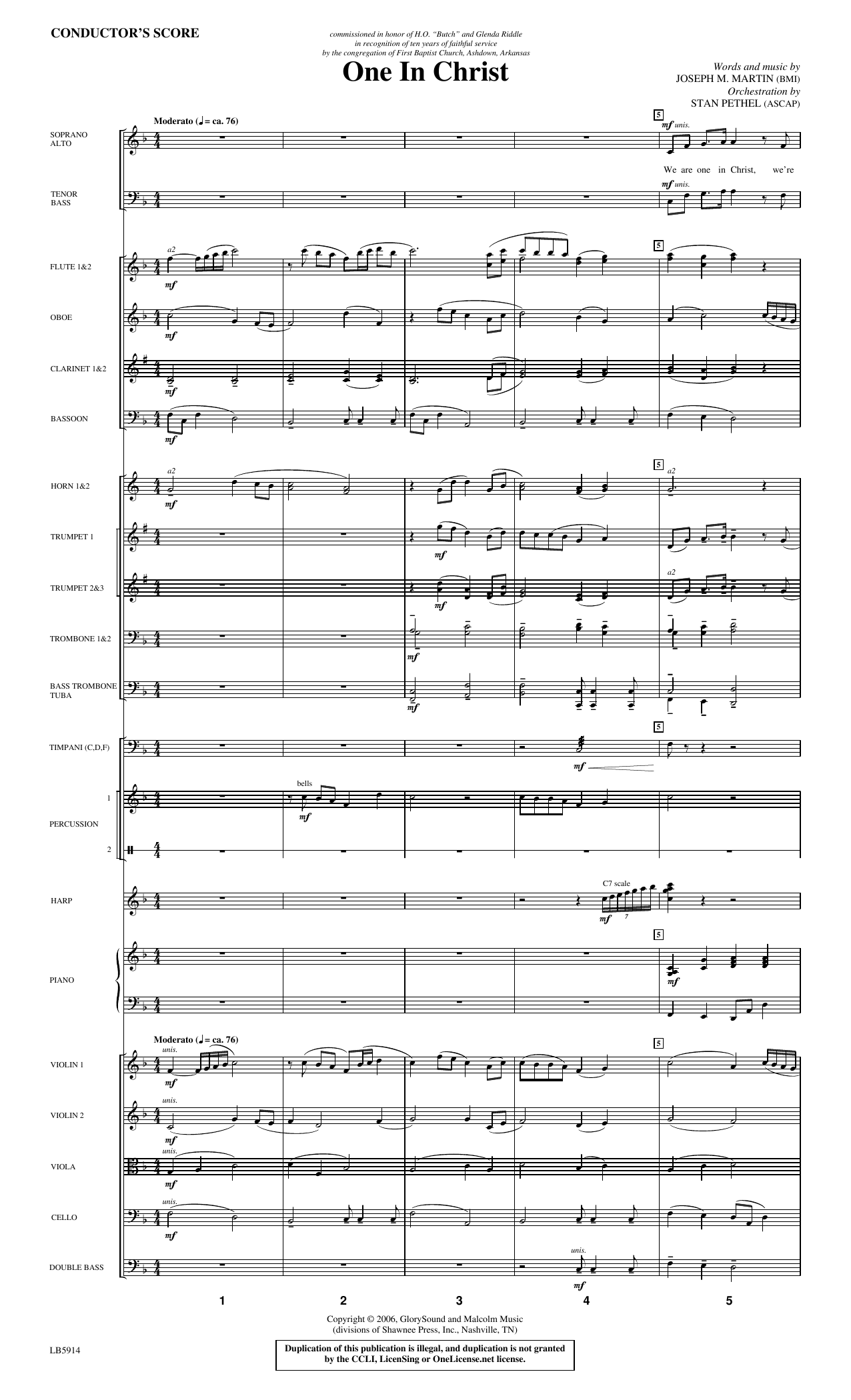

One In Christ: Choral Instrumental Pak
By Joseph M. Martin
Item: 35-PK01251989
$74.95
Pickup currently not available
Buy Extra Parts (Digital PDF Download)
Parts Added to Cart!
Description
The unity we share in the Christ is the reason to sing. With one voice, this contemporary ballad delivers a powerful Williams text with forceful determination. In only 50 measures, this inspiring message will draw your congregation together in bonds of shared faith.


One In Christ: Choral Instrumental Pak isn't in MakeMusic Cloud just yet...but it could be. Let us know you'd like to see it, and you'll help shape what comes next. In the meantime, start a free trial and dive into thousands of interactive titles your students can play along with today.
Request This Title
Tell us you want it.
Start Your Free Trial
Explore everything that's ready to play right now.
Sample Audio
No sample audio found.
Sample Video
No sample videos found.
Additional Details
Publisher:
Hal Leonard
SKU:
35-PK01251989
More about this title
About the Composer: Joseph M. Martin

Joseph M. Martin's training in piano performance at Furman University and the University of Texas shaped him as both a disciplined musician and thoughtful educator. He spent five years teaching piano pedagogy at UT Austin before redirecting his energies toward composition and concert performance, eventually establishing himself as a sought-after voice in church music. His works have been performed across prominent venues from Carnegie Hall to countless worship spaces throughout North America, reflecting his ability to write music that speaks authentically to both concert audiences and congregational settings.
Martin's compositional output demonstrates remarkable range, from solo piano recitals to large ensemble works, yet his underlying strength lies in crafting accessible music that carries genuine spiritual weight. Living in Austin with his family, he continues balancing concert performance with an active composing schedule, producing the kind of music that has made him a trusted name among church musicians and music educators seeking contemporary sacred works with substance.
Why we love this
Martin's gift for setting a text lies in his refusal to oversell a moment. The orchestral arrangement here supports the choir without drowning it out, and the brevity (50 measures) means the piece lands with impact rather than wearing out its welcome. Directors appreciate that contemporary doesn't mean complicated, and this ballad proves a unified choir and orchestra can communicate faith more powerfully than virtuosity ever could.
What to expect
A contemporary ballad with conviction and warmth. The orchestration unfolds with restraint, allowing space for the choir's voice to carry the emotional weight of the text. There's an earnest, intimate quality despite the full ensemble, as though a gathered community is affirming something essential they already believe.
Who it's for
This works for congregations with an orchestra or chamber ensemble at their disposal, making it ideal for larger churches, special services, or concert presentations with blended instrumentation. Choirs of mixed ages and abilities can succeed here; the writing sits in a comfortable range and the message transcends technical difficulty.
How to get the most out of it
- Establish the harmonic foundation early in rehearsal by having the orchestra play through sections while the choir listens, then reverse it. This interdependence becomes clear quickly when both forces understand how they sit within the texture.
- The text deserves clarity above all else. Before adding dynamic shape, drill the diction so each word lands distinctly, especially in moments where orchestra and voices overlap.
- Allow the orchestra to breathe with the choir rather than pushing through mechanically. Martin's phrasing follows text stress, so mark breath points together and respect them in every rehearsal run-through.
How to use it
Fit this into a service centered on unity or communion, where its brevity makes it ideal for a moment of corporate affirmation rather than a lengthy anthem. It also works as a concert opener or closer, particularly when programming alongside longer works, since its directness and contemporary idiom can freshen a program's arc.
Skills your students will build
- Balancing ensemble blend when singing against orchestral accompaniment
- Sustaining legit vowel shape through longer note values in ballad style
- Responding to text as the primary shaper of phrasing and dynamics
- Listening to orchestral cues and entrances within a coordinated ensemble