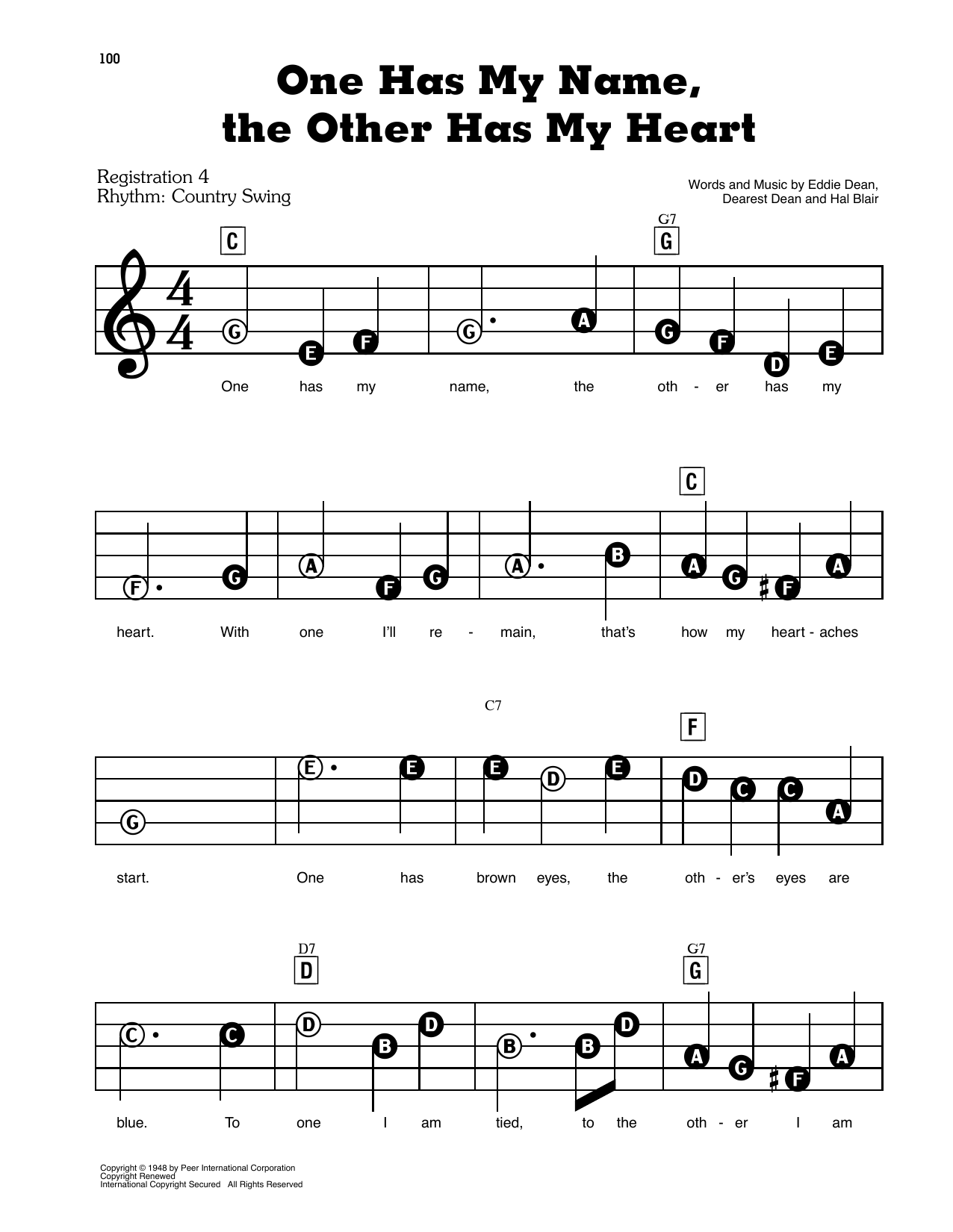
One Has My Name, The Other Has My Heart Sheet Music Preview

One Has My Name, The Other Has My Heart: E-Z Play Today

As performed by Jimmy Wakely

Item: 35-DS00460593

Digital Download
$4.99
Description

One Has My Name, The Other Has My Heart: E-Z Play Today isn't in MakeMusic Cloud just yet...but it could be. Let us know you'd like to see it, and you'll help shape what comes next. In the meantime, start a free trial and dive into thousands of interactive titles your students can play along with today.

Sample Audio
No sample audio found.
Sample Video
Additional Details
Publisher: Hal Leonard
Page Count: 2
SKU: 35-DS00460593

More about this title

About the Artist: Jimmy Wakely

Jimmy Wakely was a versatile entertainer who built his career across radio, film, and recording in the 1940s and 1950s. Known for his smooth vocal delivery and ability to straddle country and pop styles, Wakely became a fixture on Western Swing broadcasts and recorded numerous duets that showcased his gift for close harmonies and emotional phrasing.

Why we love this

This is a legitimate country standard with genuine emotional weight, not a novelty or throwaway tune. The lyrical conceit creates natural harmonic opportunities for pianists to explore passing tones and voice leading that brings the story to life.

What to expect

Bittersweet and intimate, with the restraint of a late-night radio performance. The melody sits naturally on the piano, and the harmonic movement carries the emotional weight without drama or orchestration.

Who it's for

Piano students ready to explore country repertoire beyond bluegrass adaptations, and jazz pianists looking to develop their touch in a stripped-down, story-driven context. Teachers programming recitals or showcases that celebrate American roots music will find this accessible and genuinely moving.

How to get the most out of it

  • Shape the melody with subtle rubato in the verses to honor the vulnerability of the lyric without losing the country feel.
  • Keep the accompaniment light and spacious rather than filling every beat; let silence become part of the arrangement.
  • Balance the narrative arc across both pages so the emotional peak lands exactly where Wakely's recording places it.
  • Pay attention to the rhythm guitar skeleton implied by the chord changes; lean into that pocket rather than playing straight eighths.

How to use it

Pair this with other 1940s-era standards to build a thematic set on heartbreak and longing. It works especially well as a bridge between classical traditions and contemporary singer-songwriter repertoire, helping students hear how melody and harmony serve storytelling across genres.

Skills your students will build

  • Sustaining vocal-style phrasing at the piano
  • Reading and interpreting chord symbols in a country-pop context
  • Balancing accompaniment texture with narrative presence
  • Understanding period-appropriate rubato and expression in mid-century American song

You May Also Like