Folk tunes and nursery songs, accompanied by the three principal chords of C major. Titles: America * Camptown Races * Clementine * Hey Diddle Diddle * Here We Go Looby-Loo * Hickory Dickory Dock * Humpty Dumpty * Jingle Bells * Lullaby * Oh! Susanna * Sing a Song of Sixpence * Twinkle, Twinkle, Little Star.
Discover MakeMusic Cloud: thousands of interactive titles your students can play along with today.
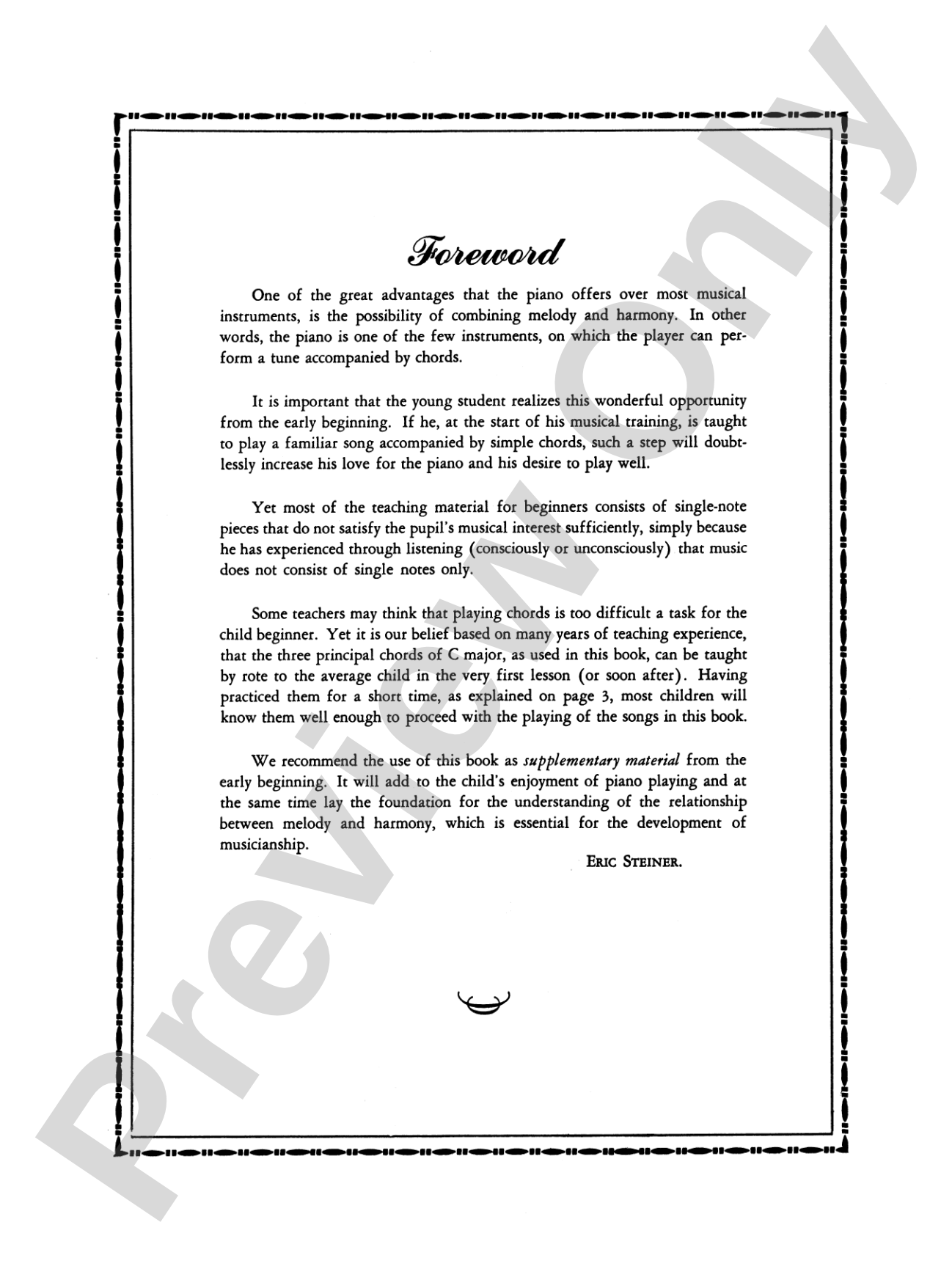
Eric Steiner's journey from Vienna to New Jersey shaped both his pedagogy and his mission. Born in Austria in 1911, he showed early musical promise and received piano instruction despite his family's modest means. After beginning a law career in Vienna, he immigrated to the United States in 1938 and dedicated himself entirely to music education, establishing the Lauter Piano School in Newark and becoming a sought-after clinician and private instructor.
Steiner's legacy extends far beyond his own teaching career. He earned credentials from the Vienna Music Academy and became an active member of multiple music educator organizations, serving as vice president of the New York Piano Teachers' Congress during the 1950s. His pedagogical materials remain in widespread use decades after his death in 1987, testament to their clarity and effectiveness. The Music Educators Association of New Jersey established the Eric Steiner Memorial Awards in his honor, recognizing his lasting impact on piano composition and instruction.
Why we love this
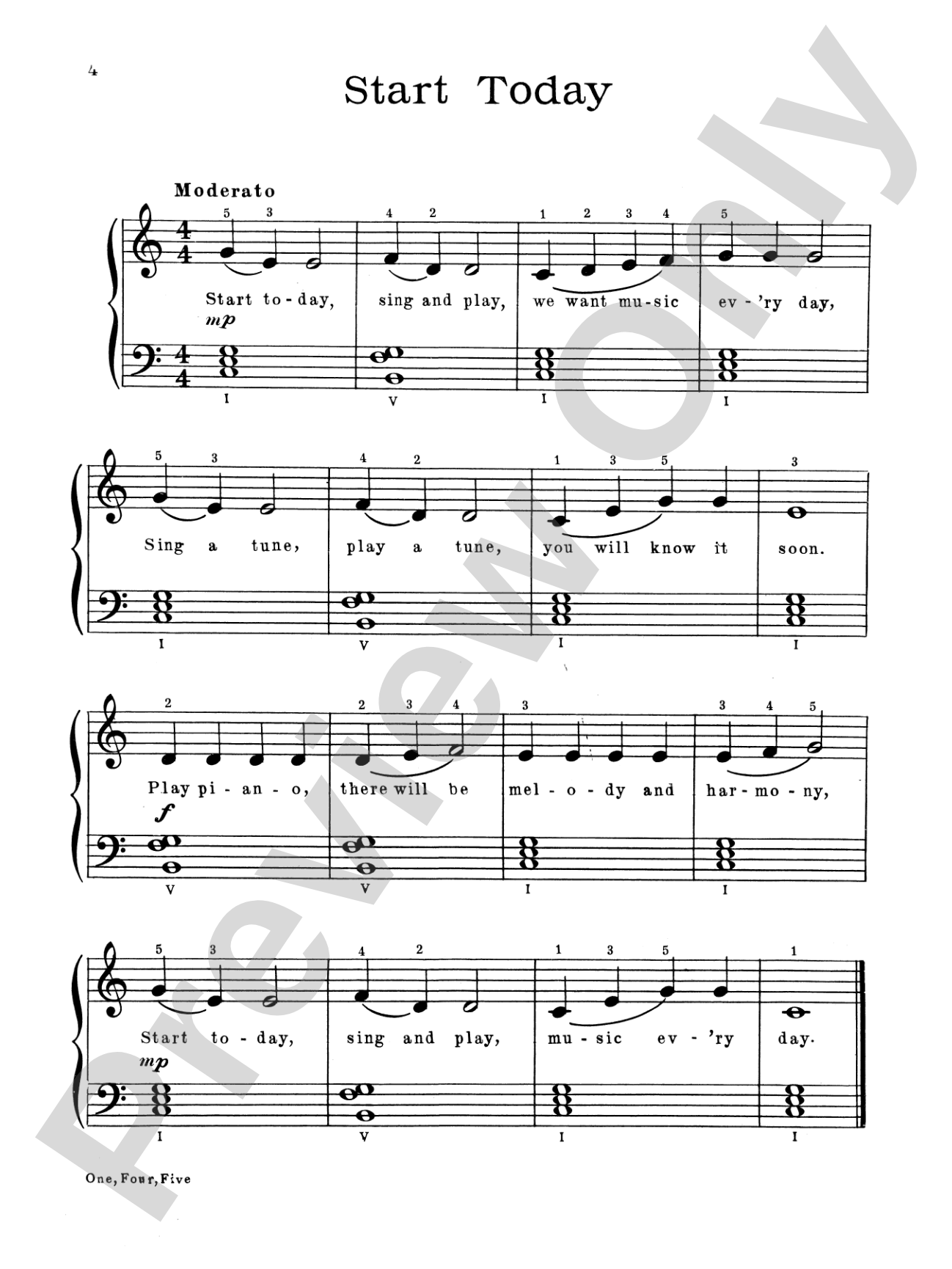
Steiner's harmonic simplicity here serves a crucial pedagogical purpose: young pianists gain genuine independence at the keyboard almost immediately, playing recognizable melodies while their left hands handle the three core chord changes of C major. The folio respects children's musical intelligence by using songs they already know, which means students focus entirely on chord function and hand coordination rather than memorizing unfamiliar material.
What to expect
Gentle and purposeful. Every song lands with harmonic clarity without feeling labored; the familiar melodies create warmth while the straightforward chord progressions establish confidence. There's something reassuring about hearing a song you know suddenly make sense from both hands at the keyboard.
Who it's for
Beginning pianists typically in their first or second year who have learned basic technique and are ready to understand how chords function in actual songs. This collection also works beautifully for adult beginners seeking simple, satisfying pieces that sound complete from the very first lesson.
How to get the most out of it
Establish steady quarter-note pulse in the left hand before introducing the melody. This foundation makes the harmonic changes audible and prevents rushing when hands coordinate.
Listen for the moment when students stop thinking about which chord comes next and start hearing the chord change. That's when you can ask them to shape the melody more expressively.
Keep the left hand dynamic slightly softer than the right, even when both hands play throughout. The accompaniment supports; the tune sings.
Encourage students to notice which chords appear most frequently and which create the turning points in each song. This listening habit transfers directly to improvisation.
How to use it
Pair these pieces with more elaborate arrangements of the same folk tunes at higher levels, showing students how their foundational understanding expands into richer textures. They also serve as excellent ear-training material during the first half of a beginner lesson, establishing chord recognition before moving into technique work.
Skills your students will build
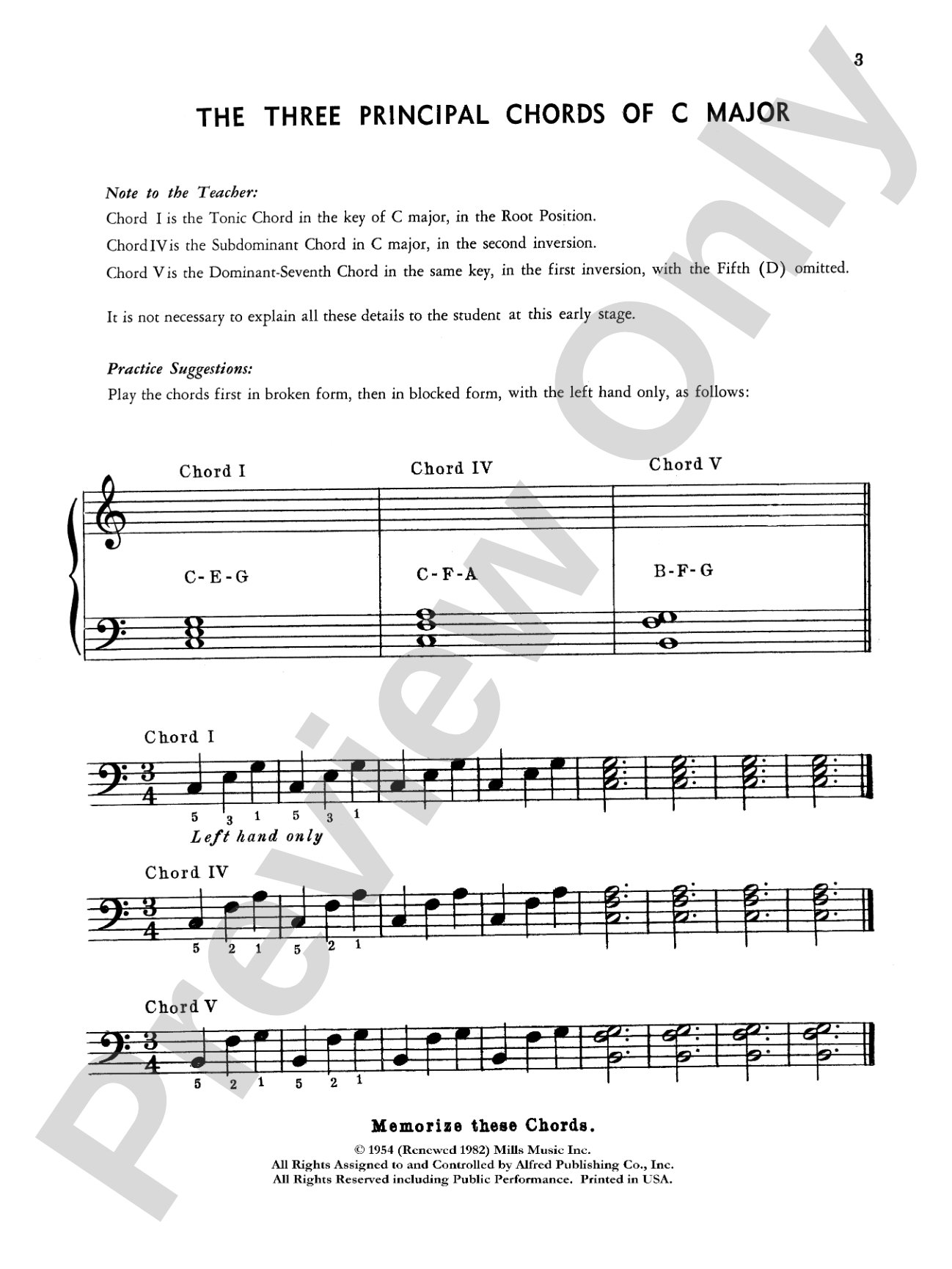
Recognizing and playing the I, IV, and V chords in C major
Coordinating independent left and right hand parts
Understanding chord function within a harmonic progression
Sight-reading simple melodies with basic rhythmic patterns
Transferring musical knowledge across multiple songs with the same harmonic framework
You May Also Like
Scan to Complete Your Purchase
Use your phone's camera to scan the code below
You'll log in on your phone and the order will be added to your account