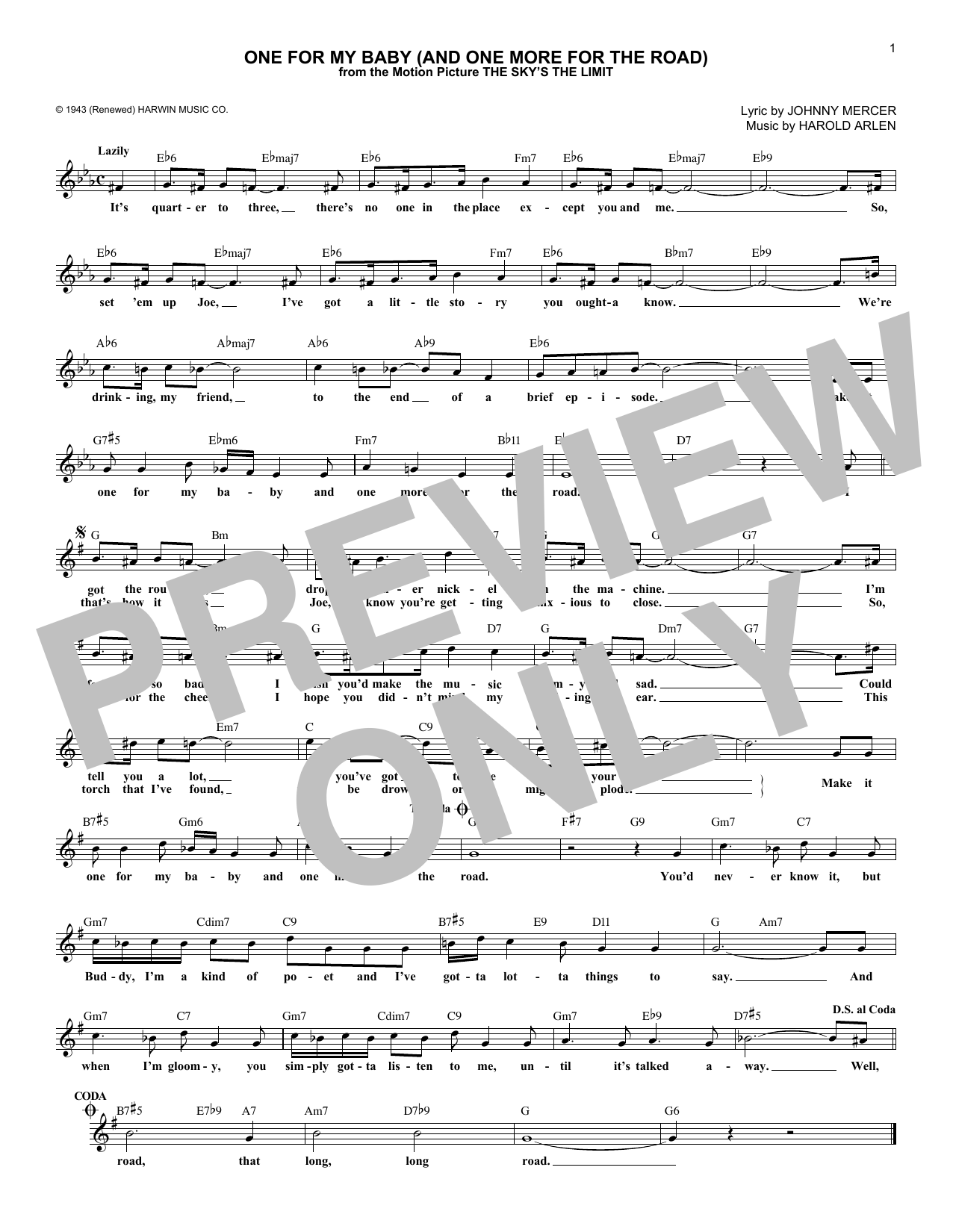
One For My Baby (And One More For The Road) Sheet Music Preview

One For My Baby (And One More For The Road): Lead Sheet / Fake Book

As performed by Frank Sinatra

Item: 35-DS00436315

Digital Download
$3.99
Description

One For My Baby (And One More For The Road): Lead Sheet / Fake Book isn't in MakeMusic Cloud just yet...but it could be. Let us know you'd like to see it, and you'll help shape what comes next. In the meantime, start a free trial and dive into thousands of interactive titles your students can play along with today.

Sample Audio
No sample audio found.
Sample Video
Additional Details
Publisher: Hal Leonard
Page Count: 1
SKU: 35-DS00436315

More about this title

About the Artist: Frank Sinatra

Frank Sinatra defined the art of vocal jazz interpretation across five decades, setting the standard for how standards should be sung. His influence on phrasing, rubato, and emotional directness shaped generations of jazz vocalists and remains the reference point for understanding how melody and harmony intersect in the Great American Songbook.

Why we love this

This tune captures one of Sinatra's signature interpretive moments, and having it in lead sheet form lets students and performers study the exact harmonic choices and melodic contours that make his version iconic. The straightforward single-page layout removes barriers for jazz combos, vocal ensembles, or individual pianists looking to add a sophisticated standard to their repertoire.

What to expect

Intimate and reflective, with a melancholy edge. The melody sits in a conversational register, never straining, while the harmony underneath carries emotional weight. This is a song about quiet acceptance, and the music reflects that through its unhurried pacing and gentle contours.

Who it's for

Vocalists building a jazz repertoire and wanting to study how one of the greatest interpreters approached this particular ballad; pianists developing their ability to comp and solo over standard changes; jazz ensembles seeking material that teaches both restraint and sophistication.

How to get the most out of it

  • Listen closely to how Sinatra handles the lyric's emotional arc; the melody isn't the point so much as what the melody does to the words, and your phrasing choices should follow that logic.
  • Treat the harmony as conversational rather than decorative. Each chord change has intentionality, so let the comping breathe and respond to the vocalist's timing.
  • The bridge asks for a different textural approach than the outer sections. Consider how dynamics or density might shift to mark that harmonic turn.

How to use it

Feature this in a jazz standards set where it can stand alongside other Sinatra material, or use it as a teaching piece when introducing students to how harmonic sophistication and lyrical restraint work together. It works equally well in a cabaret context or as part of a larger concert devoted to the American songbook.

Skills your students will build

  • Reading jazz chord symbols and rootless voicings
  • Phrasing melody in relationship to lyrical content rather than phrase length
  • Understanding how harmony supports emotional storytelling in vocal music
  • Accompanying singers with sensitivity to rubato and timing flexibility

You May Also Like