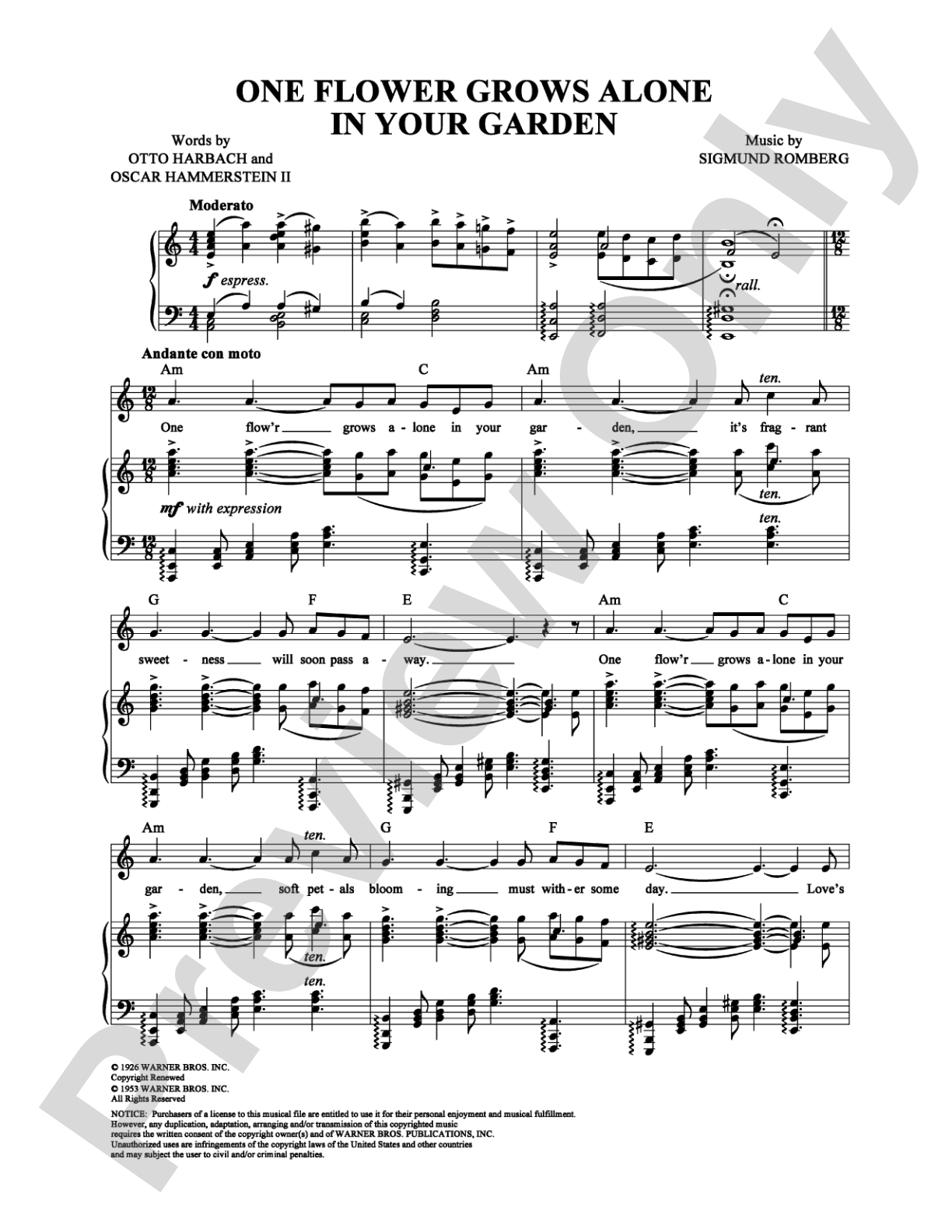
One Flower Grows Alone in Your Garden: Piano/Vocal/Chords Digital Sheet Music

One Flower Grows Alone in Your Garden: Piano/Vocal/Chords Digital Sheet Music

Sigmund Romberg

Item: 00-PS-0001932

Digital Download
$3.99
Description

One Flower Grows Alone in Your Garden: Piano/Vocal/Chords Digital Sheet Music isn't in MakeMusic Cloud just yet...but it could be. Let us know you'd like to see it, and you'll help shape what comes next. In the meantime, start a free trial and dive into thousands of interactive titles your students can play along with today.

Sample Audio
No sample audio found.
Sample Video
Additional Details
SKU: 00-PS-0001932

More about this title

Why we love this

The intimate pairing of piano and voice in this arrangement makes it ideal for recital programs where you want a piece that feels both polished and deeply personal. The chord chart opens the door for flexible accompaniment, whether you're working with a pianist, using guitar, or exploring different harmonic colors in rehearsal.

What to expect

The title suggests quiet contemplation and solitude, inviting a reflective vocal approach. The piano/vocal/chords format allows the piece to breathe with nuance, creating space for emotional authenticity rather than theatrical grandeur.

Who it's for

This arrangement works for vocalists preparing intimate recital material, voice students developing interpretive skills with piano collaboration, and singers looking for a complete chart to share with flexible accompanists. It's also accessible for classroom use in vocal technique or songwriting contexts where understanding the relationship between melody, lyrics, and harmonic support matters.

How to get the most out of it

  • Balance the vocal line so it sits naturally above the piano without pushing; the accompaniment should support, not compete.
  • Use the chord symbols to experiment with different voicings or substitutions if you're working with a guitarist or improvising accompanist.
  • Pay attention to phrasing across the piano and voice together; breathe where the harmonic rhythm suggests a natural rest, not just where the lyric breaks.

How to use it

Program this for a solo recital as a contrasting moment between larger or more dramatic selections, or use it in a chamber concert pairing vocalist and pianist. It also serves well in vocal master classes or studio recitals where demonstrating interpretive choices and accompaniment collaboration is part of the learning.

Skills your students will build

  • Balancing vocal production with piano accompaniment
  • Interpreting chord symbols and understanding harmonic function
  • Collaborative listening and ensemble awareness between singer and pianist
  • Shaping lyrical phrasing across longer melodic lines

You May Also Like