One Day Like This (arr. Theo Janssen) Sheet Music Preview

One Day Like This (arr. Theo Janssen): SSATB Choral Octavo

As performed by Elbow / Arranged by Theo Janssen

Item: 35-DS00488246

Digital Download
$2.99

One moment…

Description

One Day Like This (arr. Theo Janssen): SSATB Choral Octavo isn't in MakeMusic Cloud just yet...but it could be. Let us know you'd like to see it, and you'll help shape what comes next. In the meantime, start a free trial and dive into thousands of interactive titles your students can play along with today.

Sample Audio
No sample audio found.
Sample Video
Additional Details
Publisher: Hal Leonard
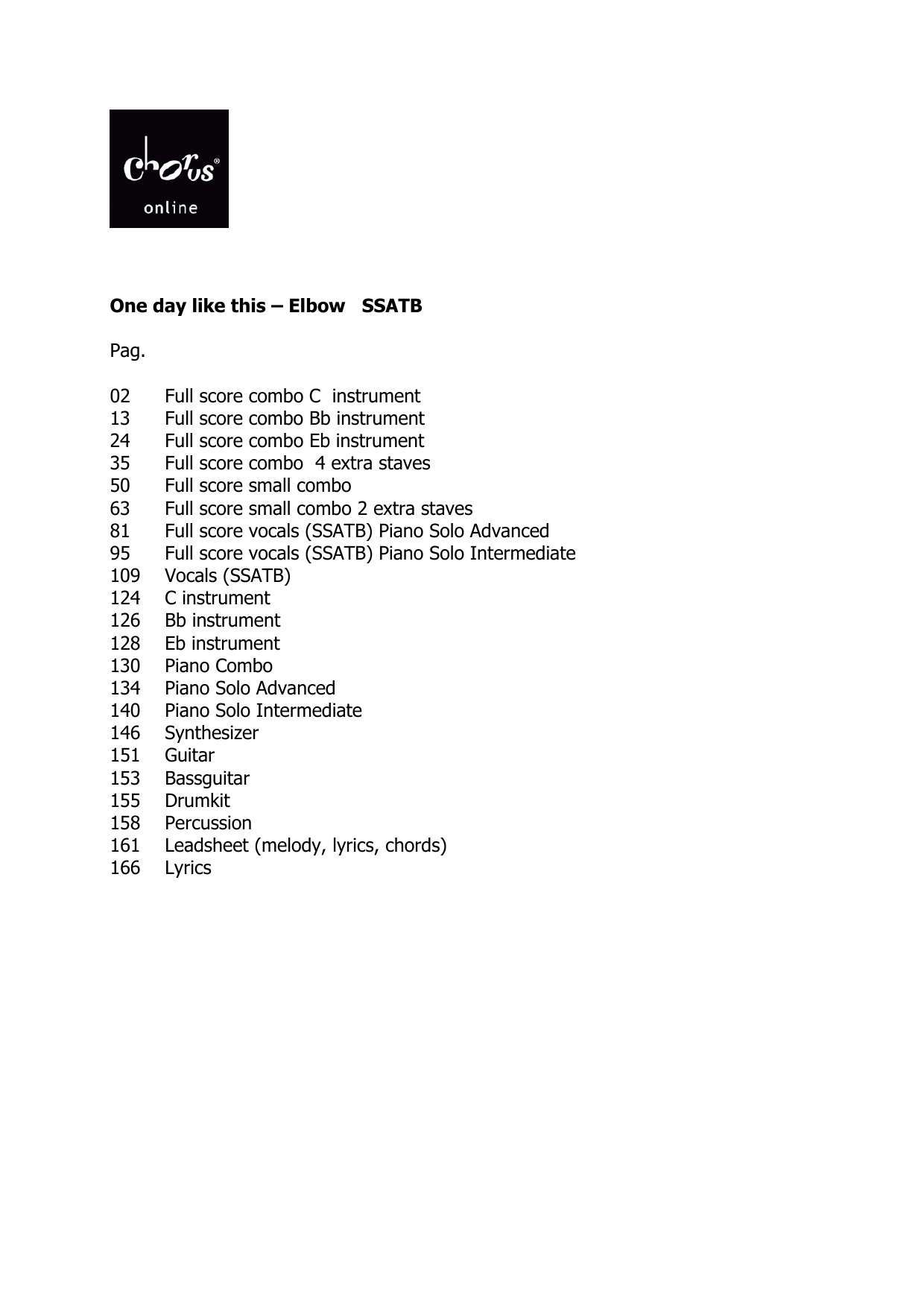
Page Count: 166
SKU: 35-DS00488246

More about this title

About the Artist: Elbow

Elbow is a British rock band formed in Bury, Greater Manchester, in 1997. Led by Guy Garvey's distinctive vocals and introspective songwriting, the band has built a reputation for emotionally resonant music that balances pop accessibility with artistic depth. Their work spans multiple decades and has earned critical acclaim, Grammy recognition, and a devoted international following.

For music educators, Elbow's catalog offers rich material for choral arrangement. Their melodies sit naturally in the voice, their harmonic language rewards close listening, and their emotional directness connects with student singers across age groups. "One Day Like This" exemplifies why their songs translate so effectively to ensemble settings: the tune is memorable without being simplistic, and the underlying sentiment invites genuine expression from performers.

Why we love this

Theo Janssen's arrangement respects the song's core appeal while giving it a choral architecture that feels organic rather than forced. Directors will appreciate how this setting works for mixed voices without requiring a massive ensemble; the 166-page octavo format suggests carefully voiced parts that let each section sing meaningfully. This is a modern love song that avoids schmaltz, making it ideal for programming where you need something contemporary that your singers will actually want to perform.

What to expect

Warm, reflective, and quietly joyful. The song carries an intimate quality that invites listeners closer rather than pushing them away with volume or bombast. There's a sense of gratitude woven through the melody, and Janssen's arrangement seems to honor that emotional restraint while still allowing for expressive moments that feel earned.

Who it's for

This arrangement suits choirs that want to program contemporary material with substance. It works equally well for high school groups, college ensembles, and community choirs seeking modern love songs that read as genuine rather than novelty additions. The SSA/SSAA voicing makes it accessible for groups with limited tenor and bass resources.

How to get the most out of it

  • Keep the opening soft and intimate. These early measures set the emotional foundation; resist the urge to build volume before the arrangement asks you to.
  • Balance the soprano and alto lines in passages where they diverge. Janssen likely uses that separation intentionally to create textural interest, not to feature one voice over another.
  • Find the natural phrasing in Garvey's lyrical contours. Even in a choral context, this song works best when it breathes like a vocalist would breathe, not in metronomic blocks.
  • Use the recorded accompaniment to lock ensemble entrances, but rehearse unaccompanied frequently so the choir owns the harmonic shape independently.

How to use it

Consider this for a spring concert, especially one themed around love, gratitude, or life's simple moments. It sits well alongside both classical choral standards and other contemporary pop arrangements, offering a bridge between those worlds. The moderate length and SSA/SSAA voicing also make it suitable for a concert where you're programming mixed, women's, and potentially children's ensemble pieces in one evening.

Skills your students will build

  • Balancing close harmony in contemporary choral textures
  • Singing expressive lines that sit naturally in the pop idiom
  • Handling text that speaks directly and emotionally without oversinging
  • Reading arranged parts for standard SSAA voicing
  • Matching vocal production to modern rather than classical aesthetic

You May Also Like