
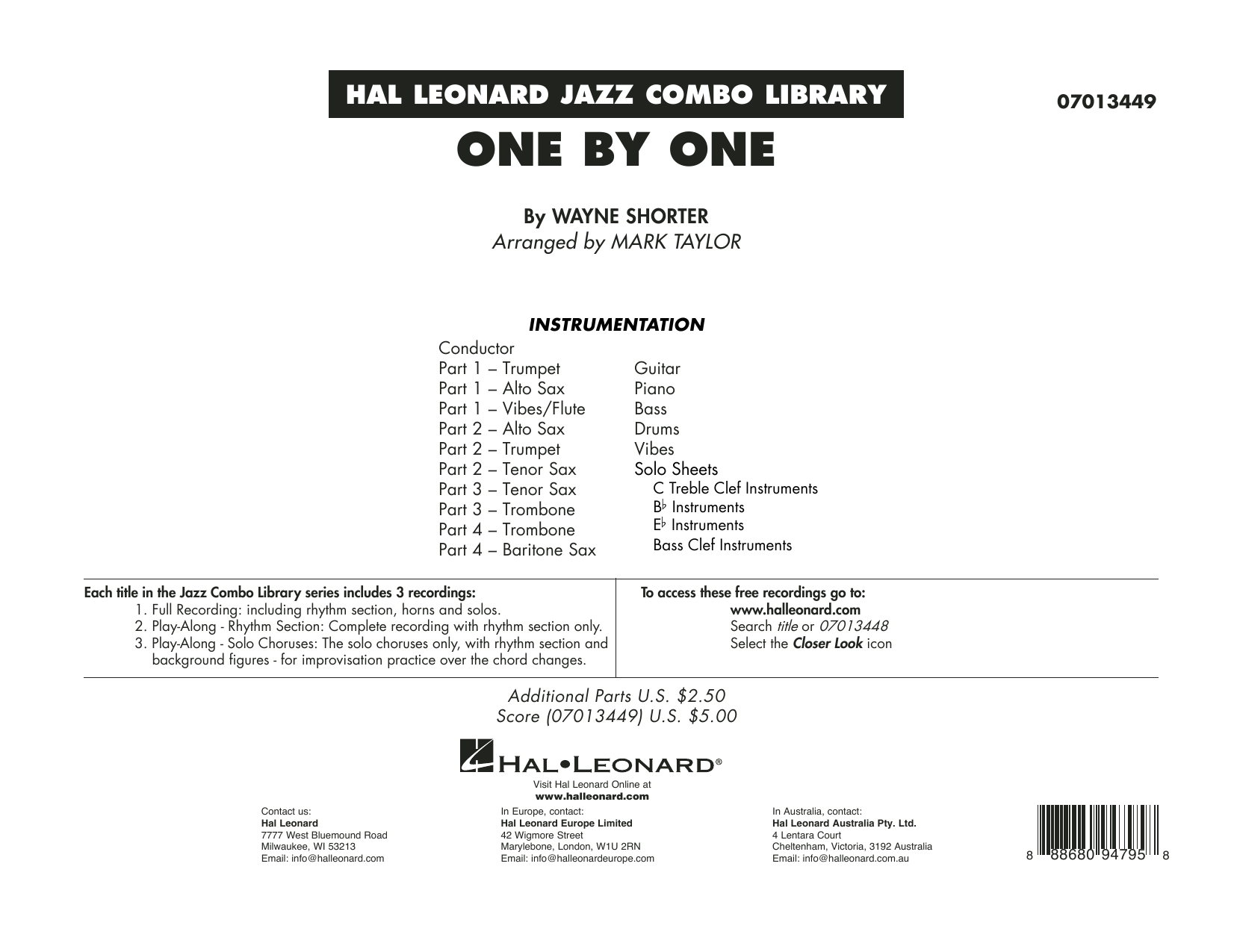

One by One (arr. Mark Taylor): Jazz Ensemble Conductor Score & Parts
By Wayne Shorter / Arranged by Mark Taylor
Grade: 4
Item: 35-PK00448463
$40.00
Pickup currently not available
Buy Extra Parts (Digital PDF Download)
Parts Added to Cart!
Description
Moderately paced swing tune from jazz master Wayne Shorter.


One by One (arr. Mark Taylor): Jazz Ensemble Conductor Score & Parts isn't in MakeMusic Cloud just yet...but it could be. Let us know you'd like to see it, and you'll help shape what comes next. In the meantime, start a free trial and dive into thousands of interactive titles your students can play along with today.
Request This Title
Tell us you want it.
Start Your Free Trial
Explore everything that's ready to play right now.
Sample Audio
No sample audio found.
Sample Video
No sample videos found.
Additional Details
Publisher:
Hal Leonard
SKU:
35-PK00448463
More about this title
About the Composer: Wayne Shorter
Wayne Shorter stands as one of jazz's most influential composers and saxophonists, with a catalog that shaped modern jazz across decades. His work with Art Blakey's Jazz Messengers, the Miles Davis Quintet, and Weather Report established him as a master of harmonic sophistication and melodic invention. Shorter's compositions balance accessibility with harmonic depth, making them ideal vehicles for student ensembles learning to navigate the language of jazz.
Why we love this
Mark Taylor's arrangement captures Shorter's compositional elegance while keeping the part writing manageable for Grade 4 players. The moderate swing tempo allows students to focus on feel and phrasing without rushing, and the melody sits beautifully across the ensemble. Programming a Shorter composition signals to your students that jazz standards carry real artistic weight.
What to expect
The tune breathes with mid-tempo swing confidence. Shorter's melodic contours feel conversational and organic, neither overly complex nor simplistic, with harmonic moments that reward careful listening and playing.
Who it's for
Jazz ensembles at the intermediate level benefit most from this arrangement. Directors programming a concert featuring composers beyond the usual suspects will find this accessible without sacrificing sophistication.
How to get the most out of it
- Shape the melody with rubato in the head. Shorter's compositions reward subtle rhythmic flexibility; avoid a metronomic pulse even though the swing quarter note should stay steady underneath.
- Balance the front line carefully during the melody statement. The saxophones should anchor the harmony while allowing the trumpet or lead voice to project the primary line.
- Work the comping section with intention. Whether the rhythm section is walking, laid back, or pushing, make sure each player understands their role in creating the swing feel rather than just hitting changes.
How to use it
This works beautifully as the centerpiece of a jazz standards set, particularly when paired with other modernist compositions from the 1950s and 1960s. It also serves well as a vehicle for introducing students to the harmonic language of post-bop jazz in a format that doesn't overwhelm.
Skills your students will build
- Swing feel and quarter-note pulse consistency across the ensemble
- Reading chord changes and understanding harmonic progression in post-bop contexts
- Ensemble blend and balance between melody and comping voices
- Stylistic phrasing and rubato within a structured jazz form
- Call-and-response techniques in improvisation or section writing