Bert Stratton has spent his life chasing the perfect marriage of melody and lyric. From childhood, he was drawn to the emotional power of song; his parents' eclectic record collection became his first classroom, and by age seven he was at the piano studying not just notes but the architecture of music itself. Piano lessons evolved into guitar, then into formal study of theory and composition at Ithaca College, where he wrote his first piece among hundreds that would follow.
His career has spanned decades of published work with major houses including Shawnee Press, Carl Fischer, and Alfred, with recordings and productions that have reached listeners worldwide. A breakthrough came when Pat Boone recorded one of his compositions as a title track. Now based in Nashville, Stratton continues to hold his work against the standard of the great masters, driven by the same curiosity that made him fall in love with song as a child. As an ASCAP member, his catalog reflects a relentless pursuit of craft and authenticity.
Why we love this
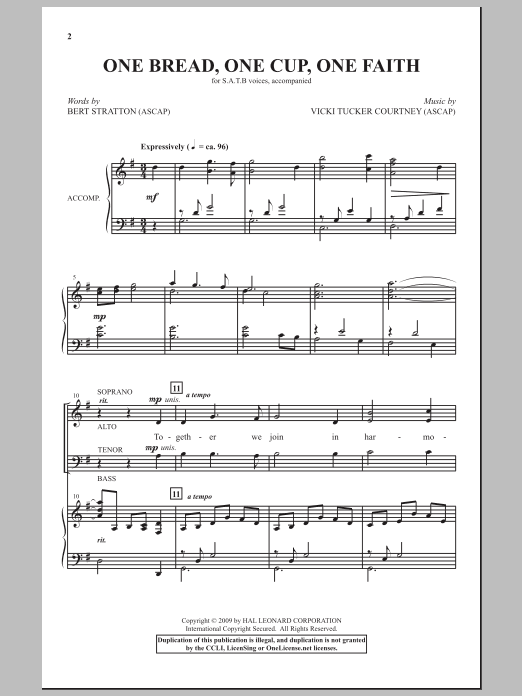
This anthem carries a quiet conviction. Stratton and Courtney have crafted something that feels both contemporary and timeless, never sacrificing harmonic depth for accessibility. The text settles into singers' voices naturally, and the piece works equally well in a casual service setting or as a concert closer that leaves the room reflective rather than drained.
What to expect
Grounded and communal. The piece builds from intimate reflection toward something shared, with harmonic warmth that feels earned rather than sentimental. There's a gentle insistence in the music, as if it's reminding singers and listeners of something they already know but need to hear again.
Who it's for
Choirs seeking a sacred octavo that speaks to unity and faith with musical sophistication. Works well for intermediate to advanced ensembles comfortable with four-part harmony and text-driven interpretation.
How to get the most out of it
Shape the opening phrases with breath, not volume. Let the text initiate the emotional arc rather than forcing the sound forward.
Balance the inner voices as carefully as the soprano line. The harmonies create their own narrative that shouldn't disappear beneath the melody.
Mark your tempo early in rehearsal and stick with it across sections. This piece relies on harmonic momentum to land its message.
How to use it
Position this as a unifying moment in a concert or service. Its meditation on shared faith pairs naturally with other sacred works of varying styles, or stands alone as a powerful closing statement. The moderate length makes it ideal filler in a program where you need emotional weight without overextending rehearsal time.
Skills your students will build
Balancing four-part harmony while maintaining text clarity
Interpreting sacred text with musical conviction
Sustaining harmonic tension through longer phrases
Blending vocal color across soprano, alto, tenor, and bass lines
You May Also Like
Scan to Complete Your Purchase
Use your phone's camera to scan the code below
You'll log in on your phone and the order will be added to your account