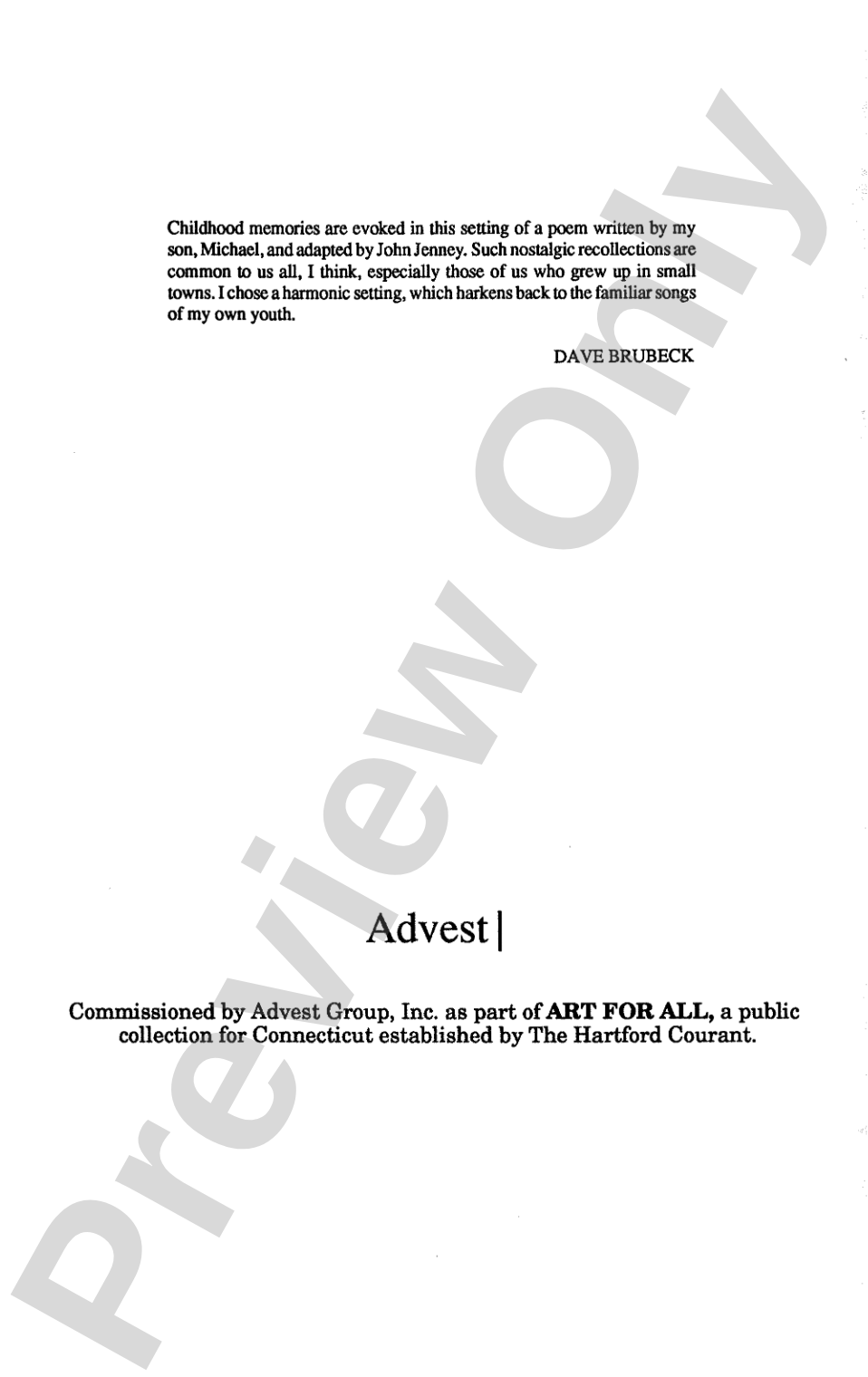
Once When I Was Very Young (from <I>Four New England Pieces</I>) Sheet Music Preview

Once When I Was Very Young (from Four New England Pieces): SATB Choral Octavo

From Four New England Pieces

By Dave Brubeck

Item: 00-PO-0004921

Digital Download
$2.25

Minimum order quantity: 20 copies

Description

Once When I Was Very Young (from Four New England Pieces): SATB Choral Octavo isn't in MakeMusic Cloud just yet...but it could be. Let us know you'd like to see it, and you'll help shape what comes next. In the meantime, start a free trial and dive into thousands of interactive titles your students can play along with today.

Sample Audio
No sample audio found.
Sample Video
Additional Details
Series: Lawson-Gould: The Dave Brubeck Series
Publisher: Alfred Music
Page Count: 8
SKU: 00-PO-0004921

More about this title

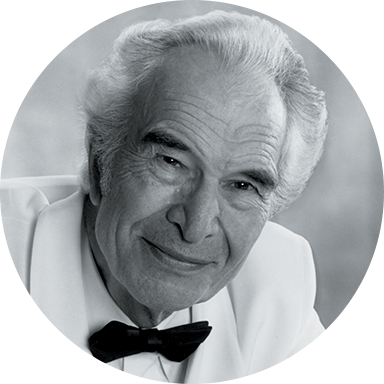
About the Composer: Dave Brubeck

Dave Brubeck

Dave Brubeck built his reputation as a jazz pianist through his improvisational brilliance, but his compositional range extended far beyond the jazz idiom. He composed choral works, hymns, orchestral pieces, chamber music, ballets, a string quartet, and large-scale works for chorus and orchestra. His study with French composer Darius Milhaud at Mills College encouraged him to synthesize the languages of jazz and classical music into a unified compositional voice.

Brubeck's cultural significance extends beyond music. He was instrumental in dismantling racial barriers in mid-twentieth-century America, and his 1959 album Time Out became the first jazz recording to sell over a million copies. His sacred choral works, including To Hope! and the oratorios The Voice of the Holy Spirit and Beloved Son, have been performed and recorded internationally by ensembles ranging from the London Symphony Orchestra to the Cathedral Choral Society at the National Cathedral in Washington, DC. He received the Grammy Lifetime Achievement Award for his jazz legacy, was elected to the American Classical Music Hall of Fame in 2003, and was honored with the Presidential Medal of the Arts.

Why we love this

Brubeck's choral writing brings the sophistication of his compositional voice to the ensemble repertoire without demanding virtuosity beyond reach. This piece captures the introspective, lyrical quality that makes his non-jazz works resonate with singers and audiences alike, offering a welcome alternative to both standard pops arrangements and heavier art song repertoire.

What to expect

The piece carries a quiet reflectiveness, invoking memory and introspection through gentle harmonic motion and lyrical phrasing. Brubeck's orchestral sensibility translates to choral writing as lush, nuanced vertical sonorities that shift through unexpected harmonic colors without sacrificing emotional directness.

Who it's for

This octavo works well for accomplished community choruses, college and university choirs, and advanced high school ensembles that can navigate Brubeck's harmonic sophistication with blend and intonation. Singers who have engaged with contemporary classical choral writing will find his approach accessible yet rewarding.

How to get the most out of it

  • Pay attention to the harmonic language; Brubeck's chords contain unexpected intervals and voice leading that require clean ensemble balance. Highlight suspensions and resolutions by adjusting dynamic shaping across the parts.
  • Treat text phrasing as integral to musical shape rather than secondary to melody. The introspection of the lyric deserves deliberate breathing and attention to how words sit across the harmonic rhythm.
  • Support the narrative arc across all eight pages; this isn't a novelty selection but a complete musical thought that benefits from sustained interpretive commitment.

How to use it

Position this as part of a concert exploring American classical composition, perhaps alongside other mid-century American art songs or choral works that bridge popular and concert idioms. Its intimate character makes it well-suited to a program that moves from more energetic selections into reflective repertoire near the close.

Skills your students will build

  • Reading chromatic voice leading and non-diatonic harmony
  • Balancing inner-part independence while maintaining ensemble cohesion
  • Sustaining lyrical phrasing across longer phrases
  • Interpreting text with musical intention in a contemporary harmonic context

You May Also Like