

Once Upon a Time Signature: Viola
By Richard Meyer
Grade: 1.5
Item: 00-PC-0014497_VA1
$5.99
Pickup currently not available
Description
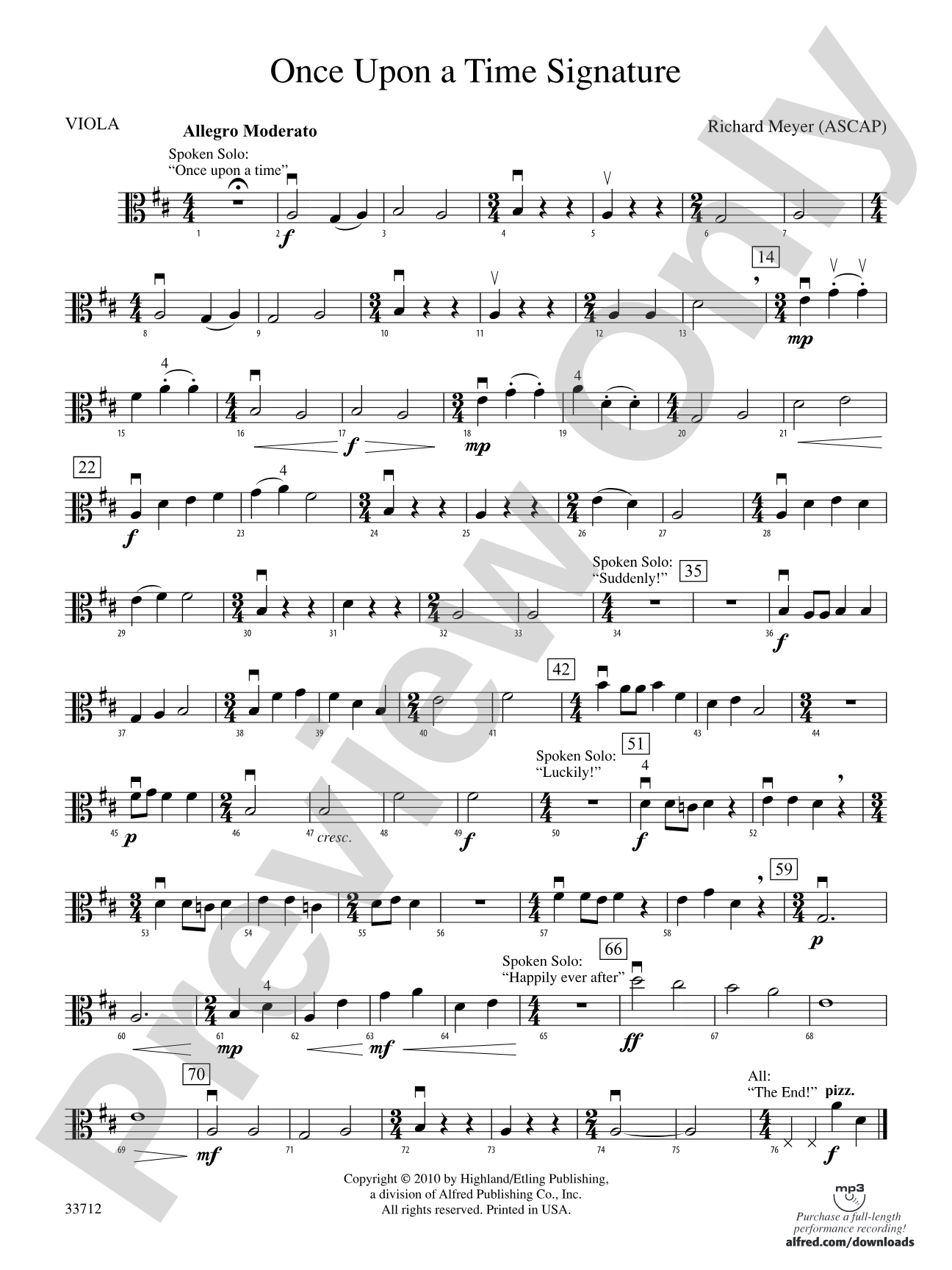
As the title suggests, this fun grade 1.5 piece features ever-changing time signatures that will intrigue and challenge the young string orchestra. There are four mood shifts in the piece, suggested by a student narrator who stands up and declares simply "Once upon a time," "Suddenly," "Luckily," and "Happily ever after." But what, exactly, is the story? That's up to your students and your audience to decide! This charming piece is simple rhythmically and note-wise, but a great way to get your orchestra counting. Sure to spark everyone's imagination! This title is available in MakeMusic Cloud.


Don't just read it, hear it, play along with it, and watch your students grow with it. In MakeMusic Cloud, Once Upon a Time Signature: Viola comes alive with professional accompaniment, adjustable tempo, and built-in practice tools that turn solo practice into real progress.
Open in the Player
Jump straight in and assign it today.
Start Your Free Trial
Open this title and explore the full library in minutes.
Sample Audio
1
Audio File
--:--
0:00
0:00
Sample Video
No sample videos found.
Additional Details
Series:
Highland/Etling String Explorer
Publisher:
Alfred Music
Page Count:
70
SKU:
00-PC-0014497_VA1
More about this title
About the Composer: Richard Meyer

Richard Meyer brings three decades of string teaching experience to his compositions, having shaped orchestras at every level from elementary through high school in California public schools. At Oak Avenue Intermediate School, he transformed a 29-student program into a thriving 200-student orchestra over 22 years, while simultaneously overseeing the city's elementary string curriculum. His work extends beyond the classroom: he directed the Pasadena Youth Symphony Orchestra for 16 years, leading performances across North America, Europe, and Australia, and he created the nationally recognized "Giving Bach" program, which uses interactive concerts to reach students with special needs and from underserved communities.
Meyer has established himself as a prolific composer and arranger with nearly 200 works in publication, a guest clinician at major music education conferences, and a former string editor for Alfred Publishing Company. He co-authored the popular String Explorer Series and Sight-read It for Strings, drawing on his deep understanding of what young string players need to grow musically and technically.
Why we love this
Meyer understands exactly how young string orchestras think and what will hold their attention. The narrator device transforms metric complexity from an abstract counting exercise into a storytelling opportunity, making every time signature change feel intentional rather than arbitrary. Students invest in nailing the rhythms because they're locked into the drama of the narrative, not grinding through a technical etude.
What to expect
The piece unfolds like a fairy tale narrated in real time, each mood shift arriving exactly when the story demands it. Rhythmically straightforward within each section, the alternating time signatures create a playful tension that keeps both players and listeners leaning forward, curious about what "suddenly" or "luckily" will sound like in the orchestra's hands.
Who it's for
Young string orchestras at the first and second grade levels, especially ensembles ready to move past steady meters but needing music that makes metric variety feel purposeful rather than arbitrary. Teachers seeking a high-engagement piece that develops counting skills while keeping the ensemble invested in musical storytelling.
How to get the most out of it
- Assign the narrator role before the first rehearsal and have them practice their lines with clear, deliberate pacing. Their declarations should feel like natural story breaks, not rushed announcements.
- Work each mood shift separately before combining them. Have the orchestra sit with the emotional character of each section (playful, jarring, relieved, triumphant) before worrying about counting.
- Use the time signature changes as sectional checkpoints rather than obstacles. Mark the bar number where each shift occurs in parts and conduct clearly through transitions so students can anchor to downbeats.
- Record a rehearsal once the piece is secure and play it back for the ensemble. Hearing themselves execute the narrative arc reinforces why the metric shifts matter musically.
How to use it
Program this as a centerpiece of a concert built around narrative and imagination, pairing it with other pieces that invite student interpretation or audience engagement. It works equally well as a full concert closer (ending with "Happily ever after") or as an opening statement that sets a creative, slightly irreverent tone for the program.
Skills your students will build
- Reading and executing multiple time signatures within a single piece
- Maintaining rhythmic accuracy during metric transitions
- Responding to conductor cues across meter changes
- Connecting musical character to technical demands
- Listening and entraining as an ensemble through shifting metric frameworks