Once Upon a Time Signature Cover Image

Once Upon a Time Signature: Concert Band Conductor Score

$10.00 USD
Sale price  $10.00 USD Regular price 
Skip to product information
Once Upon a Time Signature Cover Image

Once Upon a Time Signature: Concert Band Conductor Score

By Vince Gassi

Grade: 2

Item: 00-49967S

$10.00
Shipped

One moment…

Description
Themes are pliable; they can evolve and exist in more than one time signature. Once Upon a Time Signature is the perfect opportunity for your young musicians to improve their craft by adapting to frequent changes in time. 4/4 to 3/4, and back again, they will rise to the challenge. Count on it! (2:30)

Once Upon a Time Signature: Concert Band Conductor Score isn't in MakeMusic Cloud just yet...but it could be. Let us know you'd like to see it, and you'll help shape what comes next. In the meantime, start a free trial and dive into thousands of interactive titles your students can play along with today.

Sample Pages

Sample Audio
0:00
0:00
Sample Video
Additional Details
Series: Developing Band Series
Publisher: Alfred Music
ISBN10: 1-4706-5849-6
ISBN13: 978-1-4706-5849-6
UPC: 038081576053
SKU: 00-49967S

More about this title

About the Composer: Vince Gassi
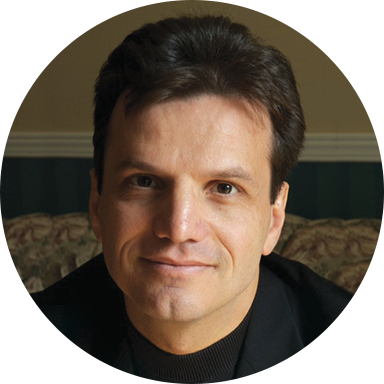
Vince Gassi

Vince Gassi has built a prolific career as a composer, conductor, and educator since earning his Bachelor of Music from the University of Western Ontario. He studied composition and arranging at the Dick Grove School of Music in Los Angeles and completed his Ph.D. in music at York University in Toronto. For over twenty-five years, Gassi has taught instrumental music at the elementary and secondary levels while maintaining an active presence as a guest conductor, adjudicator, and clinician across the United States and Canada.

With more than 100 published titles and an Alfred Music catalogue spanning nearly two decades, Gassi's work has become a staple on concert and contest programs internationally. His compositions balance musical substance with accessibility, earning consistent recognition from young musicians and their directors. He leads workshops on creative engagement and digital workflows for music educators, and his pieces have been performed throughout North America, Europe, and Japan, with frequent performances at the Midwest Clinic in Chicago.

Why we love this

Grade 2 bands often sidestep meter changes, but Gassi confronts them head-on here without sacrificing musical coherence. The theme weaves naturally between 4/4 and 3/4, so students experience shifting time signatures as a compositional choice, not a technical exercise. This builds metric literacy in a way that feels organic and rewarding to conduct.

What to expect

The title invokes storybook charm, and the melodic voice carries that sense of unfolding narrative. The frequent meter shifts feel like natural progressions rather than disruptions, creating a piece that sounds cohesive even as the rhythmic framework subtly transforms.

Who it's for

Grade 2 concert bands ready to develop metric flexibility without overwhelming complexity. Directors seeking a musically engaging piece that addresses meter changes as a deliberate learning outcome will find this invaluable for festival programs and concert settings.

How to get the most out of it

  • Conduct the 3/4 sections with clear, deliberate beats to anchor students as they reorient themselves to the new meter
  • Isolate the meter change at measure breaks during rehearsal, drilling the transition from 4/4 to 3/4 and back until the band counts confidently through the shift
  • Exaggerate the breath and recount at each meter change to signal the new pulse; once the band internalizes it, you can ease back to natural phrasing

How to use it

Program this on a concert where you want to celebrate your band's growth in reading and adaptability; the short duration (2:30) makes it ideal for festival rotation or as a bridge piece between more static meters. It also works well in educational settings where demonstrating metric variety is a learning goal.

Skills your students will build

  • Counting and conducting through alternating time signatures (4/4 and 3/4)
  • Maintaining ensemble cohesion during metric transitions
  • Recognizing thematic continuity across different metrical contexts
  • Responding to clear metric boundaries and reorienting to new pulse markings

You May Also Like