

Once Upon a Time: SATB Choral Octavo
Words by Lee Adams, music by Charles Strouse / arr. Steve Zegree
Item: 00-PO-0005612

$2.25
Minimum order quantity: 20 copies
Pickup currently not available
Description
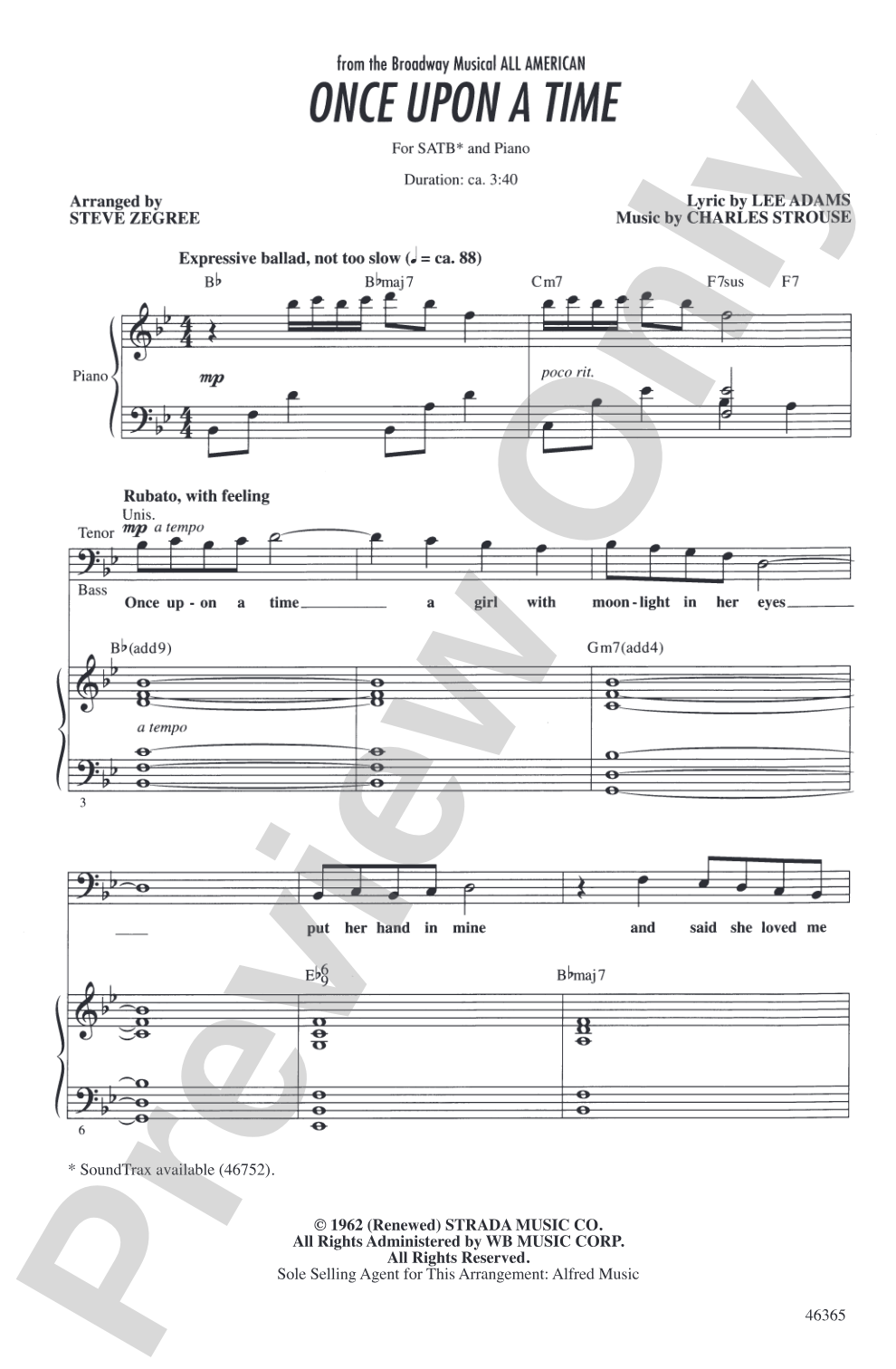
A favorite from the 1960s musical All American, this absolutely gorgeous concert setting by Steve Zegree is once again in print. Jazz-tinged harmonies make this Charles Strouse and Lee Adams love ballad absolutely enchanting.


Don't just read it, hear it, play along with it, and watch your students grow with it. In MakeMusic Cloud, Once Upon a Time: SATB Choral Octavo comes alive with professional accompaniment, adjustable tempo, and built-in practice tools that turn solo practice into real progress.
Open in the Player
Jump straight in and assign it today.
Start Your Free Trial
Open this title and explore the full library in minutes.
Sample Audio
1
Audio File
--:--
0:00
0:00
Sample Video
No sample videos found.
Additional Details
Series:
Alfred Pop Choral Series
Publisher:
Alfred Music
Page Count:
12
SKU:
00-PO-0005612
More about this title
About the Composer: Charles Strouse
Charles Strouse composed the scores for some of Broadway's most enduring musicals, including Bye Bye Birdie, Applause, and Annie. His gift for melody and his ability to write songs that work equally well in concert settings and on stage made him a fixture in American musical theater from the 1960s onward. Strouse's songs have become standards in choral repertoire, valued by directors for their accessibility, harmonic sophistication, and emotional directness.
Why we love this
Steve Zegree's arrangement captures the essence of Strouse and Adams's original while bringing sophisticated jazz voicings to a high school and community choir level. The piece reads as genuinely musical, not simplified, and gives singers real harmonic and rhythmic interest without becoming unwieldy. This is the kind of contemporary pop choral work that sounds polished in concert without demanding hours of sectional rehearsal.
What to expect
Once Upon a Time carries the warmth and vulnerability of a classic love ballad, wrapped in sophisticated jazz voicings that hint at nightclub elegance without losing intimacy. The arrangement feels intimate rather than grand, making space for singers to connect emotionally with the text while navigating the chromatic movement and extended harmonies.
Who it's for
This octavo works beautifully for intermediate to advanced high school choirs, community choruses, and college ensembles seeking repertoire that bridges jazz and choral literature. Singers who enjoy contemporary pop arranging and aren't intimidated by jazz harmonies will find this rewarding and fun to perform.
How to get the most out of it
- Treat the jazz harmonies as vertical color rather than complications. Once singers hear the recorded accompaniment, the harmonic movement becomes clear and the parts lock together naturally.
- Balance the soprano line carefully in verse sections; it carries the melody but shouldn't overshadow the countermelodies in the other parts.
- Let the rhythm section breathe. This arrangement benefits from a relaxed, swung approach rather than mechanical precision; think of it as conversational rather than military.
- Work dynamics across the entire ensemble as a unit. The piece relies on subtle shaping to create emotional momentum, not sudden volume shifts.
How to use it
This piece sits naturally alongside other Broadway and pop choral standards in a spring concert or pops program. Its sophistication and 1960s style also pair well with other period music, making it ideal for thematic concerts exploring the golden age of musical theater.
Skills your students will build
- Reading jazz harmonies and chromaticism in a four-part context
- Maintaining independence in a four-part texture with countermelody material
- Interpreting swing rhythm and jazz-inflected phrasing
- Balancing ensemble blend when voices carry equal musical weight