Once Upon a Memory Sheet Music Preview

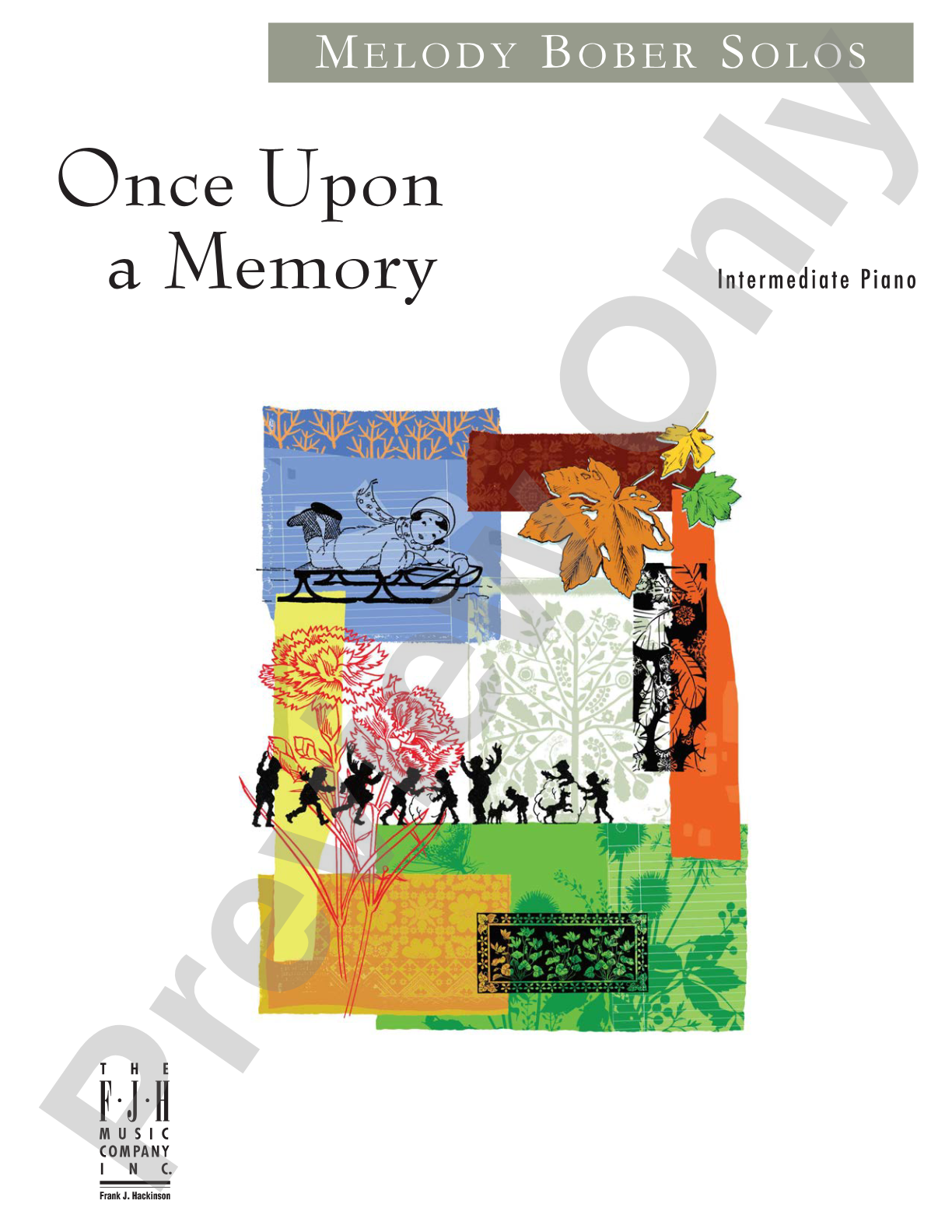
Once Upon a Memory: Piano

By Melody Bober

Item: 98-DW9218

Digital Download
$2.95
Description
With a singable, eight-measure theme that asks you to reminisce, Once Upon a Memory plays to its audience like a narrating storyteller. The accompanying Alberti bass moves this tale to and from a chordal "B" section, where trumpeting open sixths support a proud, lyric countermelody. Ask your students to prolong the return of the theme as it arrives, and fades, and lingers in the memory.

Once Upon a Memory: Piano isn't in MakeMusic Cloud just yet...but it could be. Let us know you'd like to see it, and you'll help shape what comes next. In the meantime, start a free trial and dive into thousands of interactive titles your students can play along with today.

Sample Audio
No sample audio found.
Sample Video
Additional Details
Series: Written For You
Publisher: The FJH Music Company, Inc.
SKU: 98-DW9218

More about this title

About the Composer: Melody Bober

Melody Bober

Melody Bober writes piano music with a clear pedagogical purpose: to deepen students' musicality while keeping them engaged. She holds a bachelor's degree in music education from the University of Illinois at Champaign-Urbana (graduating summa cum laude) and a Master of Arts in piano performance from Minnesota State University, Moorhead, where she studied under pianists Joel Shapiro and Andrew Froelich. Her teachers in music education and jazz (Mary Hoffman and Tony Caramia, respectively) shaped her approach to composition.

Bober's teaching background spans two decades in public schools, two years at the university level, and an ongoing private piano studio in Minnesota. She has also worked as a church pianist, accompanist, and music director. Her reputation as both clinician and composer has made her a sought-after presenter at piano teacher conventions and workshops throughout North America.

Why we love this

Bober has crafted a piece that invites genuine reflection rather than technical showmanship. The storytelling frame gives intermediate pianists permission to shape and linger over the return of the theme, turning a relatively accessible piece into an exercise in artistic interpretation and pedal control. The combination of Alberti bass with a lyric countermelody in the B section rewards students who can balance accompaniment and melody simultaneously.

What to expect

A gentle, introspective piece that unfolds like someone telling a cherished story. The opening melody feels intimate and warm, the Alberti bass creates forward motion without urgency, and the B section introduces a moment of quiet pride before returning to the gentle reverie of the theme.

Who it's for

Intermediate pianists ready to move beyond note-reading and explore interpretive choices. This piece suits students who respond well to evocative imagery and benefit from explicit permission to slow down and listen to themselves play.

How to get the most out of it

  • Shape the opening eight-measure theme as though introducing a character in a story. Allow slight tempo flexibility and subtle rubato to honor the reminiscent quality without rushing the narrative.
  • Maintain a gentle, steady pulse in the Alberti bass throughout the A section so it supports rather than overwhelms the melody.
  • Bring out the proud, lyric countermelody in the B section by voicing the open sixths and upper line with clarity while keeping the accompaniment subdued.
  • Experiment with pedal timing during the return and fade of the theme to create a sense of memory lingering and dissolving rather than abruptly ending.

How to use it

Include this on a recital alongside other character pieces to give your intermediate students a more introspective program balance. It works well as a moment of repose between more technically demanding or energetic selections, and its moderate length makes it ideal for student showcases or virtual recitals.

Skills your students will build

  • Phrasing and musical interpretation in a lyrical context
  • Alberti bass accompaniment technique with consistent texture
  • Balancing melody and accompaniment in both hands
  • Pedal control for harmonic resonance and atmospheric effect
  • Voice independence between a countermelody and primary melody
  • Tempo flexibility and rubato within a narrative framework

You May Also Like