Once in Royal David's City: Baritone B.C. Sheet Music Preview

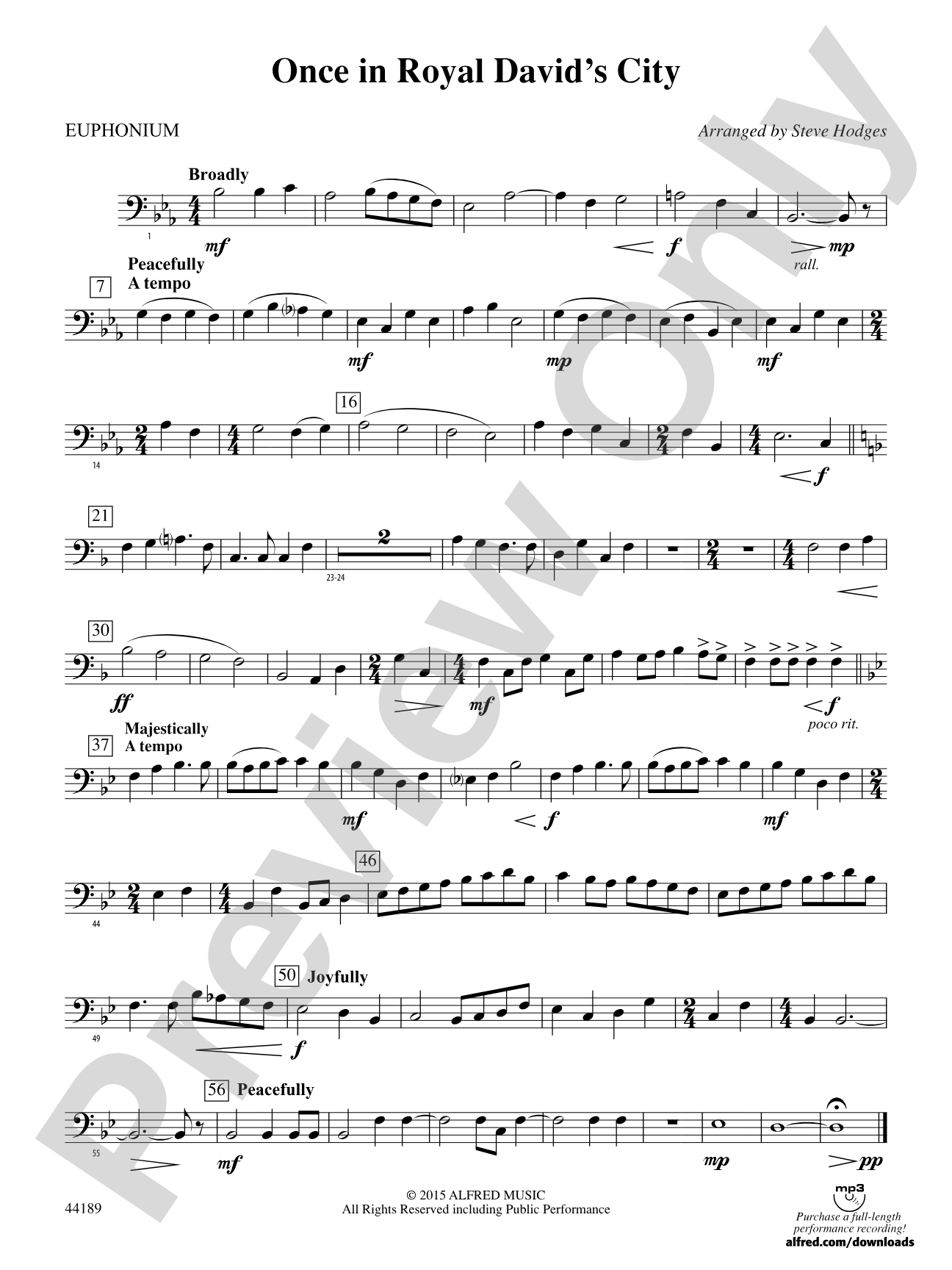
Once in Royal David's City: Baritone B.C.

Traditional / arr. Steve Hodges

Grade: 2 (Medium Easy)

Item: 00-PC-0017039_BBC1

Digital Download
$3.00
Description
"Once in Royal David's City" is a Christmas carol originally written as a poem by Cecil Frances Alexander. The carol was first published in 1848. This setting for young band augments the beautiful melody with textural contrasts and flowing countermelodies, leaving the seasonal feelings of peace and joy. (3:00)

Don't just read it, hear it, play along with it, and watch your students grow with it. In MakeMusic Cloud, Once in Royal David's City: Baritone B.C. comes alive with professional accompaniment, adjustable tempo, and built-in practice tools that turn solo practice into real progress.

Sample Audio
0:00
0:00
Sample Video
Additional Details
Series: Young Symphonic
Publisher: Alfred Music
Page Count: 134
SKU: 00-PC-0017039_BBC1

More about this title

About the Arranger: Steve Hodges

Steve Hodges

Steve Hodges brings four decades of band and choral directing experience to his compositions and arrangements. He holds degrees from Western Oregon University (B.S.) and Central Washington University (M.A. in Music Education), and during his career in public school music education, he worked with ensembles at all levels, from beginning bands to advanced choirs.

Since 1986, Hodges has published over 120 concert band works with Alfred Music, along with choral arrangements through Staff Music and Shawnee Press. His music has appeared at state conventions and festivals worldwide, and several of his pieces were commissioned by honor bands and schools across North America. His compositions have also been featured on TBS and ESPN broadcasts. Hodges is an ASCAP member and currently resides in The Dalles, Oregon, where he remains active in community music alongside his family.

Why we love this

Hodges respects the carol's essential character while adding genuine compositional craft. The textural contrasts and countermelodies enrich the arrangement without overwhelming young players, making this a piece that sounds far more sophisticated than its Grade 2 reading level suggests. You get a concert-quality Christmas selection that your students will actually enjoy learning.

What to expect

The arrangement glows with quiet dignity and gentle movement. Textural shifts create moments of reflection alongside passages of fuller ensemble sound, capturing both the peaceful reverence and joyful proclamation inherent in Alexander's original poem. The flowing countermelodies feel natural and unforced, like the carol has always been written this way.

Who it's for

Young concert bands at the Grade 2 level will find this arrangement musically substantial without excessive technical demands. It works beautifully for ensembles seeking a Christmas concert piece that connects to the carol's genuine seasonal warmth without requiring advanced players.

How to get the most out of it

  • Balance the countermelodies carefully so they enhance rather than compete with the main tune; this arrangement rewards clear articulation and intentional voice leading even at this accessible level.
  • Pay attention to the flowing character Hodges creates through his harmonic choices; allow the band to breathe naturally into phrase endings rather than cutting off abruptly.
  • Let the students hear where the peace and joy emerge in the scoring; discussing the emotional arc during rehearsal will deepen their investment in the performance.

How to use it

Feature this as a centerpiece in a holiday concert alongside more uptempo seasonal selections to showcase the band's range of expression. It also pairs well with sacred or winter-themed works that benefit from the contemplative mood Hodges establishes. The three-minute duration fits comfortably into diverse programming schemes.

Skills your students will build

  • Balancing melody and countermelody within a single section
  • Sustaining legato phrasing across harmonic changes
  • Reading and performing textural contrasts (solo voices, tutti sections, divided parts)
  • Interpreting expressive character through dynamics and articulation choices

You May Also Like