Once in David's City: 1st Percussion Sheet Music Preview

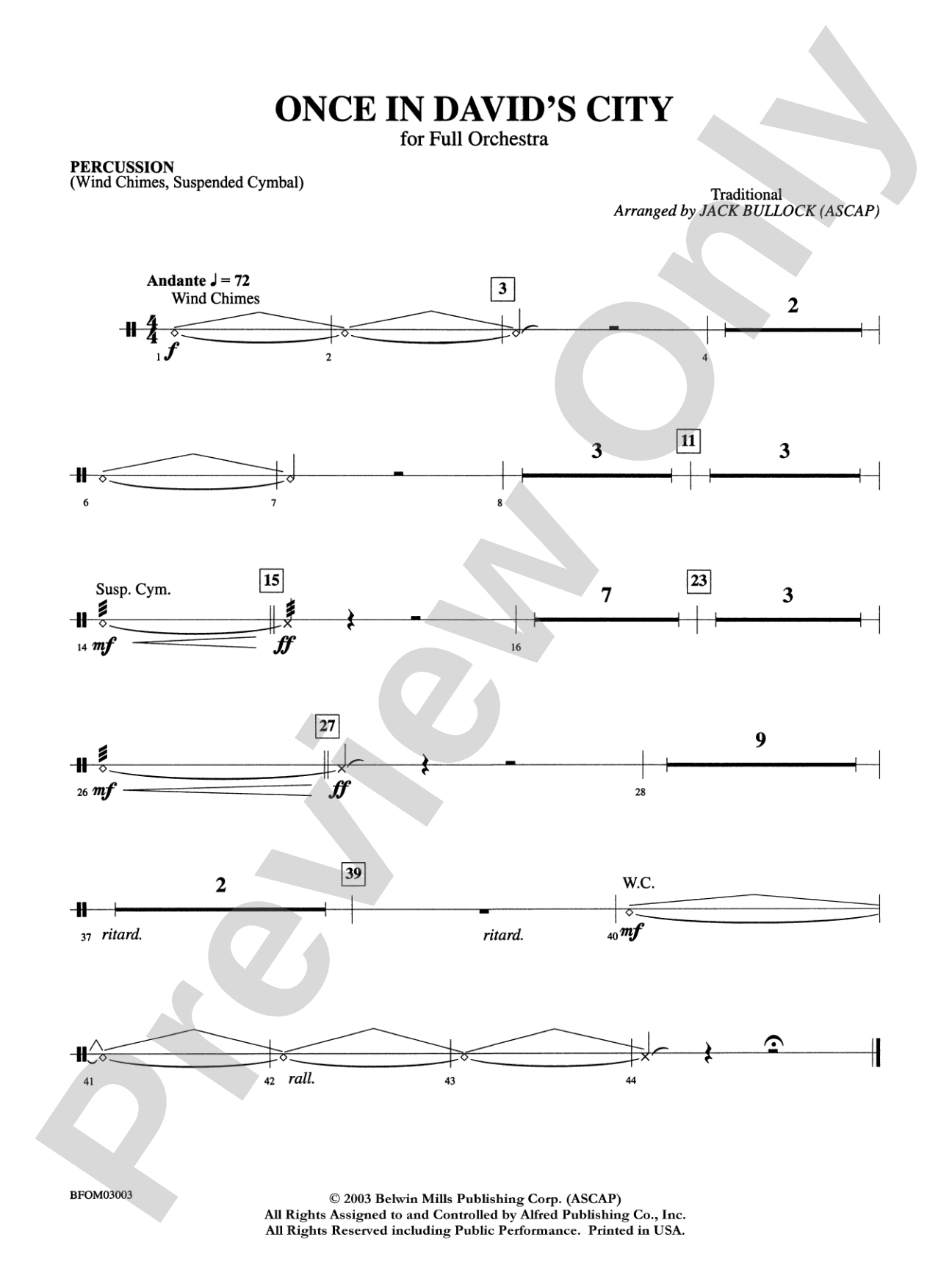
Once in David's City: 1st Percussion

Traditional / arr. Jack Bullock

Grade: 3.5

Item: 00-PC-0002235_PC1

Digital Download
$3.00
Description
A lovely addition to the concert literature, this English carol is often heard during the holiday season. It has a charm that is gracious and haunting. Although more obscure than other holiday melodies, it is delightful material for any seasonal concert. A variety of textures and tone colors add to the richness of the work. (2:51)

Don't just read it, hear it, play along with it, and watch your students grow with it. In MakeMusic Cloud, Once in David's City: 1st Percussion comes alive with professional accompaniment, adjustable tempo, and built-in practice tools that turn solo practice into real progress.

Sample Audio
0:00
0:00
Sample Video
Additional Details
Series: Belwin Concert Full Orchestra
Publisher: Alfred Music
Page Count: 126
SKU: 00-PC-0002235_PC1

More about this title

About the Arranger: Jack Bullock

Jack Bullock

Jack Bullock brings decades of hands-on experience across multiple roles in music. As a trumpeter, he performed with the Miami Philharmonic Orchestra and Miami Opera Company, alongside professional touring and regional bands. His formal training spans undergraduate through doctoral study in Music Education, grounding his work in sound pedagogical principles.

With over 600 published works across concert band, orchestra, jazz ensemble, and marching band, Bullock has shaped music education at every level. He taught instrumental music in schools for 20 years, served as assistant band director at Ithaca College's School of Music, and chaired their Music Education Department. His contributions extend beyond composition and arrangement to curriculum development, including co-authorship of the Belwin 21st Century Band Method. He has been an ASCAP member since 1980 and continues to mentor through clinics and workshops across North America and internationally.

Why we love this

Bullock respects the carol's inherent character while giving your orchestra genuine color to work with. The Grade 3.5 scoring sits in a sweet spot where it demands musicianship without overwhelming inexperienced orchestras, and the variety of textures means no section rides the bench for long stretches.

What to expect

The piece carries a quiet dignity and reflective quality. Its lesser-known status gives it an air of discovery, while the orchestral textures create warmth and intimacy rather than bombast. You'll hear the carol's character emerge freshly through instrumental colors.

Who it's for

Orchestra directors building a winter concert lineup with material beyond the usual suspects, especially those working with intermediate players who need engaging repertoire that doesn't require virtuosic chops. It's equally suited for schools seeking something liturgical without being heavy-handed.

How to get the most out of it

  • Balance the melody across your first violins and flutes initially; the arrangement likely uses doubled doublings that need careful blending to avoid muddiness.
  • Mark your entrances clearly in parts during sectional rehearsals. With 126 pages of score, players benefit from visual cues that anticipate their role entries.
  • Shape phrase endings with slight breath points, especially if the arrangement breaks the tune across multiple instrumental families. This prevents the tune from sounding fragmented.
  • The 2:51 runtime suggests steady pacing; resist the temptation to drag the tempo for sentiment. The piece's charm comes from clarity and grace, not drag.

How to use it

Slot this into the centerpiece of a holiday concert, perhaps paired with one brighter, more familiar seasonal piece to bookend the program. Its gracious tone also works well as a concert opening or closing gesture, especially in winter pops contexts where you want to acknowledge the season without filling the program entirely with holiday fare.

Skills your students will build

  • Blending multiple instrumental families to support a single melodic line
  • Listening for balance across divisi sections in strings
  • Reading parts that feature irregular phrase lengths and sectional rests
  • Sustaining lyrical tone quality over longer held notes
  • Following conductor through varied textural changes

You May Also Like